Understanding Your Options After Pregnancy and Delivery
A tummy tuck after C-section is a safe procedure that can address excess skin, separated abdominal muscles, and the C-section scar itself. Most plastic surgeons recommend waiting 6-12 months after your C-section to allow your body to fully heal before undergoing a tummy tuck.
Quick answers for post-C-section tummy tuck candidates:
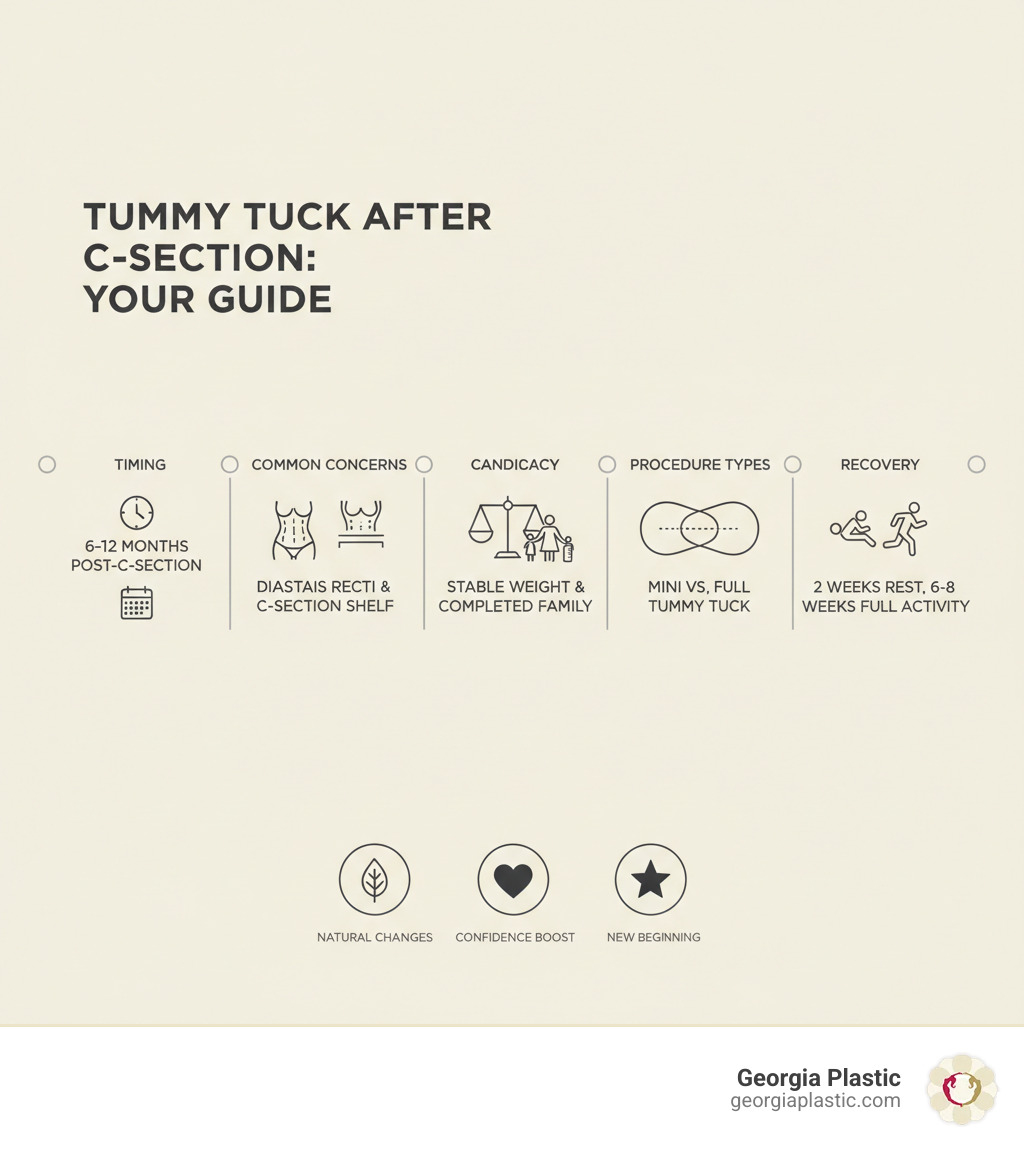
- Timing: Wait at least 6-12 months after delivery
- Safety: Do NOT combine with your C-section delivery (risks are too high)
- Benefits: Removes excess skin, repairs muscle separation, improves or removes C-section scar
- Candidacy: Best for those at stable weight, done having children, and in good health
- Recovery: Similar to C-section recovery, typically 2 weeks for light activities, 6-8 weeks for full activity
- Cost: Typically $8,000-15,000; rarely covered by insurance (cosmetic procedure)
Pregnancy changes the body in profound ways. Abdominal muscles stretch, skin expands, and a C-section delivery leaves a scar—often with a stubborn “shelf” of skin above it. While these changes are normal, you don’t have to live with them if they affect your confidence.
According to research, over 170,000 tummy tuck procedures were performed in 2023, making it one of the top five cosmetic procedures. Many of these patients are mothers seeking to restore their pre-pregnancy bodies after a C-section.
A tummy tuck can address the most common post-C-section concerns: the scar, loose skin, separated abdominal muscles (diastasis recti), and stubborn fat deposits. This guide covers everything from timing and candidacy to surgical options and recovery.
Why Consider a Tummy Tuck After a C-Section?
Childbirth changes your body, and if you’ve had a C-section, you may be dealing with a stubborn scar, loose skin, or a persistent “pooch.” These are not just cosmetic issues; they can affect your core strength, cause back pain, and impact your self-confidence. A tummy tuck after C-section is designed to address these real, physical changes.
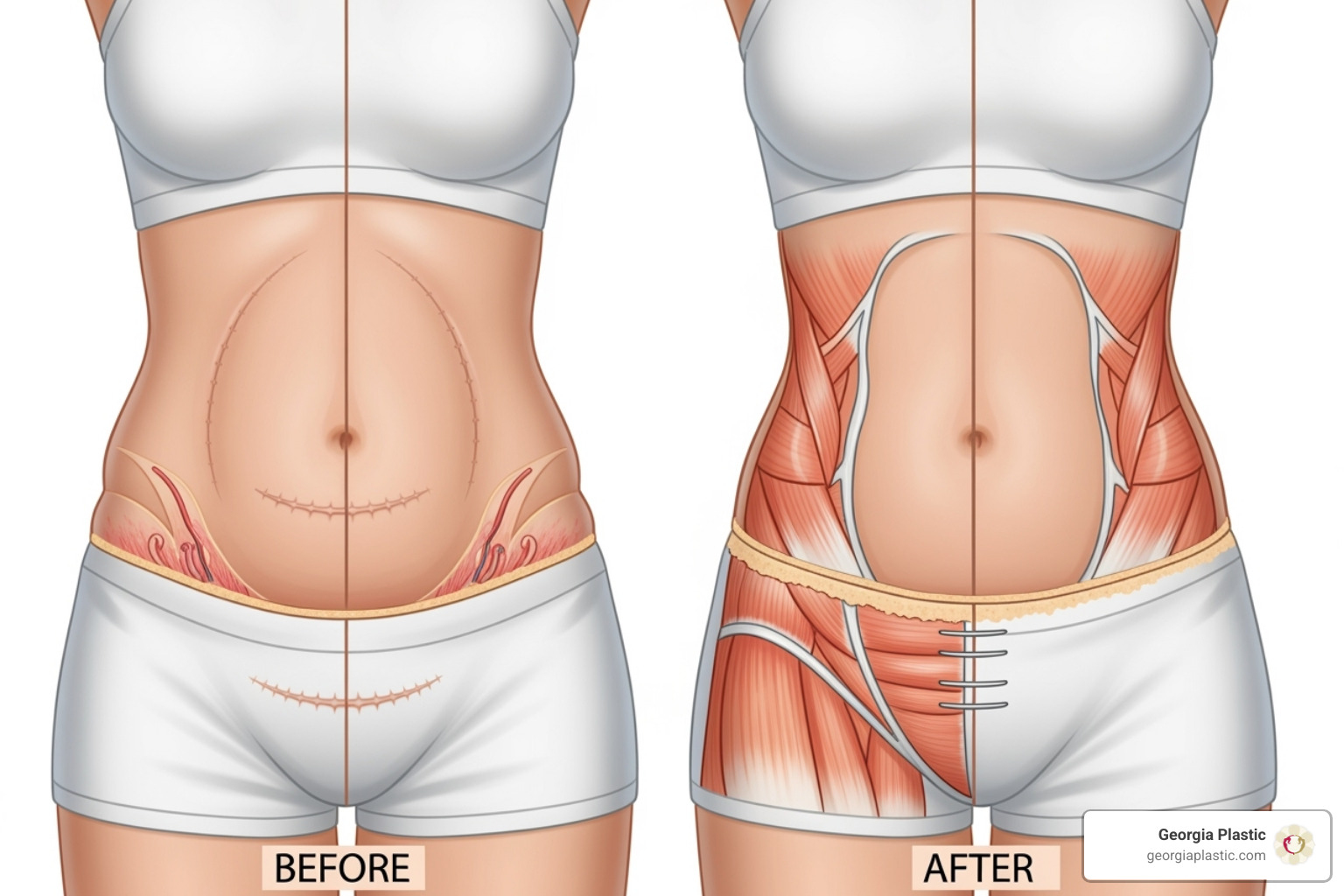
A tummy tuck offers both aesthetic and physical benefits. We can often remove your C-section scar entirely, incorporating it into a new, single incision placed low enough to be hidden by underwear. The procedure also repairs separated abdominal muscles (a condition called diastasis recti), which you can learn more info about Diastasis Recti. By surgically bringing these muscles back together, we tighten lax muscles and restore core strength.
Additionally, a tummy tuck removes loose, stretched-out skin that exercise can’t fix, and any stretch marks on the removed skin are eliminated as well. This combination helps contour your belly and waistline. Many patients also experience unexpected physical benefits, such as improved posture and a significant reduction in back pain due to a stronger core.
Addressing the C-Section Scar and “Shelf”
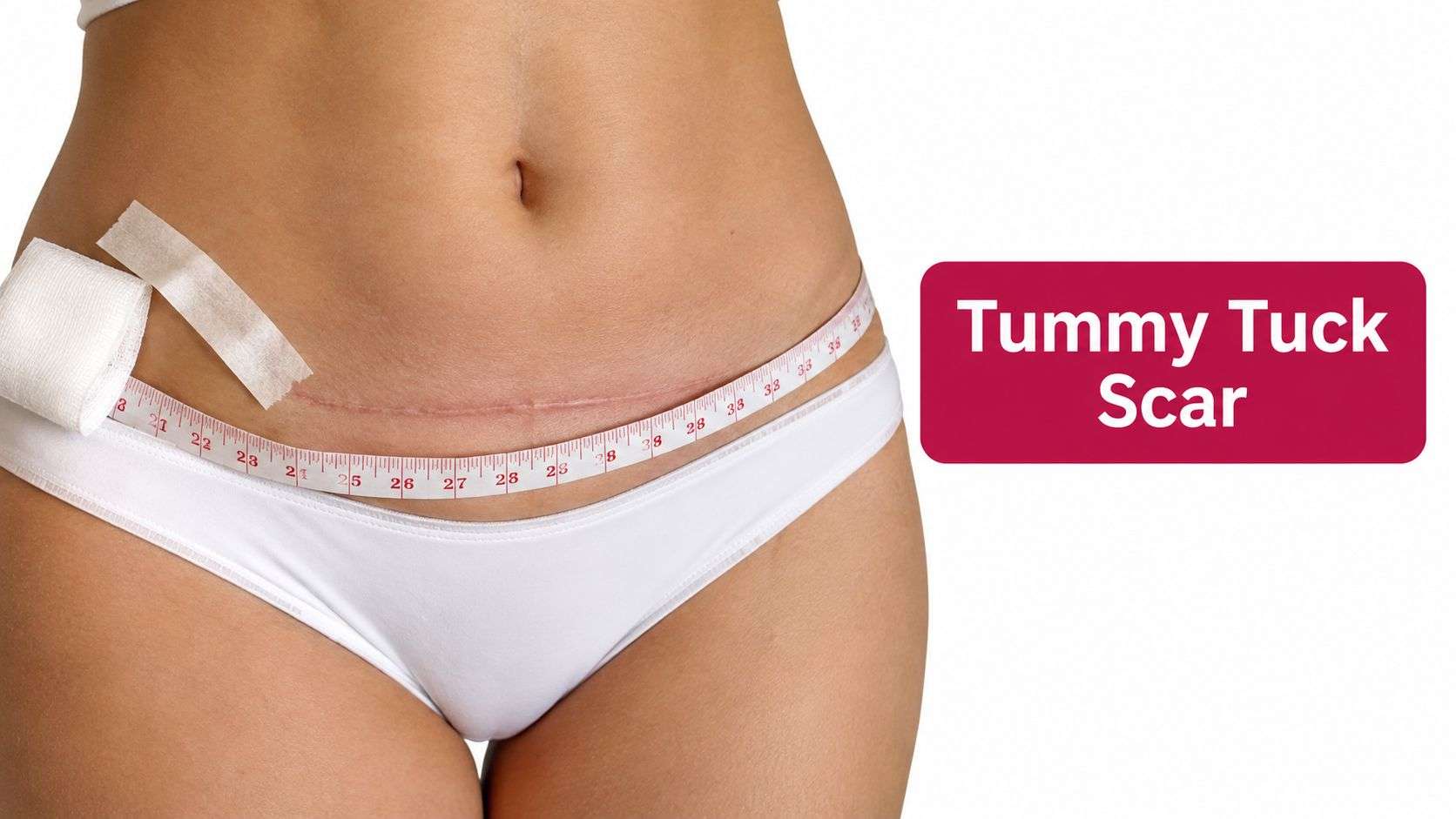
Many C-section patients are left with a frustrating “shelf” of skin and tissue that hangs over the scar. The scar itself may be bumpy, uneven, or tethered, creating an indentation. This happens because an OB/GYN’s priority is a safe delivery, not a perfect cosmetic closure.
A tummy tuck after C-section provides an opportunity for scar revision. We excise the problematic C-section scar along with the excess skin that creates the shelf. The new incision is placed very low on the abdomen and is carefully closed to heal as smoothly as possible. By repositioning the scar and removing the overhanging tissue, we create a flatter contour across your lower abdomen.
Repairing Abdominal Muscles (Diastasis Recti)
Pregnancy can cause your abdominal muscles to separate down the middle, a condition known as diastasis recti. This creates a weakened core and can cause a protruding abdomen or “pooch,” even at a healthy weight. This lack of abdominal wall stability can also contribute to back pain and poor posture.
During a tummy tuck, we surgically stitch the separated muscles back together, restoring core strength from the inside out. This is a structural repair that exercise alone cannot achieve once the muscles have significantly separated. The functional improvement is often as rewarding as the cosmetic one, with patients reporting they feel stronger and more stable. To see if you are a good candidate, you can learn about who qualifies for a Tummy Tuck.
The Right Time: Candidacy and When to Schedule Your Surgery
Timing is everything when planning a tummy tuck after a C-section. Your body needs to be fully healed and ready before undergoing another surgical procedure.

An ideal candidate for a tummy tuck after C-section has reached a stable weight for at least three to six months, as significant weight changes can alter the surgical results. You should be in good physical health and a non-smoker, as smoking severely impairs healing and increases complication risks.
Most importantly, you should be done having children. A future pregnancy will re-stretch the skin and muscles, potentially undoing the results of your surgery. Finally, having realistic expectations is key to a positive outcome. You can find more on ideal candidates for a tummy tuck from reputable sources.
How Long Should I Wait After My C-Section?
We recommend waiting at least 6 to 12 months after your C-section before having a tummy tuck. This waiting period is crucial for several reasons.
First, your body needs time to recover from major abdominal surgery. Your C-section incision must heal, and the scar tissue needs to mature. Internally, your uterus is involuting (shrinking), and your hormones are rebalancing, which affects weight and skin elasticity. Waiting also allows for weight stabilization, ensuring we are contouring your body at its new normal. This postpartum healing process is complex; you can find more info on postpartum healing to understand the changes your body undergoes.
Finally, the first few months with a newborn are demanding. A tummy tuck requires a significant recovery with activity restrictions, which is much more manageable when your baby is a bit older.
Can I Combine a Tummy Tuck with My C-Section?
The idea of a combined “C-tuck” seems efficient, but this is not a safe option, and we strongly advise against it. The medical community is nearly unanimous on this point.
A scientific study on combined procedures found significantly higher complication rates. Patients who combined the surgeries experienced:
- Wound infections at a rate of 18% (vs. 5% for separate procedures)
- Lower abdominal skin necrosis (tissue death) in 12% of cases
- Wound dehiscence (incision reopening) in 6% of cases
Furthermore, 32% of patients experienced outward bulging of the abdomen, and nearly a quarter had an outward-bulging belly button—the opposite of the desired outcome.
There are clear reasons for these risks. At the time of a C-section, your uterus is still enlarged, making it impossible to accurately assess your final abdominal contour. Combining procedures also means longer operative time, greater blood loss, and more complex anesthesia considerations. Asking your body to heal from two major surgeries while caring for a newborn is too much. Your safety and results are worth the wait.
Your Surgical Options: Types of Tummy Tucks and Mommy Makeovers
Once you’re ready to move forward, we’ll create a personalized treatment plan. There isn’t a single type of tummy tuck after C-section; the best approach depends on your unique anatomy and goals. During your consultation, Dr. Okoro will help you decide which option is right for you. You can explore our general philosophy on our Tummy Tuck (Abdominoplasty) in Atlanta page.
| Tummy Tuck Type | Incision Length | Area Treated | Muscle Repair | Navel Involved | Recovery Time |
|---|---|---|---|---|---|
| Mini Tummy Tuck | Shorter (above pubic area) | Lower Abdomen | Often optional, minor | No (or minor adjustment) | Shorter (1-2 weeks) |
| Full Tummy Tuck | Hip-to-hip (above pubic area) | Upper & Lower Abdomen | Yes, comprehensive | Yes, repositioned | Moderate (2-4 weeks) |
| Extended Tummy Tuck | Longer (hip-to-hip, extending to flanks) | Abdomen, Flanks, Lower Back | Yes, comprehensive | Yes, repositioned | Longer (3-6 weeks) |
Mini vs. Full vs. Extended Tummy Tuck
A Mini Tummy Tuck is the least invasive option, focusing only on the lower abdomen below the belly button. It’s ideal for addressing a small pooch or C-section shelf with minimal skin laxity. The incision is shorter, and recovery is generally quicker. You can read more on mini tummy tucks to see if this fits your needs.
A Full Tummy Tuck is the most common choice for post-C-section mothers. It addresses the entire abdomen, both above and below the navel. The hip-to-hip incision allows for comprehensive muscle repair (diastasis recti), removal of significant excess skin, and repositioning of the belly button for a natural look.
An Extended Tummy Tuck is for patients with excess skin that wraps around to the flanks (“love handles”) and lower back, often after multiple pregnancies or major weight loss. The incision is longer, extending around the hips to allow for more extensive contouring. While the recovery is longer, the results can be transformative.
What is a Mommy Makeover?
Pregnancy often affects more than just the abdomen. A Mommy Makeover is a personalized combination of procedures performed at the same time to address multiple concerns in a single recovery period.
A tummy tuck after C-section is often the foundation of a Mommy Makeover. It can be combined with other procedures like breast augmentation to restore lost volume, a breast lift to address sagging, or liposuction to remove stubborn fat from the hips, thighs, or back. The goal is a comprehensive rejuvenation custom to your specific needs. Learn more about how we can help you reclaim your Post-Pregnancy Body with a Mommy Makeover and see what’s included in a Mommy Makeover.
Recovery and Results for a Tummy Tuck After C-Section
Understanding the recovery process for your tummy tuck after C-section is key to a successful outcome. We will ensure you feel prepared for your healing journey.

Immediately after surgery, you’ll wear a supportive abdominal binder to reduce swelling and support your new contours. While drains were traditionally used to prevent fluid buildup, we often use advanced techniques for a drainless tummy tuck. This can lead to less discomfort and an easier recovery. We will discuss if this approach is right for you during your consultation.
You can expect discomfort, swelling, and bruising, which is normal. We will provide medication to manage any pain, which most patients find comparable to their C-section recovery. Following your activity restrictions is essential for proper healing. For a detailed guide, see our page on Tummy Tuck Recovery: What to Expect.
The Recovery Journey: What to Expect Week by Week
Recovery happens in stages. Knowing the timeline can help you plan accordingly.
First 2 Weeks: This is your primary healing phase. You will feel sore and tight, and you may walk slightly hunched over. Light walking is encouraged, but you will need help with daily tasks and childcare. Most patients with desk jobs can return to work after two weeks.
Weeks 3-6: You’ll feel much more like yourself as discomfort and swelling decrease. You can gradually increase your activity, but strenuous exercise and heavy lifting (including your children) are still off-limits.
6-8 Weeks and Beyond: Most patients are cleared to resume all activities, including exercise. However, full recovery, with all swelling resolved and scars matured, can take up to a year. The recovery journey resources from the American Society of Plastic Surgeons offer additional helpful information.
Long-Term Results and Maintenance
The results of your tummy tuck after C-section are designed to be permanent. The removed skin is gone for good, and the repaired muscles provide a permanent structural improvement to your core.
However, maintaining your results is a partnership. Maintaining a stable weight through a healthy diet and regular exercise is crucial to preserving your new contour. Significant weight gain can re-stretch the skin.
Future pregnancies will also compromise your results by stretching the skin and repaired muscles. This is why we strongly recommend waiting until your family is complete. If another pregnancy occurs, revision surgery may be needed. Think of your tummy tuck as a reset; a healthy lifestyle is key to protecting your investment. This guide to long-term results offers more valuable perspectives.
Navigating Costs, Risks, and Alternatives
Considering a tummy tuck after C-section involves practical considerations like cost, risks, and potential alternatives. We believe in full transparency to help you make an informed decision.
Understanding the Financial Investment
The cost of a tummy tuck typically ranges from $8,000 to $15,000. This fee covers the surgeon, anesthesia, facility fees, and post-operative garments. As this is a significant investment, we offer financing options to make your goals more accessible. We will provide a detailed cost breakdown during your consultation.
Being Realistic About Risks
All surgeries have risks. While uncommon, it’s important to be aware of potential complications such as infection, seroma (fluid collection), poor scarring, blood clots, and numbness or changes in skin sensation. Other risks include bleeding, skin necrosis, or asymmetry. We minimize these risks through meticulous surgical technique and comprehensive post-operative care, which we will discuss with you in detail.
Is a tummy tuck after C-section covered by insurance?
In most cases, no. A tummy tuck after C-section is considered a cosmetic procedure and is not covered by insurance. Rare exceptions may exist. A panniculectomy (removal of an overhanging pannus causing medical issues like rashes) may be partially covered if strict criteria are met. Similarly, the repair of a co-existing hernia might be covered. Coverage for diastasis recti is extremely rare and requires documentation of severe functional impairment. It is best to check with your insurance provider directly, but expect to cover the cost out-of-pocket.
Alternatives to Surgery
If you’re not ready for surgery, there are other options. A healthy lifestyle with diet and core-strengthening exercises is foundational, but it cannot remove excess skin or surgically repair separated muscles.
Non-surgical body contouring treatments like fat freezing or radiofrequency can address very minor fat pockets or mild skin laxity. However, their results are limited and cannot achieve the dramatic improvements of a tummy tuck, especially for significant loose skin or muscle separation. When surgery is necessary to address these concerns, non-surgical options will not provide a satisfactory outcome. We will honestly assess your needs and help you determine the best path forward.
Frequently Asked Questions about Tummy Tucks After a C-Section
Considering a tummy tuck after C-section naturally brings up many questions. Here are answers to some of the most common ones.
How painful is a tummy tuck after a C-section?
Discomfort is expected, but it is manageable. Most patients compare the soreness and tightness to their C-section recovery. The pain is most noticeable in the first week and subsides significantly after that. We will provide a comprehensive pain management plan to keep you comfortable.
Will I have a new scar?
Yes, but a tummy tuck provides an opportunity for scar improvement. In most cases, your C-section scar is removed along with the excess skin. The new scar is carefully placed very low on the abdomen, so it can be easily hidden by underwear or a bikini bottom. With proper care, it will fade to a thin, pale line over time.
Can I have more children after a tummy tuck?
Physically, yes—a tummy tuck does not affect fertility. However, we strongly advise against it. A future pregnancy will re-stretch the skin and abdominal muscles, compromising your surgical results. To ensure your results are long-lasting, we recommend waiting until you are done having children before undergoing the procedure.
Reclaim Your Confidence with a Post-Pregnancy Tummy Tuck
Motherhood is transformative, but the physical changes from pregnancy and a C-section can leave you feeling disconnected from your body. If you’re struggling with excess skin, separated muscles, or a C-section scar, a tummy tuck can help you feel like yourself again.
A tummy tuck after C-section is about more than aesthetics; it’s about restoring the confidence to live your life fully. At Georgia Plastic & Reconstructive Surgery, Dr. Okoro, our board-certified plastic surgeon, provides a personalized approach, listening to your goals to deliver natural-looking results while prioritizing your safety.
Key takeaways to remember:
- Wait at least 6-12 months after your C-section.
- Be at a stable weight and finished with family planning.
- Choose a board-certified plastic surgeon who specializes in post-pregnancy procedures.
- A tummy tuck can remove excess skin, repair muscles, and improve or eliminate your C-section scar.
Your body has performed a miracle. If the physical results are holding you back, we are here to help restore not just your body, but your confidence.
Considering a Tummy Tuck? Contact Us to schedule your consultation with Dr. Okoro today. Let’s work together to help you achieve the confidence you deserve.