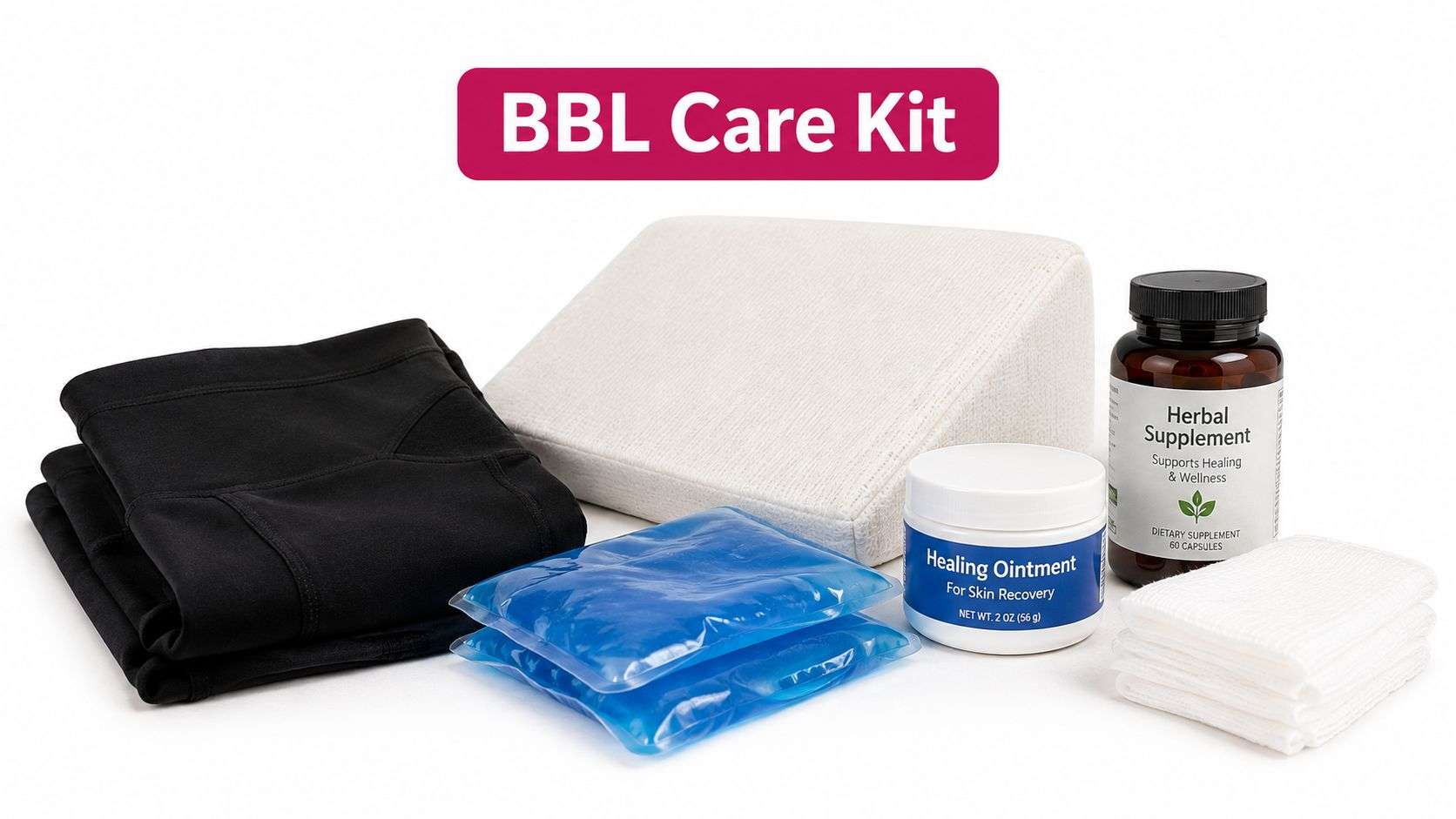
You're getting ready for a Brazilian butt lift, and the details that seemed minor before surgery can matter once you're home, sore, and moving carefully. A BBL post-op care kit should be assembled before surgery day, not after you arrive home in pain or with limited mobility. Set up the supplies where you'll sleep and recover, and ask someone who's helping you to learn where each item is and how to reach your surgeon.
This guide organizes seven useful categories around the practical challenges of early recovery, including pressure avoidance, swelling, wound care, sleep positioning, bowel discomfort, and drainage. Some choices depend on your surgeon's protocol, your measurements, your home setup, and whether you're traveling. Use this list to prepare, then confirm each product and instruction with your surgical team. A kit supports recovery, but it doesn't replace medical supervision or urgent care when symptoms need evaluation.
Table of Contents
- 1. Post-Operative Compression Garment (Stage 1 and Stage 2)
- 2. BBL Seat Cushion (Donut or U-Shaped Cushion)
- 3. Silicone Scar Treatment Sheets and Gels
- 4. Positioning Pillows and Wedges for Sleeping
- 5. Stool Softeners and Gentle Laxatives
- 6. Incision Care Supplies (Gauze, Saline, Dressings, and Prescribed Ointments)
- 7. Disposable Absorbent Underpads and Protective Liners
- 7 Essential BBL Post-Op Care Kit Items Compared
- Build Your Kit, Then Follow Your Surgeon's Protocol
1. Post-Operative Compression Garment (Stage 1 and Stage 2)
A compression garment supports the areas treated with liposuction and can help manage swelling. It should fit the treatment plan, not just your usual clothing size. Your measurements may change with swelling, so follow your surgeon's sizing guidance and ask which garment style and compression level they want you to use.
Some practices use a two-stage approach: an initial garment followed by a different garment as recovery progresses. Don't assume when to switch or how many hours to wear either one. Ask for a clear schedule, including when to remove the garment for bathing, dressing changes, or skin checks.
Fit and access matter
Choose a garment that gives the surgical team access to the areas they need to examine and that you can put on without excessive bending or pulling. If the garment has closures, check that you or your caregiver can manage them while you're sore. A backup garment makes it easier to keep one clean while the other is being washed.
- Follow the prescribed schedule: Don't add extra compression or extend wear time on your own.
- Check comfort and skin: Tell your team about numbness, skin irritation, worsening pain, or breathing discomfort.
- Keep pressure off grafted areas: A garment for liposuction sites isn't permission to press directly on the buttocks.
Practical rule: Ask your surgeon to distinguish compression for donor areas from positioning measures that protect the grafted buttocks.
For practical details on garment selection and care, review post-operative shapewear guidance. Prepare the garment before surgery and bring it to any fitting or pre-op appointment if your practice asks you to.
2. BBL Seat Cushion (Donut or U-Shaped Cushion)
A BBL cushion helps make necessary sitting more manageable by shifting weight away from the buttocks. It doesn't make unrestricted sitting safe. Cleveland Clinic guidance says patients generally can't sit or lie directly on the buttocks for at least two weeks, and may need a specially designed cushion for short periods of sitting. Follow your surgeon's specific instructions, which may differ based on your procedure and recovery.
A U-shaped cushion or a cushion with a cutout can direct weight toward the thighs. Before surgery, test it on the chair you expect to use, then check that your thighs bear your weight and the cushion doesn't press against incision sites. Keep a washable cover or spare cushion available, especially if drainage is part of your recovery plan.
Plan for real-world sitting
Think beyond the sofa. You may need a safe setup for a car ride, a brief appointment, or an essential task at home. If you're traveling to Atlanta for surgery, ask your practice how to manage the trip home and whether the cushion you plan to use is appropriate for your route.
Don't improvise by piling up soft pillows. They can shift, tilt your pelvis, or leave you balancing awkwardly. A cushion should be stable on the chair and easy to position, and you should know how to get up without pushing through the area your surgeon wants protected.
“A cushion supports a restricted sitting plan. It doesn't cancel the restriction.”
For a sense of how sitting restrictions fit into recovery, read this week-by-week BBL recovery guide. Ask your surgeon when you may use the cushion and how long you may sit at a time.
3. Silicone Scar Treatment Sheets and Gels
Silicone sheets or gels belong in the kit for later, not for fresh incisions. Start only when your incisions are fully closed and dry and your surgeon approves. Applying a product too early can interfere with wound care, so keep it separate from gauze and dressings until your care team says it's appropriate.
Once cleared, silicone can be applied to closed scars according to the product directions and your provider's advice. Medical-grade sheets, such as Mepiform, and silicone gels are common options. Choose a product that you can keep clean and use consistently, and ask your surgeon which form works best for the locations of your incisions.
Make scar care easy to maintain
Keep the skin clean and dry before applying a sheet or gel. If a sheet irritates your skin or won't stay in place, stop and ask your care team what to try instead. Don't place silicone over open areas, scabs, or wounds that are still draining.
Sun protection also matters as scars heal. Cover the area when practical and ask your clinician what protection is suitable for the location and stage of healing. Don't add creams, oils, or other scar products to your routine without checking that they're compatible with your surgeon's instructions.
A small labeled pouch helps prevent confusion: keep silicone products apart from wound supplies, and write down the date your surgeon says you can start. For more guidance on timing and product use, see scar care after surgery. Bring questions about redness, raised scars, or persistent irritation to a follow-up rather than trying to treat a changing incision yourself.
4. Positioning Pillows and Wedges for Sleeping
Sleeping can be difficult when your usual position puts pressure on the grafted buttocks. Prepare your bed before surgery with the pillows your surgeon recommends, so you aren't arranging them while tired and uncomfortable. A wedge behind your upper body, a body pillow beside you, or a pillow between your knees may help you stay in an approved position.
Your instructions should determine whether you sleep on your stomach, side, or another position. Don't assume that one position is right for every patient. Cleveland Clinic guidance notes that patients generally need to avoid lying directly on the buttocks during early recovery, so ask your surgeon to explain how that applies to your sleep setup.
Set up the room before you need it
Try the arrangement while you're still feeling well. Check that you can get in and out of bed safely, that the pillows won't slide, and that your phone, water, medications, and instructions are within reach. If lying flat is uncomfortable and your surgeon approves it, a wedge or recliner-style setup may help you rest without scrambling for extra support.
- Stabilize your position: Use pillows to reduce rolling into a restricted position.
- Keep a clear path: Move cords and clutter so you can get up with help.
- Change positions carefully: Follow your care team's guidance for safe movement.
Don't stack pillows in a way that strains your back or makes it hard to breathe comfortably. Ask a caregiver to help adjust the setup, and tell your surgeon if pain or discomfort prevents you from following the positioning plan.
5. Stool Softeners and Gentle Laxatives
Anesthesia, reduced movement, and some pain medicines can contribute to constipation. Straining can make an already uncomfortable recovery harder, so ask your surgeon before surgery whether to keep a stool softener or gentle laxative at home. Don't choose a product or dose based on someone else's instructions; medication plans vary, and some products may not be right for you.
Place the approved product with your medication organizer and write down when you're meant to take it. If you're prescribed an opioid, ask whether the bowel plan should begin alongside it. Keep water within reach and include fiber-containing foods as your appetite and care instructions allow.
Support bowel function without guesswork
Gentle movement may help, but walk only as your provider allows and have assistance available if you feel unsteady. Don't take additional laxatives, supplements, or remedies without checking with your surgical team, especially if you're taking other medication or have a medical condition that affects bowel function.
Call your provider if constipation persists, or if you develop severe bloating or abdominal pain. Keep the office number easy to find rather than waiting until discomfort becomes difficult to manage. A short medication and symptom log can help your care team understand what you've taken and when.
Prepare the bathroom, too. Put needed supplies within easy reach and make sure the route from your recovery space is clear. These small adjustments can reduce unnecessary bending and help you avoid rushing when you're still moving cautiously.
6. Incision Care Supplies (Gauze, Saline, Dressings, and Prescribed Ointments)
Small liposuction incisions and access sites may need dressings or monitoring during early recovery. Prepare the supplies your surgical team recommends, such as gauze, tape, saline, gloves, or a prescribed ointment. Don't add antiseptics, creams, or oils unless your provider has approved them.
Store everything together with your written instructions and your surgeon's contact details. A caregiver can help with dressing changes if your team advises it, but they should follow the practice's directions rather than relying on general advice. Wash hands before touching dressings or incisions, and keep supplies clean and easy to reach.
Track changes, don't self-diagnose
Use a simple log to record dressing changes, drainage, and new symptoms. This can help you give your team clear information at follow-up. If your care instructions allow photos, follow their privacy and storage guidance.
Contact your provider promptly about spreading redness, warmth, foul odor, fever, increasing pain, or bleeding that concerns you. For severe symptoms or an emergency, follow the emergency instructions from your surgical team. Don't wait for a routine appointment to ask about a sudden change.
Keep the wound-care kit in a clean, dry place, separate from used dressings. If you're recovering away from home, pack the supplies you've been told to use and confirm how to reach your surgeon after hours. For additional practical guidance on dressing care at home, see this home wound-care and dressing resource.
7. Disposable Absorbent Underpads and Protective Liners
Underpads protect beds and car seats if dressings or small incision sites leak. They also make it easier to keep your recovery space clean when bending and changing sheets feels difficult. Keep a stack near the bed and, if you'll be traveling, pack clean pads in a separate bag from used clothing or supplies.
Use a pad on a surface where your surgeon's instructions allow it, and change it when it becomes wet or soiled. A damp pad left against skin can cause irritation, and used pads shouldn't be treated as wound dressings. If drainage is heavier than expected or changes in a concerning way, contact your surgical team.
Keep the setup secure
A loose pad can slide when you get in or out of bed. Secure it beneath a fitted sheet or place it on a stable seat surface, and check that it doesn't create a trip hazard. Keep spare pads and disposable gloves nearby so a caregiver can change the setup without searching through bags.
Don't remove or replace a dressing just because a pad has collected fluid. Follow the dressing schedule provided by your surgeon, and ask what to do if a dressing becomes saturated. If you're traveling home after surgery, confirm what supplies to bring and how to manage a leak or dressing change during the trip.
Underpads are a practical backup, not a substitute for monitoring. Note the amount and appearance of drainage if your team asks you to, and report unexpected changes rather than trying to manage them with extra layers.
7 Essential BBL Post-Op Care Kit Items Compared
| Recovery Item | Implementation Complexity | Resource Requirements | Expected Outcome | Ideal Use Case | Key Advantage |
|---|---|---|---|---|---|
| Post-Operative Compression Garment (Stage 1 and Stage 2) | Moderate; requires correct sizing and adherence to the surgeon's wear schedule | Medical-grade garments; often two stages and a spare for washing | Supports swelling management and tissue contouring during healing | Early recovery after BBL, liposuction, or abdominal procedures | Provides sustained, surgeon-specified compression |
| BBL Seat Cushion (Donut or U-Shaped Cushion) | Low; positioning must keep weight on the thighs rather than the buttocks | Supportive, portable cushion with a washable cover | Helps reduce direct pressure on grafted areas while sitting | Car rides, home seating, or work when sitting is approved | Makes sitting restrictions more manageable |
| Silicone Scar Treatment Sheets and Gels | Low; use consistently after incisions are fully closed and approved for treatment | Silicone sheets or gel; routine skin cleaning | May improve scar texture and appearance over weeks or months | Scar care after incisions have healed | Non-invasive and simple to use at home |
| Positioning Pillows and Wedges for Sleeping | Low to moderate; requires a suitable setup and maintaining approved positions | Wedge or body pillows with washable covers | Helps maintain prescribed sleeping positions and improve comfort | Resting while avoiding pressure on the buttocks, as directed | Supports positioning throughout rest |
| Stool Softeners and Gentle Laxatives | Low; product and dose should be confirmed with the provider | Recommended medication; fluids and fiber as tolerated | May reduce constipation-related straining and discomfort | Recovery involving reduced mobility or opioid pain medication | Helps manage a common post-operative concern |
| Incision Care Supplies (Gauze, Saline, Dressings, and Prescribed Ointments) | Moderate; requires clean technique and following wound-care instructions | Sterile gauze, dressings, saline, tape, gloves, and only approved topical products | Supports dressing care and monitoring for changes in healing | Early recovery when incisions or drainage sites need care | Keeps wound-care essentials organized at home |
| Disposable Absorbent Underpads and Protective Liners | Low; place on surfaces and replace when soiled or saturated | Disposable pads in suitable bed, chair, or travel sizes | Helps contain drainage and protect bedding or furniture | Early recovery, especially when drainage is present | Reduces laundry and surface cleanup |
Build Your Kit, Then Follow Your Surgeon's Protocol
The best BBL post-op care kit is personalized, organized, and ready before surgery day. Use the seven categories above to prepare, then confirm the product, fit, timing, and use of each item with your surgical team. Keep your written instructions, medication plan, and contact numbers together where you and your caregiver can reach them.
Think of the kit as part of a recovery system, not a shopping list. A cushion supports pressure avoidance, positioning aids help you follow sleep instructions, and dressings and underpads help you manage incision care and drainage. But products can't assess a wound, adjust a medication plan, or determine whether a symptom needs urgent evaluation.
Ask your surgeon how to handle daily tasks that can complicate recovery, including getting into a car, using the bathroom, changing dressings, and arranging help at home. Make sure the person supporting you knows how to contact the practice and what symptoms require a prompt call or emergency care. If you're traveling for surgery, confirm your follow-up schedule, transportation and lodging plans, and how you'll reach the clinical team after you leave the area.
Georgia Plastic & Reconstructive Surgery provides BBL recovery guidance and patient education resources for people considering body-contouring procedures. Its recovery information addresses topics such as positioning, compression, incision care, medication schedules, and sitting restrictions. Review those resources with your surgeon, then use the practice's guidance alongside the specific plan given for your procedure.
Before surgery, lay out your supplies and test your recovery setup. Ask your care team to review anything you're unsure about, especially compression fit, sitting restrictions, wound products, and medication use. A prepared kit can make early recovery more manageable, while following your surgeon's instructions keeps the plan grounded in your care.
Georgia Plastic & Reconstructive Surgery offers BBL procedures, recovery guidance, and patient education resources for people preparing for surgery in the Atlanta area. Visit Georgia Plastic & Reconstructive Surgery to explore its BBL information and plan a consultation with the practice.