Most visible swelling and bruising improves in 10–14 days, with many people returning to desk work in 1–2 weeks. Near-full social recovery commonly takes 4–6 weeks, while the final contour may continue settling for 3–6 months as residual swelling clears and the skin contracts.
You may be asking this while looking at your calendar, checking upcoming meetings, photos, or a social event and wondering whether chin liposuction will leave you visibly swollen for weeks. The answer depends on which kind of recovery you mean. You may feel well enough to work before your jawline looks finished, and you may look presentable before the deeper tissues have completed their healing.
That difference is the key to understanding chin liposuction recovery time. The early phase is about controlling swelling, protecting the small incision sites, and returning safely to ordinary movement. The later phase is about tissue remodeling, firmness fading, skin retraction, and the final shape becoming easier to judge.
Table of Contents
- What Chin Liposuction Recovery Really Means
- How Your Chin and Neck Heal After Liposuction
- Chin Liposuction Recovery Timeline Week by Week
- Immediate Aftercare That Speeds Healing
- Activity Restrictions and When to Return to Normal Life
- Complications to Watch For and Who Heals More Slowly
- Your Follow Up Schedule and Tips for the Best Result
What Chin Liposuction Recovery Really Means
The morning after surgery, you might be able to walk around your home, answer messages, and prepare something simple to eat. Then you catch your reflection and notice that your chin looks fuller than expected. Bruising may be visible, the skin may feel tight or numb, and the compression garment can make your face feel unfamiliar.
That first impression often causes unnecessary worry. Early swelling can temporarily hide the fat reduction that was performed. Recovery is moving forward even when the mirror doesn't yet show the final benefit.
Two recovery clocks
Think of recovery as two clocks running at the same time.
Social recovery describes when you can comfortably return to work, errands, routine conversations, and ordinary social contact. Many patients return to work or routine social activities within 1–2 weeks, while visible swelling and bruising often improve substantially during the first 10–14 days. These estimates are summarized in an independent review of submental fat reduction literature and contemporary clinical recovery guidance, including the published review of submental fat reduction recovery.
Biologic recovery describes when the tissues have largely completed swelling reduction, lymphatic fluid clearance, skin contraction, and contour refinement. Near-full recovery is often placed around 4–6 weeks, but the final chin and neck shape may continue emerging for 3–6 months as residual edema and tissue remodeling settle, as described in contemporary chin liposuction swelling guidance.
Practical rule: Being ready to sit at your desk doesn't mean you're ready to judge the final result.
Why the face can look better before it is healed
The chin and neck generally involve a smaller treatment area than larger body liposuction procedures, so everyday function often returns relatively quickly. However, the tissues still need time to clear fluid and adapt to the new contour. Firmness, mild numbness, pulling, and uneven-looking swelling can make the jawline appear unfinished even after bruising has faded.
The useful question isn't just, “When can I go back to work?” Ask two questions instead:
- When will I be functional and presentable?
- When will the contour be stable enough to evaluate?
The week-by-week timeline below keeps those answers separate, so an early improvement doesn't create unrealistic expectations about the final shape.
How Your Chin and Neck Heal After Liposuction
Your body treats liposuction as a controlled tissue injury. The procedure removes localized fat through a small cannula, but the surrounding tissues still respond with inflammation, fluid movement, and gradual repair.
A simple analogy helps. Think of the treated area as a sponge that has been handled and reshaped. It temporarily holds extra fluid, then slowly releases that fluid through the lymphatic system. Meanwhile, the skin and connective tissues adapt to the reduced volume beneath them.
The early swelling response
Swelling commonly peaks during the first 24–72 hours, then starts to decline during the first week. This pattern is described in patient recovery guidance for chin and neck liposuction. Bruising follows its own fading process, and both may improve before all deeper swelling has disappeared.
Compression and elevation support this transition. A compression garment applies gentle, even pressure to the treated area, while head elevation uses gravity to reduce fluid pooling in the face and neck. These measures don't instantly remove swelling. They help create conditions in which fluid can move away from the surgical area more efficiently.
Why firmness and numbness can linger
Temporary numbness or altered sensation can occur because the small sensory nerves in the treated area have been disturbed by swelling and instrumentation. Firmness may reflect healing tissue and residual edema rather than remaining fat. As these changes resolve, the skin can gradually contract over the underlying contour.
The visible surface doesn't always reveal what is happening below it. A chin may look smoother while still feeling firm, or it may look uneven from one day to the next because fluid distribution changes as you move through recovery.
For broader context about how submental contouring can affect the profile, you can review the discussion of neck liposuction benefits.
What normal healing usually feels like
Expected early experiences can include:
- Swelling and bruising: These are often most noticeable during the first few days and then gradually improve.
- Tightness: The skin may feel pulled or unusually firm as swelling and compression interact.
- Temporary numbness: Sensation can return gradually rather than all at once.
- Mild tenderness: The area may feel sensitive with touch, clothing, or movement.
- Changing appearance: One day may look better than the next without indicating a problem.
Contact your surgical team if pain is severe or worsening, swelling becomes suddenly pronounced, the incision develops concerning drainage, or you develop symptoms that feel distinctly different from the expected recovery pattern. Your own postoperative instructions should take priority over any general timeline.
Chin Liposuction Recovery Timeline Week by Week
A calendar can help you plan, but it shouldn't replace instructions from your surgeon. The stages below describe the general pattern, while your treatment extent, anatomy, and postoperative findings may shift the pace.
First 72 hours
This is usually the most swollen and bruised phase. The chin and neck may feel tender, tight, numb, or heavy, and the compression garment can feel restrictive. Resting with your head raised, using cold compresses as instructed, and limiting unnecessary activity can make this period more manageable.
Short, gentle movement around the home may be appropriate if your team permits it. Avoid repeatedly bending over, pressing on the treated area, or checking the mirror every few minutes. The appearance is too early to interpret.
Week 1
During the first week, swelling often begins to fall after its initial peak. Bruising may remain visible, but many people notice that discomfort becomes easier to manage. Compression remains central because the tissues are still adapting and fluid can collect beneath the skin.
Some patients can work from home or return to desk-based tasks during this stage, depending on how they feel and how much visible swelling their work involves. A public-facing role, important presentation, or event may require more planning than quiet computer work.
Weeks 2 to 3
By this point, bruising often fades and swelling becomes less obvious. Light activity may feel comfortable, but the jawline can still look softer or fuller than expected because residual edema remains.
This is often the stage when people say they look “mostly normal” while still noticing firmness or numbness. That distinction matters. Improvement is real, but the contour isn't necessarily ready for final evaluation.
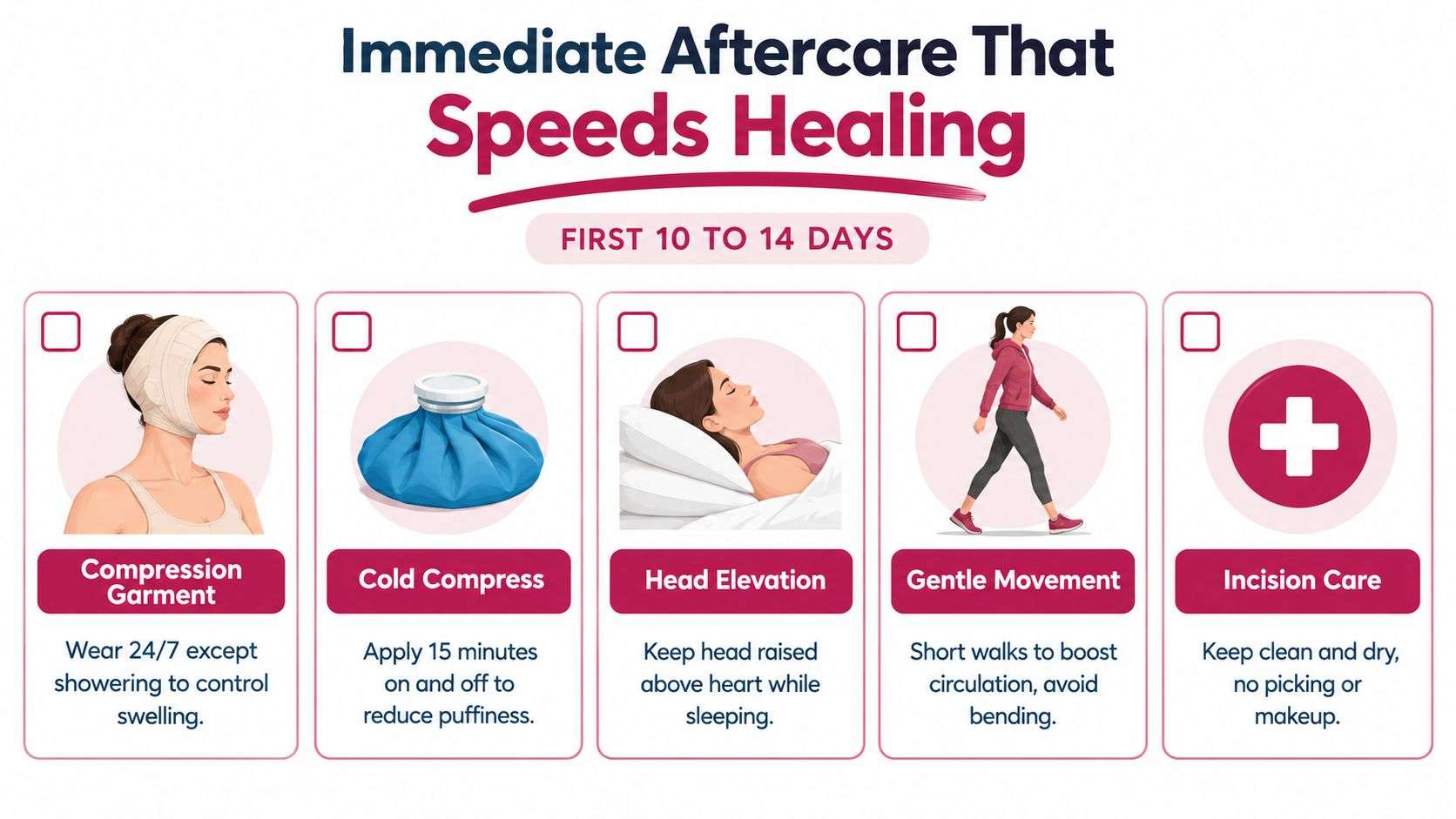
Weeks 4 to 6
Most visible puffiness may be substantially improved by this stage, and the jawline often begins to show clearer definition. Near-full social recovery is commonly discussed in the 4–6 week range, although some people still notice firmness or mild swelling.
Strenuous exercise is often reintroduced gradually rather than resumed abruptly. Your surgeon may assess incision healing, contour symmetry, sensation, and whether compression or other supportive care should continue.
Months 2 to 6
The later phase is quieter but important. Residual swelling can continue to resolve, skin can retract, and the neck and jawline may become more refined. Final contour may emerge across 3–6 months, and some recovery guidance notes that swelling can persist for several months before the endpoint is clear, as outlined in submental liposuction recovery guidance.
Don't judge the result from a single photograph or a single morning. Compare progress over time and attend scheduled reviews, especially if firmness, asymmetry, or swelling seems stalled.
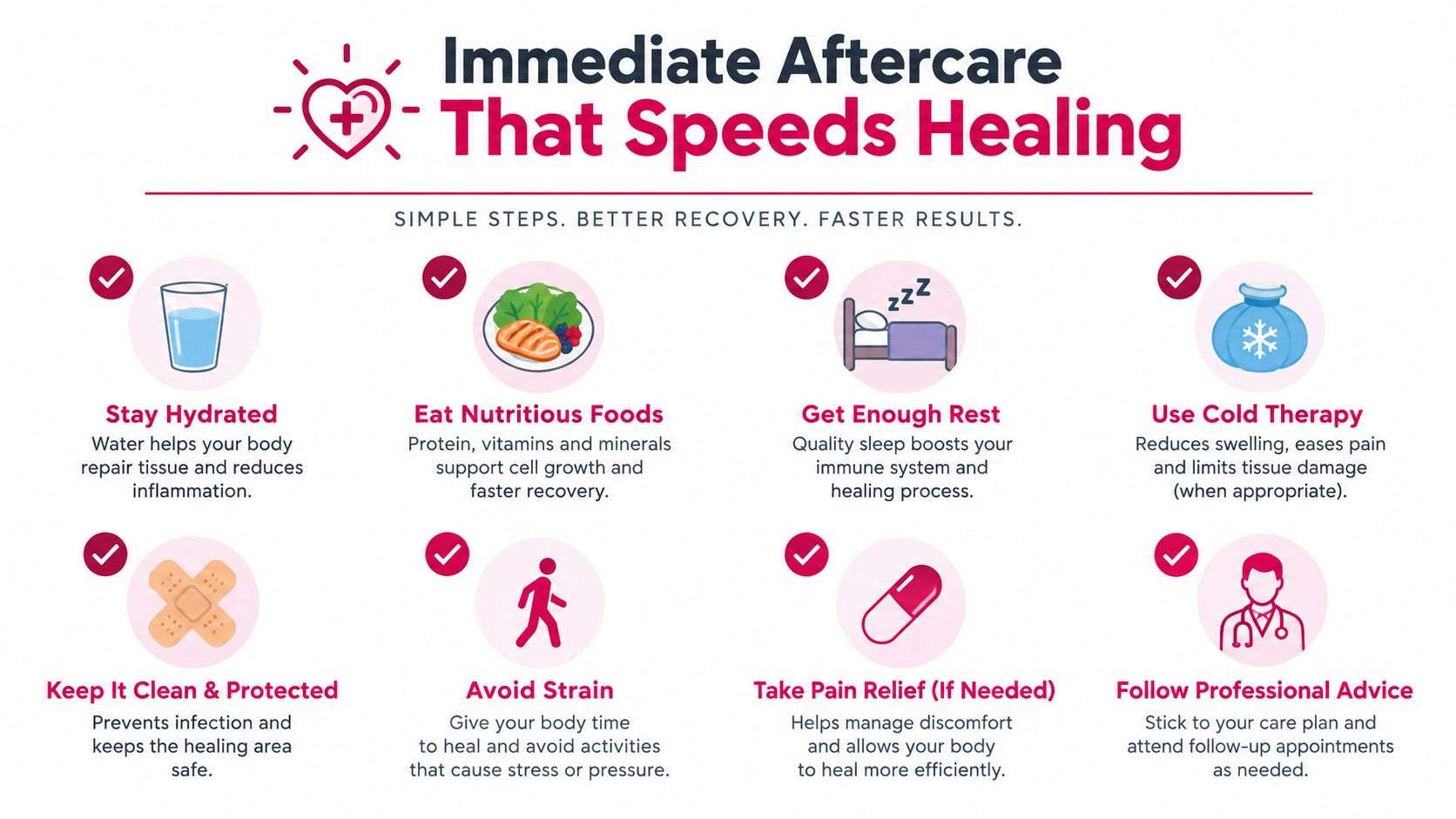
Immediate Aftercare That Speeds Healing
The first 10–14 days are when your routine has the greatest effect on comfort and swelling. Your face may look presentable before the biologic healing is complete, so treat aftercare as protection for the developing contour. Follow your surgeon's instructions whenever they differ from general guidance.
Compression comes first
A compression band or garment supports the treated area while swelling builds and gradually clears. One published instruction set recommends wearing a chin compression band for at least 10 hours per day for 10 days, together with cold compresses and a raised head position, as described in postoperative chin liposuction instructions.
Your surgeon may prescribe another schedule, such as near-continuous wear followed by nighttime use. The fit should feel supportive, not painfully tight. Extra pressure can increase discomfort and irritate the skin, so do not adjust it beyond the prescribed fit.
Keep your head raised
Sleep with your head and upper body raised in the position your care team recommends. This position can limit fluid pooling overnight, when lying flat may make morning puffiness more noticeable.
Consistency matters more than adding extra compression. If the setup makes sleep difficult, ask your team how to change it safely.
Use cold carefully
Cold compresses may ease early puffiness and discomfort. Place a protective layer between the cold source and your skin, and follow the timing provided by your surgeon. Numbness can hide excessive cold, so never place ice directly on the skin or sleep with a cold pack in place.
Protect the incisions
Clean and dry the incision areas as instructed. Avoid picking scabs, applying makeup before clearance, or using unapproved creams and massage methods. Even small openings need protection while the skin barrier repairs.
Keep movement gentle
Short, easy walks may support comfortable circulation without the tissue movement and increased blood flow linked with strenuous activity. Avoid heavy lifting, forceful bending, and anything that makes the neck throb or swelling increase.
Massage requires specific clearance. For background on post-surgical lymphatic drainage massage, review guidance before arranging or performing a technique. For general education about recovery-focused muscle care and topical massage products, see yuve's guide to muscle recovery. Neither resource replaces instructions from your surgical team.
Drink fluids and eat ordinary nourishing meals to support recovery. Do not use food or supplements in place of prescribed care. Ask before taking any product that could affect bleeding, bruising, or medication interactions.
Activity Restrictions and When to Return to Normal Life
Three timelines overlap after chin liposuction. Your body may tolerate an activity before swelling has settled, and you may look presentable before the final contour is set. Plan each return based on the activity, your symptoms, and your surgeon's clearance.
| Activity | Days 1-7 | Weeks 2-3 | Weeks 4-6+ |
|---|---|---|---|
| Desk work | Often possible when comfort, medication effects, and visible swelling allow | Commonly manageable, with breaks and a head-up position when practical | Usually unrestricted if healing is progressing |
| Driving | Wait until you can turn your head safely, react quickly, and are not affected by prescribed pain medicine | Resume only if your surgeon's instructions and your comfort permit | Typically easier once neck movement feels normal |
| Walking | Short, gentle walks may be appropriate | Increase gradually if swelling does not flare | Progress toward ordinary activity as cleared |
| Exercise | Avoid strenuous exercise, bending, and heavy lifting | Light activity may be introduced with approval, but intensity should remain limited | Gradual return to harder exercise after clearance |
| Sleep position | Keep your head raised and avoid pressure on the treated area | Continue this position if it reduces morning swelling | Return to a comfortable position when approved |
| Makeup or shaving | Protect incisions and wait for clearance | Resume cautiously around healed areas | Usually normal once the skin is fully healed |
During the first week, comfort and swelling usually set the pace. In the next two weeks, normal walking and desk work may become easier, but a sudden increase in puffiness after activity means the tissues need more recovery time. Strenuous exercise is commonly deferred for 3–6 weeks because increased blood flow and tissue motion can worsen swelling and prolong visible recovery. Your surgeon's assessment determines the right timing for you.
Social recovery follows a different clock. You might feel physically comfortable at a gathering while still noticing fullness in close-up photographs, bright lighting, or a high-collar outfit that rubs against the garment. For an important event, allow for lingering swelling rather than using the earliest return-to-work date as your photo-ready date.
A useful checkpoint is how your neck responds the following morning. If swelling, throbbing, or tightness is clearly worse, reduce the activity and ask your surgical team when uncertain. For related guidance on planning recovery after a broader neck procedure, see tips for navigating neck lift recovery.
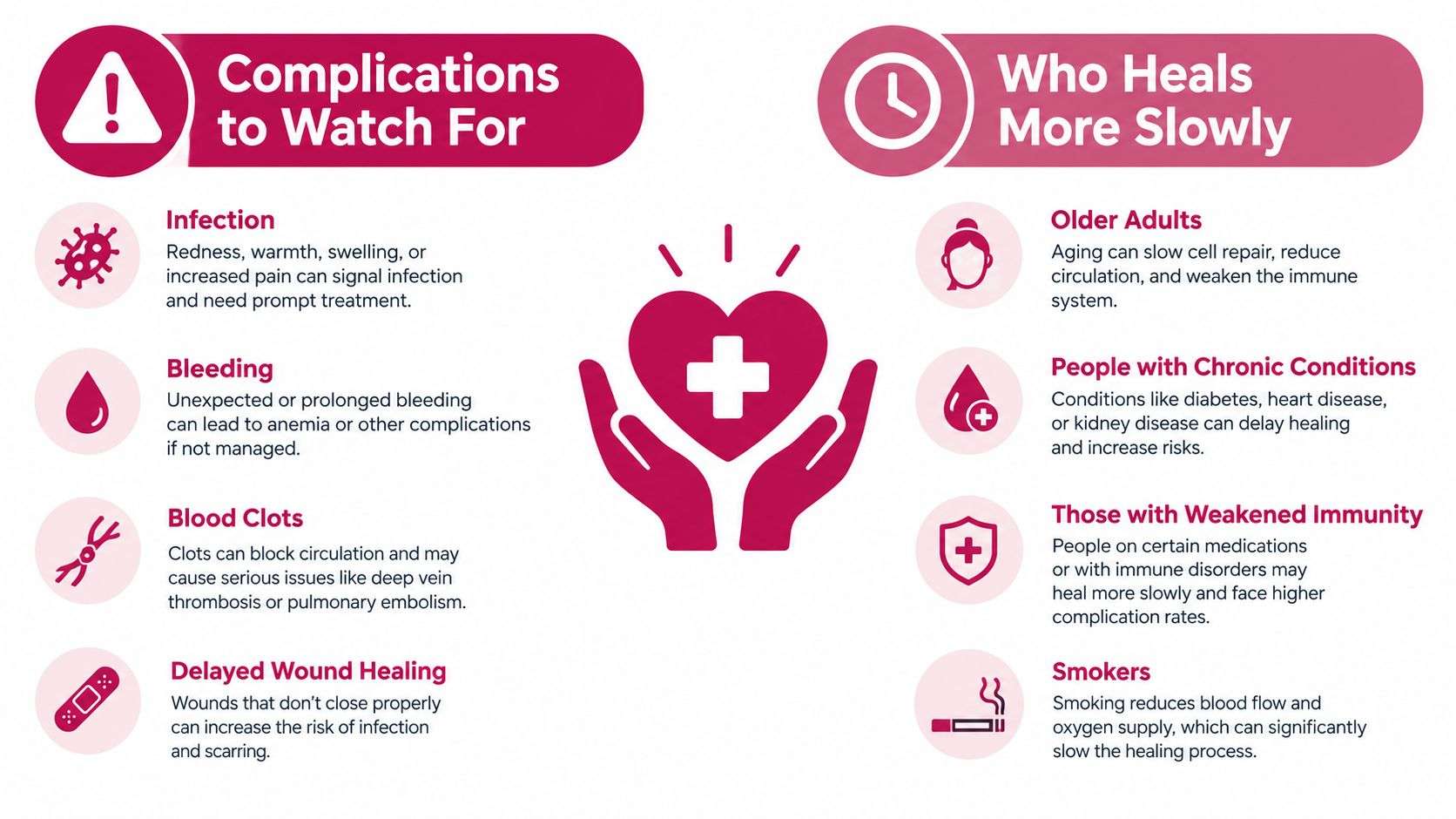
Complications to Watch For and Who Heals More Slowly
Swelling, bruising, firmness, tightness, and temporary numbness can all occur during ordinary healing. The concern is less about having any swelling and more about a pattern that is suddenly worsening, unusually painful, associated with systemic symptoms, or clearly different from what your team described.
A 2025 systematic review of adverse events after submental aesthetic liposuction found that minor events represented 74.8% of reported complications, with seromas at 21.1%, surface irregularities or asymmetry at 19.1%, and platysmal banding at 18.5%, as reported in the systematic review indexed by PubMed. These figures describe complications in the reviewed evidence, not your personal risk, and they show why recovery shouldn't be reduced to a promise that everyone is back to normal in a week.
Symptoms that deserve a call
Contact your surgical team promptly about:
- Sudden swelling: A rapid or one-sided increase deserves assessment.
- Escalating pain: Pain that becomes severe or stops improving isn't something to ignore.
- Skin or wound changes: Spreading redness, concerning drainage, wound separation, or skin color changes require medical advice.
- Systemic symptoms: Fever, chills, or feeling acutely unwell should prompt contact.
- Breathing or swallowing difficulty: Seek urgent medical attention for these symptoms.
- Persistent or troubling asymmetry: Early unevenness may reflect fluid, but your surgeon should evaluate changes that remain concerning.
Don't diagnose a seroma or contour irregularity from a mirror. Your surgeon may need to examine the area and decide whether observation, additional care, or treatment is appropriate.
Why some people heal more slowly
Recovery can vary with skin laxity, preexisting neck anatomy, the amount and distribution of fat, cannula size and technique, and combined procedures. Skin with less elastic recoil may need more time to contract, while a more complex treatment plan can create a longer period of swelling.
Some people also notice more pronounced numbness, firmness, or fluid retention without having done anything wrong. Individual biology matters. Follow-up is how your surgeon separates normal variation from a problem that needs intervention.
Your Follow Up Schedule and Tips for the Best Result
Your follow-up schedule should be set by the operating surgeon, since it depends on the technique, incision care, compression plan, and your individual healing. Early visits commonly focus on wound condition, swelling, bruising, garment fit, sensation, and signs of fluid collection or infection.
Later reviews focus more on contour. The surgeon may assess symmetry, firmness, skin retraction, and whether the jawline is refining as expected. A result that looks unfinished early can become more defined as lymphatic fluid clears and the skin contracts.
Use this practical checklist:
- Follow the written plan: Don't change compression, medication, wound care, or activity limits without asking.
- Track trends: Use occasional photographs taken in similar lighting instead of judging daily fluctuations.
- Protect the healing area: Avoid pressure, unapproved massage, and premature skin products.
- Keep every review: A scheduled assessment can identify a concern before it becomes harder to manage.
- Stay patient with contour: Social recovery and biologic recovery don't end on the same day.
If skin laxity remains after healing has matured, your surgeon can discuss whether an additional tightening approach is appropriate. That decision should wait until swelling has settled enough to distinguish laxity from temporary edema.
The most useful expectation is simple: plan for ordinary function to return first, visible refinement next, and final contour later. That sequence is normal for many patients, but your surgeon remains the right person to interpret your specific recovery.
Georgia Plastic & Reconstructive Surgery provides chin and neck liposuction consultations, individualized postoperative guidance, and recovery resources for patients planning facial contouring. Visit Georgia Plastic & Reconstructive Surgery to request a consultation and discuss your expected work, social, and final-result timelines with the practice team.