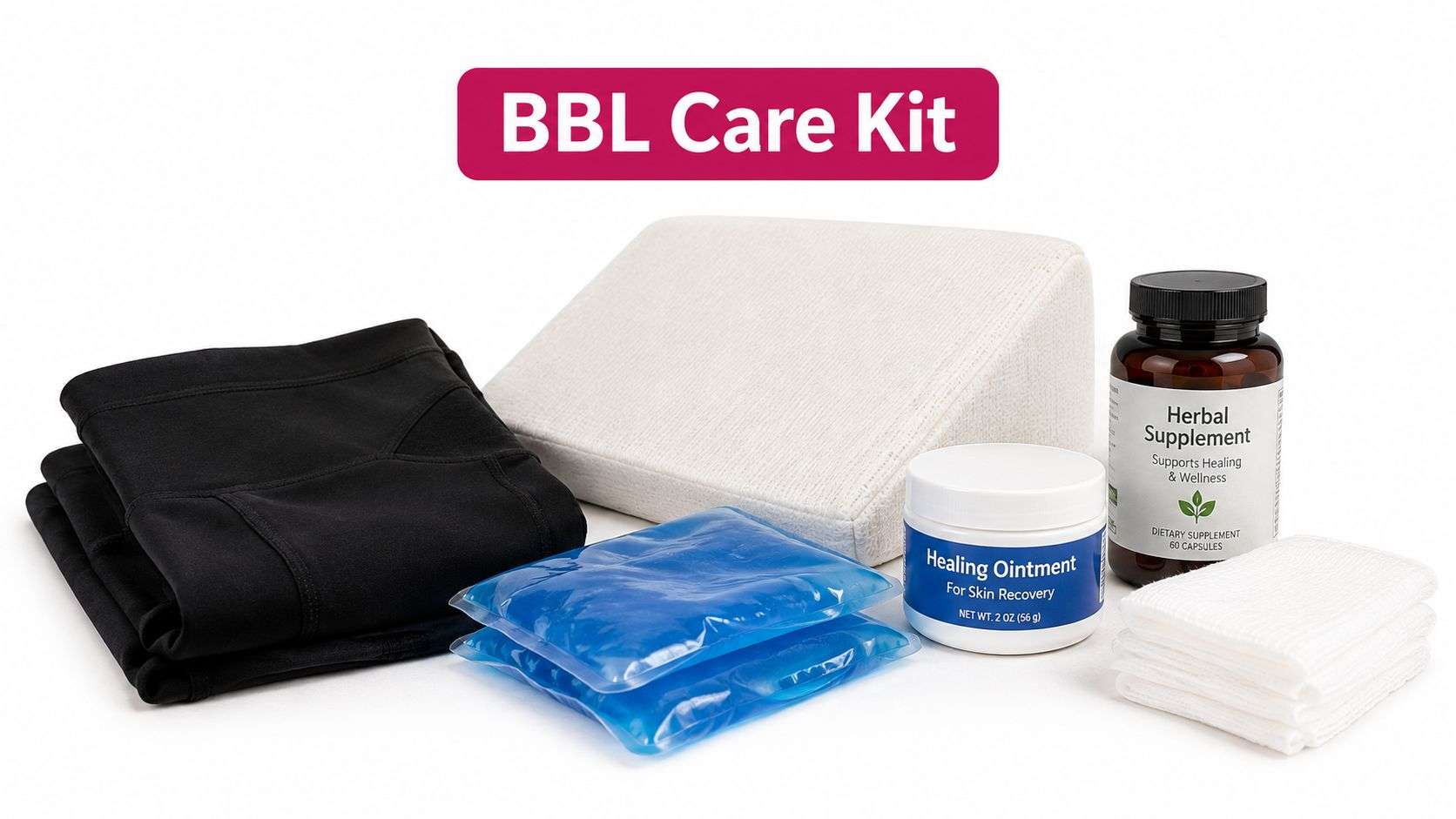
Most patients will see lip implants cost about $2,000 to $5,500 for both lips, but that number often reflects a base quote rather than the full bill. In practice, your total can be higher once anesthesia, facility charges, medications, and follow-up care are added.
If you're researching a permanent alternative to repeat filler appointments, you've probably noticed how hard it is to get a straight answer on price. One website shows a low starting number, another gives a broad range, and neither explains why the quote in a consultation can look very different from the figure you saw online.
That gap is where patients get frustrated. A lip implant is a surgical procedure, not an in-office injectable. The actual financial decision isn't just whether the surgeon's fee fits your budget. It's whether you understand the all-in commitment, including the parts many online estimates leave out.
Table of Contents
- Your Guide to Understanding Lip Implant Costs in 2026
- Deconstructing the Total Lip Implants Cost
- What Factors Influence Your Final Price
- Lip Implants vs Fillers Cost Over a Lifetime
- The Lip Implant Procedure and Recovery Journey
- Planning Your Procedure at Georgia Plastic
- Frequently Asked Questions About Lip Implants
Your Guide to Understanding Lip Implant Costs in 2026
A patient comes in expecting one number and leaves realizing there are two. The advertised price is the starting point. The actual budgeting number is the total cost of surgery from consultation through recovery.
Many online estimates create confusion because they blend a base surgical fee with a full procedural bill. Lip implants are also elective cosmetic surgery, so patients should plan on paying out of pocket rather than expecting insurance coverage. The distinction is important because many patients are comparing unlike with unlike.
Practical rule: If a quote for lip implants seems unusually low, ask for an itemized breakdown before you compare it with any other option.
In practice, I advise patients to separate pricing into two buckets:
- Base quote: The number that may cover the surgeon's fee and part of the surgical setting.
- All-in quote: The total expected cost, including anesthesia, prescriptions, preoperative testing if needed, and follow-up expenses tied to recovery.
That second number is the one that should drive your decision.
A lower headline price can still become the more expensive choice if it leaves out common charges or if the procedure is being performed in a setting with different safety standards, support staff, or recovery resources. A higher quote may reflect more experienced surgical judgment, a better-equipped facility, or more complete postoperative care. Those are real trade-offs, not marketing language.
If you want a broader look at how surgical and nonsurgical lip enhancement expenses compare, our guide to lip augmentation cost can help frame the discussion before you request a personalized quote.
Deconstructing the Total Lip Implants Cost
When patients ask about lip implants cost, I encourage them to stop thinking in one number. A surgical quote is a package of decisions, people, and resources. Some clinics advertise the first line item. Your actual bill reflects the full chain of care.
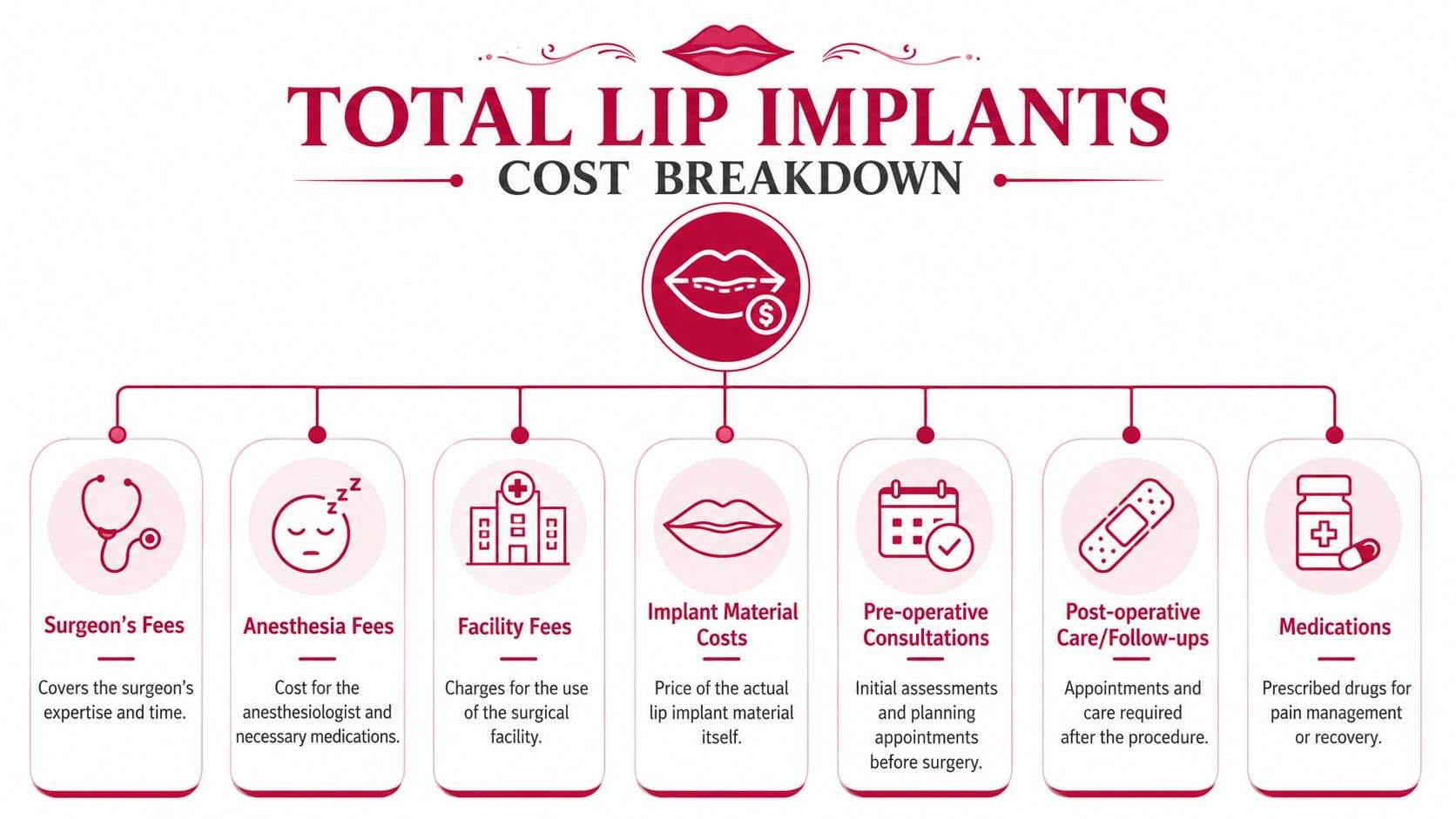
A major reason for confusion is that many published estimates focus on a base range and leave out separate operating costs. As outlined in this Healthline discussion of lip implant pricing, many sources quote $2,000 to $4,000, but those numbers often omit general anesthesia, which can add $1,000+, as well as facility charges. In major cities such as New York, the total can exceed $9,000 once those added costs are included.
For a broader framework on pricing categories, patients often find this guide to lip augmentation cost useful alongside an individualized consultation.
Surgeon's fee
This fee pays for surgical judgment, technical execution, planning, and the ability to handle anatomy that doesn't read like a textbook. Lips are small structures, but they are unforgiving. Tiny differences in pocket creation, implant sizing, and symmetry have a visible effect.
A low surgeon's fee isn't a bargain if it comes with limited experience, rushed planning, or weak follow-up. In facial surgery, precision is the product.
Anesthesia fee
Patients often miss this line item because it may not appear in an advertised starting price. Yet anesthesia is part of what makes surgery controlled, comfortable, and safe.
The exact anesthesia arrangement can vary by practice and by patient. What matters financially is simple. If the quote doesn't clearly state whether anesthesia is included, you should assume you need to ask.
The right question isn't “What's the cheapest lip implant price?” It's “Who is providing every part of my care, and is that included in writing?”
Surgical facility fee
A proper surgical setting has its own cost. You're paying for the room, equipment, sterile processing, trained staff, recovery support, and the systems that make surgery predictable.
This is one reason lip implants cost more than office injectables. An accredited surgical environment costs more to run than a treatment chair, but it provides a different level of infrastructure.
Implant material cost
The implant itself is only one piece of the bill, but it still affects price. Material choice, sizing options, and the surgeon's preference for a particular implant system can all change the total.
Some patients overfocus on this category because it's the most tangible. In reality, the implant is rarely the main reason a quote rises. The operating context usually matters more.
Post-operative care and related expenses
The surgery doesn't end when you leave the procedure room. Recovery has its own practical costs, and some are easy to overlook.
- Medications: Pain control, infection prevention, or comfort measures may be prescribed separately.
- Pre-op items: Depending on the practice and your health history, testing or medical clearance may add cost.
- Follow-up visits: Some offices bundle them. Others separate them.
- Time away from work: This isn't a medical bill, but it is part of your real budget.
A transparent quote should tell you which of these are bundled and which are not. If that isn't spelled out, ask for a written breakdown before you commit.
What Factors Influence Your Final Price
Two patients can ask for fuller lips and receive very different quotes. That's normal. A responsible quote reflects the surgeon, the facility, the implant plan, and the realities of the local market.
Geographic location
Regional overhead changes cosmetic surgery pricing more than many patients expect. According to this market analysis of lip augmentation pricing, patients in New York City and San Francisco can see lip procedure costs exceeding $9,000, while Miami commonly falls in the $2,000 to $6,000 range.
That doesn't mean one city is automatically overcharging or another is automatically a deal. Rent, staffing, facility costs, and local demand shape pricing. A moderate market may offer more room for value, but you still need to evaluate what the quote includes.
Surgeon training and judgment
This is not a procedure where I'd advise shopping on price alone. The lips sit in the center of the face. Small problems become daily visual problems.
Patients usually benefit from asking direct questions such as:
- Who performs the surgery: Make sure you're meeting the surgeon who will operate.
- How is the procedure planned: Implant size and lip proportions should be discussed, not guessed.
- What happens if healing isn't smooth: Good follow-up matters when swelling, asymmetry concerns, or adjustment questions arise.
A higher quote tied to stronger credentials, a better surgical setting, and structured aftercare often makes more sense than a lower number with missing safeguards.
Implant choice and case complexity
Not every lip anatomy supports the same plan. Some patients need subtle enhancement. Others need more structural change, careful sizing, or added attention to balance between the upper and lower lip.
That complexity can affect:
| Factor | Why it changes price |
|---|---|
| Implant selection | Different devices and sizes may carry different supply costs |
| Existing asymmetry | More planning and technical adjustment may be needed |
| Revision history | Prior procedures can make dissection and placement more demanding |
Cheap surgery often becomes expensive when a patient has to correct a poor plan.
Lip Implants vs Fillers Cost Over a Lifetime
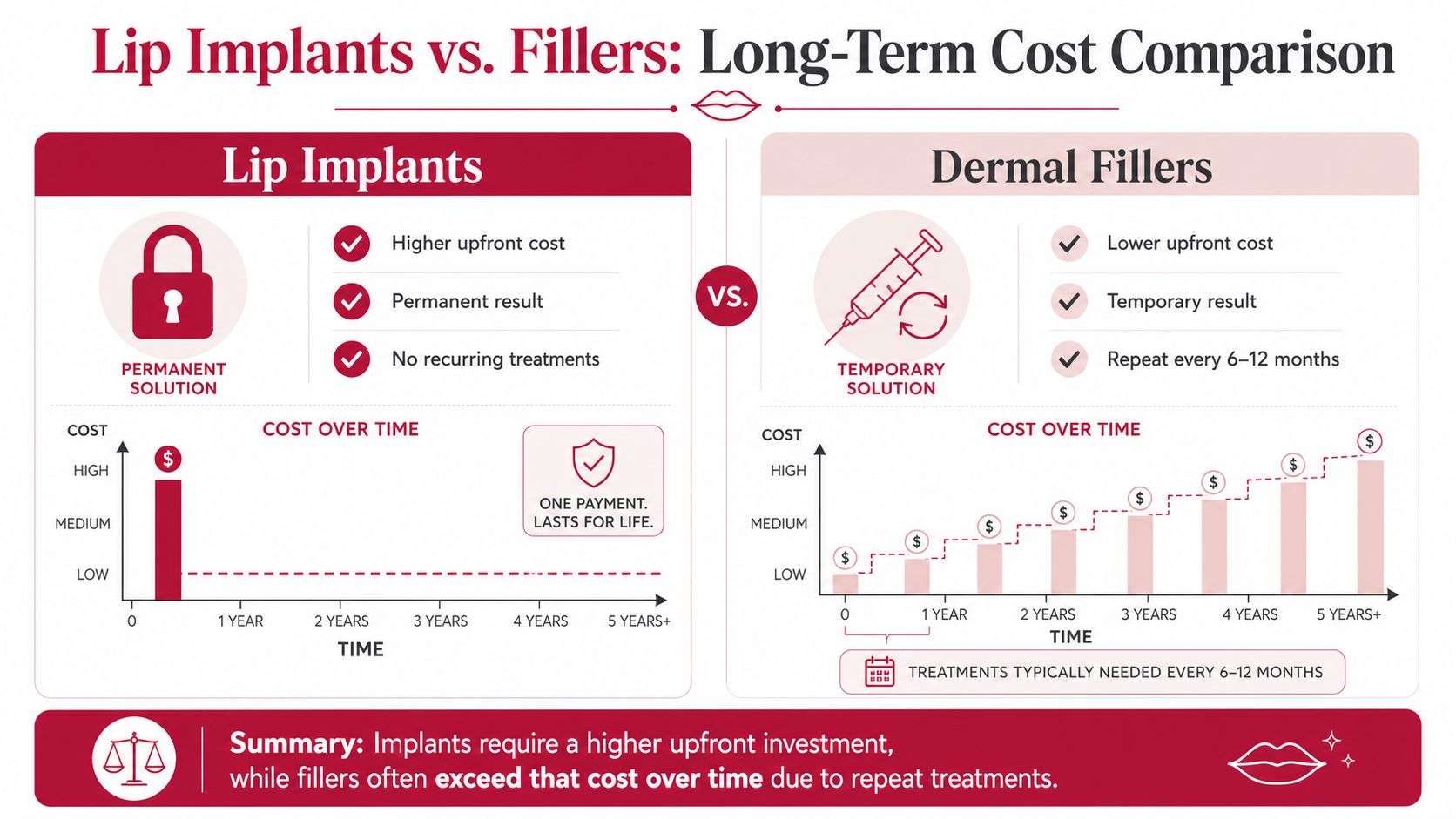
A common budgeting mistake happens before surgery is even scheduled. A patient sees the lower starting price for filler, compares it with the quoted implant fee, and assumes fillers are the less expensive path. That can be true for a short trial period. It is often not true over several years.
The short-term appeal of fillers
Fillers usually win on entry price. You pay for treatment in smaller increments, and that feels easier than committing to surgery all at once.
The trade-off is maintenance. Lip filler does not become a one-time expense just because the first appointment was affordable. If you like the result and want to keep it, you are signing up for repeat visits, repeat product cost, and repeat injector fees. Patients who want a clearer sense of that cycle should review how long lip fillers last.
Over time, the practical question is simple. Are you paying for a temporary look you plan to keep refreshing, or are you paying once for a long-term result?
When implants make more financial sense
Lip implants usually require more money upfront, but they can be less expensive in the long run for the right patient. That is especially true for someone who has already had multiple filler sessions and knows they want lasting volume.
This is also where advertised pricing causes confusion. Patients may compare a filler invoice to an implant base quote and miss the full financial picture. Surgery often includes added costs such as anesthesia, facility fees, preoperative visits, medications, and follow-up care. Fillers have their own version of hidden accumulation. Maintenance appointments, touch-ups, and the tendency to add "just a little more" over time.
If you want the most accurate comparison, total the full implant plan against several years of filler maintenance. Base price alone is not a useful budgeting tool.
A practical way to decide
A lifetime cost discussion only matters if it matches your goals.
- Choose fillers if: You want flexibility, you are still testing your preferred shape, or you do not want surgery.
- Choose implants if: You want a stable result, you are tired of maintenance visits, and you would rather absorb one larger all-in cost than ongoing smaller expenses.
- Pause and reassess if: You are focused only on the lowest starting number and have not mapped out what you are likely to spend over time.
In practice, the patients happiest with implants are usually the ones who are done paying repeatedly for temporary volume.
The Lip Implant Procedure and Recovery Journey
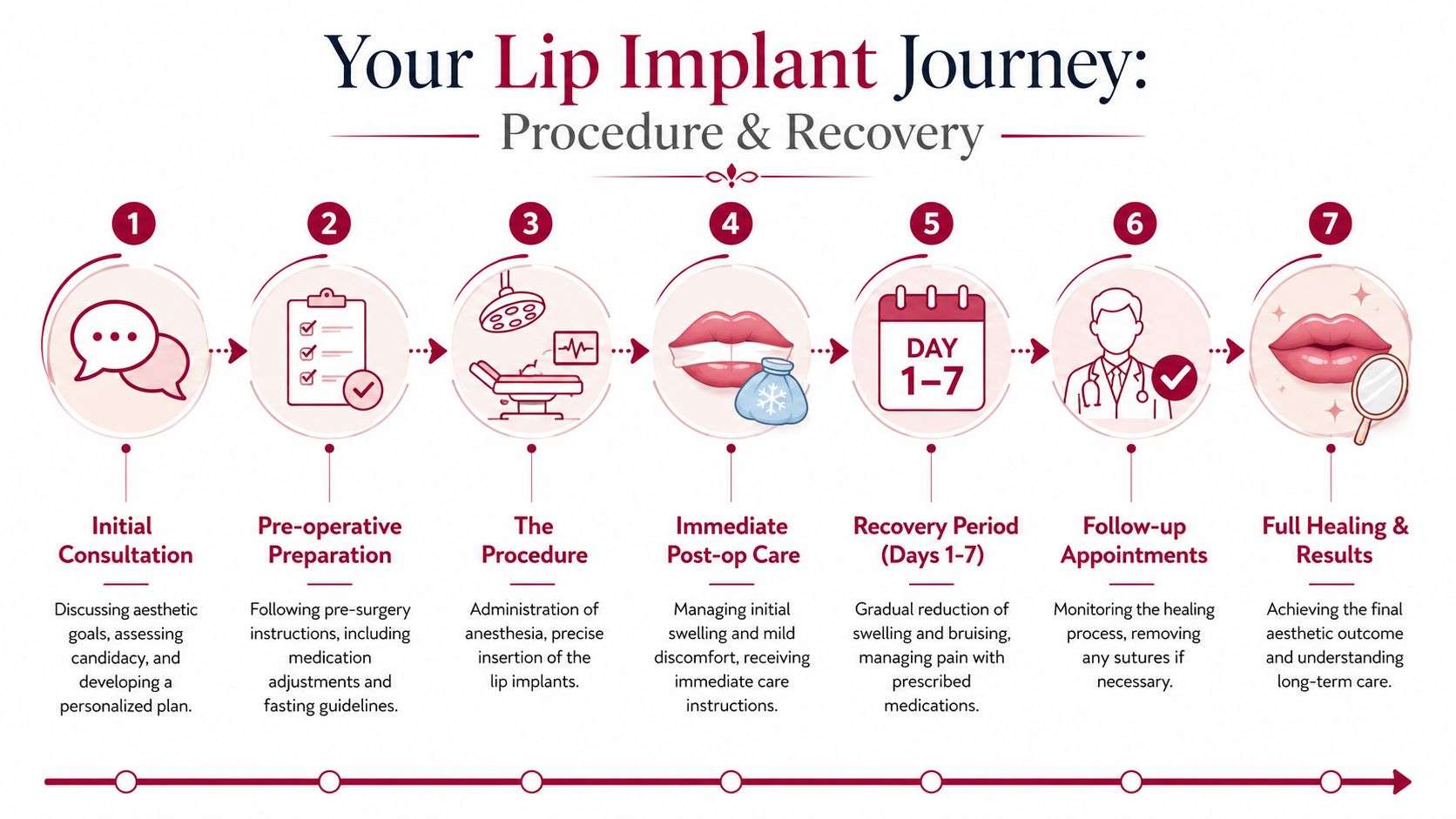
A patient may see an implant quote online, then feel caught off guard when important questions emerge. How long will I be swollen? When can I go back to work? What follow-up care is part of this, and what costs are tied to recovery? The procedure itself is only part of the commitment. The recovery period affects your schedule, comfort, and sometimes your budget too.
Consultation and planning
This is the stage where a generic price becomes a real treatment plan. Lip width, tissue thickness, asymmetry, prior filler use, and your tolerance for downtime all affect what I recommend. A result that looks balanced on one patient can look overdone or unnatural on another.
The consultation should cover more than size preference. It should clarify incision placement, implant selection, anesthesia plan, expected swelling, restrictions after surgery, and what follow-up visits are included in your fee. Patients who want help choosing the right surgeon usually benefit from reading this guide on how to choose a plastic surgeon in Atlanta, because credentials and experience matter more here than a low starting quote.
Surgery day
Lip implants are usually placed through small incisions at the corners of the mouth or within natural transition points, then guided into position to create consistent volume. The procedure is controlled and precise. Good planning matters because a few millimeters can change the final shape.
From the patient side, surgery day is often easier than expected. The bigger adjustment usually comes afterward, when the lips feel tight, swollen, and firmer than the final result will be.
Patients rarely tell me the procedure was the hard part. They usually say the hardest part was not knowing what normal early swelling would feel like.
Recovery and settling in
Early recovery requires patience. Swelling, tenderness, and stiffness are normal at first, and the lips commonly look more dramatic in the beginning than they will once they settle. That early appearance is not the final result.
Practical preparation makes recovery smoother:
- Food planning: Have soft foods ready for the first several days.
- Schedule planning: Avoid booking surgery right before photos, travel, or important social events.
- Medication planning: Fill prescriptions in advance so you are not stopping on the way home.
- Follow-up care: Keep your postoperative visits. Small concerns are easier to address early.
This part of the process has a cost component too. Time away from work, prescription expenses, and any added support you need at home are easy to overlook when you focus only on the surgical quote. A realistic budget includes recovery, not just the procedure.
The practices that guide patients well through healing usually make the whole experience easier, both medically and financially.
Planning Your Procedure at Georgia Plastic
Once you've decided to explore implants seriously, the next step isn't hunting for the lowest advertised number. It's getting a quote that's complete enough to be useful.

Georgia Plastic & Reconstructive Surgery offers consultations, recovery guidance, financing resources, and patient education for cosmetic procedures in Atlanta and Marietta. If you're comparing surgeons, this article on choosing a plastic surgeon in Atlanta is a practical place to start.
What to ask before you book
A useful consultation should leave you with a written understanding of both the surgical plan and the financial plan. Ask for specifics.
- What's included in my quote: Surgeon, anesthesia, facility, implant, medications, and follow-ups should be clarified.
- What's excluded: Surprise costs are often concealed by exclusions.
- How is revision handled: Policies vary, so don't assume.
A practice that welcomes those questions is usually easier to work with from start to finish.
How to budget without surprises
Patients often do well with a simple budgeting checklist:
- Use the all-in number, not the starting number.
- Set aside room for recovery-related expenses.
- Review financing only after you understand the total fee structure.
If you're traveling from outside the area, add transportation, lodging, and recovery support to your own planning. Those aren't surgical fees, but they're still part of your real investment.
Frequently Asked Questions About Lip Implants
Are lip implants covered by insurance
No. Lip implants are elective cosmetic surgery, so patients should expect to pay through personal funds or financing arrangements rather than health insurance. That insurance distinction is one reason full pricing transparency matters so much before surgery.
Who is a good candidate
A good candidate usually wants more permanent lip enhancement, is in good general health, understands the recovery process, and has realistic expectations. The best candidates are not just asking for bigger lips. They're looking for proportion, stability, and a result that fits their face.
What risks should you understand
Like any surgery, lip implants come with potential risks. Patients should discuss infection, healing issues, asymmetry, implant positioning concerns, and the possibility of needing revision or removal. None of those risks mean the procedure is a poor choice. They mean surgery should be planned carefully and performed by a qualified plastic surgeon in an appropriate setting.
Is a low advertised price a red flag
Not always, but it should trigger questions. A low base quote may leave out anesthesia, facility use, medications, or follow-up care. If the office can't explain the difference between the advertised price and your actual expected bill, keep asking.
Do implants always make more sense than fillers
No. They make more sense for patients who want permanence and are comfortable with surgery. Fillers often fit better if you want flexibility, a smaller initial commitment, or time to test different levels of volume.
If you're considering lip implants and want a quote that reflects the full financial picture, Georgia Plastic & Reconstructive Surgery offers consultations that can clarify candidacy, treatment options, and the practical costs tied to your specific plan.