Your Journey to a New Profile
Rhinoplasty recovery time is one of the most important things to understand before undergoing nose reshaping surgery. Here’s what you need to know:
Quick Answer: Rhinoplasty Recovery Timeline
- Week 1: Splint removed, most bruising present, return to light activities
- Weeks 2-4: 70-80% of swelling resolved, return to work and social activities
- Months 1-3: Resume exercise, 90% of swelling gone, bones stable
- 6-12 Months: Final results emerge as last swelling resolves
Most patients take about one week off work and can resume normal activities within 2-4 weeks. However, it takes a full year to see your final results as internal swelling gradually subsides and your nose settles into its new shape.
Understanding the healing process is essential for a successful rhinoplasty experience. While the surgery itself may take only a few hours, the change of your nose happens gradually over many months. Swelling and bruising peak in the first 72 hours, then steadily improve. Your nose will continue to refine and change subtly throughout the first year as the tissues heal and adapt to their new structure.
This journey requires patience, proper aftercare, and realistic expectations. Some patients feel frustrated when they don’t see their final results immediately after the splint comes off. That’s completely normal—your nose is still swollen and will look quite different from what you’ll see six months or a year later.
I’m Dr. Stanley Okoro, a double board-certified plastic surgeon and founder of Georgia Plastic and Reconstructive Surgery in Atlanta. I’ve guided hundreds of patients through their Atlanta nose reshaping journey, and I’ve seen how understanding rhinoplasty recovery time helps patients feel more confident and prepared throughout their healing process.
In this guide, I’ll walk you through exactly what to expect at each stage of recovery, share practical tips to promote faster healing, and help you understand when certain symptoms are normal versus when you should contact your surgeon.
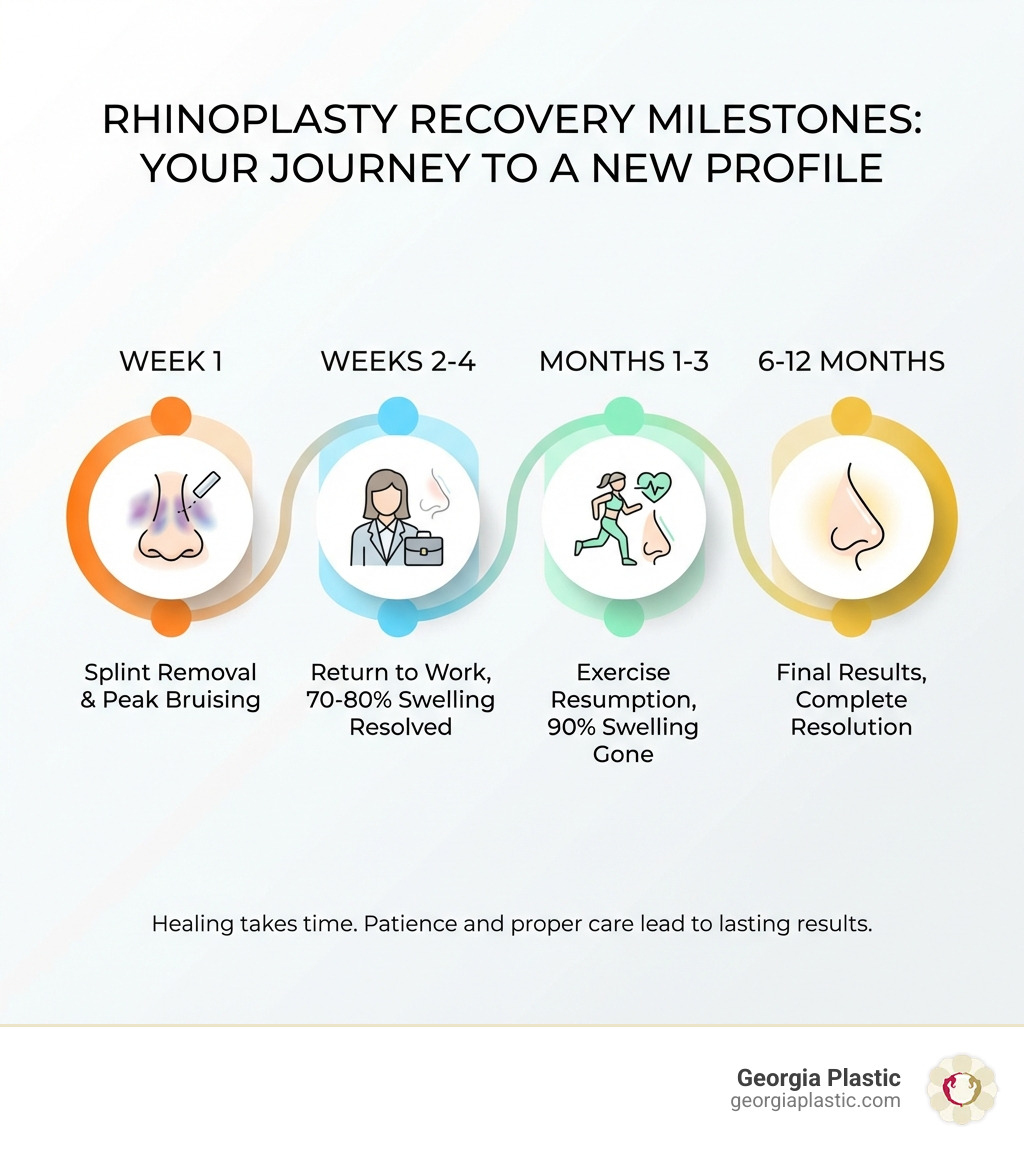
The Complete Rhinoplasty Recovery Time Timeline
When considering rhinoplasty, one of the most common questions we hear is, “What is the typical Rhinoplasty recovery time?” It’s a journey, not a destination, and it unfolds in several stages. While initial downtime is relatively short, the complete healing process for your new nasal contour can extend up to a year. Understanding this timeline helps set realistic expectations and ensures you’re prepared for each phase.
This section provides a detailed breakdown of the healing process, answering the core question of what to expect at each stage. It covers swelling, bruising, and activity levels over time.
Week 1: The Initial Healing Phase
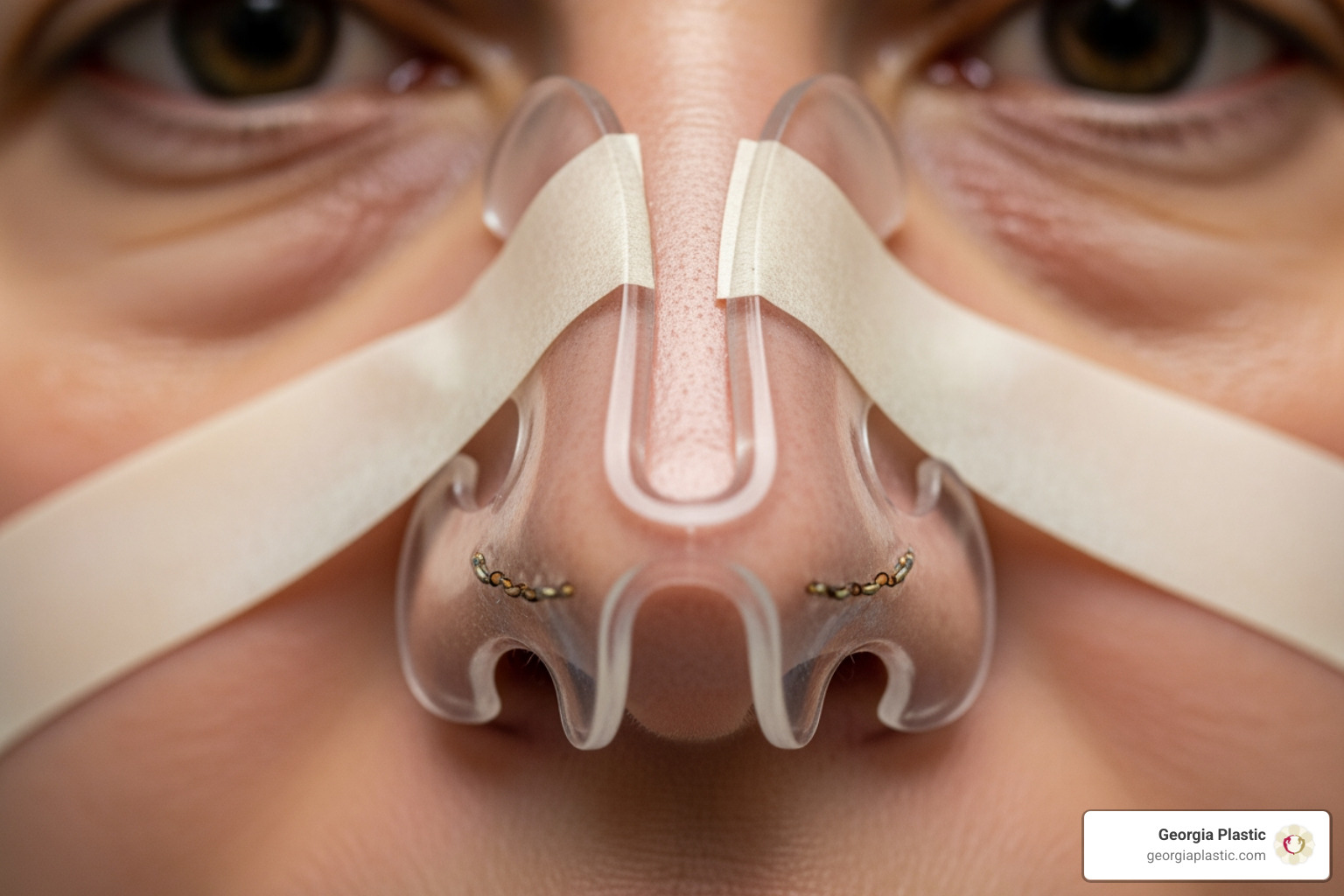
The first week after rhinoplasty is typically the most noticeable in terms of visible signs of surgery and discomfort. Immediately after your procedure, you’ll likely wake up with a splint placed either inside or outside your nose, or both, to support and protect the newly reshaped structures. You may also have some nasal packing, which our team will typically remove within 24 to 48 hours. A small drip pad might be placed under your nose to catch any drainage, which is normal for the first day or two.
During the first 72 hours, swelling and bruising typically peak. You can expect tenderness, facial pressure, and nasal congestion, making it feel like you have a bad cold. Bruising will likely appear around your eyes, often dark and noticeable, and may extend to your cheeks. While some pain is present, it’s generally mild to moderate and manageable with prescribed pain medication. We advise taking any pain medicine exactly as directed, ideally after meals if it causes stomach upset.
Around day seven, we will typically remove your external splint. This is often the first time you’ll see a glimpse of your reshaped nose, though this is far from the final result due to significant swelling. Most of the facial bruising and swelling should have started to subside by this point, though minor bruising around the eyes may still persist.
We recommend a good 7-10 days of downtime during this period. Rest is paramount, and keeping your head liftd, even while sleeping, is crucial to minimize swelling. Light walking is generally permitted and can help with circulation, but avoid any strenuous activities. You can learn more about what to expect during this phase from Rhinoplasty Recovery information from the American Society of Plastic Surgeons.
Weeks 2-4: Returning to Normalcy
As you move into weeks 2-4, you’ll notice a significant improvement in your appearance and comfort. By the two-week mark, most of the visible facial bruising should have subsided, and the majority of the initial swelling will have resolved enough for you to feel comfortable returning to work or social settings. Many patients feel much more like themselves by this stage.
In fact, by 2-3 weeks after surgery, about 70–80% of the initial swelling has typically subsided. This allows the new shape of your nose to begin emerging more clearly. While your nose will still look swollen to you, most casual observers won’t notice that you’ve had surgery.
During this period, you can gradually resume light activities. If you work out, you can typically start with cardiovascular exercises, such as brisk walking or stationary cycling, around week three or four. However, strenuous physical activities, heavy lifting, and any activities that could put your nose at risk of impact should still be avoided. We’ll provide specific guidance on this during your follow-up appointments.
It’s also important to continue being gentle with your nose. Avoid blowing your nose forcefully, and if you need to sneeze, try to do so with your mouth open to relieve pressure. For more details on surgical approaches and how they might influence your recovery, you can explore More info about Open vs Closed Rhinoplasty.
Months 1-3: Resuming Exercise and Seeing Refinement
The period from one to three months post-surgery marks a significant phase in your Rhinoplasty recovery time, where your nose continues to refine, and you can gradually return to more strenuous physical activities.

By the one-month mark, most patients feel significantly more comfortable. The majority of visible swelling has resolved, and your nose is settling into its refined shape. If you’ve been eager to get back to your workout routine, this is typically when you can resume low-impact exercises like brisk walking or stationary cycling.
Around six weeks post-surgery, your nasal bones should be stable enough to allow for resistance workouts and strength training. However, it’s crucial to avoid any activities that could result in direct impact to your nose, such as contact sports, for at least three months. Your nose is still delicate and needs protection as it continues to heal internally.
By the three-month mark, approximately 90% of the swelling should have subsided. This is a major milestone, as you’ll have a very good idea of what your nose will look like. Any numbness or altered skin sensations around your nose should also be starting to diminish, with many patients reporting these sensations completely gone by 3 to 6 months.
We always emphasize patience during this phase. Even though your nose looks great, internal healing is still ongoing. Continuing to follow our post-operative instructions, including protecting your nose from trauma, is vital for achieving the best possible outcome. Many patients find that the Benefits of Rhinoplasty truly begin to shine through during this period of refinement.
6 Months to 1 Year: The Final Results Emerge
The final stages of Rhinoplasty recovery time stretch from six months to a full year, and sometimes even a little longer. This is the period where the subtle, yet significant, changes occur, and your nose settles into its permanent form.
While the majority of swelling is gone by three months, the remaining 10% can take a considerable amount of time to resolve completely. This minimal, persistent swelling is often most noticeable in the nasal tip, which can take 12 months or even longer to fully subside. The tip of the nose holds onto swelling the longest because of its thicker skin and complex structure. You might notice that swelling can fluctuate, sometimes worsening in the morning, especially during the first year.
As this last bit of swelling dissipates, your nasal contour will continue to refine. The tip will become more defined and natural-looking, and any subtle asymmetries caused by uneven swelling will typically resolve. By the one-year mark, the healing process should be complete, and you should be able to see the final results of your rhinoplasty. Your nose should feel normal in terms of sensation and function, fully integrated with your facial harmony.
Plastic surgery results should be viewed as an improvement over your baseline, not a pursuit of unattainable perfection. We encourage you to review our Gallery Rhinoplasty to see examples of the refined outcomes our patients achieve.
A Guide to a Smooth Recovery: Dos and Don’ts
A successful rhinoplasty isn’t just about the surgery itself; it’s equally about diligent aftercare. Following our instructions carefully during your Rhinoplasty recovery time is crucial for minimizing complications, speeding up healing, and ensuring you achieve the beautiful, natural-looking results you desire. This section offers actionable tips for patients to facilitate a comfortable and efficient healing process, covering everything from diet to daily habits.
Essential Tips for a Faster Rhinoplasty Recovery Time
We want to empower you with the best strategies to make your healing process as smooth and comfortable as possible. Here are our top tips:
- Prioritize Rest: Your body needs ample rest to heal. Aim for 7-9 hours of uninterrupted sleep each night, especially in the first few weeks. Rest when you feel tired, and avoid pushing yourself.
Keep Your Head Liftd: This is perhaps one of the most critical tips for reducing swelling. For the first few weeks, and ideally up to six weeks, sleep with your head liftd at a 45-degree angle. Use extra pillows or a wedge pillow to maintain this position. This helps prevent fluid from pooling in your face and nose.
Apply Cold Compresses: During the first 48-72 hours, applying cold compresses to your cheeks and under your eyes can significantly reduce swelling and bruising. Never apply ice directly to your nose; wrap it in a soft cloth. Apply for 10-20 minutes at a time, every 1-2 hours while awake, for the first three days.
- Stay Hydrated: Drinking plenty of water is essential for your body’s healing processes. Aim for at least 8-10 glasses of water daily. Proper hydration supports tissue repair and helps flush out toxins.
- Maintain a Healthy Diet: Nourishing your body with nutrient-rich foods provides the building blocks for healing. Focus on:
- Lean protein: Essential for tissue repair (chicken, fish, eggs, beans).
- Vitamin C: Boosts collagen production and immune function (citrus fruits, berries, bell peppers).
- Zinc: Supports wound healing (nuts, seeds, lean meats).
- Leafy greens: Rich in vitamins and antioxidants (spinach, kale).
- Avoid salty, processed, and fried foods, as they can contribute to swelling.
- Take Short, Gentle Walks: While strenuous exercise is off-limits initially, gentle movement like short walks daily can improve circulation, reduce the risk of blood clots, and boost your mood. Start slowly and gradually increase duration as you feel able.
- Manage Pain Effectively: We will prescribe pain medication to manage any discomfort. Take it as directed. For mild pain, over-the-counter pain relievers (as approved by us) can be effective. If your pain medicine causes stomach upset, try taking it after meals.
- Use Saline Nasal Spray: Nasal congestion is common after rhinoplasty. We may recommend using a saline-based nasal spray a few times a day to help keep the nasal passages moist and clear, easing congestion.
Activities and Habits to Avoid During Recovery
To protect your healing nose and ensure the best possible outcome, there are several activities and habits you must avoid during your Rhinoplasty recovery time:
- Blowing Your Nose: This is a big one! Do not blow your nose for at least 1-2 weeks, and potentially longer, as recommended by us. Blowing your nose can dislodge internal sutures, cause bleeding, and increase swelling. If you need to sneeze, do so with your mouth open to reduce pressure on your nose.
- Strenuous Exercise and Heavy Lifting: Avoid any intense physical activities, including jogging, weight lifting, and aerobic exercise, for at least 2-3 weeks, and often up to 4-6 weeks. Strenuous activities can increase blood pressure, leading to bleeding and increased swelling. We’ll advise you when it’s safe to gradually resume your workout routine.
- Bending Over: For the first few days to a week, avoid bending over, as this can increase blood pressure in your head and cause swelling or bleeding.
- Wearing Glasses or Sunglasses: For at least 4-6 weeks, avoid resting eyeglasses or sunglasses directly on your nasal bridge. The pressure can indent the healing bone and cartilage, potentially altering your results. If you must wear glasses, we can show you how to tape them to your forehead or use cheek rests. Contact lenses are a good alternative.
- Sun Exposure: Protect your nose from direct sunlight for several months. Sun exposure can prolong swelling, cause discoloration, and potentially worsen scarring. Wear a wide-brimmed hat and use SPF 30+ sunscreen when outdoors.
- Smoking and Alcohol: Both smoking and alcohol can significantly impair your healing process. Smoking restricts blood flow, delaying recovery and increasing the risk of complications. Alcohol can thin your blood, increasing bruising and swelling. We strongly advise avoiding both for several weeks before and after surgery.
- Clothes Pulled Over the Head: For at least the first week, avoid wearing shirts or sweaters that you have to pull over your head. The risk of accidentally bumping or snagging your nose is too high. Opt for button-up shirts or blouses instead.
- Rubbing Your Nose: Do not rub your nose for at least 8 weeks.
- Contact Sports: Any activity that risks impact to your face or nose, such as contact sports, must be avoided for at least 3 months, and sometimes longer, depending on the extent of your surgery. Your bones are still very fragile during this period.
- Swimming: Avoid submerging your head in water or swimming for at least 4 weeks to prevent infection and protect your healing nose.
For more general information on rhinoplasty and what to expect, the Cleveland Clinic offers a comprehensive guide.
Navigating Your Recovery: Complications and Key Considerations
While we strive for a smooth and straightforward Rhinoplasty recovery time, it’s important to be aware of potential issues and understand when to seek our guidance. Knowing what’s normal versus what requires a surgeon’s attention is crucial. This section also addresses how different surgical factors can alter the recovery experience.
When to Contact Your Surgeon
Your well-being is our top priority. While some discomfort, swelling, and minor bruising are expected during your Rhinoplasty recovery time, certain symptoms warrant immediate attention. Please contact us or seek medical help if you experience any of the following:
- Signs of Infection: This includes increasing redness, warmth, pus, red streaks spreading from the incision site, or a fever (over 100.4°F or 38°C).
- Excessive Bleeding: While some light oozing is normal in the first day or two, severe or uncontrolled nosebleeds are not.
- Severe Pain: If your pain is not relieved by the prescribed medication or suddenly worsens significantly.
- Worsening Swelling: If swelling dramatically increases rather than gradually subsiding, especially after the first 72 hours.
- Difficulty Breathing: While nasal congestion is common, severe difficulty breathing, especially if it feels worse than expected.
- Symptoms of a Blood Clot: Pain or swelling in your calf, back of the knee, thigh, or groin, and redness/swelling in the leg or groin.
- Loose Stitches or Open Incision: If stitches come undone prematurely or an incision opens.
- Inability to Keep Fluids Down: If you are sick to your stomach and cannot keep fluids down.
We also want you to contact us if you feel that you are simply not getting better as expected or have any concerns at all. It’s always better to be safe and let us assess your situation. For more detailed guidance on at-home care and when to call for help, you can consult a guide on what to expect at home after rhinoplasty.
LIST of warning signs requiring immediate medical attention:
- Fever (100.4°F / 38°C or higher)
- Increased pain not relieved by medication
- Severe or uncontrolled nosebleeds
- Increasing redness, warmth, or pus from incision site
- Difficulty breathing (beyond expected congestion)
- Sudden, severe swelling
- Signs of a blood clot (leg pain, swelling, redness)
How Your Rhinoplasty Recovery Time Can Vary
While we provide general guidelines, each patient’s Rhinoplasty recovery time is unique. Several factors can influence how quickly and smoothly you heal:
- Primary vs. Revision Rhinoplasty: Recovery from revision rhinoplasty (a second or subsequent nose surgery) is often longer and involves more swelling and bruising than primary rhinoplasty. This is because the tissues have already been manipulated, and there may be more scar tissue or structural changes to address.
- Open vs. Closed Rhinoplasty: The surgical technique used can impact recovery. Open rhinoplasty involves a small incision across the columella (the strip of skin between the nostrils), which typically leads to more initial swelling and bruising compared to closed rhinoplasty, where all incisions are made inside the nostrils. However, the difference in overall recovery time isn’t drastic, as internal healing is similar.
- Skin Thickness: Patients with thicker, more sebaceous skin tend to experience longer-lasting swelling, especially in the nasal tip, compared to those with thinner skin.
- Extent of Surgery: The more extensive the changes made to the bone and cartilage, the more swelling and bruising you can expect, and potentially a slightly longer recovery. This includes cases where cartilage grafts are used or significant reshaping is performed.
- Individual Healing Factors: Your overall health, age, adherence to post-operative instructions, and even your body’s natural tendency toward bruising and swelling all play a role. Maintaining optimal health before and after surgery can help minimize recovery time.
We tailor our approach to each patient’s unique needs, and we’ll discuss these factors with you during your consultation. Understanding these variables helps manage expectations and ensures you’re prepared for your specific healing journey. For more insights into how we approach correcting nasal concerns, you can visit our page on Information on correcting the nose.
Frequently Asked Questions about Rhinoplasty Recovery
We know you have many questions about your Rhinoplasty recovery time, and we’re here to answer them thoroughly. Here are some of the most common inquiries we receive:
How long does numbness in the nose last after surgery?
It’s very common to experience numbness or altered sensation in your nose, particularly in the tip, after rhinoplasty. This is a normal consequence of the surgical process, as tiny nerves are temporarily affected. For most patients, this numbness gradually subsides, and sensation begins to return within 3 to 6 months after surgery. You might notice itching or even occasional “shooting pains” as the nerves regenerate—these are good signs of healing! However, for some patients, particularly those with thicker skin or more extensive tip work, it can take up to a year for sensation to fully return to normal. Rest assured, this is rarely a permanent issue, and we will monitor your progress during follow-up appointments.
Is rhinoplasty recovery painful?
Most patients are pleasantly surprised to find that Rhinoplasty recovery is not as painful as they anticipate. While you will experience discomfort, it’s generally manageable and often described more as pressure and congestion than severe pain. The peak discomfort usually occurs within the first 72 hours after surgery. We will prescribe appropriate pain medication to help you manage this, and many patients find that over-the-counter pain relievers are sufficient after the first few days. It’s important to take your medication as directed and communicate with us if your pain is not well-controlled. Our goal is to ensure you are as comfortable as possible throughout your healing process.
When can I safely wear glasses or sunglasses?
Wearing glasses or sunglasses too soon after rhinoplasty can exert pressure on your nasal bridge, potentially compromising your results by indenting the delicate healing bones and cartilage. Therefore, we advise against resting glasses directly on your nose for at least 4 to 6 weeks post-surgery.
If you wear prescription glasses, we can discuss alternatives. Some patients opt to wear contact lenses during this period. Others may use special devices that tape the glasses to the forehead or employ frames with cheek rests to avoid direct contact with the nose. We will provide specific guidance custom to your situation and let you know when it’s safe to resume wearing glasses normally. Patience here is key to protecting your newly sculpted nose!
Conclusion: Embracing Your Final Results
Starting on the journey of rhinoplasty is a significant step towards achieving improved facial harmony and confidence. As we’ve detailed, understanding the Rhinoplasty recovery time is fundamental to a smooth and successful experience. While the initial weeks involve managing visible swelling and bruising, the full change is a gradual process that culminates around the one-year mark.
Patience truly is key during this period. It’s a testament to your body’s incredible ability to heal and adapt. We encourage you to trust the process, follow our post-operative instructions diligently, and communicate any concerns you may have along the way.
At Georgia Plastic & Reconstructive Surgery, led by Dr. Okoro, we pride ourselves on providing personalized care that prioritizes patient safety and delivers natural-looking results. We are dedicated to guiding you through every stage of your recovery, ensuring you feel supported and informed as your new profile emerges.
If you’re considering rhinoplasty or simply wish to explore your options for facial improvement, we invite you to take the next step. Schedule your consultation for facial rejuvenation with our expert team in Atlanta today. We look forward to helping you achieve your aesthetic goals.