
Understanding RF Quantum Technology: From Complex Physics to Practical Applications
RF quantum refers to two distinct but related fields: quantum-enhanced radio frequency sensing that uses quantum principles like superposition and entanglement for superior signal detection, and Quantum RF aesthetic treatments that use radiofrequency energy to tighten skin and stimulate collagen production. While these technologies share the “RF quantum” name, they serve vastly different purposes—one advancing scientific measurement and communication, the other revolutionizing non-surgical cosmetic procedures.
Quick Answer: What is RF Quantum?
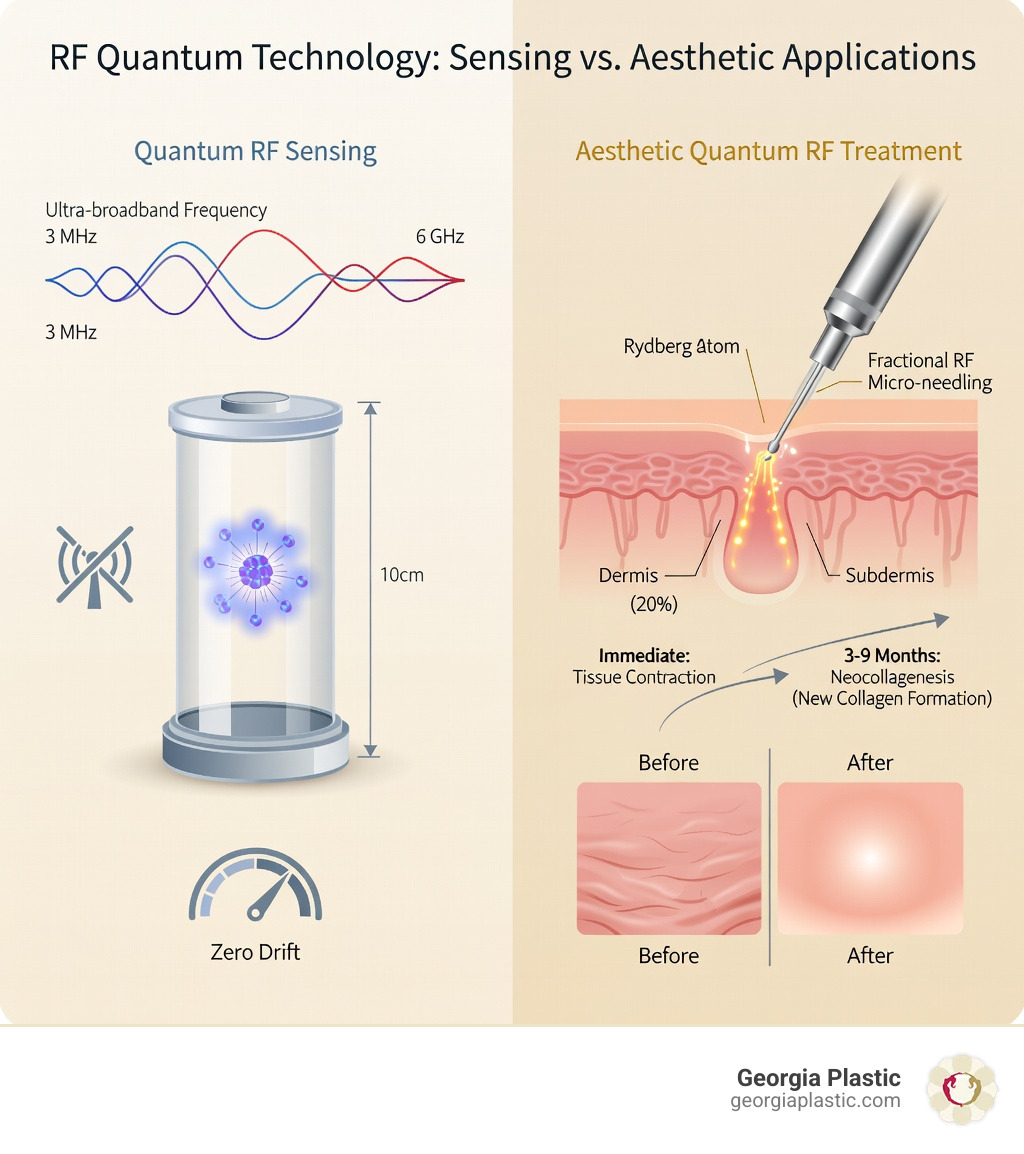
- Quantum RF Sensing: Uses quantum phenomena (Rydberg atoms, superconducting qubits) to detect radio frequency signals with ultra-high sensitivity from 3 MHz–6 GHz without traditional antennas
- Quantum RF Aesthetic Treatment: FDA-approved minimally invasive procedure delivering radiofrequency energy beneath the skin to contract tissue and stimulate new collagen formation
- Key Advantage (Sensing): Self-calibrated sensors that don’t drift over time, offering superior precision over classical RF detectors
- Key Advantage (Aesthetic): Targets deeper skin layers for immediate tightening (up to 20%) plus long-term improvement over 3–9 months
- Common Challenge: Both require specialized equipment—quantum sensors need cryogenic cooling; aesthetic devices need precise energy control
The rapid evolution of RF technologies has created demand for both ultra-precise detection tools in scientific applications and effective skin rejuvenation solutions in aesthetic medicine. Traditional RF systems face limitations—classical sensors drift over time and lack sensitivity, while surface-level skin treatments can’t reach the deeper layers where collagen production occurs.
As Dr. Stanley Okoro, a double board-certified plastic surgeon at Georgia Plastic & Reconstructive Surgery, I’ve witnessed how RF quantum technology transforms patient outcomes through precise, minimally invasive skin tightening that delivers natural-looking results. My experience with advanced RF aesthetic procedures has shown these treatments offer remarkable improvements in skin laxity without the downtime of traditional surgery.
Understanding the Fundamentals of RF Quantum Sensing
To truly grasp what rf quantum technology is, we have to dive into subatomic particles. Classical RF sensors—the kind in your cell phone or car radio—rely on metal antennas to catch electromagnetic waves. However, these systems are limited by thermal noise and physical size. Quantum RF sensing changes the game by using the fundamental properties of matter: superposition and entanglement.
Superposition allows a quantum system to exist in multiple states at once, while entanglement links particles so that the state of one instantly influences another. By leveraging these principles, we can detect signals that are far too faint for classical electronics to “hear.” One of the most significant breakthroughs in this field is the use of Rydberg atoms. These are atoms “on steroids”—their electrons are excited to very high energy levels, making them incredibly sensitive to external electric fields.
Because these atoms have well-defined energy levels, they are “self-calibrated.” Unlike a classical sensor that might need a tune-up every few months due to environmental drift, a quantum sensor relies on the immutable laws of physics. This leads to ultra-broadband coverage, allowing a single small sensor to detect frequencies ranging from 3 MHz all the way to 6 GHz (and eventually up to 100s of GHz). For those interested in the deep physics of these systems, the Scientific research on probing quantum devices provides an extensive look at how we measure these delicate states.
How Rydberg Atoms Revolutionize RF Quantum Detection
Imagine an antenna that isn’t made of metal, but of a vapor of atoms trapped in a glass cell. This is the heart of Rydberg atomic sensing. When a laser excites these atoms, they develop massive dipole moments. When an RF signal hits them, it slightly shifts their energy levels. We then use another laser to “read” that shift.
This “antenna-less” sensing is a revolution. It allows for compact deployment in environments where a giant metal dish wouldn’t fit. Current technology, such as the Sqywire system, is already proving this works. The Gen 1 Sqywire system covers 3 MHz to 6 GHz in a 9U rack-mount form factor, with Gen 2 shrinking that to a 4U size while expanding the range to 12 GHz.
This isn’t just for laboratory experiments; it’s the future of communication. Scientists have already used these methods to achieve high-speed quantum communication, reaching practical data rates of 20 Mbps through digital modulation and quantum dense coding. It’s like upgrading from a tin-can-and-string to a fiber-optic cable, but for the airwaves.
The Role of RF Quantum Techniques in Aesthetic Lifting
While physicists are using rf quantum to find signals in space, we at Georgia Plastic are using similar radiofrequency principles to “find” the youthful contours of your face and body. In the aesthetic world, rf quantum refers to a sophisticated delivery of energy.
Unlike older RF machines that just heat the surface of the skin (en-bloc heating), modern Quantum RF skin tightening uses fractional energy. Think of it like “pops” of energy delivered exactly where they are needed. By using specialized cannulas—like the QuantumRF 10 for the face and the QuantumRF 25 for the body—we can target the subdermal plexus.
When this energy hits the deeper dermis, two things happen:
- Immediate Contraction: The existing collagen fibers shrink, providing an instant lift of up to 20%.
- Neocollagenesis: The heat triggers a “healing response,” prompting your body to grow brand-new collagen over the next 3 to 9 months.
Technical Mechanisms: Reflectometry and Impedance Matching
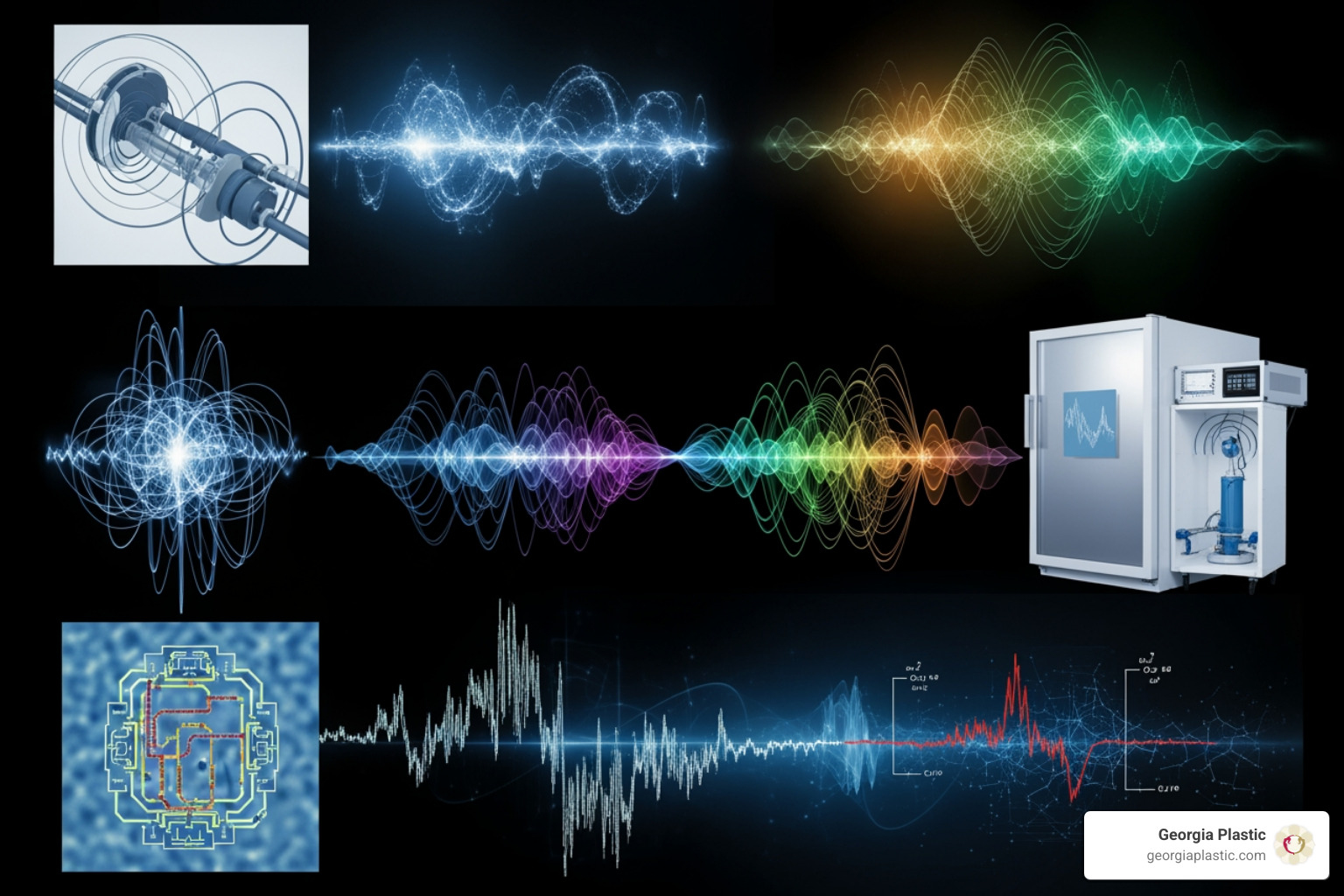
If you’ve ever tried to pour water from a massive bucket into a tiny straw, you’ve experienced an “impedance mismatch.” In rf quantum devices, this is a major hurdle. Most quantum devices have a very high resistance—roughly 25.8 kΩ (the resistance quantum). However, standard transmission lines and cables are designed for 50 Ω.
If we just plugged them together, the signal would bounce back, and we’d see nothing. To fix this, we use RF reflectometry. This involves building an electrical resonator (an LC circuit consisting of an inductor and a capacitor) to bridge the gap.
By matching the impedance, we can send RF signals into the quantum device and measure what comes back. This allows us to detect:
- Resistive changes: Using tools like the rf-SET (Radio-Frequency Single-Electron Transistor), which can measure charge changes with a bandwidth exceeding 100 MHz.
- Reactive changes: Detecting shifts in capacitance, which is vital for reading the state of qubits in a quantum computer.
This technical foundation is so precise that researchers are even developing a scientific framework for quantum machine learning to help process the massive amounts of data these sensors produce.
Practical Applications in Modern Technology and Medicine
The versatility of rf quantum technology means it is popping up everywhere. In defense and security, it provides interference-resilient spectrum monitoring. Because these sensors don’t have traditional metal antennas, they are much harder for enemies to “jam” or detect.
In the medical field, the implications are just as exciting. Beyond the Quantum RF skin tightening benefits we provide at Georgia Plastic, RF techniques are being used to improve medical imaging and the readout of spin qubits for quantum computing. There is even ongoing research on photonic links for spin sensors, which could lead to ultra-sensitive diagnostic tools that can detect diseases at the cellular level long before symptoms appear.
Detecting Dynamic Phenomena with RF Quantum Methods
One of the coolest things about RF methods is that they are fast. Classical DC measurements are often limited to a few kilohertz because of the “RC time constant” (the time it takes for a circuit to charge and discharge). RF reflectometry pushes this into the megahertz and even gigahertz range.
This speed allows scientists to watch quantum particles in real-time. We can now probe:
- Majorana modes: Exotic particles that could be the key to “fault-tolerant” quantum computing.
- Sisyphus resistance: A strange phenomenon where a quantum system “gets tired” as it’s pushed back and forth by an RF signal.
- Fast thermometry: Measuring sub-Kelvin temperature changes in microseconds.
Overcoming Challenges in Scaling Quantum RF Systems
It’s not all smooth sailing in the quantum world. The biggest “diva” in the room is temperature. Most high-end quantum RF sensors (especially those using superconducting qubits) require cryogenic cooling—we’re talking temperatures colder than outer space.
Noise is another enemy. To get a clear signal, we use cryogenic low-noise amplifiers (LNAs) that suppress thermal noise. However, we are getting better at making these systems practical. The roadmap for products like Sqywire shows a move toward modular, rugged VPX designs that can survive in “real-world” environments, not just pristine labs.
We are also seeing massive strides in latest research on mesoscale physics, which helps us understand how to scale these systems from a single channel to multi-channel arrays. This scaling is essential if we want quantum RF to replace the cell towers and radar stations of today.
Frequently Asked Questions about RF Quantum
What is the difference between classical and quantum RF sensing?
Classical sensing uses metal antennas to capture waves, which are limited by size and thermal noise. Quantum sensing uses atoms or superconducting circuits. The main benefits are that quantum sensors are much smaller, cover a much wider range of frequencies (ultra-broadband), and are self-calibrating, meaning they don’t lose accuracy over time.
How does RF reflectometry overcome impedance mismatches in quantum devices?
Quantum devices naturally have very high resistance (~25.8 kΩ), while standard electronics use 50 Ω. RF reflectometry uses an LC resonator circuit (an inductor and capacitor) to act as a “transformer.” This matches the impedances so that the RF signal can flow into the device and reflect back with information about the device’s state, allowing for high-speed measurements.
What are the primary benefits of Quantum RF for skin tightening?
In the aesthetic sense, rf quantum provides a way to tighten skin without major surgery. It uses fractional bipolar energy to heat the deep layers of the skin. This results in an immediate tightening of collagen fibers and stimulates the body to produce new collagen over several months. It’s safe for all skin types, involves minimal downtime, and produces natural-looking results.
Conclusion
Whether we are talking about the cutting-edge physics of Rydberg atoms or the transformative power of a non-surgical facelift, rf quantum technology represents the pinnacle of precision. At Georgia Plastic & Reconstructive Surgery, we pride ourselves on staying at the forefront of these advancements.
Under the leadership of board-certified Dr. Stanley Okoro, our team provides personalized care that prioritizes your safety and your aesthetic goals. We believe that everyone deserves to feel confident in their skin, and tools like Quantum RF allow us to deliver that confidence with natural-looking results and minimal interruption to your life.
If you are ready to see what the future of skin rejuvenation looks like, we invite you to Schedule a consultation for Quantum RF lifting today. Let us help you unlock a firmer, more youthful version of yourself using the most advanced science available.


