
What You Need to Know About Mini Facelift Recovery

Mini facelift recovery is typically faster and easier than a traditional facelift, with most patients returning to work within 1-2 weeks and seeing final results in 3-6 months. The good news is that recovery time is often half that of a full facelift, and many patients find the experience surprisingly manageable.
Quick Recovery Overview:
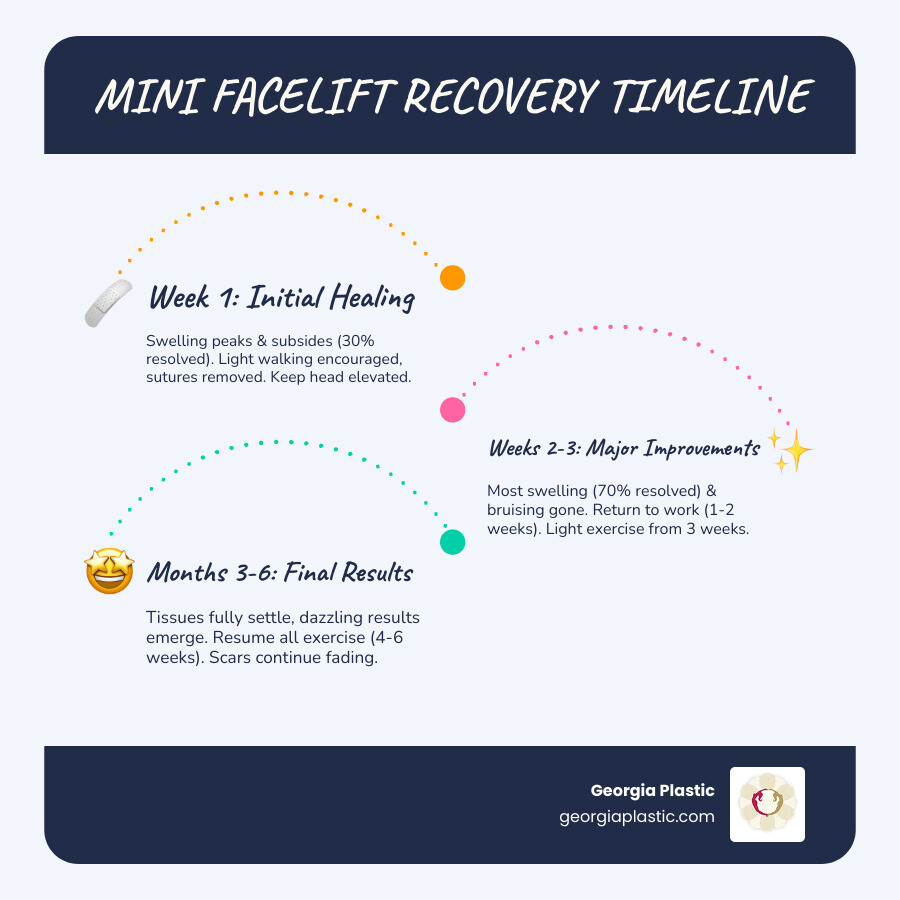
- Week 1: Swelling peaks then subsides, light walking encouraged, sutures removed
- Weeks 2-3: Most swelling and bruising gone, return to work and light activities
- Weeks 4-6: Resume most exercise, scars begin to fade significantly
- Months 3-6: Final results emerge as tissues fully settle
Key Recovery Facts:
- About 70% of swelling resolves in the first 2 weeks
- Bruising typically fades within 10-14 days
- You can wear makeup after 7-10 days
- Full recovery takes about 6 weeks, but you’ll look great well before then
- Complication rates are below 2% with board-certified surgeons
This procedure focuses on the lower face—targeting jowls and jawline definition—using shorter incisions for faster healing. During the first few days, you’ll manage swelling with cold compresses and by keeping your head liftd. By week two, most visible signs of surgery have faded, with significant improvements visible within a month.
The key to a smooth recovery is following your surgeon’s aftercare instructions carefully, from proper sleep positioning to knowing when to resume exercise.
I’m Dr. Stanley Okoro, a double board-certified plastic surgeon and founder of Georgia Plastic and Reconstructive Surgery. I’ve helped hundreds of patients steer their mini facelift recovery with personalized care. My approach combines surgical precision with comprehensive post-operative support to ensure you heal beautifully and achieve natural-looking results.
Understanding the Mini Facelift: A Modern Approach to Rejuvenation
A mini facelift is a cosmetic procedure designed to refresh the lower half of the face, offering a more youthful appearance without the extensive downtime of a traditional facelift. At Georgia Plastic, we often recommend this for individuals seeking a subtle yet impactful improvement.
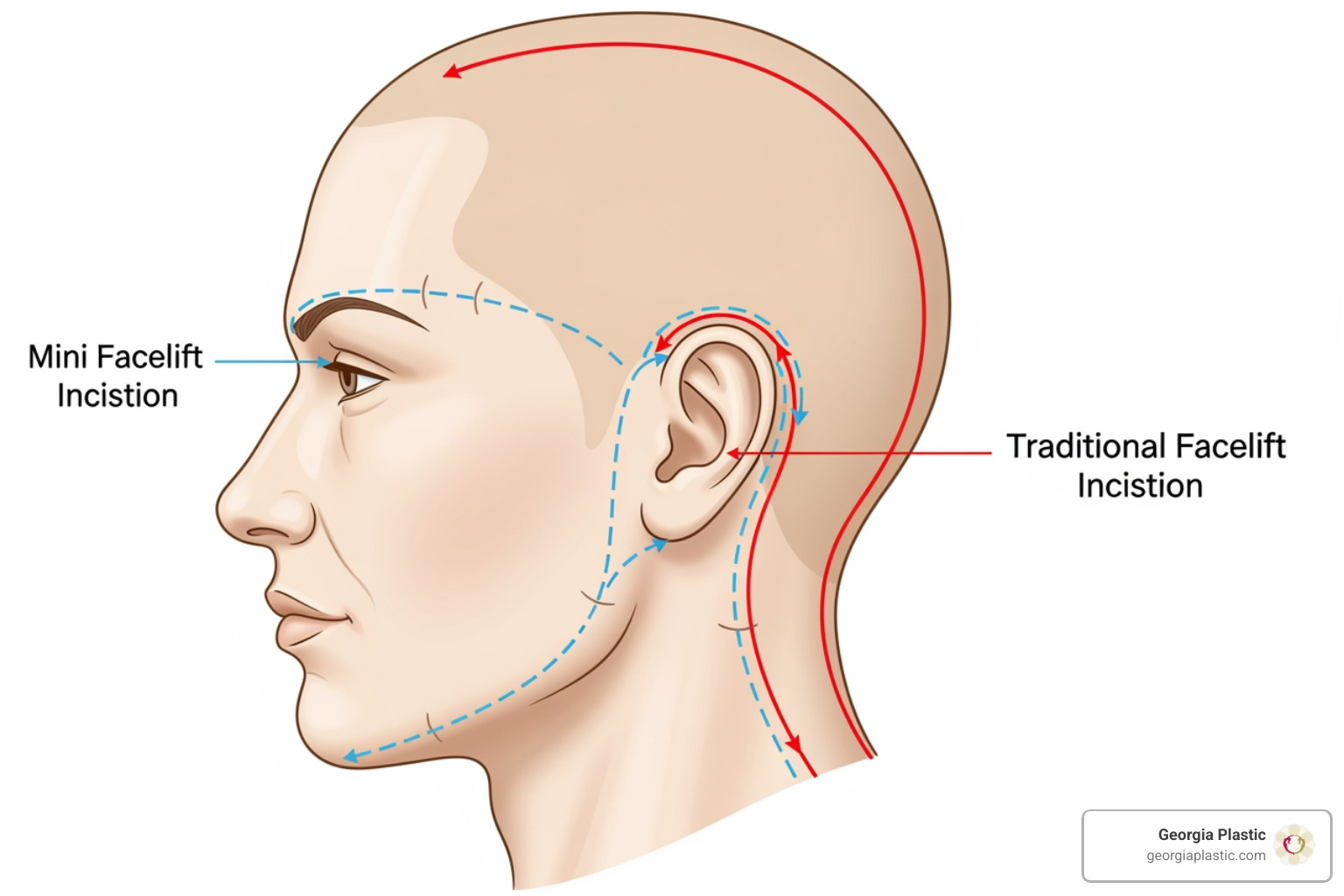
How does it differ from a full facelift? A traditional facelift is a more extensive procedure addressing the mid-face, jawline, and neck. A mini facelift is a targeted refinement, ideal for those with early signs of aging.
The primary distinction lies in the shorter incisions, typically half the length of those in a traditional facelift. These are discreetly placed in front of the ear and into the hairline, making them easy to conceal. Through these smaller access points, we lift and reposition sagging tissues of the lower face to address jowls and a softened jawline. We tighten the underlying SMAS layer (the structural support network), redrape the skin, and remove any excess for a refined, natural contour.
The focus on the bottom third of the face means less tissue disruption, leading to a quicker and more comfortable mini facelift recovery. While both procedures offer rejuvenation, the mini facelift is an excellent solution for those wanting noticeable improvement with a shorter recovery. For more details, explore our page on Mini Facelift Atlanta Rhytidectomy Surgery.
Who is an Ideal Candidate for a Mini Facelift?
Ideal candidates for a mini facelift typically share a few key characteristics. The procedure is best for individuals experiencing mild to moderate skin laxity and early signs of aging, such as:
- Mild jowling along the jawline.
- A loss of definition in the jawline.
- The appearance of marionette lines.
- Some looseness in the upper neck area.
Patients are often in their 40s to early 50s, seeking more significant results than non-surgical treatments can offer. The American Society of Plastic Surgeons recommends mini facelifts for younger individuals with mild skin laxity. It is crucial for candidates to be in good health and have realistic expectations. Our goal at Georgia Plastic is to deliver natural-looking results that improve your appearance without looking “overdone.”
Cost and Procedure Time: Mini vs. Full Facelift
When considering a cosmetic procedure, cost and time are significant factors. A mini facelift is often a more accessible option than a traditional facelift in both respects.
Cost Comparison: A mini facelift generally costs less than a full facelift, with prices in the United States typically ranging from $5,500 to $8,000. The lower cost reflects the less invasive nature of the surgery and shorter operating time.
Procedure Time: A mini facelift is usually completed within 1.5 to 2 hours, whereas a traditional facelift can take two to six hours. If additional neck work is needed, a mini facelift might extend up to 4 hours.
Anesthesia and Setting: Many mini facelifts can be performed with local anesthesia and twilight sedation, avoiding general anesthesia and contributing to a smoother recovery. Both are typically outpatient procedures, allowing you to return home the same day.
The reduced cost and shorter procedure time make the mini facelift an appealing option. For answers to more general questions, please visit our Frequently Asked Questions About a Face Lift page.
Your Week-by-Week Mini Facelift Recovery Timeline
Navigating the mini facelift recovery process is a journey with a significantly shorter and more comfortable timeline than a traditional facelift. Understanding what to expect can help you prepare. Initially, you’ll experience some swelling, bruising, and mild discomfort, which are all normal parts of healing. We’ll guide you through each stage. To better understand the procedure itself, you can read more about What Happens in a Mini Facelift.
The First 48 Hours: Rest and Lift
The immediate period after your mini facelift is about rest. You will need someone to drive you home. Once there, keep your head liftd using extra pillows or a recliner to reduce swelling. Mild discomfort can be managed with prescribed pain medication. Apply cold compresses gently around the incision areas, but not directly on sutures, to minimize swelling and bruising.
For the first 24-48 hours, limit movement and stick to a liquid or soft food diet if chewing is uncomfortable. You can typically shower about 48 hours after surgery, but avoid soaking your incisions. Gently clean and pat them dry as instructed.
Week 1: Initial Healing and Follow-Up
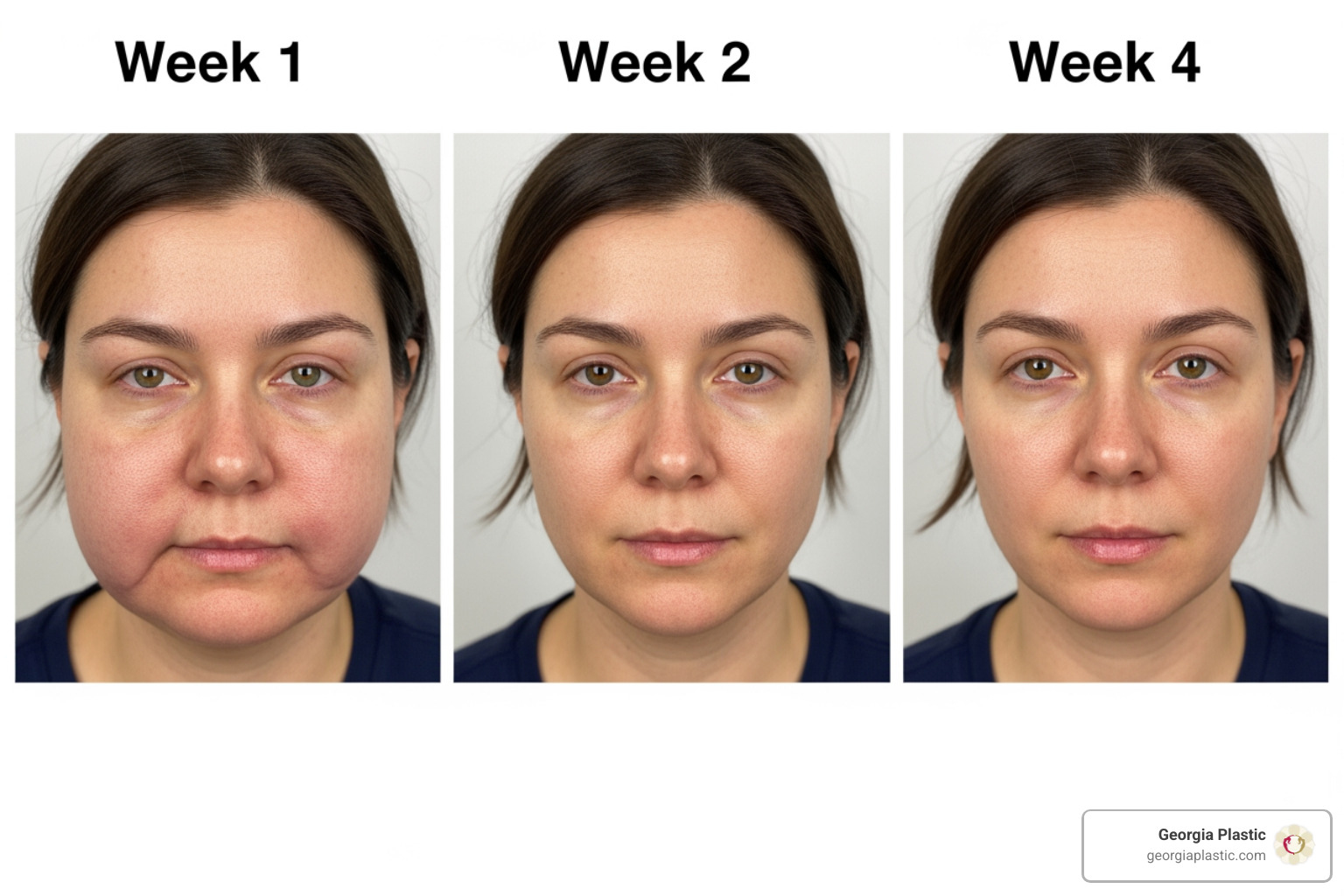
During the first week of your mini facelift recovery, swelling will peak around 48-72 hours and then begin to subside. Bruising may appear but usually starts to fade within 10-14 days. We encourage light walking to improve circulation, but avoid bending, lifting, or strenuous activities. We will see you for a follow-up appointment this week to check your progress and remove any sutures.
Many patients can return to non-physical work within a week. Some even schedule their procedure on a Friday and feel ready for their routine by Monday, which is why it’s sometimes called a “weekend facelift.” Most feel presentable enough to go out as swelling and bruising diminish. For more on this, visit our Weekend Facelift page.
Weeks 2-4: Returning to Normalcy
This period marks significant progress. About 70% of the initial swelling resolves within the first two weeks. By week two, most visible signs of surgery will have faded, and you’ll start seeing your refreshed appearance. You can often resume most social activities with confidence. Makeup can be worn seven to ten days after surgery, once incisions are healed, to cover any lingering bruising.
Light exercise, like brisk walking, can generally be resumed after three weeks. However, wait at least four to six weeks before returning to intense cardio, strength training, or weightlifting. By weeks 3-4, your face will look smoother and incision lines will continue to fade, putting you well on your way to enjoying your revitalized look!
Essential Aftercare for Optimal Healing and Results
The success of your mini facelift recovery depends heavily on your aftercare. At Georgia Plastic, we provide comprehensive post-operative instructions to optimize healing, minimize discomfort, and ensure beautiful, natural-looking results. This dedication to patient care is how we help you Look and Feel Younger After a Facelift.
Managing Comfort and Healing at Home
Proper positioning is crucial immediately after surgery. We recommend sleeping with your head liftd at a 30- to 45-degree angle for about a month. Using extra pillows or a wedge pillow helps reduce swelling and prevents pressure on your incisions. Most patients can resume their normal sleeping position after about a month.
You will also wear a compression garment, or chinstrap, after your mini facelift. This vital device helps reduce swelling and bruising, allowing you to heal more quickly. You’ll likely wear it constantly for the first few days, then only at night for up to three weeks.
Pain is typically mild and manageable with prescribed medications. It’s important to take these as directed and avoid over-the-counter pain relievers like aspirin or ibuprofen, which can increase bruising. Our surgical techniques, including careful manipulation of the SMAS layer, contribute to a smoother recovery. You can learn more about advancements in these techniques by reviewing resources like this systematic review on SMAS facelift techniques. Remember to keep your head liftd and avoid bending over for the initial recovery period.
Diet and Lifestyle to Support Your Mini Facelift Recovery
Your diet and lifestyle during mini facelift recovery can significantly impact healing. A nutritious diet provides the building blocks your body needs to repair itself.
Here’s what we recommend:
- Protein-Rich Foods: Eat plenty of lean proteins like chicken, fish, and legumes to aid tissue repair.
- Vitamins C & E: Found in citrus fruits, leafy greens, and nuts, these antioxidants support collagen production.
- Hydration: Drink plenty of water to flush out toxins and maintain skin elasticity.
- Foods to Avoid: Limit salty foods, which can worsen swelling, and sugary or processed foods, which can promote inflammation.
- Alcohol Avoidance: Avoid alcohol for at least two weeks post-surgery, as it can delay healing and interfere with medications.
- Smoking Cessation: You must stop all nicotine use at least six weeks before and throughout your recovery. Smoking severely compromises blood flow and can lead to complications and poor scarring.
Incision and Scar Care for Minimal Visibility
Mini facelift incisions are strategically placed in the natural creases around your ears and hairline to be as inconspicuous as possible. With proper care, these scars will fade dramatically.
Our instructions for incision care are vital:
- Gentle Cleaning: Once cleared by us, gently clean your incisions and pat them dry. Keeping them clean and lightly moisturized helps prevent crusting.
- Sun Protection: Protect healing scars from the sun for at least six months. UV rays can permanently darken scars. Use a broad-spectrum sunscreen with SPF 30 or higher daily.
- Silicone Scar Treatments: After about four weeks, once incisions are fully healed, you can use silicone-based scar gels or sheeting. Studies show these products can significantly improve scar appearance.
Incisions heal dramatically within a month and continue to fade over the following months. By six months, your scars should be practically unnoticeable. Our meticulous techniques and your diligent aftercare ensure the visible signs of surgery are minimal. We also explore options like Face Lift Without Cutting for those interested in less invasive approaches.
From Healing to Final Results: What to Expect
The mini facelift recovery journey culminates in revealing your refreshed appearance. While the initial weeks are for healing, the following months are when your final, dazzling results emerge. At Georgia Plastic, we take pride in our Gallery Facelift where you can see the natural outcomes our patients achieve.
When Will I See My Dazzling Results?
Patience is key when it comes to cosmetic surgery. While you’ll see improvements once major swelling subsides around two weeks, the true “dazzling” effect takes longer to manifest.
- Initial Results (2 weeks): With most significant swelling and bruising gone, you’ll see a more defined jawline and a subtle lift. You’ll likely feel comfortable in social settings.
- Final Look Emerges (3-6 months): This is when your final results truly shine. As residual swelling disappears and tissues settle, your facial contours will soften and refine. Improvements can continue for up to a year.
- Numbness Fading: It’s common to have temporary numbness in treated areas, which typically fades within a year as nerve endings regenerate.
Full recovery takes about six weeks, but you’ll look and feel great much sooner. The gradual healing process ensures your results appear natural and harmonious.
Potential Complications and Red Flags During Your Mini Facelift Recovery
While mini facelift recovery is generally smooth, it’s important to be aware of potential complications. Complication rates for procedures performed by board-certified surgeons are very low, typically below 2%, but we prioritize your safety and want you to be informed.
Contact us immediately if you experience any of these warning signs:
- Excessive Bleeding: Persistent bleeding that soaks through dressings.
- Sudden Unilateral Swelling: If one side of your face suddenly swells much more than the other.
- Fever: A temperature above 38°C (100.4°F).
- Foul-Smelling Discharge: Any odorous discharge from your incisions.
- Severe Pain: Pain that is not relieved by your prescribed medication.
- Rapidly Spreading Redness: Increasing or spreading redness around your incisions.
Maintaining Your Youthful Look Long-Term
A mini facelift offers remarkable rejuvenation, but it doesn’t stop the aging process. To maintain your results for as long as possible—typically 5 to 10 years—a commitment to long-term care is key.
Here are our top recommendations:
- Consistent Skincare Routine: Use high-quality, medical-grade skincare products suited to your skin type.
- Sun Protection: Daily use of a broad-spectrum SPF 30+ is the most effective way to prevent skin aging and protect your scars.
- Healthy Lifestyle: A balanced diet, regular exercise, and adequate hydration contribute to healthy skin and help maintain your surgical results. Avoid significant weight fluctuations.
- Complementary Treatments: Non-surgical treatments can extend your results. Options like dermal fillers, Botox, and skin tightening treatments like Ultherapy for Non-Surgical Facelift can be discussed during your follow-up appointments.
By embracing these habits, you can enjoy your revitalized appearance for years to come.
Frequently Asked Questions about Mini Facelift Recovery
We know you have questions about mini facelift recovery. Here are clear, straightforward answers to some of the most common inquiries.
How long does swelling and bruising typically last?
Swelling and bruising are normal, but their duration varies.
- Swelling: Swelling is most noticeable in the first 48-72 hours. About 70% resolves within two weeks, with the remaining subtle swelling improving over three to six months.
- Bruising: Most bruising fades within 10 to 14 days.
- Concealer Makeup: Once incisions are healed (usually 7-10 days), you can use hypoallergenic makeup to cover any discoloration. Green-tinted concealers neutralize redness, while yellow-tinted ones mask bruising.
- Individual Variation: Everyone heals at a different pace, influenced by physiology and adherence to aftercare instructions.
When can I resume exercise and physical activity?
We advise a gradual return to physical activity during your mini facelift recovery.
- Light Walking: Start gentle walking immediately to improve circulation.
- Intense Cardio: Wait at least three weeks before resuming activities like running or aerobics. Increased blood pressure can worsen swelling.
- Strength Training/Weightlifting: Pause for four to six weeks before any activity that involves straining or heavy lifting to allow tissues to strengthen.
- Listen to Your Body: If an activity causes pain or increased swelling, stop and rest. We will provide personalized guidelines at your follow-up appointments.
Can I travel after a mini facelift?
Travel is feasible with proper timing.
- Local Travel: Short car rides are generally fine within one to two weeks, once you feel comfortable.
- Domestic Flights: We advise waiting 10 to 14 days to allow initial swelling to subside.
- International Flights: For longer flights, it’s best to wait three to four weeks to reduce the risk of increased swelling or blood clots.
- Activity Restrictions Still Apply: Regardless of when you travel, avoid lifting heavy luggage and walk around frequently on flights. Always discuss travel plans with us for personalized advice.
Begin Your Rejuvenation Journey with Confidence
Starting on a mini facelift recovery journey is a step toward a refreshed, more confident you. The benefits include a quicker recovery than a traditional facelift and natural-looking results that subtly improve your features.
At Georgia Plastic & Reconstructive Surgery, our goal is to ensure your entire experience is safe, comfortable, and leads to the dazzling results you envision. We provide personalized care, guiding you through every stage of the healing process with expert support.
Following our post-operative instructions is paramount to achieving the best possible outcome. If you’re ready to explore your options for facial rejuvenation, we invite you to connect with us. Let us help you achieve a naturally youthful appearance that reflects how vibrant you feel. Find out more by exploring our facial rejuvenation options.


