
What Is a Panniculectomy? A Quick Answer
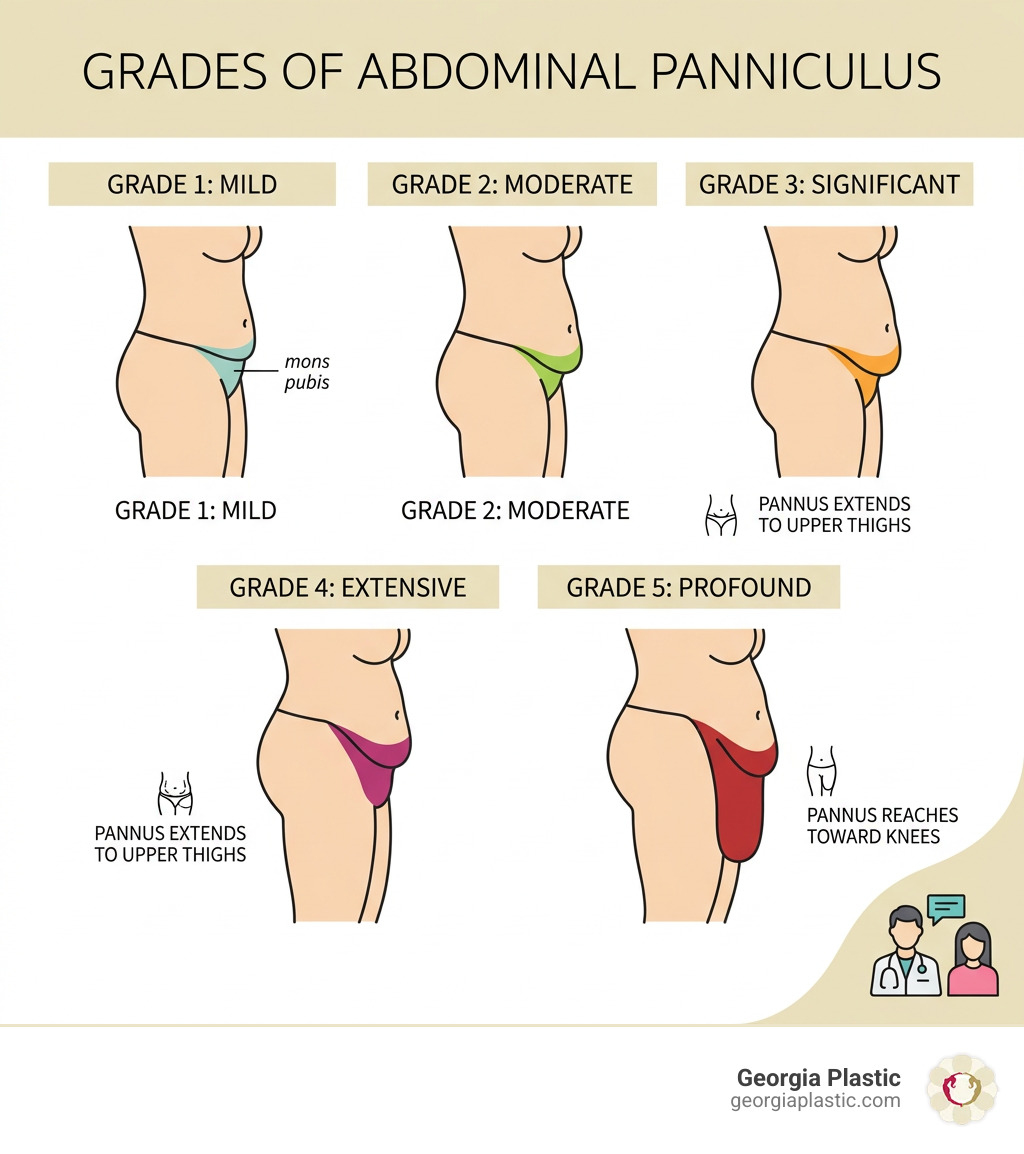
Panniculectomy is a surgical procedure that removes the hanging apron of excess skin and fat — called a pannus — from the lower abdomen.
Quick facts:
- What it removes: Overhanging skin and fat from the lower belly
- What it does NOT do: Tighten abdominal muscles (that’s a tummy tuck)
- Who it’s for: People with excess skin after major weight loss, pregnancy, or aging
- Is it cosmetic? Not always — it’s often medically necessary
- Insurance coverage: Possible if the pannus causes rashes, infections, or mobility problems
- Recovery time: About 4 weeks to return to work; up to 2 years for final results
- Cost (before insurance): Roughly $8,000 to $15,000
This surgery is not a weight loss tool. It’s a functional procedure that addresses real health problems — like skin infections, hygiene difficulties, and limited mobility — caused by excess abdominal skin.
Imagine losing over 100 pounds after bariatric surgery, only to find a heavy fold of skin hanging over your hips and thighs, causing constant rashes and making it hard to walk comfortably. That’s exactly the kind of problem a panniculectomy is designed to solve.
I’m Dr. Stanley Okoro, a double board-certified plastic surgeon and founder of Georgia Plastic and Reconstructive Surgery, with extensive experience performing body contouring procedures — including panniculectomy — for patients seeking both functional relief and improved confidence. In this guide, I’ll walk you through everything you need to know, from candidacy and surgical technique to recovery and long-term results.
What is a Panniculectomy and How Does it Differ from a Tummy Tuck?
When we talk about abdominal surgery, the term “tummy tuck” (abdominoplasty) usually steals the spotlight. However, for many of our patients, a panniculectomy is the more appropriate, and often medically necessary, choice.
The primary difference lies in the goal of the surgery. A panniculectomy is a functional procedure designed to remove a “pannus”—that apron of skin and subcutaneous adipose tissue that hangs down over the thighs or genitals. In contrast, a tummy tuck is primarily cosmetic, focusing on creating a slim waistline by tightening the underlying abdominal muscles (muscle plication).
| Feature | Panniculectomy | Tummy Tuck (Abdominoplasty) |
|---|---|---|
| Primary Goal | Functional: Removes hanging skin apron | Cosmetic: Flattens and shapes the belly |
| Muscle Tightening | No | Yes (Muscle plication) |
| Belly Button | May be repositioned or removed | Almost always repositioned |
| Medical Necessity | Often covered by insurance | Rarely covered (Cosmetic) |
| Target Tissue | Excess skin and fat (Pannus) | Skin, fat, and loose muscles |
While we often perform panniculectomy services for patients who have undergone massive weight loss, it is important to understand that this is a major operation. According to scientific research on abdominal wall contouring, the procedure involves removing the skin and fat “en bloc” (as one whole piece), which can weigh anywhere from a few pounds to over 50 pounds in extreme cases.
Candidacy and Medical Indications for Panniculectomy Surgery
Who is the right candidate for this life-changing procedure? We generally look for patients who are struggling with the physical burdens of excess skin rather than those just looking for a “snatched” waistline.
Common medical indications include:
- Intertrigo and Infections: Chronic rashes, fungal infections, or sores that develop in the moisture-trapping folds of the skin.
- Mobility Issues: A large pannus can interfere with walking, sitting, or even standing, leading to back pain and physical limitations.
- Hygiene Challenges: Difficulty maintaining cleanliness in the deep skin folds.
- Massive Weight Loss: Patients who have lost 100 pounds or more, often through bariatric surgery, frequently find that their skin lacks the elasticity to “shrink back.”
To be a good candidate, we require that you have maintained a stable weight for at least six months (and ideally 12 to 18 months if you’ve had weight loss surgery). Being a non-smoker is also non-negotiable, as smoking severely impairs the body’s ability to heal and increases the risk of skin necrosis. Scientific research on post-bariatric skin issues highlights that excess skin is not just an aesthetic concern but a significant factor in a patient’s quality of life. At Georgia Plastic, we help you treat excess skin with panniculectomy to restore your comfort and mobility.

Is a Panniculectomy Covered by Insurance?
This is the question we hear most often! Because a panniculectomy addresses functional health problems, it is much more likely to be covered by insurance than a tummy tuck. However, insurance companies have strict criteria.
Typically, you must provide documentation of:
- A pannus that hangs below the level of the pubis.
- Chronic skin issues (rashes or ulcers) that have failed at least three months of conservative medical treatment (like prescription creams or powders).
- Functional impairment, such as difficulty with walking or daily activities.
In some cases, we can perform this surgery in conjunction with other medical procedures, such as a hysterectomy and panniculectomy, which may help with insurance authorization if both are deemed medically necessary.
Preparing for Your Panniculectomy Surgery
Preparation is the key to a smooth recovery. During your consultation, we will take a detailed medical history and discuss any medications you are taking.
- Smoking Cessation: You must stop smoking at least several weeks before and after surgery.
- Medication Adjustments: We will ask you to stop taking blood thinners, including aspirin, ibuprofen, and certain herbal supplements, as these can increase bleeding risks.
- Fasting: You’ll receive specific instructions on when to stop eating and drinking the night before your procedure.
- Support System: Ensure you have someone to drive you home and help you around the house for the first week.
If you are wondering what does a panniculectomy entail in terms of prep, think of it as “pre-hab.” The healthier you are going in, the faster you’ll bounce back.
The Surgical Procedure and Recovery Timeline
The surgery is performed under general anesthesia and typically takes two to five hours, depending on the size of the pannus. We begin with a horizontal incision in the suprapubic crease, extending toward the hip bones (ASIS). We then excise the excess skin and fat en bloc.
A key technical detail we prioritize is Scarpa fascia preservation. By leaving this deep layer of connective tissue intact, we can significantly reduce the risk of fluid buildup (seromas) and improve the overall healing of the wound. Once the tissue is removed, we place suction drains to manage any fluid and close the incision in multiple layers.
The Recovery Stages
Recovery is a marathon, not a sprint. Here is what you can generally expect:
- The First 48 Hours: You may stay in the hospital for a day or two. We will encourage you to walk a few steps almost immediately to prevent blood clots.
- Weeks 1-2: You will wear a tight abdominal binder or compression garment to support the area and reduce swelling. You’ll need to walk slightly hunched over to avoid putting tension on the stitches.
- Weeks 3-4: Most patients can return to desk jobs around the four-week mark. Drains are usually removed once the output is less than 30 mL per day.
- Months 3-6: Most swelling subsides by month three, and you can resume more strenuous activities.
For more detailed home care, you can refer to resources like Panniculectomy: What to Expect at Home. We also occasionally perform tummy tuck, liposuction, and hysterectomy combinations for patients who want to address multiple concerns in a single session.
Risks, Complications, and Long-Term Results
Every major surgery carries risks. For a panniculectomy, the most common complication is a seroma (a pocket of fluid). Other potential issues include:
- Wound Dehiscence: The incision pulling apart, often due to tension or poor blood flow.
- Hematoma: A collection of blood under the skin.
- Infection: Prevented with sterile techniques and post-op antibiotics.
- Skin Necrosis: Death of skin tissue, most common in smokers or those with uncontrolled diabetes.
Scientific research on complication predictive factors shows that complication rates can vary widely—from 8% to over 50%—depending on the patient’s pre-operative health and BMI. This is why we are so diligent about patient selection at our panniculectomy Atlanta facility.
The long-term results are generally excellent. While it takes about three months for major swelling to disappear, it can take up to two years for scars to fully fade and for the final contour to settle.
Managing Weight Fluctuations After a Panniculectomy
A panniculectomy provides permanent results because the fat cells and excess skin are physically removed. However, the remaining skin still has the capacity to stretch. If a patient gains a significant amount of weight after the procedure, the results will be diminished.
Interestingly, scientific research on long-term weight gain post-contouring found that patients who had these procedures after weight loss surgery only gained an average of 4% of their weight back over 12 years. This suggests that the psychological boost of seeing your new body often helps you stay committed to a healthy lifestyle!
Frequently Asked Questions about Panniculectomy
How much does a panniculectomy cost without insurance?
If insurance does not cover the procedure, the cost typically ranges from $8,000 to $15,000. This includes the surgeon’s fee, anesthesia, and the facility fee. At Georgia Plastic, we provide transparent pricing and financing options to help make the procedure accessible.
How long does it take for swelling to go down?
While you will see an immediate difference, the “final” look won’t be apparent for about three months. Residual, minor swelling can linger for up to six months, especially at the end of a long day of standing.
Can I get a panniculectomy and a hysterectomy at the same time?
Yes! Combining a hysterectomy and tummy tuck or panniculectomy is quite common. It allows you to undergo one anesthesia session and one recovery period. We coordinate closely with your gynecologist to ensure the highest level of safety.
Conclusion
A panniculectomy is more than just a surgical procedure; for many, it is the final step in a long journey toward health and self-reclamation. By removing the physical and emotional weight of excess skin, we help our patients live more active, comfortable, and confident lives.
At Georgia Plastic & Reconstructive Surgery, Dr. Okoro and our entire team are dedicated to providing personalized care that prioritizes your safety and delivers natural-looking results. We understand the unique challenges faced by patients after massive weight loss and are here to guide you through every step of the process.
Ready to take the next step? Schedule a consultation for a panniculectomy with us today and let’s discuss how we can help you achieve the abdominal contour you deserve.


