
How Much Is Liposuction? Here’s What to Expect in 2026
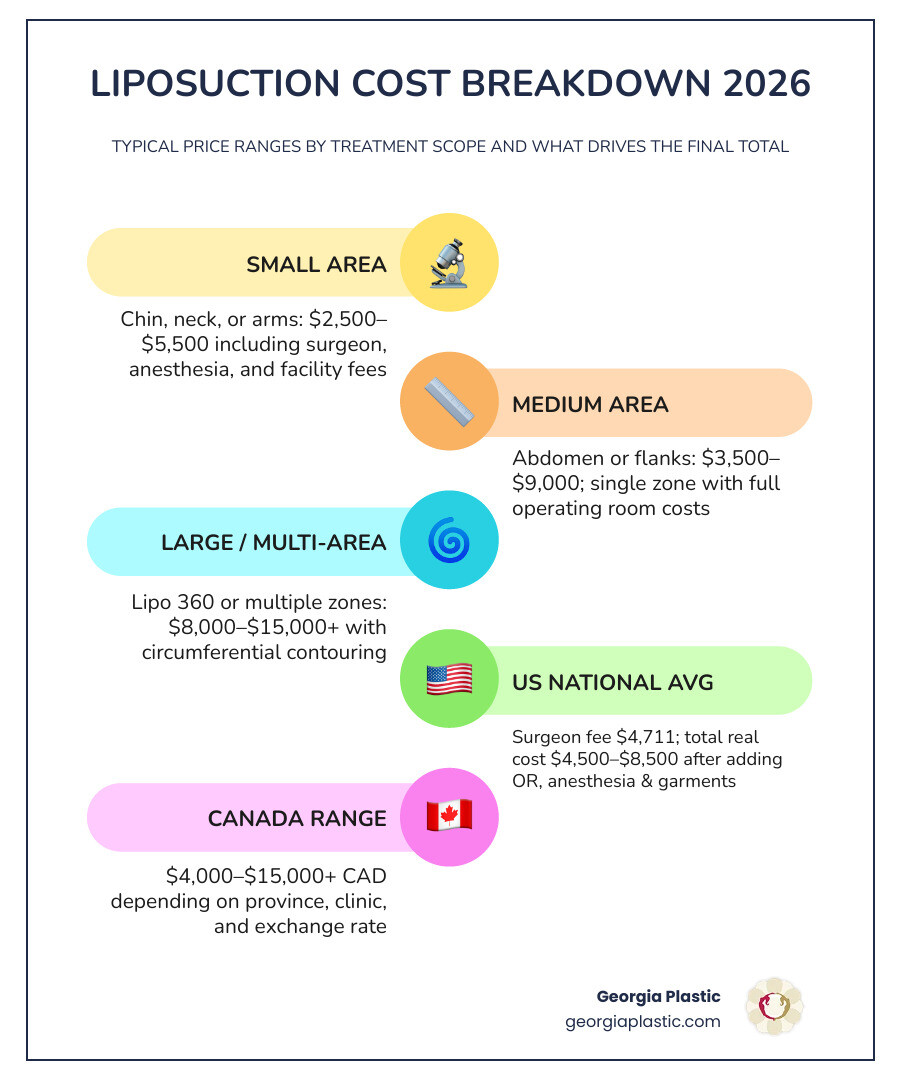
How much is liposuction is one of the first questions people ask — and the short answer is: it depends on where you’re treated, how many areas are involved, and which technique is used.
Here’s a quick snapshot of typical costs:
| Location / Scope | Typical Total Cost Range |
|---|---|
| US national average (single area, all fees) | $4,500 – $8,500 |
| Small area (e.g., chin, arms) | $2,500 – $5,500 |
| Medium area (e.g., abdomen, flanks) | $3,500 – $9,000 |
| Large or multi-area (e.g., Lipo 360) | $8,000 – $15,000+ |
| Canada (varies by province and clinic) | $4,000 – $15,000+ |
Important: The American Society of Plastic Surgeons reports an average surgeon fee of $4,711 — but that number excludes anesthesia, the operating room, garments, and follow-up care. Your real out-of-pocket cost will be higher.
These numbers are a starting point. Every quote is different, and several factors — surgeon experience, facility type, and technique — can push the final price up or down significantly. This guide breaks all of that down clearly.
I’m Dr. Stanley Okoro, a double board-certified plastic surgeon and founder of Georgia Plastic and Reconstructive Surgery, with years of experience performing liposuction and body contouring procedures across a wide range of patient goals and budgets. Helping patients understand exactly how much is liposuction — and what drives those costs — is something I prioritize in every consultation, so you can make a confident, informed decision before committing to surgery.
What is Liposuction and How Does it Work?
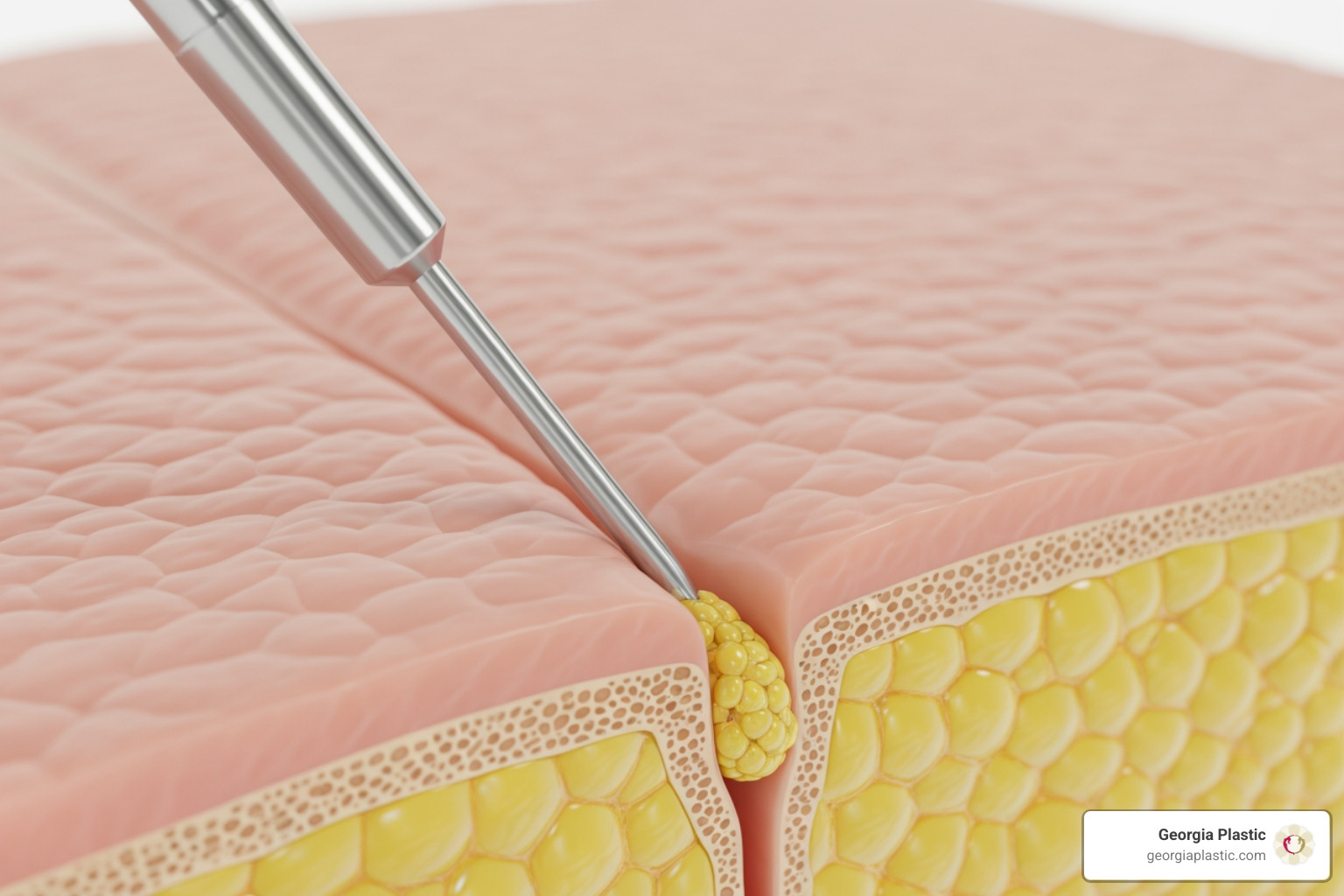
At its heart, liposuction is a surgical procedure designed to remove excess fat from specific areas of the body. Also known as “lipo” or suction-assisted lipectomy, it involves the use of a thin, hollow tube called a cannula. This cannula is inserted through tiny incisions in the skin, where it is used to break up fat cells and suction them out of the body using a medical vacuum.
We often describe the process as a way to “sculpt” the body. By removing localized fat deposits, we can improve your body’s proportions and create a more defined silhouette. It is one of the most popular cosmetic surgeries worldwide because it offers a permanent solution for fat cells that simply won’t budge. If you’ve ever wondered what can liposuction do for me?, the answer is quite a lot—from refining a jawline to slimming down the thighs.
It is also helpful to understand the terminology. You might hear the terms “liposuction” and “liposculpture” used interchangeably. While they are similar, there are nuances in the approach. If you want to dive deeper, we have a guide on is it liposuction or liposculpture: how to tell the difference.
Body Contouring vs. Weight Loss
One of the biggest misconceptions we hear is that liposuction is a weight-loss tool. We want to be very clear: it is not. Liposuction is a body-contouring procedure.
While you will technically lose a few pounds as the fat is removed, the primary goal is to target “stubborn fat”—those pockets that remain even when you are at or near your goal weight. Ideal candidates are generally within 30% of their ideal weight and have good skin elasticity. If the skin is too loose, it may not “snap back” over the new, slimmer contours, which is why we often discuss liposuction effective fat reduction in the context of overall skin health and BMI requirements.
Advanced Techniques and Technology
In 2026, we have more tools in our kit than ever before. Traditional tumescent liposuction (using a saline solution to numb the area and shrink blood vessels) is still the gold standard, but advanced technologies can make the process even more precise:
- VASER Liposuction: This uses ultrasound waves to “liquefy” fat before it’s removed. It’s like turning a block of butter into a smoothie, making it much easier to suction out while protecting surrounding tissues.
- SmartLipo/Laser-Assisted: This uses laser energy to melt fat and can also provide a slight skin-tightening effect.
- Power-Assisted Liposuction (PAL): This uses a vibrating cannula to break up tough fat more quickly.
These techniques provide permanent fat removal with liposuction, as the fat cells removed during the procedure do not grow back. However, keep in mind that remaining fat cells can still expand if you gain weight, so a stable lifestyle is key.
How Much is Liposuction? National and Regional Averages
When patients ask how much is liposuction, they are often looking for a single number. However, the price is a mosaic of different fees. As of May 2026, the national average surgeon’s fee in the US is approximately $4,711. But remember, that is just the “talent fee” for the surgeon.
When you add in anesthesia, facility fees, and surgical supplies, the liposuction cost: $3,637 avg in 2026 ($2,000–$8,000) data from some sources can be a bit misleading if you don’t look at the “all-in” price. For a comprehensive look at these variables, check out our liposuction cost 101 guide.
Understanding how much is liposuction in the US vs Canada
If you are looking at North American averages, Canada and the US have similar pricing structures, though the currency and healthcare systems differ.
In Canada, costs typically range from $4,000 to $15,000 CAD. For example, in Ontario, a single area might start around $6,999, while more complex “360” procedures can reach $21,000. In the US, our Atlanta liposuction complete guide shows that pricing is highly competitive but varies based on the market, provider, and facility.
Regional price variations for how much is liposuction
Where you have your surgery matters. High-rent districts like Beverly Hills, Manhattan, or downtown Toronto naturally have higher overhead expenses.
- High-Cost Hubs: NYC, LA, and Miami often see prices 15-30% above the national average.
- Mid-Market Cities: Many cities across the US offer a balance of experienced surgeons and somewhat more moderate facility fees than the coasts.
- The South: Cities like Atlanta offer world-class surgeons and accredited facilities with pricing that often falls in the middle of the national range, providing excellent value for the level of care.
Breakdown of Liposuction Costs by Body Area
The size and number of “zones” treated are the biggest drivers of the final bill. Most surgeons charge a base price for the first area and a discounted rate for additional areas performed in the same session.
| Body Area | Estimated Total Cost (All-In) |
|---|---|
| Chin / Neck | $2,500 – $5,500 |
| Upper Arms | $3,500 – $6,500 |
| Abdomen (Upper and Lower) | $5,000 – $9,000 |
| Flanks (Love Handles) | $3,500 – $6,500 |
| Thighs (Inner or Outer) | $4,000 – $8,000 |
| Back / Bra Roll | $3,000 – $6,000 |
Facial and Small Area Contouring
For areas like the chin and neck, we use specialized precision tools. While the area is small, it requires a high level of artistry because the results are front and center. Submental (under the chin) liposuction is also increasingly popular for men looking for a more “chiseled” jawline. You can read more about tailored approaches in liposuction for men.
Midsection and Large Area Procedures
The stomach is the most common area treated. Because it often involves multiple “sub-zones” (upper abs, lower abs, and the waist), it is usually more expensive than a single small area. If you’re curious about the specifics, we’ve written a dedicated post on how much does it cost to get liposuction on your stomach.
For those looking for a total transformation, “Lipo 360” (or circumferential contouring) targets the entire midsection—front, sides, and back. This is a more intensive procedure, and our liposuction cost Atlanta guide notes that these comprehensive packages usually start around $8,000 to $12,000+.
Factors Influencing Your Total Liposuction Quote
Why does one person get a quote for $5,000 and another for $10,000 for the “same” area? It usually comes down to these variables:
- Surgeon Experience: A board-certified surgeon with 20 years of experience will charge more than someone just starting out. You are paying for safety and the “eye” for aesthetics.
- Anesthesia Type: Local anesthesia (where you are awake but numb) is cheaper than general anesthesia (where you are fully asleep), which requires an anesthesiologist or CRNA.
- Facility Type: An accredited private surgical center is generally more cost-effective than a large hospital, though both must meet strict safety standards.
- Technique: Using VASER or SmartLipo technology often adds $1,000 to $2,000 to the base price due to the specialized equipment used.

What is Included in a Surgical Quote?
When you receive a quote from our office, we make sure it is “all-in” so there are no surprises. A transparent quote should include:
- The Surgeon’s Fee
- Anesthesia Fees
- Operating Room/Facility Fees
- Medical Tests and Lab Work
- Compression Garments (essential for healing!)
- Post-operative follow-up visits
- Prescriptions for recovery
Always ask if a quote is an “estimate” or a “total price.” A suspiciously low price often means they are only quoting the surgeon’s fee.
Safety Standards and Fat Removal Limits
Your safety is our absolute priority. There is a limit to how much fat can be safely removed in a single outpatient session. In many jurisdictions, including Ontario and several US states, the safe limit is generally considered to be 5 liters of total fluid (aspirate).
Removing more than this in one go increases the risk of fluid shifts and complications. If a patient needs more fat removed, we recommend staging the procedures 12 weeks apart. This ensures your body has time to recover and maintain its internal balance.
Frequently Asked Questions about Liposuction Costs
Does insurance or OHIP cover the procedure?
Because liposuction is almost always considered an elective cosmetic procedure, insurance plans and government programs like OHIP do not cover it.
However, there are rare exceptions. If liposuction is being used to treat a medical condition like Lipedema (a chronic fat distribution disorder) or as part of a medically necessary breast reconstruction, it may be partially covered. For most of us, though, it’s an out-of-pocket investment. To make it more accessible, we offer financing options through providers like CareCredit and Alphaeon, which allow you to pay in monthly installments.
How long is the recovery and downtime?
Time is money, and we know patients need to get back to their lives. Most people return to desk work within 3 to 7 days. You will need to wear a compression garment 22 hours a day for the first few weeks to help your skin adhere to the new contours and reduce swelling.
While you’ll see an immediate difference, the final “wow” results usually take 3 to 6 months to fully appear as the last of the swelling subsides. Sometimes patients ask about liposuction vs tummy tuck; the recovery for a tummy tuck is significantly longer (2-4 weeks) because it involves muscle repair and skin removal.
What are the age and candidacy requirements?
In Canada and the US, we generally recommend patients be at least 21 years old, as the body and weight patterns should be stable.
The best candidates are:
- Non-smokers (you must stop nicotine several weeks before and after surgery).
- At a stable weight.
- Equipped with realistic expectations.
- In good overall health.
Conclusion
Understanding how much is liposuction is the first step toward the body you’ve worked hard for. While the price tags can vary, the value of feeling confident in your own skin—and finally fitting into those clothes that used to pinch—is often priceless for our patients.
At Georgia Plastic & Reconstructive Surgery, Dr. Okoro and our entire team are dedicated to providing personalized care that prioritizes your safety and delivers natural-looking results. We don’t believe in “cookie-cutter” surgery; we believe in tailoring every procedure to your unique anatomy and goals.
If you’re ready to get a precise, itemized quote and see what’s possible for your body, we invite you to schedule a consultation for accurate pricing. Let’s work together to create a plan that fits your vision and your budget.


