
Understanding Lipedema: A Condition That Affects Millions of Women
Lipedema leg treatment offers hope to the estimated 10-17 million people in the United States—primarily women—who struggle with this chronic condition. Unlike regular fat accumulation, lipedema causes painful, disproportionate fat buildup in the legs that doesn’t respond to diet or exercise.
Key Treatment Options for Lipedema Legs:
- Conservative Management – Compression therapy, manual lymphatic drainage, anti-inflammatory diet, low-impact exercise
- Surgical Intervention – Lymphatic-sparing liposuction techniques (water-jet assisted or power-assisted)
- Advanced Contouring – Thigh lifts and skin excision for excess tissue after fat removal
- Emerging Therapies – GLP-1 medications showing promise for inflammation reduction
Primary Goals of Treatment:
- Reduce leg pain and tenderness
- Decrease limb volume and swelling
- Improve mobility and quality of life
- Prevent progression to advanced stages
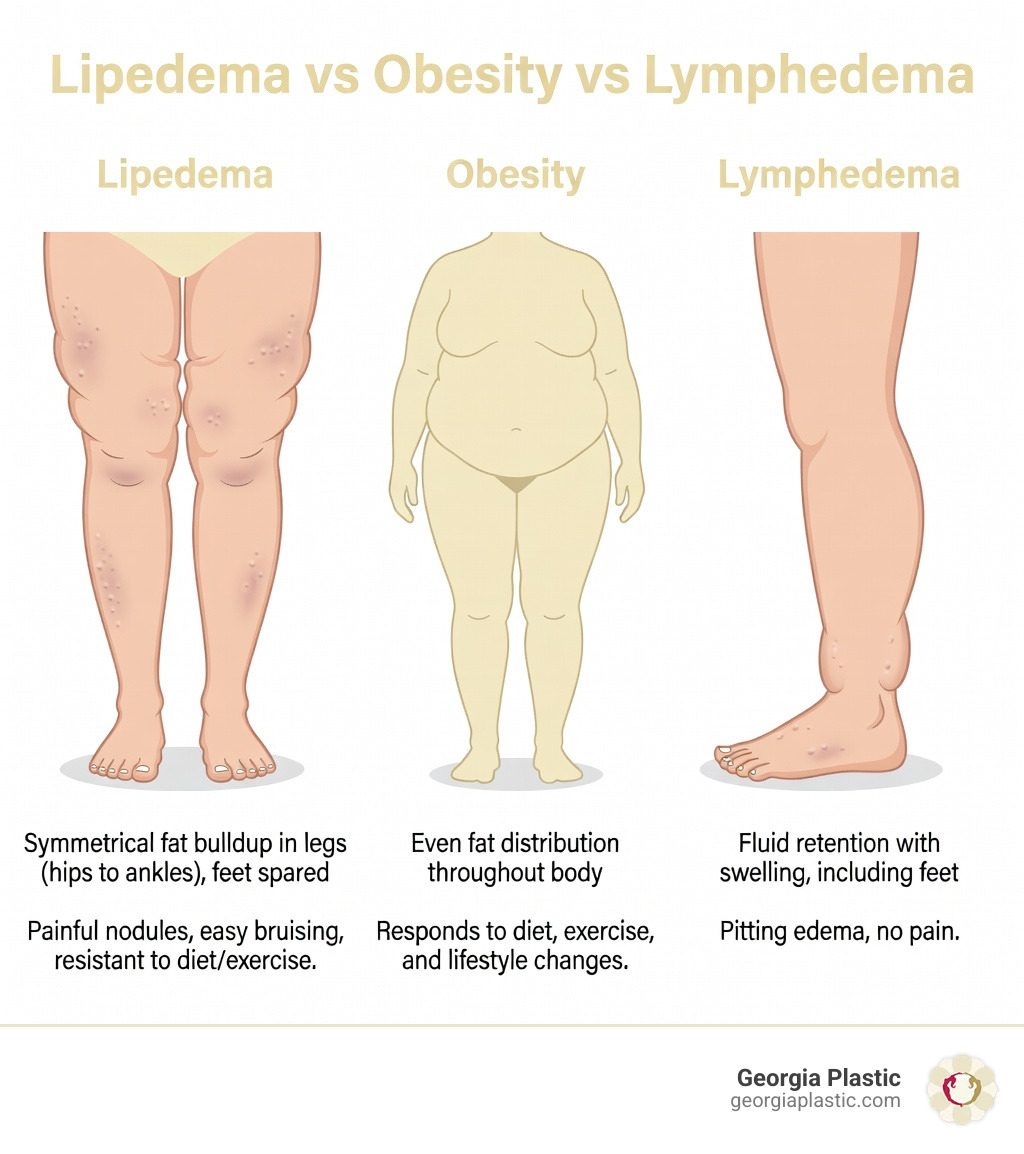
Lipedema is not caused by being overweight. It’s a distinct medical condition that typically begins during hormonal changes like puberty, pregnancy, or menopause. The condition affects legs symmetrically, causes easy bruising, and creates painful nodules under the skin—while notably sparing the feet.
Research shows that early diagnosis can stabilize lipedema progression in the legs. A comprehensive treatment approach combines lifestyle modifications with specialized medical care. Studies demonstrate that following liposuction, 40% of women no longer need lymphatic drainage therapy, and 60% have reduced requirements.
As Dr. Stanley Okoro, a double board-certified plastic surgeon with experience in advanced body contouring, I’ve helped numerous patients find relief through specialized lipedema leg treatment approaches that combine surgical precision with comprehensive post-operative care. My practice focuses on lymphatic-sparing techniques that prioritize both aesthetic outcomes and long-term symptom management.
Understanding Lipedema: Why Leg Fat is Different
If you’ve ever felt like your legs just don’t “match” the rest of your body, you aren’t alone. Lipedema fat is biologically different from the fat associated with general obesity. While “regular” fat is distributed relatively evenly and responds to a calorie deficit, lipedema fat is a chronic health condition characterized by symmetrical swelling and the accumulation of diseased adipose tissue.
One of the most frustrating aspects of this condition is that it is often resistant to traditional weight loss methods. You might lose weight in your face, chest, and waist, but your legs remain the same size. This is because lipedema involves microangiopathy (damage to small blood vessels) and disturbed lymphatic microcirculation.
Common signs that your leg fat is actually lipedema include:
- Symmetrical Swelling: Both legs are affected equally, often creating a “column-like” appearance.
- The “Cuff” Sign: Fat often stops abruptly at the ankles, sparing the feet.
- Painful Nodules: You may feel small, pea-sized grains or larger “walnut” sized nodules under the skin.
- Easy Bruising: The fragile capillaries in the affected tissue break easily, leading to unexplained bruises.
- Hormonal Triggers: Onset or worsening usually coincides with puberty, pregnancy, or menopause. Hormonal changes are believed to be a primary driver of the condition.
The Four Stages of Leg Progression
Lipedema is a progressive disease. Understanding which stage you are in helps us determine the best lipedema leg treatment plan for your specific needs.
| Stage | Skin Appearance | Tissue Texture | Key Symptoms |
|---|---|---|---|
| Stage 1 | Smooth surface | Enlarged hypodermis (fat layer) | Soft fat, “pearl-size” nodules, pain may begin. |
| Stage 2 | Uneven, “mattress” skin | Indentations and larger nodules | Increased pain, heavier feeling in legs. |
| Stage 3 | Large deforming lobules | Thickening with hard nodules | Significant mobility issues, skin folds. |
| Stage 4 | Overlapping folds | Lipolymphedema | Lymphatic system failure, severe swelling. |
How to Get an Accurate Diagnosis for Lipedema Leg Treatment
Getting a diagnosis is often the hardest part of the journey. Many women are told for years that they are simply “obese” or need to “exercise more.” At Georgia Plastic, we know that lipedema requires a specialized clinical eye.
There is currently no single blood test or “biomarker” to confirm lipedema. Instead, diagnosis is based on a thorough medical history and a physical examination. We look for the “Stemmer Sign”—if we can pinch the skin on the top of your foot or toe, it suggests lipedema (because the feet are spared), whereas if the skin is too tight to pinch, it might be lymphedema.
Early intervention is critical. By identifying the condition in Stage 1 or 2, we can implement conservative measures that may stabilize the tissue and prevent the “heavy leg” feeling from becoming debilitating. Organizations like Lipoedema Australia provide excellent resources to help patients prepare for their first clinical consultation.
Non-Surgical Strategies for Managing Leg Pain and Swelling
Before jumping into surgery, we almost always recommend a trial of conservative management. These strategies don’t “cure” the condition, but they are essential for managing pain and reducing the inflammatory load on your body.

- Compression Therapy: This is the cornerstone of non-surgical care. We recommend medical-grade compression garments (often flat-knit) to boost lymphatic flow and provide external support to the tissues. You can find more about compression therapy for lipoedema to understand how it reduces the “heaviness” in the limbs.
- Manual Lymphatic Drainage (MLD): This is a specialized, gentle massage technique that helps move stagnant fluid out of the limb. It’s incredibly soothing for the “aching” pain many patients feel.
- Anti-Inflammatory and Ketogenic Diets: While diet won’t “starve” lipedema fat away, reducing sugar, processed foods, and gluten can significantly lower systemic inflammation. Some patients find that a ketogenic protocol helps reduce the swelling (edema) component of the disease.
- Aquatic Exercise: Water is your best friend! The natural hydrostatic pressure of water acts like a full-body compression garment. Swimming or water aerobics allows for low-impact movement that doesn’t exacerbate joint pain or hypermobility.
- Skin Care: Because lipedema skin can become stretched and fragile, daily moisturizing is vital to prevent dryness and reduce the risk of infections like cellulitis.
Surgical Options: When Liposuction is Recommended
When conservative treatments no longer provide enough relief, or when mobility is severely compromised, we look toward surgical intervention. It is important to note that liposuction for lipedema is not a “cosmetic” procedure—it is a functional surgery designed to remove the diseased tissue that is causing pain and mechanical stress on your joints.
In Atlanta, we specialize in lymphatic-sparing liposuction. Unlike traditional liposuction, which can be aggressive, our goal is to protect the delicate lymphatic vessels while removing as much pathological fat as possible. Scientific research confirms that this approach leads to long-term improvements in quality of life, with many patients reporting a significant reduction in their need for daily MLD or compression.
Surgical Techniques for Lipedema Leg Treatment
We utilize the most advanced technologies to ensure your safety and the best possible contour.
- Water-Jet Assisted Liposuction (WAL): This technique uses a pressurized stream of saline to gently dislodge fat cells. It’s like “power washing” the fat away while leaving nerves and blood vessels intact.
- Power-Assisted Liposuction (PAL): This involves a vibrating cannula that moves at thousands of cycles per minute. It allows us to remove dense, fibrous lipedema nodules with less trauma to your body.
- Tumescent Local Anesthesia: We use a specialized “tumescent” solution that numbs the area and shrinks blood vessels, which minimizes bruising and allows for awake liposuction in many cases.
- Laser-Assisted Options: For some patients, laser liposuction or Smartlipo can be used to help liquefy fat and provide a secondary benefit of skin tightening.
Advanced Body Contour and Skin Tightening
Removing large volumes of fat (sometimes up to 10 liters per session) can leave behind excess skin. This is especially true in Stage 3 cases where the skin has been stretched for decades.
To achieve the best functional and aesthetic result, we may recommend:
- Thighplasty: An Atlanta thighplasty removes the “apron” of skin that can cause chafing and infections in the groin or inner thigh.
- Medial Thigh Lift: This medial thigh lift focuses on the inner leg, which is a common area for painful lipedema lobules.
- Knee Contouring: Many of our patients are thrilled to finally see their kneecaps again after years of thigh liposuction removes the heavy fat deposits around the joint.
Recovery and Long-Term Success After Lipedema Leg Treatment
Recovery from lipedema leg treatment is a marathon, not a sprint. Because we are working with the lymphatic system, you can expect “hard” legs or localized swelling for several weeks as your body heals.
Scientific research on long-term outcomes shows that while the fat cells removed are gone for good, maintaining a healthy lifestyle is key to preventing the remaining cells from expanding. We also keep a close eye on emerging research, including the use of GLP-1 agonists (like Ozempic or Wegovy) which may help manage the inflammatory aspect of the disease in some patients.
Recovery Protocols for Lipedema Leg Treatment
We provide a detailed roadmap for your post-op journey:
- Immediate Movement: We want you walking (short distances) the same day as surgery to prevent blood clots.
- Staged Surgeries: For safety, we usually treat the legs in stages—for example, calves and ankles in one session, and thighs in another—spaced about 3-4 months apart.
- Compression is Key: You will wear medical-grade compression 24/7 for the first few weeks to help the skin adhere to the new contour and reduce swelling.
- Professional Support: We encourage you to utilize resources from Lipoedema UK to connect with support groups who understand the emotional “ups and downs” of recovery.
Frequently Asked Questions about Lipedema
Can lipedema fat be lost through diet and exercise?
Generally, no. While a healthy lifestyle is vital for overall health and managing inflammation, the “lipedema fat” itself is metabolically different and notoriously resistant to calorie restriction. This is why many women feel “defeated” by the gym—they lose weight everywhere except their legs.
Is liposuction for lipedema a permanent solution?
The fat cells removed during liposuction are permanently gone. However, lipedema is a systemic condition. If you gain a significant amount of weight, the remaining fat cells in the body can enlarge. Most patients, however, enjoy a permanent reduction in pain and a lasting improvement in mobility.
How do I find a qualified lipedema specialist?
Look for a board-certified plastic surgeon who has a specific interest in lymphatic diseases and uses lymphatic-sparing techniques (WAL or PAL). Don’t be afraid to ask how many lipedema cases they perform each year!
Conclusion
Managing lipedema is a lifelong journey, but it’s one you don’t have to walk alone. At Georgia Plastic & Reconstructive Surgery, our mission is to provide more than just a surgical procedure; we provide a path back to a life with less pain and more movement.
Led by Dr. Stanley Okoro, we prioritize patient safety and personalized care above all else. Whether you are seeking conservative guidance or are ready for life-changing surgery, we are here to help you achieve natural-looking results and a higher quality of life.
Ready to take the next step? Schedule a consultation for lipedema leg treatment with us today and let’s create a plan that works for you.


