
Understanding Your Chin Implant After Two Decades
Chin implant after 20 years can still look great and function well, but it’s natural to wonder about longevity and potential changes. Here’s what you need to know:
- Lifespan: Most chin implants are designed to last a lifetime, with many patients enjoying their results for 15-20+ years without issues
- Complications: Long-term problems are rare but can include minor bone resorption (typically <2mm), implant shifting, or scar tissue changes
- Stability: The majority of implants remain stable and asymptomatic after two decades
- Revision needs: Only 10-20 years after placement do most patients consider removal or replacement, usually for aesthetic rather than medical reasons
- Material matters: Silicone implants show the lowest complication rates, particularly for nerve issues
If you’ve had your chin implant for two decades, you’re likely part of the success story. Research shows that while minor bone changes can occur—like small erosion where the implant contacts the jaw—these are usually asymptomatic and don’t affect your appearance. The most common reason people seek changes after 20 years isn’t implant failure, but natural aging of the surrounding facial tissues.
That said, it’s important to know what’s normal and what might signal a need for evaluation. Issues like new asymmetry, visible implant edges, chronic discomfort, or dissatisfaction with how your face has aged around the implant are all valid reasons to consult with a plastic surgeon.
As Dr. Stanley Okoro, a double board-certified plastic surgeon with experience in facial rejuvenation and revision procedures, I’ve helped many patients assess their chin implant after 20 years and determine the best path forward, whether that’s enjoying continued results or exploring revision options. My focus is on providing honest guidance based on your individual anatomy and goals.
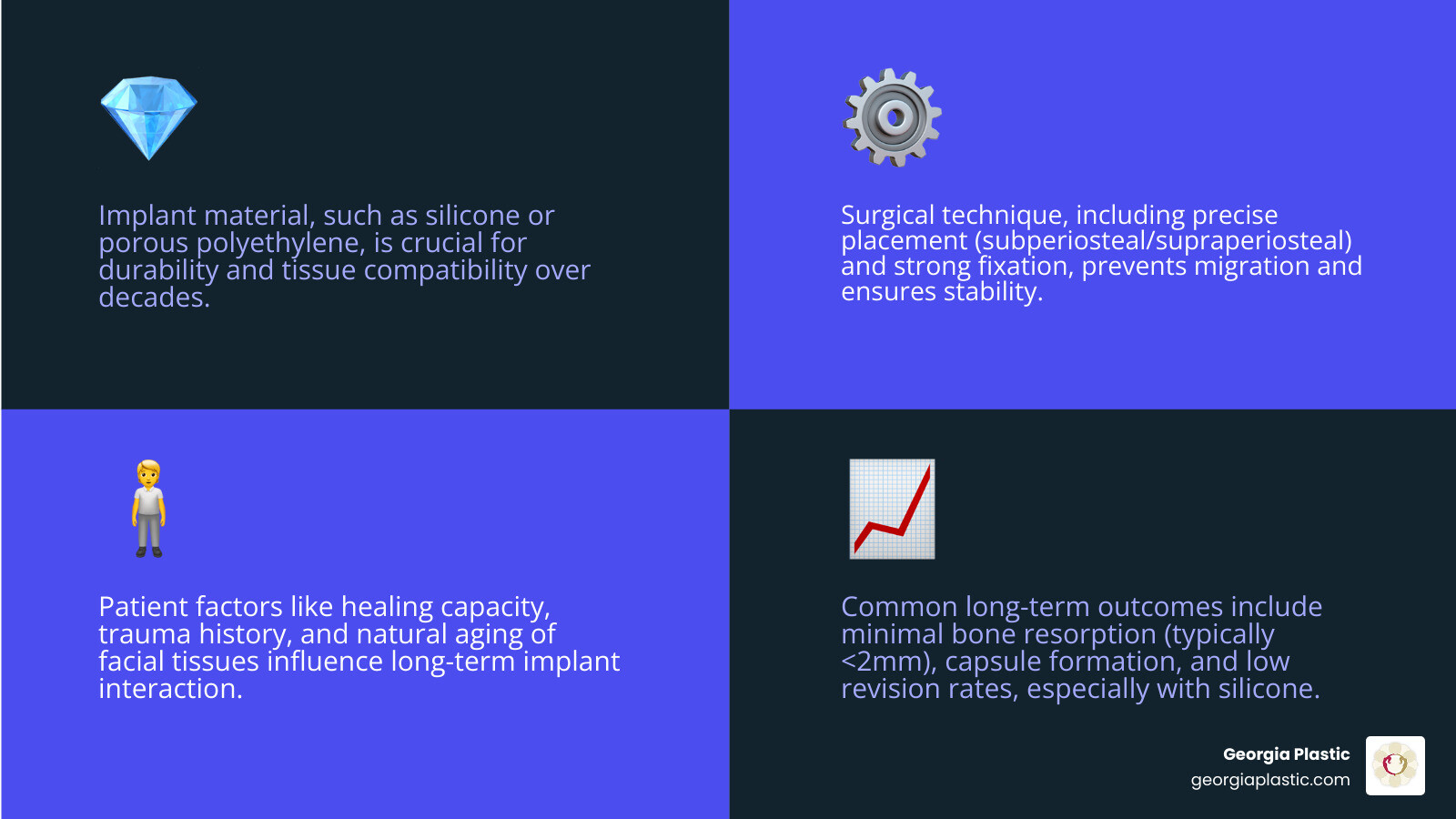
The Lifespan of a Chin Implant: What to Expect After Two Decades
When considering a chin implant, one of the most common questions we hear is, “How long will it last?” It’s a great question, and the good news is that chin implants are largely designed for life. In most cases, these implants remain stable and effective for many, many years, often a lifetime. Patients who received their implants two decades ago often continue to enjoy their results without significant issues.
The reason for this impressive longevity lies in the materials used and the nature of the procedure itself. Chin implants are typically made from durable, biocompatible materials like solid silicone or porous polyethylene, which are well-tolerated by the body. Once properly placed and integrated, they become a stable part of your facial structure. We often describe them as a permanent solution for enhancing facial balance and proportion.
Statistics from various studies support this long-term stability. While some sources suggest a typical patient might consider replacement or removal after 10-20 years, this is often driven by changing aesthetic preferences or the natural aging process rather than implant failure. With proper care, your chin implant can remain in place indefinitely, requiring no frequent maintenance once the initial healing is complete. Patient satisfaction rates for chin augmentation are remarkably high, often ranging between 85% and 90%, even over extended periods.
It’s truly a testament to modern plastic surgery that a chin implant after 20 years can still provide the desired aesthetic improvement and structural support. For more details on the typical duration, you can visit our page on How Long Does Chin Implants Last?.
Factors Influencing Implant Durability
While chin implants are generally long-lasting, several factors contribute to their overall durability and how well they perform over two decades or more. Understanding these elements can help set realistic expectations and inform decisions if revision becomes necessary.
- Implant Material: As we discussed, the material plays a crucial role. Silicone implants, for example, are known for their flexibility, comfort, and long-lasting results. Other materials like porous polyethylene (HDPE) and expanded polytetrafluoroethylene (ePTFE) also offer excellent durability, with some differences in how they interact with surrounding tissues. We’ll dig deeper into material specifics shortly.
- Surgical Technique: The skill and approach of your surgeon are paramount. Proper placement of the implant in a precisely created pocket, ideally against the bone and secured, significantly reduces the risk of long-term issues like shifting. An experienced surgeon like those at Georgia Plastic & Reconstructive Surgery understands the nuances of facial anatomy and uses techniques to ensure optimal stability. You can learn more about our commitment to excellence and meet our skilled professionals at Surgical expertise.
- Patient’s Healing Process: Every individual heals differently. A healthy healing response, free from complications like infection, sets the stage for long-term success. Following post-operative care instructions diligently is key to this process.
- Facial Trauma: While chin implants are resilient, significant blunt force trauma to the face can potentially affect the implant’s position or integrity. This is a rare occurrence but a factor to consider in the context of implant longevity.
- Significant Weight Changes: Extreme fluctuations in body weight can alter facial contours, which might subtly affect the overall appearance of the chin area, even if the implant itself remains stable.
A combination of a high-quality implant, expert surgical placement, and good patient care contributes to the remarkable durability of a chin implant after 20 years.
How Aging Affects Your Chin Implant
Even with a perfectly stable chin implant, the natural aging process continues, and this can affect the overall appearance of your chin and lower face over time. It’s not usually the implant itself that changes, but rather the tissues around it.
- Changes in Surrounding Soft Tissues: As we age, our skin naturally loses elasticity and collagen, leading to skin laxity. The fat pads in the face can also shift or diminish. This means that while your implant provides consistent projection, the overlying skin and soft tissues may sag, potentially altering the perceived definition or contour of your chin.
- Jawbone Remodeling: Beyond the direct contact with the implant, the jawbone itself undergoes subtle remodeling throughout life. While studies show bone resorption directly under implants is often minimal and asymptomatic, the overall structure of the jaw can change, which might subtly influence how the chin appears.
- Maintaining Facial Harmony: The chin doesn’t exist in isolation. As other facial features age—the neck, jowls, and midface—they can impact the overall harmony that the chin implant initially achieved. What looked perfectly balanced at 30 might appear less so at 50, not because the implant has failed, but because the rest of the face has changed.
This is why some patients, even with a perfectly functioning chin implant after 20 years, might consider complementary procedures to maintain overall facial harmony. Options like a Facelift or a Neck Lift can address sagging skin and jowls, bringing the entire lower face into renewed balance with the chin projection provided by the implant. It’s about looking at the bigger picture of facial rejuvenation.
Potential Long-Term Complications of a Chin Implant After 20 Years
While chin implants have an excellent safety record, it’s wise to be aware of potential long-term complications, even if they are rare. For a chin implant after 20 years, most patients remain asymptomatic, but some issues can warrant attention.
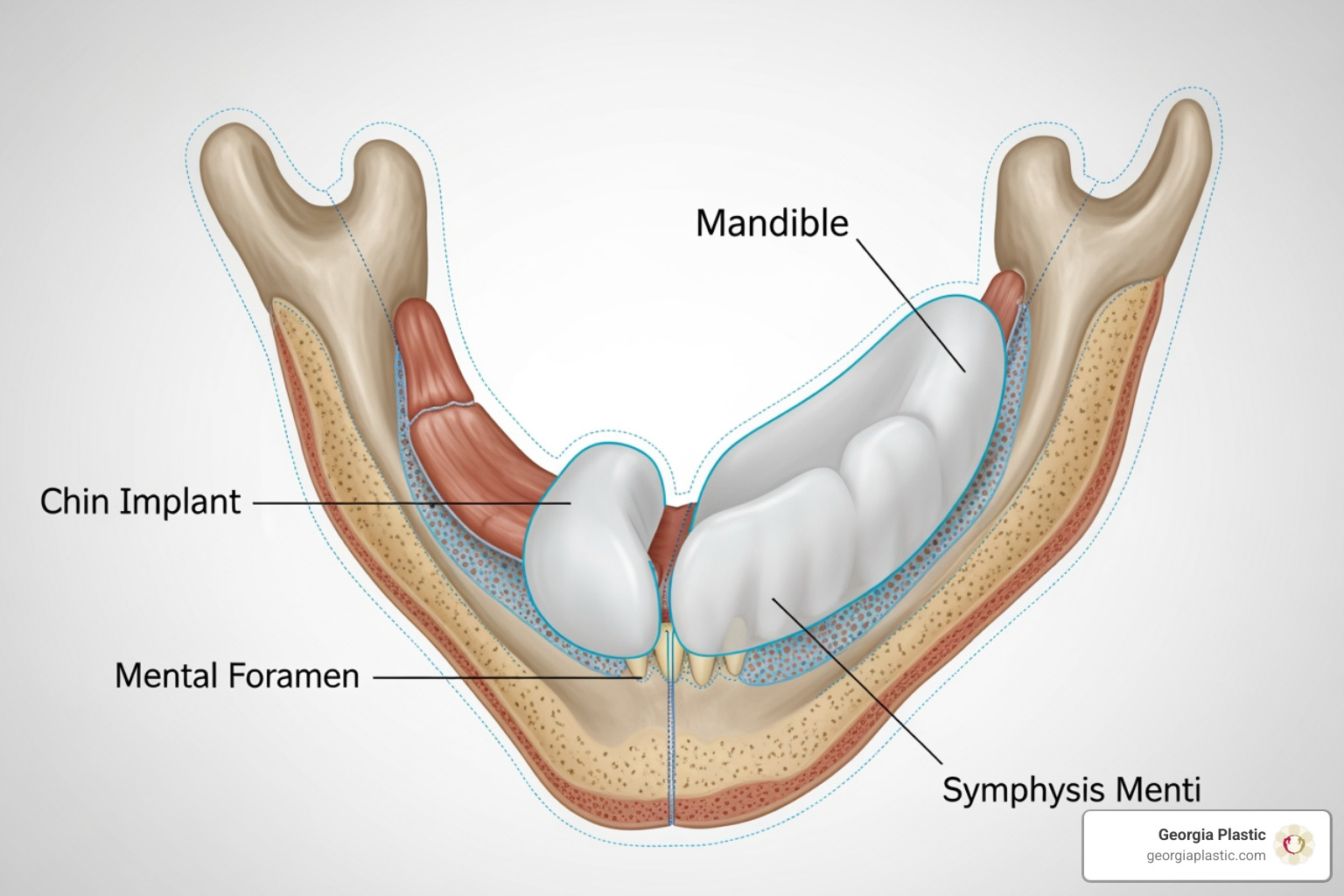
Long-term issues can include:
- Implant shifting or malposition
- Minimal bone resorption (thinning)
- Changes in the surrounding scar tissue capsule
- Altered nerve sensation
- Late-onset infection (very rare)
Let’s look closer at these potential concerns.
Implant Shifting and Malposition
While implant mobility is rare decades after placement, it is possible. This can be caused by significant trauma, an improperly sized surgical pocket, or a lack of secure fixation during the initial surgery. Over many years, natural aging of surrounding tissues or the tightening of the scar tissue capsule (capsular contracture) can also contribute to movement in rare cases.
Signs of a shifted implant include new asymmetry, discomfort, or being able to feel the implant’s edges. If movement occurs, revision surgery might be needed. This highlights the importance of robust initial fixation to prevent long-term malposition of a chin implant after 20 years.
Bone Resorption: Fact vs. Fiction
The idea of “bone erosion” beneath an implant can sound alarming, but the clinical reality is reassuring. While some degree of bone remodeling is common, research shows it is typically minimal and asymptomatic.
Studies consistently find that the average resorption depth is less than 2mm, even after many years, and most patients experience no symptoms. There is also a scientific debate on the topic, with some research suggesting that what appears as resorption may sometimes be an illusion created by new bone growth around the implant. While extreme cases are theoretically possible, significant, symptomatic bone resorption is not a common concern for a chin implant after 20 years. For a deeper dive, you can review studies like Mandibular Bone Resorption Following Chin Augmentation: A Systematic Review and Bone Changes With Silicone Chin Implants: Clinical Case, Review, and Considerations for Technique Modification.
Scar Tissue (Capsule) and Nerve Sensation
The body naturally forms a fibrous capsule (scar tissue) around any implant. After many years, this capsule can sometimes become firmer, leading to a feeling of tightness or even intermittent aches. This is usually not a serious problem but is worth discussing with your surgeon.
Long-term issues with nerve sensation can also occur, though they are rare. The mental nerve, which provides feeling to the chin and lower lip, is near the implant. Altered sensation (paresthesia) might manifest as numbness or tingling. Research suggests implant material plays a role, with silicone implants showing the lowest rates of paresthesias (0.4%) compared to porous materials like HDPE (20.1%) and ePTFE (3.2%). If you experience persistent changes in sensation, it’s important to seek professional medical advice.
When to Consider Revision or Removal
Even with the remarkable longevity of a chin implant after 20 years, there might come a time when you consider revision or removal. This decision is often driven by a combination of factors, ranging from purely aesthetic preferences to medical necessity.
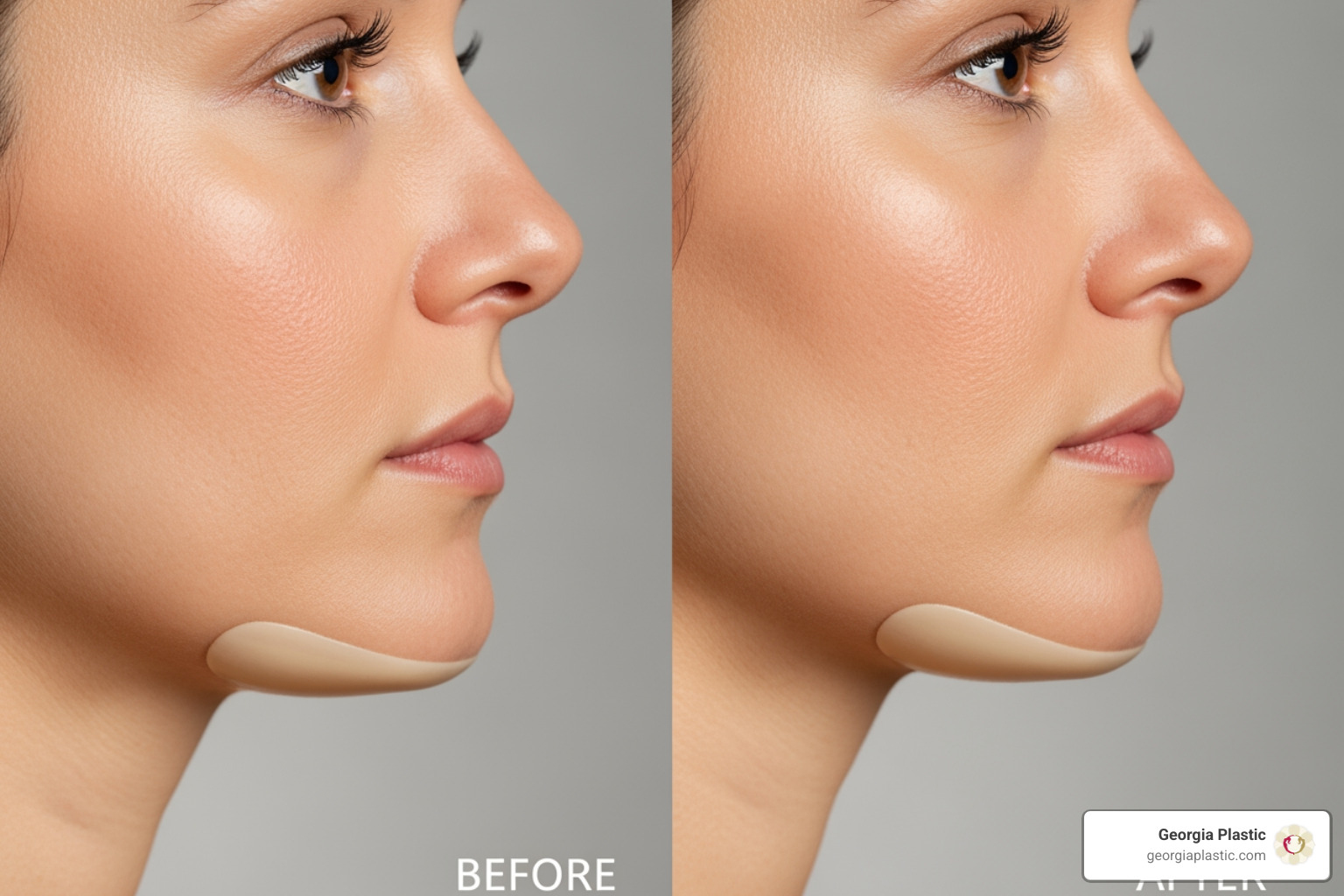
It’s important to remember that considering a change doesn’t necessarily mean your original surgery was unsuccessful. Our faces continue to age, our aesthetic goals can evolve, and sometimes, even rare complications might arise. Evaluating your options with a board-certified plastic surgeon is key to making an informed decision that aligns with your current needs and desires.
Signs You Might Need a Chin Implant Revision After 20 Years
So, how do you know if it’s time to consider a revision or removal? Here are some signs and symptoms that might indicate a need for evaluation:
- Visible or Palpable Implant: If the implant becomes noticeable through your skin, either visually or by touch, it might be due to changes in overlying tissues, minor shifting, or bone remodeling.
- New Asymmetry: While your chin might have been perfectly symmetrical post-surgery, new asymmetry developing over two decades could suggest implant malposition or uneven aging of facial tissues.
- Chronic Pain or Discomfort: Although most chin implants are asymptomatic, persistent or new-onset pain, pressure, or discomfort in the chin area warrants investigation. This could be related to scar tissue, nerve irritation, or very rare instances of bone changes.
- Signs of Infection (Rare): While very uncommon after many years, any signs of late-onset infection, such as redness, swelling, warmth, tenderness, or pus around the chin, require immediate medical attention.
- Dissatisfaction with Appearance Due to Aging: This is perhaps the most common reason for considering revision after such a long period. As other facial features age (e.g., jowls form, neck sags), the chin implant might no longer provide the desired balance or definition within the context of your aging face. You might desire a different size or shape to better complement your current appearance.
If you experience any of these signs, it’s always best to consult with an experienced plastic surgeon. They can accurately assess the situation and guide you on the best course of action for your chin implant after 20 years.
Your Options: Revision, Replacement, or Removal
If you and your surgeon determine that a change is needed for your chin implant after 20 years, you typically have a few clear options:
- Implant Exchange (Replacement): If your concern is primarily aesthetic – perhaps you desire a different size or shape to better complement your aging face – an implant exchange might be the solution. This involves removing the existing implant and replacing it with a new one that better suits your current goals.
- Repositioning the Existing Implant: If the implant has slightly shifted but is otherwise in good condition and still desirable, your surgeon might be able to reposition it back into its ideal placement. This often involves re-securing it to prevent future movement.
- Complete Removal: For some, the best option is complete removal of the implant. This might be due to medical necessity (e.g., rare infection, significant uncorrectable malposition) or simply a desire to return to your original chin contour.
If you decide to have your chin implant removed, a common question is, “Can I leave the scar tissue in?” and “Would leaving scar tissue in augment the original receded chin?” When an implant is removed, the fibrous capsule (scar tissue) that formed around it remains. In some cases, this scar tissue can indeed provide some residual augmentation, preventing the chin from fully reverting to its pre-implant appearance. However, it’s crucial to be aware that simply removing an implant, especially after a long time, is not always a straightforward procedure.
Research highlights that the removal of alloplastic chin implants is not always an “innocuous procedure,” as severe soft-tissue deformities can occur. These can include chin ptosis (sagging), bizarre soft-tissue bunching and dimpling, and even asymmetrical motion of the lower lip. One study found that 90% of patients experienced severe soft-tissue deformities after implant removal. Once established, these deformities can be virtually uncorrectable. To prevent such issues, surgeons may recommend performing an immediate osseous genioplasty (chin bone surgery) at the time of implant removal. This involves reshaping the chin bone itself to provide support and prevent soft tissue sagging.
Recovery from revision or removal surgery is generally similar to the initial implant recovery, though often less involved. We have detailed information about this on our page: Important Things to Know About Chin Implant Recovery.
The Role of Material and Technique in Long-Term Success
The long-term success of a chin implant after 20 years is profoundly influenced by two factors from your initial surgery: the implant material and the surgical technique. These choices determine how well your implant integrates and withstands the test of time.
At Georgia Plastic & Reconstructive Surgery, we understand that selecting the right approach is paramount for enduring satisfaction. For a comprehensive overview of chin augmentation, explore our dedicated page on Chin Implants.
Choosing the Right Implant Material
Chin implants are available in a few primary materials, each with properties that influence long-term outcomes:
- Silicone: The most common material, silicone is solid, flexible, and easy to remove if needed. It also has the lowest reported rates of long-term nerve sensation issues (paresthesias).
- Porous Polyethylene (HDPE): This is a rigid, porous material that allows tissue to grow into it, providing excellent stability. This integration can make it more challenging to remove.
- Expanded Polytetrafluoroethylene (ePTFE): Softer than HDPE but firmer than silicone, this porous material also allows for some tissue ingrowth to improve stability.
The best choice depends on your anatomy, goals, and your surgeon’s expertise. Porous implants may offer greater stability, while non-porous silicone is easier to revise. This is similar to how we consider options for Cheek Implants.
Why Surgical Technique Matters for Your Chin Implant After 20 Years
Beyond the material, the surgeon’s technique is critical for the long-term success of a chin implant after 20 years. Key decisions include:
- Implant Placement: Implants can be placed directly on the bone (subperiosteal) for stability or over the bone’s covering (supraperiosteal). Each method has nuances related to bone remodeling and stability, and surgeons choose the best approach based on patient anatomy.
- Incision Type: An incision inside the mouth (intraoral) leaves no visible scar but may carry a slightly higher infection risk. An incision under the chin (extraoral) involves a small, hidden scar but may have a lower infection risk.
- Implant Fixation: Securing the implant, often with tiny screws, is crucial to prevent shifting. Proper fixation provides excellent long-term stability and minimizes the risk of migration.
- Creating a Precise Pocket: The surgeon must create a pocket that fits the implant perfectly. A pocket that is too large allows movement, while one that is too small can cause pressure.
The profound impact of these surgical decisions is detailed in studies like this one on Complications Following Alloplastic Chin Augmentation. An experienced surgeon will weigh all these factors to ensure the best possible long-term outcome.
Conclusion
Navigating the journey with a chin implant after 20 years can bring up many questions, but we hope this guide has provided clarity and reassurance. The overwhelming evidence suggests that chin implants are remarkably durable, designed to offer a lifetime of aesthetic improvement. Most patients enjoy stable, asymptomatic results for decades, a true testament to the advancements in plastic surgery materials and techniques.
While long-term issues like minimal bone resorption, rare implant shifting, or subtle changes in scar tissue are possible, they are often manageable and, crucially, do not diminish the overall success and satisfaction many patients experience. The primary reasons for considering revision after such a long period often stem from the natural aging process of the surrounding facial tissues, rather than a failure of the implant itself.
The choice of implant material and the precision of the initial surgical technique play pivotal roles in this enduring success, influencing everything from stability to nerve sensation. Should you experience any concerns—whether it’s a new asymmetry, discomfort, or simply a desire to refresh your facial aesthetics due to aging—solutions are readily available. Options range from implant exchange to repositioning, or even complete removal with adjunctive procedures like osseous genioplasty to maintain soft tissue support.
At Georgia Plastic & Reconstructive Surgery, we pride ourselves on providing personalized care and delivering natural-looking results, always prioritizing patient safety. Our board-certified surgeons are experts in facial aesthetics and can evaluate your chin implant after 20 years, offering honest guidance and discussing the best path forward based on your unique needs and goals.
If you’re still rocking your chin implant two decades later, congratulations! And if you’re considering your options, know that we’re here to help. Explore your facial rejuvenation options today and let us help you maintain your beautiful, balanced profile for many more years to come.


