You've had surgery, the dressings are finally off, and now your eyes go straight to the incision. Most patients have the same reaction. Relief that healing has started, followed by concern about what the scar will look like later. That concern is normal.
A scar is part of the body's repair process, not a sign that something went wrong. Still, scar quality isn't random. The way you care for the incision in the first days, the way you support the tissue in the first weeks, and the way you stay consistent in the first months all shape the final result. In practice, the patients who do best are rarely the ones who chase every cream on the market. They're the ones who follow a simple plan well.
I often remind patients that scar care after surgery is a long game. A scar can look pink, firm, or uneven early on and still heal beautifully over time. If your procedure also affects mobility, it helps to pair scar protection with movement that doesn't overload the healing area. For lower-body recovery, this guide to safe exercises after knee surgery is a useful example of how to stay active without creating unnecessary strain.
Table of Contents
- Your Scar Healing Journey Begins Now
- Immediate Post-Op Wound and Suture Care
- Foundations of Proactive Scar Management
- Choosing the Best Topical Scar Treatments
- Advanced Scar Therapy at Our MedSpa
- Procedure-Specific Scar Care Tips
- Frequently Asked Questions About Scar Healing
- Is it normal for my scar to itch or feel numb
- Will my scar disappear completely
- Why does my scar look darker, pinker, or redder than the surrounding skin
- I have a history of bad scars. What should I do differently
- When should I worry that a scar is not healing well
- What's the biggest mistake patients make
Your Scar Healing Journey Begins Now
The first look at an incision tends to be emotionally loaded. A facelift patient may be pleased with a sharper jawline but fixate on a fine line near the ear. A breast reduction patient may feel lighter and more comfortable but worry about the anchor-shaped pattern. An abdominoplasty patient may love the contour change and still ask, “Will this always look this red?”
Those are the right questions to ask early, because scars change in stages. Fresh incisions often look more noticeable before they look better. That doesn't mean the scar is failing. It means the body is actively building, remodeling, and settling the tissue.
A good scar result usually comes from patience plus consistency, not from aggressive treatment too early.
The practical mindset is this. First, protect the closure. Then guide the scar. Then reassess only if the scar stays raised, red, tight, or uneven after a reasonable healing window.
What good scar care really means
Patients often think scar care means buying a product. It's broader than that.
- Early phase: Keep the wound clean, supported, and undisturbed.
- Middle phase: Use proven topical support and start massage only when the incision is fully closed.
- Long phase: Protect the scar from tension and sunlight, and give it time to mature.
In other words, scar care after surgery isn't one decision. It's a sequence. The sequence matters because the right treatment at the wrong time can be unhelpful, and sometimes harmful.
What to expect emotionally and visually
You may notice a scar becoming darker, firmer, itchier, or more noticeable before it starts to soften. That's one reason I encourage patients not to judge their final result too early. Stay observant, but don't panic over normal change. Most disappointment comes from expecting a mature scar during an immature phase.
Immediate Post-Op Wound and Suture Care
The first two weeks are about one thing. Protecting a clean, quiet incision so the skin can seal well.

The first priority is protecting closure
Surgical incisions typically epithelialize within 1 to 2 days, which is why gentle washing with mild soap and water can usually begin 48 hours after surgery, followed by daily cleansing to reduce bacterial contamination, according to expert wound hygiene guidance.
That timeline surprises many patients. They assume washing is risky, when in reality, gentle hygiene is often part of protecting the wound. The key word is gentle.
Use this approach:
- Wash your hands first. Clean hands matter more than any ointment.
- Clean the area softly. Use mild soap and water if your surgeon has cleared you to do so.
- Pat dry, don't rub. Friction can irritate a fresh closure.
- Replace dressings exactly as instructed. Some incisions do best left covered, others need light protection, and some may use tape or glue.
- Leave scabs, glue, and tape alone unless told otherwise. Pulling at them can disrupt early healing.
What to avoid in the first stretch
Patients usually run into trouble by doing too much, not too little.
- Don't soak the incision. Baths, pools, and hot tubs can wait until you're cleared.
- Don't scrub off adhesive residue. Let it loosen naturally or ask for help.
- Don't test the area. Stretching, twisting, or “checking” the incision repeatedly adds stress.
- Don't apply random products. Early on, fewer products usually means less irritation.
Practical rule: If a product stings, causes a rash, or makes the area look more inflamed, stop using it and contact your surgical team.
What deserves a call to the office
Some symptoms are part of ordinary recovery. Others need attention.
Contact your surgeon if you notice:
- Increasing redness that spreads outward
- Drainage that becomes cloudy, foul-smelling, or persistent
- Worsening pain after an initial period of improvement
- Separation of the incision edges
- New swelling or warmth that seems out of proportion
Patients sometimes hesitate because they don't want to “overreact.” In practice, I'd much rather hear from someone early than have them wait while a small issue becomes a larger one.
A clean incision with minimal tension gives you the best foundation for a refined scar later. This is the quiet part of healing, but it's one of the most important.
Foundations of Proactive Scar Management
Once the incision is fully closed, scar care after surgery shifts from wound protection to scar shaping. That's when small daily habits begin to matter more than dramatic interventions.

Surgical scars can continue to improve for up to 18 months, and during that period they're especially vulnerable to UV damage. Clinical guidance also recommends broad-spectrum SPF 30 or higher for at least 12 months and limiting lifting to less than 10 pounds for the first six weeks to reduce tension-related scarring, as outlined in this post-surgery scar care guidance.
Massage at the right time
Scar massage is useful when started at the right stage, not before. If the incision isn't fully closed, massage can irritate the tissue and interfere with healing. Once you're cleared, a practical routine is gentle circular pressure with a lubricant such as petroleum jelly or a simple moisturizer.
A common schedule is:
- Timing: Start around the point your surgeon confirms the wound is fully closed
- Technique: Use small circular movements and light, steady pressure
- Duration: Stay consistent rather than forceful
- Goal: Help the scar soften and move more freely against the underlying tissue
Massage shouldn't feel like you're trying to break something up aggressively. Think controlled pressure, not friction.
Sun and tension are the two common setbacks
Most patients focus on creams and forget the basics that change outcomes.
Sun exposure can darken a healing scar in a way that lasts. That's why I tell patients to treat a new scar like fresh skin that has no defense. Clothing, shade, and sunscreen all help. If the scar is on the chest, shoulder, abdomen, or breast, sun protection takes more effort than patients expect because those sites are exposed more often by everyday clothing choices.
Tension matters just as much. A scar that's repeatedly stretched can widen or stay more inflamed. This is especially important after body contouring, breast surgery, and any procedure near joints or high-motion areas.
Healing tissue likes calm. Repeated strain, even from normal chores, can keep a scar looking younger and angrier for longer.
Build a routine you can keep
Consistency beats complexity. I'd rather see a patient use a straightforward routine for months than switch between products every week.
A practical home plan usually includes:
| Habit | Why it matters | Real-world tip |
|---|---|---|
| Daily scar care | Keeps the tissue hydrated and supported | Tie it to brushing your teeth so you won't forget |
| Sun protection | Helps prevent long-term discoloration | Keep sunscreen where you get dressed, not in a drawer |
| Activity awareness | Reduces pulling across the incision | Let discomfort be a signal to scale back |
Nutrition also affects healing quality, especially when recovery overlaps with postpartum demands. For patients balancing surgical recovery and new motherhood, these expert tips for postpartum eating can help support a steadier routine.
If you want a more structured overview of treatment options, Georgia Plastic & Reconstructive Surgery also outlines its scar management approach, including silicone-based care and in-office options when needed.
Choosing the Best Topical Scar Treatments
Patients are often handed a long list of products by friends, family, and the internet. Most of that advice is noisy. The better question is simpler. Which topical treatment matches the stage of healing and the type of scar you're trying to influence?

Silicone is the standard option
For patients with a history of abnormal scarring, silicone sheets worn for at least 12 hours per day for 3 to 4 months can reduce the incidence of hypertrophic scars, according to clinical guidance on preventive scar therapy.
That's why silicone is the first product category I discuss when someone asks what has a clear role in scar care after surgery. It helps create an occlusive, hydrated environment that supports a flatter, softer scar.
How gels, sheets, and basic moisturizers differ
Each topical option has a different job. They aren't interchangeable.
| Product type | Key ingredient | Mechanism | Best for | Application frequency |
|---|---|---|---|---|
| Silicone gels or sheets | Medical-grade silicone | Hydrates, occludes, and helps reduce collagen overproduction | Raised, red, or higher-risk scars | Daily or continuous wear |
| Moisturizers such as petroleum jelly | Petrolatum or emollients | Keeps tissue moist and reduces dryness | Freshly closed wounds and general hydration | Multiple times daily |
| Onion extract creams | Allium cepa extract | Marketed for anti-inflammatory and collagen-regulating effects | Patients seeking a cosmetic scar cream option | Usually repeated through the day |
Here's how I frame the trade-offs in clinic:
- Silicone sheets: Better for patients who like a physical dressing and can commit to wear time. Less convenient on curved areas, mobile areas, or visible facial incisions.
- Silicone gel: Easier for the face, breast, and exposed areas. Better for patients who want something discreet under clothing or makeup.
- Petroleum-based moisturizers: Useful early once the incision has closed, especially if the tissue is dry or irritated. They support comfort, but they aren't a substitute for silicone when scar prevention is the goal.
What about onion extract and vitamin-rich creams
Many creams are marketed aggressively. Some patients like them, especially because the act of regular application creates consistency. But from a practical standpoint, I don't put them in the same category as silicone for scar prevention.
Vitamin-based oils and thick scar creams also create a common problem. Patients apply too much, too often, or too early and end up with clogged follicles, contact irritation, or unnecessary redness. The skin doesn't need to be smothered to heal well.
If you're choosing between a cabinet full of scar creams and one silicone product you'll actually use every day, choose the product you'll use every day.
The best topical plan is the one that fits the location of your scar, your skin sensitivity, and your ability to stay consistent.
Advanced Scar Therapy at Our MedSpa
Most surgical scars improve with time and disciplined home care. Some don't. A scar may stay red, remain raised, feel rope-like, or heal with a depressed contour that doesn't smooth out on its own. That's the point where in-office treatment becomes useful.

When home care isn't enough
The decision to escalate treatment depends on the scar's behavior, not just its age. If a scar keeps looking more active rather than gradually settling, I start thinking about what feature is driving the problem.
That feature might be:
- Persistent redness
- Thickness or elevation
- Surface irregularity
- Indentation or volume loss
- Tightness across a mobile area
Different problems need different tools. One treatment won't fix every scar pattern.
Matching treatment to scar type
For vascular scars, Pulsed Dye Laser can achieve up to an 80% reduction in redness, but it should wait until the incision is fully epithelialized, typically 2 to 3 months after surgery, based on this review of laser timing and outcomes.
That makes laser particularly useful for pink or red scars that have healed but still look active. For texture issues, resurfacing options can help refine the surface once the scar is ready. Patients considering this path can learn more about fractionated CO2 laser resurfacing as one option for improving texture and blend.
Other common in-office approaches include:
- Corticosteroid injections: Best for raised hypertrophic or keloid-type scars. The goal is to calm the overactive scar response and help flatten the tissue.
- Microneedling or radiofrequency microneedling: Useful for texture remodeling, especially when the scar feels uneven or tethered.
- Dermal fillers: Helpful for selected depressed scars where the issue is contour loss rather than thickness.
Patients often ask whether these treatments are “worth it.” My answer depends on what bothers them most. If a scar is flat but red, laser makes more sense than steroid injection. If a scar is pale but raised and tight, injection or remodeling treatment is more logical than light-based therapy.
The advantage of an integrated setting such as AmaChi MedSpa is continuity. The scar can be watched from the early healing phase through later intervention without guesswork about timing, skin condition, or the original procedure.
Procedure-Specific Scar Care Tips
Not all scars behave the same way. The body area changes the amount of tension, moisture, friction, and visibility involved.
Face
Facial scars usually benefit from restraint. Patients often want to start strong treatments quickly because the scar is visible every day. That's a mistake. Fine facial incisions generally do best with meticulous cleansing, early sun avoidance, and thin, consistent topical care once approved. Heavy products can irritate the skin, and aggressive massage can inflame a scar that would otherwise settle naturally.
Breast
Breast scars vary by pattern. An incision in the fold deals with warmth and friction from bras and skin contact. Around-the-areola scars need careful moisture balance because over-treatment can irritate delicate skin. Vertical and anchor-pattern scars need attention to support and tension, especially if swelling makes the lower breast feel heavy.
Practical habits matter here:
- Choose soft support garments that don't rub the incision line.
- Check the fold daily if your incision sits underneath the breast.
- Be careful with arm motion if reaching overhead pulls across healing tissue.
Body
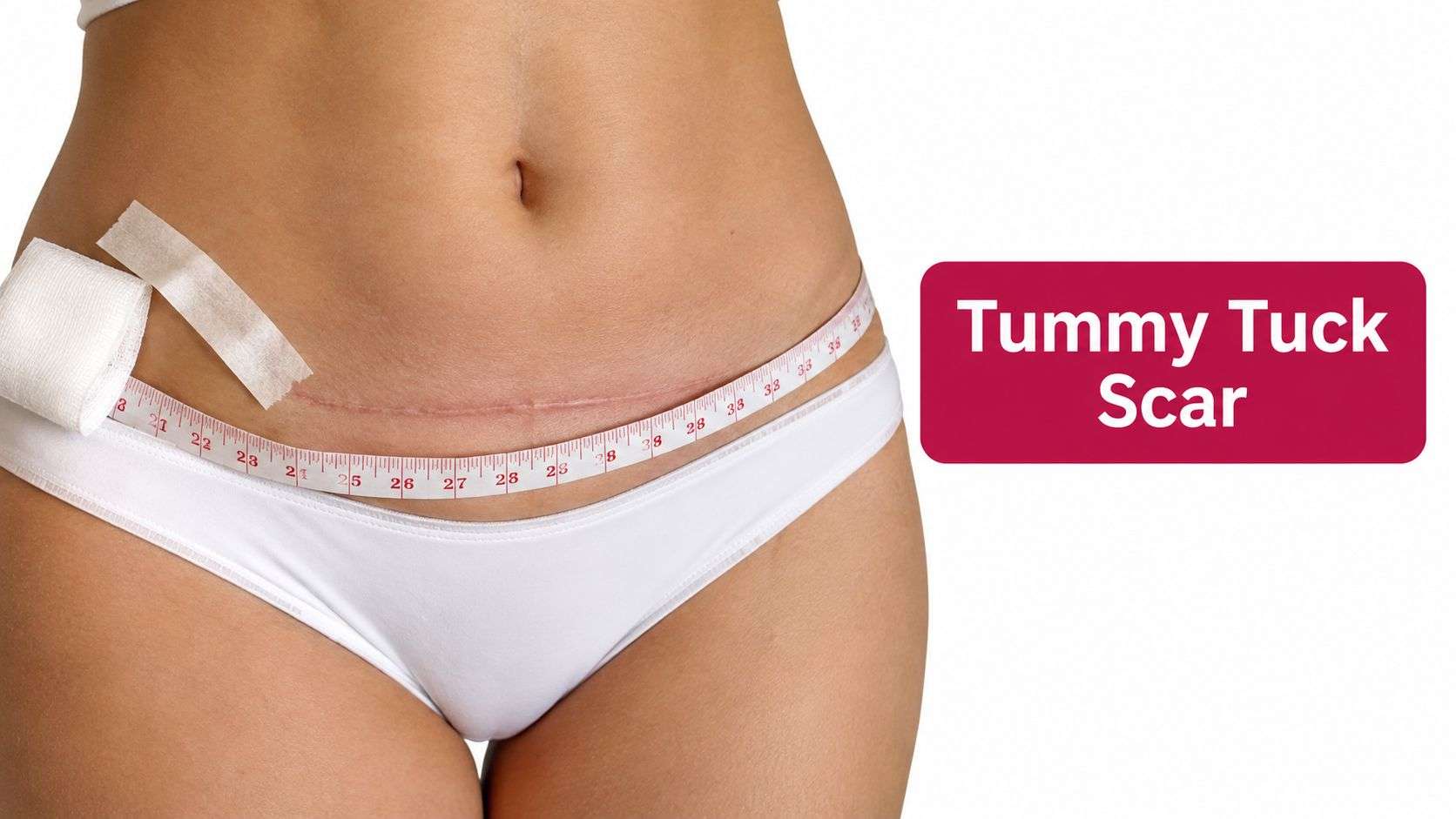
Body scars, especially after tummy tuck or contouring procedures, face the highest tension. Standing up, getting out of bed, coughing, and lifting all pull on a long abdominal incision. These scars usually look better when patients respect the recovery restrictions and don't “test” the repair too early.
For raised scars that behave more like keloids, some patients may also need procedural treatment rather than relying on home care alone. Georgia Plastic provides information on CryoShape keloid scar treatment for scars that remain prominent despite conservative management.
Frequently Asked Questions About Scar Healing
Is it normal for my scar to itch or feel numb
Yes. Itching, tightness, and small areas of numbness are common during healing. Nerves and skin are recovering at different rates, so sensation often feels strange before it feels normal.
Will my scar disappear completely
No scar disappears completely. The goal is for it to become flatter, softer, lighter, and less noticeable. A well-healed scar usually becomes much less attention-grabbing than it seems early in recovery.
Why does my scar look darker, pinker, or redder than the surrounding skin
Color change is common while a scar is still immature. Some scars stay pink for a while, while others look darker than nearby skin. The most important practical step is protecting the area from sunlight and avoiding irritation from harsh products.
I have a history of bad scars. What should I do differently
Tell your surgeon early, ideally before surgery. A personal history of hypertrophic or keloid scarring changes the prevention plan. These patients often benefit from earlier silicone use, closer follow-up, and a lower threshold for in-office treatment if the scar starts becoming raised.
When should I worry that a scar is not healing well
Call if the scar becomes progressively thicker, more painful, more inflamed, or starts to distort surrounding skin rather than gradually settling. A scar doesn't need to look perfect early, but it should move in the right direction over time.
What's the biggest mistake patients make
Starting the wrong treatment too soon, or stopping the right treatment too early. Most scar care after surgery is simple. The challenge is staying patient enough to let simple things work.
If you're concerned about how a scar is healing, or you want a more individualized plan from early recovery through advanced treatment, schedule a consultation with Georgia Plastic & Reconstructive Surgery. The practice offers surgical follow-up, recovery guidance, and access to in-office options through its integrated AmaChi MedSpa when home care alone isn't enough.