
You're probably here because the skin and fat fold on your lower belly has become more than a nuisance. It rubs, traps moisture, makes washing harder, and gets in the way of clothes, exercise, and even standing up straight without discomfort. For many people, removal of pannus is less about appearance and more about getting back hygiene, mobility, and confidence in daily life.
A pannus is the apron of skin and subcutaneous fat that hangs over the lower abdomen. In medical language, the operation is called panniculectomy, and it's a reconstructive procedure, not a muscle-tightening cosmetic tuck. That distinction matters because the goal is to remove the heavy overhang that causes problems, while setting realistic expectations about the scar, recovery, and what the surgery can and can't change.
Table of Contents
- What a Pannus Is and Why Removal Becomes Necessary
- Who Is a Good Candidate for Pannus Removal
- Panniculectomy vs Tummy Tuck Compared
- How the Pannus Removal Procedure Works
- Recovery Timeline and Realistic Risk Profile
- Cost, Insurance, and Making the Procedure Affordable
- Why Surgeon Credentials and Setting Matter at Georgia Plastic
- Frequently Asked Questions About Removal of Pannus
What a Pannus Is and Why Removal Becomes Necessary
A patient may describe it as “the fold that gets in the way,” and that is often the most accurate starting point. A pannus is the overhanging apron of skin and fat that drapes from the lower abdomen, and it can affect far more than appearance. It can change how clothes fit, trap moisture, and create ongoing skin trouble that does not settle down with basic care.
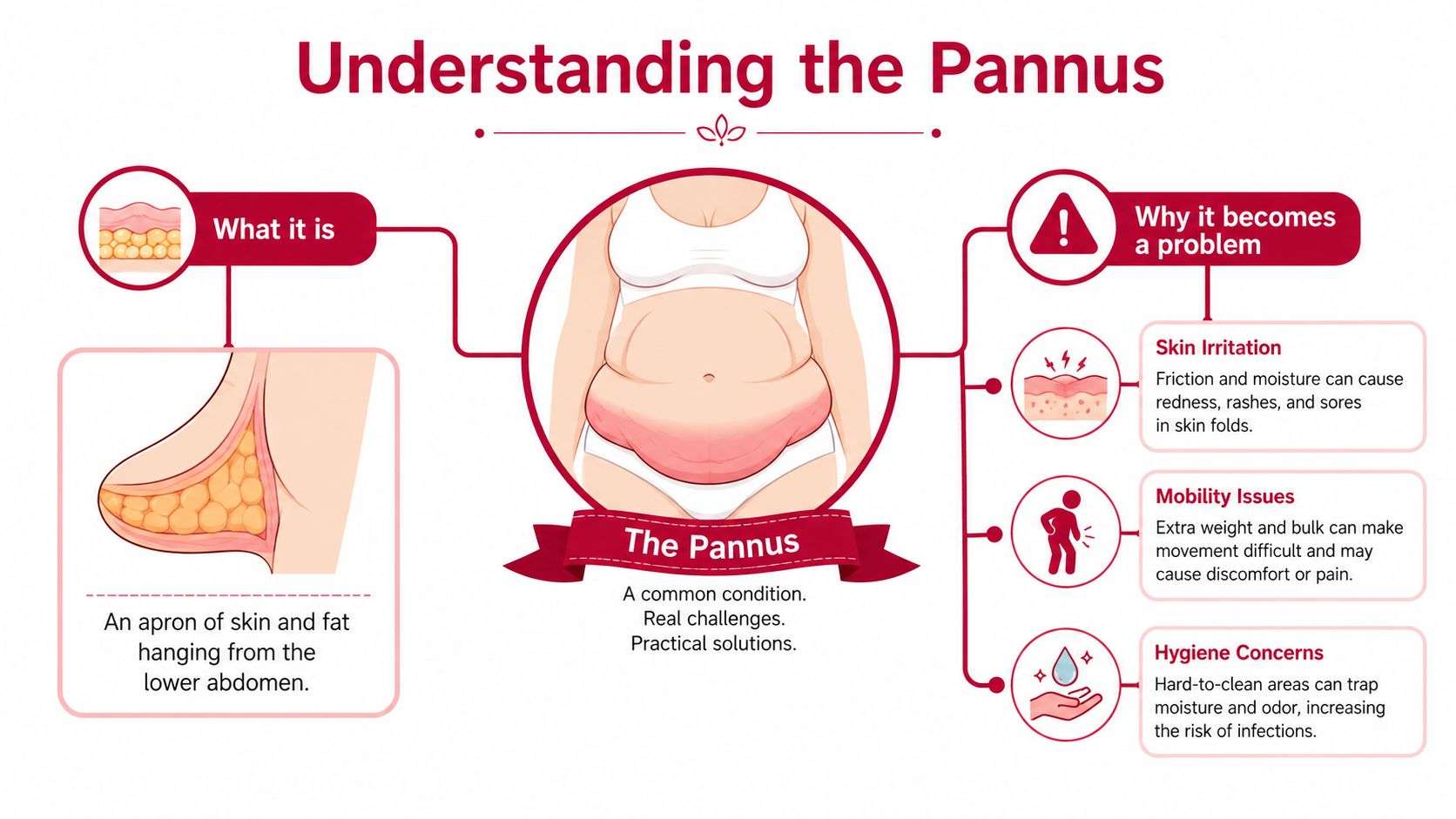
What the word pannus means
In plain language, a pannus is the lower abdominal fold that hangs over the pubic area. It often develops after major weight loss, pregnancy, or long-term body changes, and it can be large enough to interfere with cleaning, walking, and daily comfort. In an outcomes series of abdominal panniculectomy patients, the group described had a mean age of 51.7 years, a mean BMI of 33.0 kg/m², and a median resection weight of 2.7 kg (PMC study). Those details help show that pannus removal is often done for people whose lower abdominal tissue has become a persistent functional problem, not just a cosmetic concern.
Why removal stops being optional
Once the fold keeps causing rashes, moisture-related skin breakdown, hygiene problems, or trouble moving around, the conversation changes. The issue is no longer whether the tissue is unattractive. It is whether the fold is interfering with skin health and ordinary function.
That is also why panniculectomy is usually described as a reconstructive operation. The surgeon removes the excess tissue in one piece, which means taking away the apron that is causing the problem rather than reshaping every part of the abdomen for cosmetic contour. For many patients, the need for surgery becomes clearer after they have already lost weight or after pregnancy-related changes have settled and the overhang still remains.
Practical rule: if the fold keeps leading to repeat irritation or makes everyday movement harder, the question becomes whether surgery would address a real medical problem.
Georgia Plastic & Reconstructive Surgery in Atlanta and Marietta approaches that question the same way patients do, by looking at the practical impact first. The key issue is whether the pannus is creating ongoing trouble that conservative care has not fixed, and whether the case is more likely to be treated by insurance as reconstructive rather than cosmetic. That distinction matters because the paperwork, the evaluation, and the surgical plan all flow from it.
A lower-abdominal apron can behave like a heavy curtain that keeps rubbing the same skin over and over. If the problem keeps returning despite careful hygiene, drying, and other nonsurgical measures, the body may need a surgical solution. The goal is not a perfect flat stomach. The goal is to remove tissue that is getting in the way of comfort, movement, and skin health.
Who Is a Good Candidate for Pannus Removal
A good pannus removal candidate is someone whose lower-abdominal fold is causing a real problem and who is in a reasonable position to heal well after surgery. Surgeons look first at safety and then at expectations. The operation removes the overhang, it does not reset the whole abdomen into a cosmetic ideal, so weight trend, smoking status, and overall health all matter.
A patient may be a good fit when the skin fold keeps causing irritation, hygiene problems, or difficulty moving through daily life. That question is often clearer after weight loss has plateaued or after pregnancy-related changes have settled, because the overhang may remain even when other efforts have already done their part. At Georgia Plastic & Reconstructive Surgery in Atlanta and Marietta, that practical reality is the starting point. The team looks at whether the pannus is creating ongoing trouble that nonsurgical care has not solved, and whether the case is more likely to be treated by insurance as reconstructive rather than cosmetic.
The main screening questions
Stable weight is one of the first things surgeons want to see. If weight is still dropping quickly, the abdomen can keep changing after surgery, which makes the result harder to predict. Smoking also matters because it slows healing and puts more strain on the skin flaps and incision line.
The evidence is consistent with that cautious approach. In a PMC study, higher BMI and active smoking were linked with more major complications in panniculectomy patients. That does not mean someone with a higher BMI cannot be helped. It means the timing, the risk discussion, and the preoperative optimization need to be handled carefully.
Who often comes through the door
A common group is people after bariatric surgery, especially when major weight loss leaves behind a hanging apron that will not shrink on its own. Parents after multiple pregnancies also seek evaluation for the same reason, and so do patients whose skin keeps breaking down under the fold. The pattern is usually the same, the tissue has outlasted lifestyle changes and is now creating a daily functional problem.
The conversation is different from a cosmetic tummy tuck, because the goal here is relief first. For a clearer explanation of how surgeons sort out the procedure and the billing pathway, see this panniculectomy versus abdominoplasty guide.
Before booking a consultation, gather these basics:
- Your weight history: Bring your highest weight, current weight, and how long you have been stable.
- Your skin symptoms: Write down rashes, infections, odor, soreness, or drainage under the fold.
- Your smoking history: Be honest about current or recent tobacco use.
- Your health conditions: List diabetes, blood pressure issues, clotting history, and past surgeries.
- Your goals: Separate the need for relief from the wish for contour, because they are not the same thing.
If your main goal is comfort, hygiene, and mobility, you are asking the right question. If your main goal is a narrower waist, you may need a different operation or a staged plan.
Panniculectomy vs Tummy Tuck Compared
People often mix up these two operations because both involve the lower abdomen, but they solve different problems. Panniculectomy removes the hanging skin and fat apron. Abdominoplasty, often called a tummy tuck, adds contour work and muscle repair. One is reconstructive, the other is primarily aesthetic.

What each operation changes
A panniculectomy removes the apron that hangs over the lower abdomen, which can improve hygiene and reduce rubbing. It does not mainly narrow the waist or tighten the abdominal wall muscles. A tummy tuck does more contouring work, so patients who want a flatter, more sculpted look often ask about it after the functional problem is addressed.
The difference also matters for insurance review. If the main goal is relief from skin problems, the case may be treated as reconstructive. If the goal is cosmetic shaping, coverage is much less likely.
For a plain-language explanation of how surgeons separate the two procedures and why the billing path differs, use this Georgia Plastic & Reconstructive Surgery guide on panniculectomy versus abdominoplasty CPT codes. It helps patients understand why the same area of the body can lead to different codes and different approval questions.
How the trade-offs feel in real life
A panniculectomy usually leaves a long, low scar because the surgeon has to remove a broad strip of tissue. That scar is part of the trade-off for getting rid of the overhang. The result is a lighter lower abdomen and easier skin care, not a redesigned core.
A tummy tuck adds more contouring, but it also changes the expectations around recovery and appearance. Some patients want one operation. Others need the functional surgery first and the cosmetic refinement later. That staged approach can make sense when safety, body habitus, or insurance rules limit what can be done at once.
A patient planning care after major weight loss may find it helpful to read this surgery guide for Tupelo, which frames body contouring in a practical way for people sorting out next steps.
In everyday terms, panniculectomy is the operation that removes the troublesome fold. Tummy tuck is the operation that also reshapes the abdomen for a smoother outline. The first answer is often about function, the second about contour, and many patients need to know which question they are really asking before they choose a path.
How the Pannus Removal Procedure Works
For many patients, the operating room part is less mysterious than expected once the steps are broken down. You are asleep under anesthesia, the surgeon maps the tissue while you are standing, and the excess fold is removed in a way that protects blood flow and lowers tension on the closure. The process is careful and methodical, because the surgeon is not just taking away tissue. The remaining skin has to heal under the right amount of support, much like closing a heavy curtain without pulling the fabric out of shape.

The incision and dissection plane
Standard technique places a low transverse incision in the suprapubic crease, extending it toward the anterior superior iliac spines. The surgeon then works through Scarpa's fascia down to the abdominal wall, removes the excess tissue, and closes the area in layers with drains often used to control postoperative fluid. That layered closure helps manage dead space, which is one reason drains are so common after this surgery.
At Georgia Plastic & Reconstructive Surgery, the same basic plan is adapted to the patient in front of the surgeon. The incision pattern, how much tissue is removed, and where drains are placed all depend on the size of the pannus and the quality of the surrounding skin. That is also part of how the team thinks about whether the case is reconstructive, since insurance usually looks for a documented functional problem rather than a purely cosmetic goal.
Why surgeons keep the dissection conservative
With a large pannus, the main technical issue is protecting the skin flaps. Published surgical management emphasizes limiting undermining and preserving vascularity, because good blood flow helps the incision heal. If the tissue is especially large, surgeons may use special exposure methods, such as a crane-hoist or Steinman-pin setup, so the tissue can be lifted safely without straining the team or reducing precision.
The key principle is protecting the remaining skin so it can survive after the excess is removed.
For a patient, that means the operation is deliberate, not rushed. The markings matter. The incision line matters. The drainage plan matters. Each part is there to make the closure safer and the recovery more predictable.
Recovery Timeline and Realistic Risk Profile
Recovery is the part most patients want a clear map for. After pannus removal, the first days often bring incision soreness, stiffness, and the work of managing drains. Relief in clothing fit and comfort comes later, once swelling falls and the tissues settle.
What recovery usually feels like
A published outcomes series described a short hospital stay on average, which matches the idea that this is a real operation with monitored recovery rather than a quick outpatient beauty procedure. That early time is usually focused on pain control, walking safely, and watching for fluid build-up while the incision begins to seal.
Many patients are up and walking early, but they still need to move carefully and avoid strain until the surgeon says it is safe. If swelling lasts longer than expected or lymphatic fluid seems to linger, a structured aftercare plan can help. For readers in Atlanta who want a clearer explanation of that part of healing, this post-surgical lymphatic drainage massage guide is a useful companion resource.
The main complications to know
As noted earlier, the published series reported meaningful wound and medical risks, including infection, seroma, wound problems, hematoma, venous thromboembolism, and occasional revision surgery. Those findings are not meant to alarm you. They are a plain reminder that panniculectomy is reconstructive surgery, and the healing process needs active attention.
The practical takeaway is straightforward. Stopping smoking, using compression as directed, caring for drains exactly the way the team teaches, and reporting redness, fever, drainage changes, or shortness of breath right away all make a difference. Patients who treat aftercare seriously from the first day usually give their incision the best chance to heal well.
A few recovery habits that help
- Follow drain instructions exactly: Empty, measure, and write down output the way your team shows you.
- Protect the incision: Avoid twisting, lifting, or other movements that pull on the lower abdomen.
- Wear compression as directed: It supports the tissues while swelling settles.
- Keep follow-up visits: Small wound problems are easier to address early, before they grow.
Scar healing takes time, and the final contour does not declare itself right away. The early weeks are about safe healing. The later months are when swelling fades, the scar softens, and the result becomes easier to judge.
Cost, Insurance, and Making the Procedure Affordable
Money worries can stop people from even asking about surgery, so the billing side deserves a straight answer. Panniculectomy is often treated as reconstructive, which means insurance may cover it when there's documented medical necessity such as chronic skin breakdown, recurrent infection, or functional impairment. Cosmetic-only procedures are a different category and are usually paid out of pocket.
What insurers usually want to see
Documentation matters. Insurers often look for photographs, office notes showing repeated skin problems, and a record that conservative care hasn't solved the issue. That usually means there's a paper trail, not just a verbal complaint. If you're also trying to understand whether dermatology-related visits may be covered while you're building that record, this health insurance for skin care visits article gives a useful overview.
A strong preauthorization packet usually includes:
- Photos of the fold: Clear evidence of the overhang and skin irritation.
- Medical notes: Visits for rashes, odor, drainage, or recurrent infections.
- Conservative treatment history: Creams, hygiene measures, and other care that didn't fix the problem.
- Functional impact: Trouble with walking, exercise, or daily cleaning.
How to think about affordability
If insurance doesn't apply, patients usually need to plan for surgeon fees, facility fees, anesthesia, and postoperative supplies. Practices like Georgia Plastic & Reconstructive Surgery provide financing options, price guidance, and consultation-based planning so patients can understand the total picture before they commit. Their panniculectomy insurance approval guide is helpful if you're trying to build a strong case for medical necessity.
The smartest move is to ask two sets of questions. Ask your insurer what they require for reconstructive coverage. Then ask the practice what they need from you to submit a complete packet without delays. That combination reduces surprises and keeps the process organized.
Why Surgeon Credentials and Setting Matter at Georgia Plastic
Pannus removal is not a casual procedure, so the surgeon's training and the setting matter a lot. At Georgia Plastic & Reconstructive Surgery, the practice describes board-certified plastic surgeons Dr. Stanley Okoro and Dr. Greg Lee, with care delivered through offices in Atlanta and Marietta. For a patient, that means the consultation, the surgical planning, and the recovery guidance can all happen within a single coordinated system.
What the practice setting gives you
The Atlanta location is at 6125 Roswell Rd, Atlanta, GA 30328, and the Marietta location is at 2285 Asquith Ave SW, Marietta, GA 30008. The practice also integrates AmaChi MedSpa, which can support non-surgical skin care and recovery-related needs. That matters because panniculectomy patients often need more than a single operation, they need education, follow-up, and a place to ask questions when healing feels uncertain.
A consultation there should cover your weight history, your skin symptoms, your goals, and whether insurance might view the case as reconstructive. It should also include realistic discussion of the scar, drains, and the fact that this operation improves the fold more than the waistline. If you're comparing options, patient galleries and recovery resources can help you calibrate expectations before you schedule anything.
How to use the consultation well
Bring your medical records, a list of medications, and photos if you've had recurring rashes or wound problems. Ask how the team handles drains, follow-up, and out-of-town scheduling if you're traveling from outside the metro area. Good planning is part of good surgery.
A strong consult doesn't pressure you. It makes the next step clearer, safer, and less expensive in the long run.
Frequently Asked Questions About Removal of Pannus
Does pannus removal hurt?
Yes, the first part of recovery usually feels sore, tight, and swollen. That discomfort is normal after tissue is removed and the skin is pulled into a flatter position, and it often feels similar to having a long, firm band across the lower abdomen that eases slowly as healing moves forward. Most patients need pain medicine and careful movement early on, then notice steady improvement as the days pass.
Does the belly button move?
Usually it does not. A panniculectomy is designed to remove the hanging fold and improve hygiene, skin irritation, and mobility, so belly-button reshaping is not the main goal.
In a hybrid operation, where a surgeon combines skin removal with contouring steps from a tummy tuck, the navel may be repositioned. That is more likely when the plan includes upper-abdominal tightening or a broader aesthetic reshape, rather than a fold-only operation.
How long does the scar take to fade?
The scar usually starts out red and easy to see, then gradually softens and lightens. Healing on the skin surface happens before the scar fully settles, so the line can keep changing long after the incision itself feels closed.
Scar maturation takes months, and in some patients it continues to improve for a year or longer. Sun protection, gentle scar care, and keeping follow-up visits can all help the scar settle in the best possible way.
Can the pannus come back?
The tissue that is removed does not grow back. What can happen is that the remaining skin stretches again if there is major weight gain or a pregnancy later on, which can recreate some of the same heaviness and fold.
This is one reason surgeons focus so much on stability before surgery. If weight changes later, the issue is usually new stretching of the remaining tissue, not the old pannus returning in exactly the same form.
What if I lose more weight after surgery?
More weight loss after surgery can change the result in either direction. Some patients like the added contour change, while others notice that extra skin becomes more visible once the body gets smaller.
If you are still actively losing weight, the timing of surgery matters. Georgia Plastic & Reconstructive Surgery can also talk with you about revision timing, since a revision is usually easier to judge after your weight has settled and the tissues have had time to heal.
Panniculectomy vs Tummy Tuck at a Glance
| Feature | Panniculectomy | Tummy Tuck (Abdominoplasty) |
|---|---|---|
| Main goal | Remove hanging skin and fat apron | Improve contour and flatten the abdomen |
| Muscle tightening | No | Yes |
| Belly button repositioning | Not the focus | Common |
| Insurance likelihood | More likely when medically necessary | Usually cosmetic |
| Scar | Long, low lower-abdominal scar | Also a lower-abdominal scar, often with more contouring emphasis |
| Best for | Hygiene, rashes, mobility problems | Aesthetic shaping and muscle repair |
If you are trying to understand whether your own case may be treated as reconstructive rather than cosmetic, the details matter. Recurrent rashes, skin breakdown, trouble with hygiene, and documentation from prior treatment can all help show why surgery is being considered for medical reasons.
If you are thinking about this surgery in Atlanta or Marietta, schedule a consultation and bring your questions about skin problems, insurance paperwork, and recovery expectations. Georgia Plastic & Reconstructive Surgery can review whether your case fits a reconstructive path, explain the scar and drain plan, and help you understand what recovery would look like for your body and your schedule.


