
Understanding the Neck Lift Procedure: Your Path to a Defined Jawline
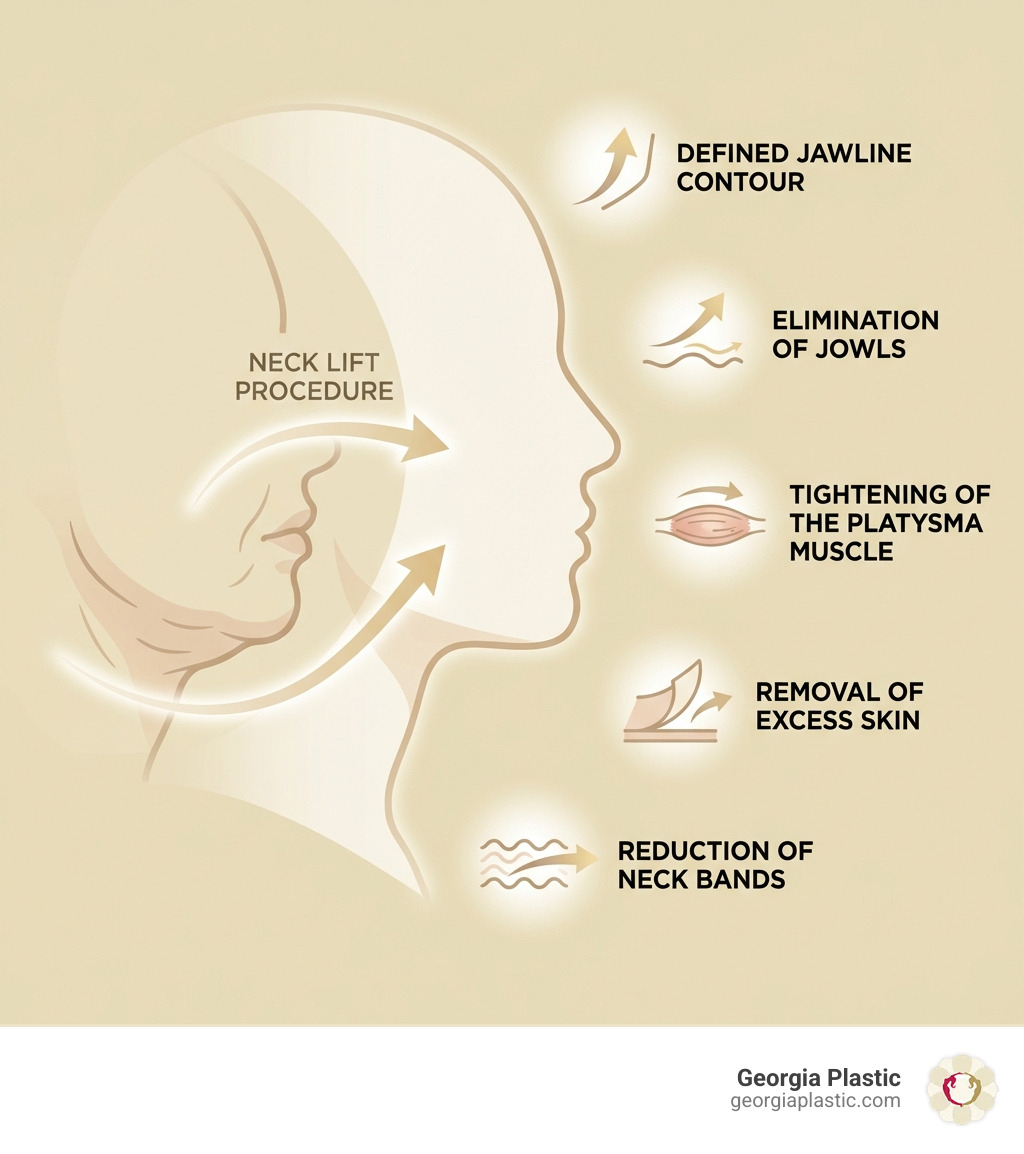
A neck lift procedure is a surgical treatment designed to improve the appearance of your neck and jawline by removing excess skin and fat, tightening underlying muscles, and creating a more youthful contour. This procedure—also called platysmaplasty or lower rhytidectomy—addresses common concerns like sagging skin, vertical neck bands, jowls, and the “turkey neck” appearance that often comes with aging or significant weight loss.
Quick Answer: What Does a Neck Lift Involve?
- Anesthesia – General anesthesia or IV sedation with local anesthesia
- Incisions – Small cuts around and behind the ears, sometimes under the chin
- Muscle Tightening – The platysma muscle is repositioned and tightened
- Fat Removal – Excess fat is removed or redistributed via liposuction
- Skin Redraping – Loose skin is trimmed and smoothly repositioned
- Closure – Incisions are closed with sutures or skin adhesive
- Recovery – Most patients return to work in 7-14 days
The neck is often one of the first areas to show aging. Its cellular makeup differs from the face, causing it to age faster, according to the American Society of Plastic Surgeons. In 2020, over 27,000 neck lift procedures were performed in the U.S.
A neck lift can restore definition for those bothered by excess skin, genetic fullness, or muscle banding, boosting confidence. It can be a standalone procedure or combined with others, like a facelift, for comprehensive results.
I’m Dr. Stanley Okoro, a double board-certified plastic surgeon and founder of Georgia Plastic and Reconstructive Surgery in Atlanta. With experience in advanced neck lift procedures, I focus on creating natural-looking results that improve each patient’s unique features. My approach combines surgical precision with facial aesthetics to help you achieve your desired refreshed appearance.
Are You a Good Candidate for a Neck Lift?
Determining if you’re an ideal candidate for a neck lift procedure is the first crucial step. At Georgia Plastic, we conduct a thorough assessment to ensure the best outcomes.
Ideal candidates are typically between 30 and 70, but candidacy depends more on skin laxity than age. Women in their mid-forties to early fifties and men in their fifties to early sixties often see optimal results. Younger patients with genetic fullness or a poorly defined neck can also be great candidates.
Key characteristics we look for in a good candidate include:
- Good Physical Health: You should be in good overall health, free from medical conditions that could impair healing or increase surgical risks.
- Non-Smoker: Smoking significantly slows healing and increases complication risks, so we require patients to stop smoking well in advance of surgery.
- Realistic Expectations: It’s vital to have a clear understanding of what a neck lift can and cannot achieve. While it can dramatically improve your appearance, it’s a restorative surgery that doesn’t halt the aging process.
- Skin Elasticity: While a neck lift addresses loose skin, good skin elasticity contributes to smoother, more natural-looking results.
- Specific Concerns: You might be a candidate if you’re bothered by:
- Jowls caused by excess fat and skin relaxation in the lower face.
- A “double chin” from excess fatty deposits.
- A “turkey gobbler” appearance from loose, sagging neck skin.
- Vertical muscle banding in the neck.
- A poorly defined jawline.
Patients with significant weight loss and resulting loose neck skin are often excellent candidates.
For those primarily concerned with excess fat rather than loose skin, alternatives like neck liposuction might be considered. You can learn more about the differences between these options here: More info about neck liposuction vs neck lift.
Types of Neck Lift Procedures
We tailor your neck lift procedure to your unique needs. Understanding these options is key to achieving your desired outcome.
- Cervicoplasty: This technique removes excess neck skin and is best for patients with significant skin laxity.
- Platysmaplasty: This procedure targets the platysma muscle, which can weaken with age and cause vertical bands. Platysmaplasty tightens or realigns this muscle to reduce banding. A specialized form, corset platysmaplasty, sutures the muscle in the midline for a tighter, more defined contour.
- Limited Incision Neck Lift: Ideal for less extensive aging, this approach uses shorter incisions around the ear. It’s less invasive but offers more limited results than a traditional lift.
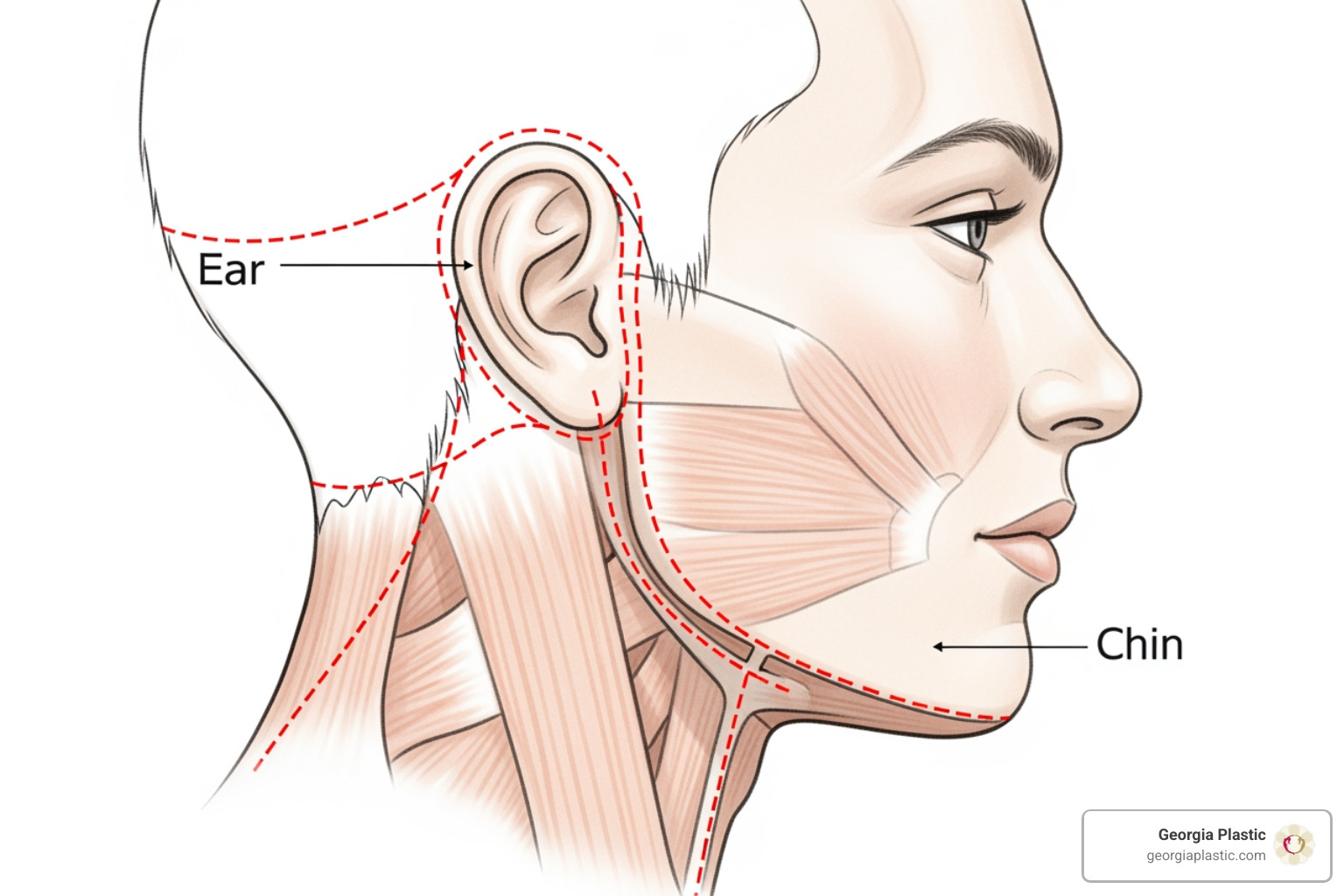
- Traditional Neck Lift: This comprehensive approach uses incisions from the sideburn hairline, around the ear, and into the lower scalp. It allows for extensive sculpting, fat redistribution, and muscle tightening to address broader aging concerns.
- Deep Neck Lift: This advanced technique works under the platysma muscle and deeper tissues. It releases the muscle from deeper layers, allowing for repositioning and removal of fat beneath it. This avoids tension, creating dramatic, natural, and long-lasting results, especially for those with significant neck fullness. It also preserves blood supply, potentially reducing pain and speeding up healing.
Often, a neck lift procedure is combined with other surgeries, such as a facelift, for harmonious and comprehensive results. To explore how a neck lift can integrate with a facelift, visit: More info about combining with a facelift.
The Surgical Neck Lift Procedure Step-by-Step
Understanding the journey of a neck lift procedure can help alleviate anxieties and prepare you for what to expect. While each procedure is custom to the individual, the general steps remain consistent. A neck lift is typically an outpatient procedure, meaning you can return home the same day. The duration usually ranges from 1.5 hours for a neck lift alone, up to 3 to 4 hours if combined with a facelift.
Preparing for Your Neck Lift Procedure
Proper preparation is key to a smooth surgery and successful recovery. Our team at Georgia Plastic will guide you through every step.
- Initial Consultation: This is where your journey begins. During your consultation with Dr. Okoro, we will discuss your aesthetic goals, individual anatomy, and health history. We’ll perform a detailed physical examination, assess your skin quality, and take pictures for your medical records. This is your opportunity to ask questions and express any concerns.
- Medical History Review: We’ll review your complete medical history, including any chronic health conditions, drug allergies, current medications (prescription and over-the-counter), vitamins, herbal supplements, alcohol, tobacco, and drug use. It’s crucial to be completely honest with us.
- Stop Smoking: If you smoke, we will require you to stop several weeks before surgery. Smoking significantly impairs healing and increases the risk of complications.
- Avoid Blood-Thinning Medications: We will instruct you to stop taking blood-thinning medications like aspirin, ibuprofen (e.g., Advil, Motrin), and certain herbal supplements for at least several days, sometimes up to two weeks, before your surgery. These can increase bleeding during and after the procedure.
- Arrange for Post-Op Care: You’ll need to arrange for a trusted friend or family member to drive you home after surgery and to stay with you for at least the first night to assist with your initial recovery.
Anesthesia and The Incision
Your comfort and safety are our top priorities during your neck lift procedure.
- Anesthesia Options: We will discuss the best anesthesia choice for you. Options typically include:
- General Anesthesia: You will be completely asleep during the procedure.
- IV Sedation with Local Anesthesia: You will be relaxed and comfortable, but not fully unconscious, while the surgical area is numbed.
We work closely with experienced anesthesiologists to ensure your experience is as comfortable and safe as possible.
- The Incision: The placement of incisions is critical for effective results and discreet scarring. The type of incision depends on the specific technique chosen:
- Traditional Incision Path: This often begins in the hairline at the level of the sideburn, extends around the earlobe, and finishes in the lower scalp behind the ear. This allows for comprehensive lifting and tightening.
- Limited Incision Path: For less extensive procedures, shorter incisions may be made only around the ear.
- Chin Incision: A small incision is often made discreetly under the chin. This allows access to the platysma muscle for tightening (platysmaplasty) and for fat removal via liposuction in the submental area.
Our goal is always to place incisions in natural skin folds or hidden areas to make any resulting scars as inconspicuous as possible once healed. For a more visual understanding of the procedure steps, you can refer to resources like the Detailed procedure steps from ASPS.
Sculpting and Redraping
After the incisions, we begin the meticulous process of reshaping your neck to achieve a smoother, more youthful contour.
- Fat Removal or Repositioning: Excess fatty deposits under the chin and along the jawline are precisely addressed. This may involve:
- Liposuction: For patients with good skin elasticity and localized fat pockets, liposuction is often performed to sculpt the chin and neck area. This is a less invasive option for younger individuals.
- Direct Excision: In some cases, particularly during a deep neck lift, fat beneath the platysma muscle is directly removed to refine the neck’s contour and definition.
- Platysma Muscle Tightening: The platysma muscle is a key player in neck aging. We tighten and often reposition this muscle to eliminate vertical bands and create a smoother, more defined neck. In a deep neck lift, the muscle is released from deeper layers, allowing for true repositioning rather than just tightening its edges. This “corset platysmaplasty” technique is incredibly effective for addressing the “turkey gobbler” appearance.
- Tissue Repositioning: Deeper tissues are carefully lifted and repositioned to restore youthful contours. In a deep neck lift, connective ligaments are released, allowing for complete repositioning of the tissue as a single unit. This helps avoid a “pulled” or stretched look, promoting natural-looking results.
- Removing Excess Skin: Once the underlying structures are tightened and reshaped, any excess skin is carefully trimmed away. The remaining skin is then redraped smoothly over the newly contoured neck and jawline, creating a taut and youthful appearance without tension. For patients with significant skin laxity, a direct skin removal method like Z-plasty might be considered, often for older individuals.
- Closing Incisions: Finally, the incisions are carefully closed using fine sutures and sometimes skin adhesives. Sutures may be dissolving or may need to be removed during a follow-up appointment a few days after surgery. The goal is to minimize visible scarring, and with proper care, incision lines typically become well-concealed and blend with the surrounding skin tone over time.
Recovery, Results, and Potential Risks
The journey to a more youthful neck continues well beyond the operating room. Understanding the recovery process, what results to expect, and potential risks is crucial for a positive experience.
The Recovery Timeline
Following your neck lift procedure, you can expect a period of recovery, during which your body heals and the beautiful results emerge.
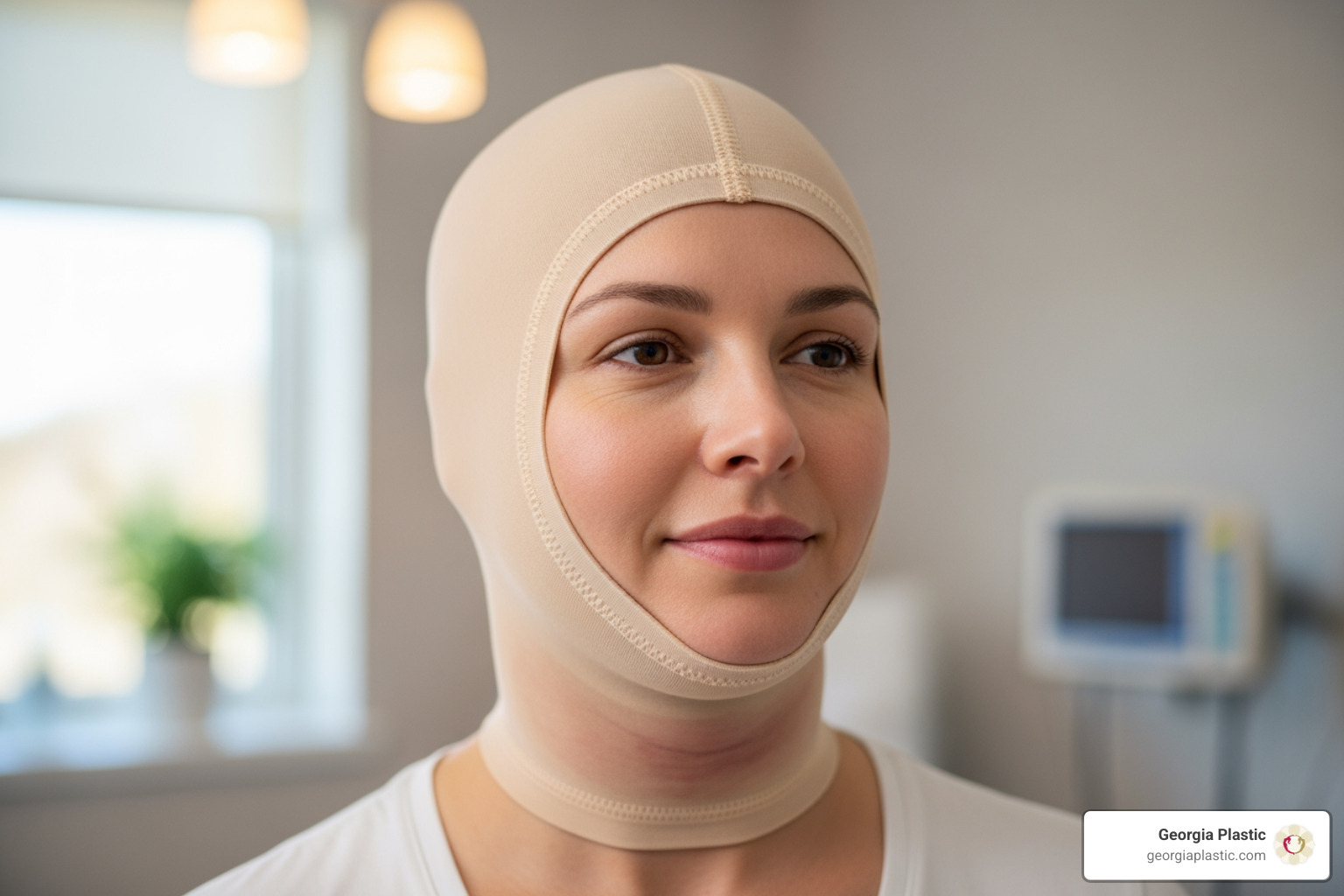
- Immediate Post-Op: You will likely experience some swelling, bruising, and a sensation of tightness in your neck. We will apply bandages and tape, and your head and neck will be wrapped in an elastic compression garment to help minimize swelling and support the healing tissues. Temporary drainage tubes may also be placed to prevent fluid buildup.
- First 1-2 Weeks: Pain is usually mild to moderate and manageable with prescribed pain medication. We advise keeping your head liftd, even while sleeping, for the first one to two weeks. It’s essential to avoid twisting or turning your neck abruptly, bending over, or lifting heavy objects for at least two weeks. Most patients feel ready to return to work and light daily activities within 7 to 14 days.
- Long-Term Recovery: While initial swelling and bruising typically subside within two weeks, subtle swelling can persist for several weeks to months. We recommend avoiding strenuous exercise and contact sports for approximately 3 to 6 weeks, until cleared by Dr. Okoro. Incision lines will gradually fade over time, taking up to a year to fully blend with your skin.
Explore our patients’ transformative results here: View our patient results.
Results: What to Expect and How Long They Last
The visible improvements from your neck lift procedure will begin to appear as the initial swelling and bruising subside.
- When Results Are Visible: You’ll notice an immediate improvement in your neck contour right after surgery, though it may appear a bit tight. The more natural and refined appearance will develop over the following weeks and months as swelling resolves. Most patients begin to see their refreshd neck appearance within 4 to 6 weeks, with final results becoming fully apparent around three months post-surgery.
- Longevity of Results: A neck lift is a long-lasting solution for neck rejuvenation. The results can last for many years, often between 10 to 15 years. A neck lift is a restorative surgery; it sets back the clock but does not stop the natural aging process.
- Factors Affecting Results: The longevity of your results can be influenced by your genetics, lifestyle choices (such as avoiding smoking and excessive sun exposure), and adherence to post-operative care instructions. Protecting your skin from the sun and maintaining a healthy lifestyle will help preserve your beautiful, youthful neck for years to come.
Understanding the Risks and Complications
As with any surgical procedure, a neck lift procedure carries potential risks and complications. We will discuss these thoroughly with you during your consultation.
Common, temporary side effects include:
- Swelling (Edema) and Bruising (Ecchymosis): These are normal and expected, gradually resolving over several weeks.
- Tightness and Numbness: You may feel tightness and experience temporary numbness in the neck, jaw, and ears, which typically subsides as nerves recover.
More serious, though rare, complications can include:
- Bleeding (Hematoma): A collection of blood under the skin, which may require drainage.
- Infection: Though precautions are taken, infection is a possibility. We’ll prescribe antibiotics to minimize this risk.
- Scarring: While we place incisions discreetly, there’s always a risk of visible or unsightly scarring, puckering, or temporary hair loss along incision lines.
- Nerve Injury: Rare but possible, leading to temporary or, in very rare cases, permanent changes in muscle function or sensation.
- Skin Loss or Poor Wound Healing: Can occur, especially in smokers or individuals with underlying health conditions.
- Deep Vein Thrombosis (DVT): A blood clot in a deep vein, a risk associated with any surgery.
- Anesthesia Risks: Reactions to anesthetic are possible.
- Dissatisfaction with Results: Though rare with an experienced surgeon, this might necessitate revision surgery.
These risks are significantly minimized when the procedure is performed by a board-certified plastic surgeon with extensive experience. For a comprehensive list of potential risks, you can consult resources like the Mayo Clinic. Contact us immediately if you experience signs of complications such as excessive bleeding, symptoms of a blood clot, fever, chills, or unusually sore incisions.
Alternatives to a Surgical Neck Lift
While a surgical neck lift procedure offers the most dramatic and long-lasting results, we understand that not everyone is ready for surgery, or their concerns may be better addressed by less invasive options. It’s important to know your choices!
| Feature | Surgical Neck Lift | Non-Surgical Neck Rejuvenation |
|---|---|---|
| Cost | Higher (average $5,131 in 2020, starting $8,500+) | Lower per session, but may accumulate with multiple treatments |
| Recovery | Weeks to months (7-14 days for return to work) | Minimal to no downtime |
| Longevity | Years (up to 10-15 years) | Temporary (months to a year, requires maintenance) |
| Effectiveness | Most dramatic and comprehensive results | Mild to moderate improvement |
| Concerns Addressed | Significant loose skin, severe banding, excess fat, jowls | Mild skin laxity, small fat pockets, fine lines, neck bands |
Minimally Invasive & Non-Surgical Options
These alternatives can be excellent for those with mild to moderate concerns, or as complementary treatments to maintain surgical results.
- Botulinum Toxin Injections (e.g., Botox®):
- What it does: Relaxes the platysma muscle to soften vertical neck bands, creating a smoother appearance.
- Longevity: Results typically last 3-4 months.
- Learn more: Botox for neck bands
- Deoxycholic Acid Injections (e.g., Kybella®):
- What it does: Permanently breaks down fat cells under the chin, reducing the appearance of a double chin.
- Longevity: Results are permanent once desired outcome is achieved, but multiple sessions are often needed.
- Dermal Fillers (e.g., Juvederm®):
- What it does: Can be used to restore lost volume along the jawline or to subtly improve contours, though less commonly used directly for neck lifting.
- Longevity: Varies by filler type, typically 6 months to 2 years.
- Learn more: Juvederm for facial volume
- Laser Treatments (e.g., Fractionated Laser):
- What it does: Improves skin texture, reduces fine lines, and stimulates collagen production for mild skin tightening.
- Longevity: Can provide lasting improvements, but may require multiple sessions and touch-ups.
- Radiofrequency (RF) & Ultrasound Treatments (e.g., Ultherapy®, ThermiTight®):
- What it does: Uses energy to heat deeper skin layers, stimulating collagen production and tightening skin. Ultherapy uses ultrasound to lift and tighten without surgery.
- Longevity: Results gradually appear over several months and can last up to a year or more, but are not as dramatic as surgery.
- Learn more: Ultherapy non-surgical lift
These non-surgical options offer quicker recovery and fewer risks, making them attractive for certain concerns. However, it’s important to have realistic expectations, as they cannot achieve the same degree of correction as a surgical neck lift procedure.
Navigating Costs and Choosing Your Surgeon
Investing in a neck lift procedure is an investment in yourself and your confidence. Understanding the financial aspects and, most importantly, selecting the right surgeon are paramount to a successful outcome.
Cost Factors
The total cost of a neck lift procedure can vary significantly based on several factors:
- Surgeon’s Fee: This is often the largest component and reflects the surgeon’s experience, reputation, and the complexity of the procedure.
- Anesthesia Fees: Depends on the type of anesthesia used (general vs. IV sedation) and the length of the surgery.
- Facility Costs: The cost of using the surgical facility (operating room, equipment, staff).
- Pre- and Post-Operative Care: This includes initial consultations, follow-up appointments, and sometimes post-operative garments or medications.
- Geographic Location: Costs can vary by region.
According to statistics from the American Society of Plastic Surgeons, the average cost for a neck lift in 2020 was $5,131. However, this is often just the surgeon’s fee and doesn’t include other expenses. For instance, the cost of a neck lift under sedation can start at $8,500 for women and $10,500 for men, reflecting the comprehensive nature of the procedure.
Since a neck lift is typically considered an elective cosmetic procedure, it is rarely covered by insurance. However, we understand that financing can be a concern, and we offer various payment options. Many patients use medical financing programs like CareCredit financing to make their procedure more affordable. Our patient care coordinator will discuss all financial details and available options during your consultation.
How to Choose a Qualified Plastic Surgeon
Choosing your plastic surgeon is perhaps the most critical decision in your neck lift procedure journey. Your safety, the quality of your results, and your overall experience depend on it. Here’s what we recommend:
- Board Certification: Always choose a surgeon who is board-certified by the American Board of Plastic Surgery. This signifies that they have met rigorous standards for training, experience, and ethical practice. Dr. Okoro is a double board-certified plastic surgeon, ensuring you are in highly qualified hands.
- ASPS Membership: Membership in the American Society of Plastic Surgeons (ASPS) indicates a commitment to patient safety and continuing education in the field. You can find a board-certified plastic surgeon through their directory: Find a board-certified plastic surgeon.
- Experience with the Neck Lift Procedure: Look for a surgeon with extensive experience specifically in neck lift surgeries. Ask how many procedures they perform annually and inquire about their preferred techniques, especially if you’re interested in advanced methods like the deep neck lift.
- Viewing Before-and-After Photos: Reviewing a surgeon’s gallery of before-and-after photos is crucial. This allows you to assess their aesthetic style, the quality of their results, and whether their work aligns with your own desired outcome.
- Patient Reviews and Testimonials: Online reviews and testimonials can offer insights into other patients’ experiences with the surgeon and their practice.
- Personal Connection: During your consultation, pay attention to how you feel. A good surgeon will listen attentively to your concerns, answer all your questions thoroughly, and ensure you feel comfortable and confident in their care.
At Georgia Plastic & Reconstructive Surgery, led by Dr. Okoro, we pride ourselves on providing personalized care, prioritizing patient safety, and delivering natural-looking results. We believe in educating our patients and empowering them to make informed decisions about their aesthetic journey.
Conclusion
A neck lift procedure is a powerful solution for a more youthful, defined jawline and neck. This surgery addresses common signs of aging like sagging skin, neck bands, and the “turkey gobbler” effect, resulting in a smoother contour and increased confidence.
We’ve covered various techniques, from traditional to the advanced deep neck lift, each custom to individual needs. The meticulous surgical steps require artistry and skill. While recovery requires patience, the long-lasting results (10-15 years) make it a rewarding investment.
We also covered non-surgical alternatives for those not ready for surgery. Your journey begins with an informed decision and expert guidance.
If you’re considering a neck lift procedure or wish to explore other facial rejuvenation options, we invite you to take the next step. A personal consultation with Dr. Okoro at Georgia Plastic & Reconstructive Surgery is the ideal opportunity to discuss your goals, understand the best approach for your unique anatomy, and have all your questions answered.
Begin your facial rejuvenation journey with us and find how we can help you achieve the confident, refreshed look you deserve.


