
Why Getting the Panniculectomy CPT Code Right Can Make or Break Your Claim
The panniculectomy CPT code is one of the most misunderstood codes in surgical billing — and getting it wrong can mean a denied claim, an audit, or an unexpected bill for your patient.
Here is the quick answer:
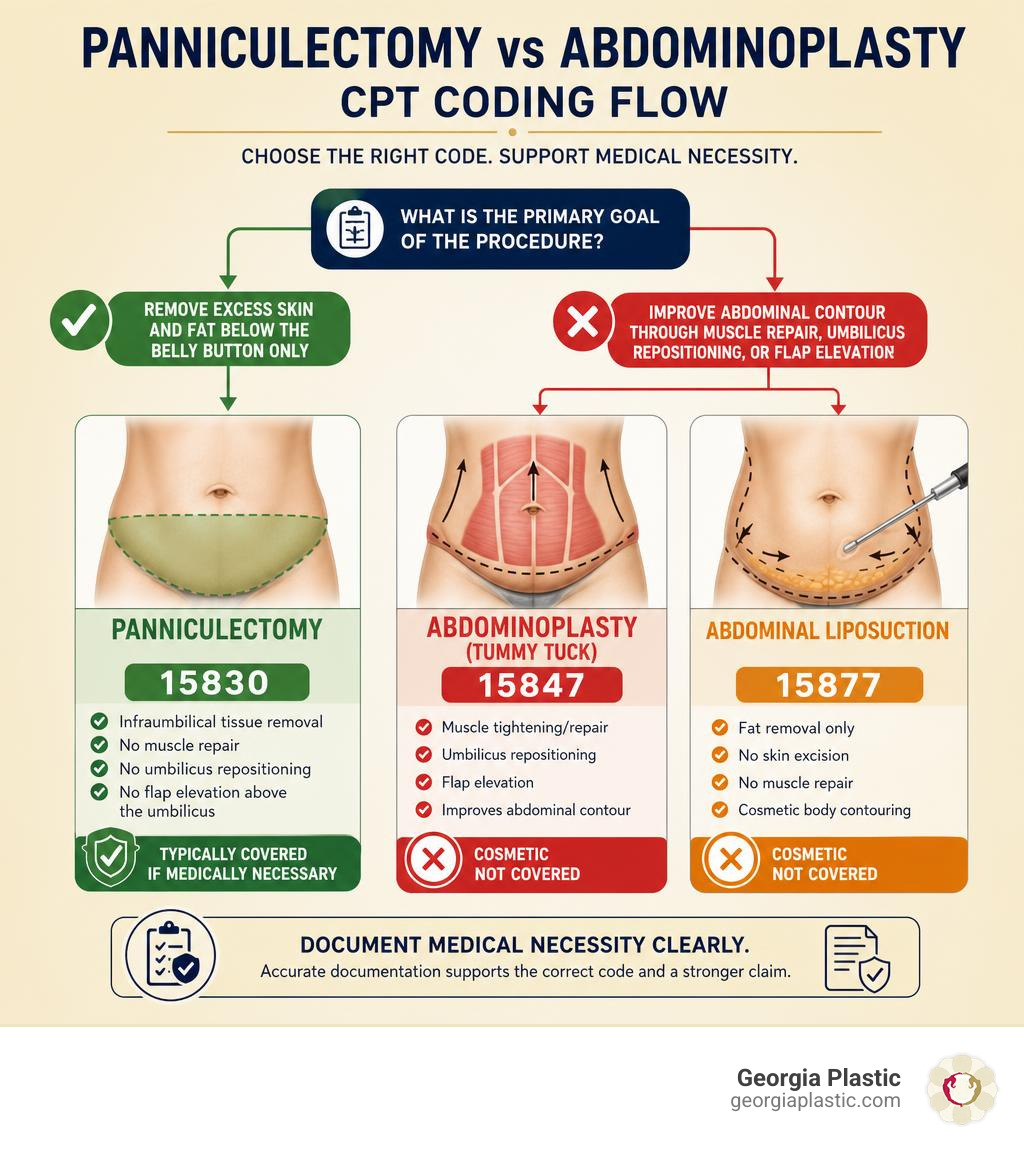
| Procedure | CPT Code | Typically Covered by Insurance? |
|---|---|---|
| Infraumbilical panniculectomy | 15830 | Yes, if medically necessary |
| Abdominoplasty (tummy tuck) | 15847 | No — cosmetic |
| Abdominal liposuction | 15877 | No — cosmetic |
| Mini/modified abdominoplasty | 17999 | Rarely |
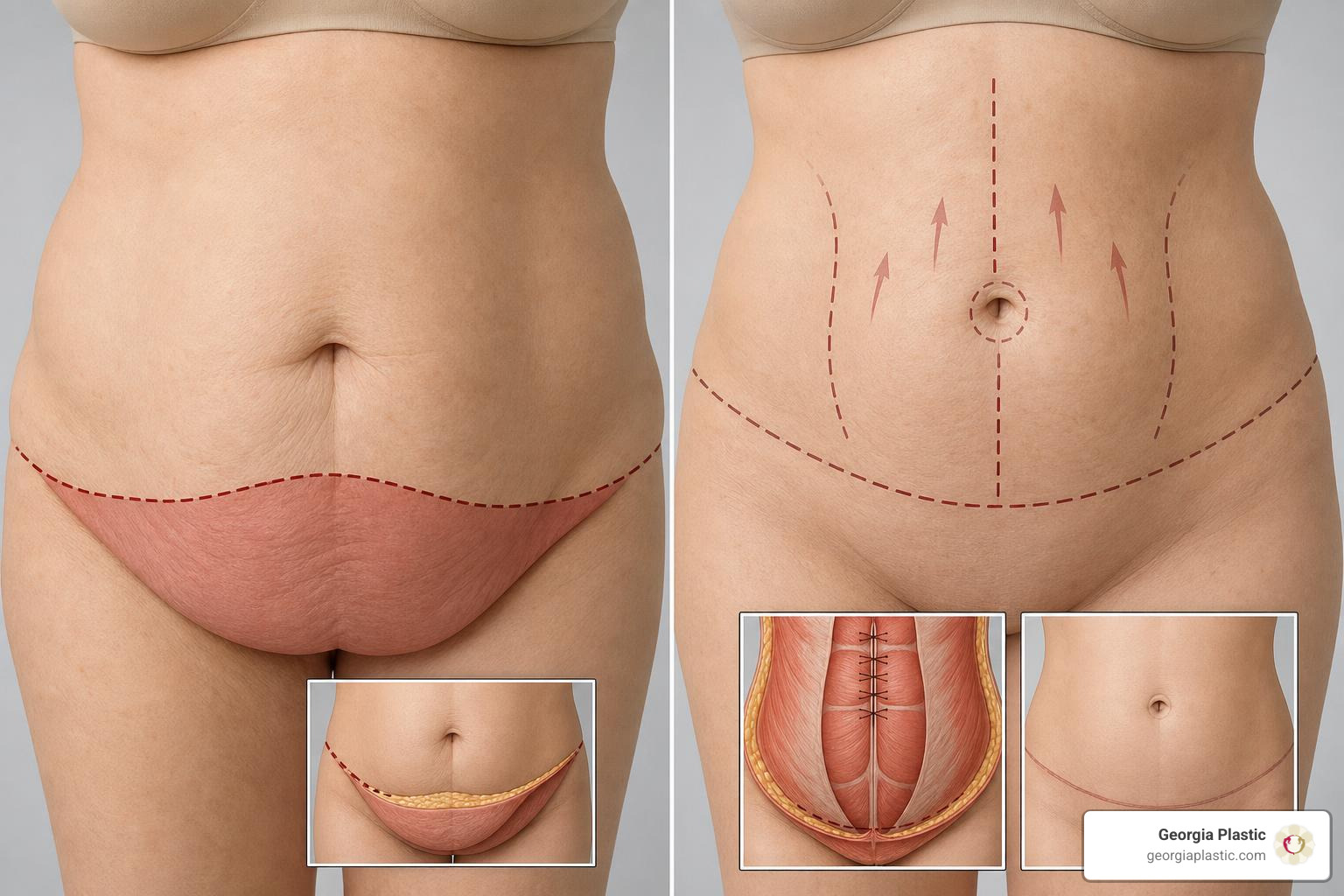
CPT 15830 is the correct code for a functional panniculectomy — the surgical removal of excess skin and fat below the belly button. It does not include muscle tightening, belly button repositioning, or flap elevation. Those elements belong to abdominoplasty (CPT 15847), which insurers almost always classify as cosmetic.
The distinction matters enormously. Before 2007, both procedures shared the same CPT code (15831). Once the codes were separated, payers gained a cleaner way to flag cosmetic intent — and the bar for proving medical necessity got higher.
I’m Dr. Stanley Okoro, a double board-certified plastic surgeon and founder of Georgia Plastic and Reconstructive Surgery in Atlanta. With extensive experience performing both reconstructive and aesthetic body procedures, I work closely with billing teams to ensure panniculectomy CPT code documentation is accurate, complete, and defensible from the moment a claim is submitted.
Quick look at panniculectomy cpt code:
The Correct panniculectomy cpt code for 2026
For May 2026 billing, the primary panniculectomy CPT code remains:
CPT 15830 – Excision, excessive skin and subcutaneous tissue, including lipectomy; abdomen, infraumbilical panniculectomy.
In plain English: CPT 15830 describes removal of the hanging lower abdominal skin and fat below the belly button. It is the code most often reviewed by insurers when a patient has a symptomatic pannus after major weight loss, pregnancy, bariatric surgery, or other body changes.
However, 15830 is often confused with nearby cosmetic body contouring codes. That is where claim trouble begins.
| Code | What It Describes | Key Billing Point |
|---|---|---|
| 15830 | Infraumbilical panniculectomy | Potentially covered when medically necessary |
| 15847 | Abdominoplasty add-on | Usually cosmetic; used with 15830 when tummy tuck components are performed |
| 15877 | Suction-assisted lipectomy of trunk | Liposuction; generally cosmetic |
| 15839 | Excision of excessive skin/subcutaneous tissue, other area | Not a substitute for abdominal panniculectomy |
| 17999 | Unlisted skin/subcutaneous procedure | Sometimes used for mini or modified procedures when no specific code fits |
For more about the procedure itself, visit our panniculectomy services page.
panniculectomy cpt code 15830: What It Includes
CPT 15830 includes removal of excess skin and subcutaneous fat from the infraumbilical abdomen, meaning the lower abdomen below the navel.
A true 15830 panniculectomy usually includes:
- Excision of the hanging pannus
- Removal of redundant lower abdominal skin
- Removal of associated subcutaneous fat
- Closure of the lower abdominal incision
- A functional purpose, such as improving hygiene, mobility, skin breakdown, or recurrent infections
It does not include:
- Muscle tightening
- Fascial plication
- Cosmetic abdominal contouring
- Belly button repositioning
- Neoumbilicoplasty
- Liposuction as the main service
- Full tummy tuck flap elevation for aesthetic shaping
Operative wording matters. If the note sounds like a cosmetic tummy tuck, the payer may treat it like one. If the note clearly describes a medically necessary infraumbilical panniculectomy, the claim has a stronger foundation.
How CPT 15847 Differs from CPT 15830
CPT 15847 describes abdominoplasty components. It is an add-on code commonly associated with a tummy tuck and includes work such as:
- Fascial plication
- Muscle tightening
- Umbilical transposition
- Cosmetic abdominal contouring
In most payer policies, abdominoplasty is considered cosmetic, even when performed at the same operation as panniculectomy. That means insurance may cover 15830 while denying 15847.
This is not a tiny detail. It affects:
- Prior authorization
- Patient financial responsibility
- Advance Beneficiary Notice use for Medicare when appropriate
- Cosmetic quotes
- Claim appeal strategy
If a patient wants the functional pannus removed and also wants muscle tightening or cosmetic contouring, we separate those goals clearly. Insurance intent and cosmetic intent should never be mashed together like a billing smoothie.
Related Codes Coders Often Confuse with Panniculectomy
Several codes can appear near panniculectomy claims:
- CPT 15877: Suction-assisted lipectomy of the trunk. This is liposuction and is typically cosmetic.
- CPT 15839: Excision of excessive skin and subcutaneous tissue in another area. This is not the standard code for infraumbilical abdominal panniculectomy.
- CPT 17999: Unlisted procedure of skin, mucous membrane, and subcutaneous tissue. This may be used for modified or mini procedures when no specific CPT code fits.
- Anesthesia CPT 00802: Commonly associated with lower abdominal wall procedures, including panniculectomy.
- Diastasis recti repair: Usually considered cosmetic or not medically necessary by many payers unless tied to another separately covered indication.
Coders should also check National Correct Coding Initiative edits, payer bundling rules, and whether a modifier such as 59 or XS is supported. The code may be correct, but if the documentation does not prove separate work, the claim can still fail.
Medical Necessity Rules for Insurance Coverage
Insurance coverage depends less on how the abdomen looks and more on what the pannus is doing to the patient’s health and function.
Most payers want to see that the pannus causes one or more of the following:
- Chronic intertrigo
- Recurrent rashes
- Candidiasis
- Cellulitis
- Skin ulcers
- Tissue necrosis
- Persistent chafing or maceration
- Hygiene impairment
- Difficulty walking
- Interference with activities of daily living
- Functional limitations not relieved by conservative care
Many policies require symptoms to persist for at least three months despite appropriate treatment. Conservative care may include topical antifungals, topical steroids, antibiotics, wound care, hygiene measures, absorbent dressings, support garments, or weight management.
Post-bariatric patients often face additional requirements, such as:
- Weight stability for 3 to 6 months, depending on payer
- At least 18 months since bariatric surgery in many policies
- BMI threshold, often around 30 or below for some plans
- Documentation of 100-pound weight loss or 40% excess body weight loss in some policies
Medicare contractors and commercial payers may use different rules. For example, Noridian’s Medicare guidance describes documentation expectations for complications such as chronic intertrigo or tissue necrosis that recur over time and fail medication management. You can review that guidance here: Medicare panniculectomy guidance.
For patient-friendly information, see our guide to treating excess skin with panniculectomy.
When Panniculectomy Is Reconstructive
Panniculectomy is usually considered reconstructive when it is performed to correct a functional problem, not to improve appearance.
Common reconstructive indications include:
- A pannus hanging below the pubis
- Recurrent skin infections under the pannus
- Chronic rashes not responding to treatment
- Nonhealing ulcers
- Skin breakdown
- Mobility limitations
- Hygiene problems
- Interference with walking, exercise, work duties, or daily care
- Structural or functional problems of the abdominal wall
The key phrase is medical necessity. The record must show that surgery is expected to restore function or relieve a documented medical problem.
Prior authorization is often required. Even when it is not required, we recommend preparing the chart as if an auditor will read it later, because sometimes they do.
When Panniculectomy Is Cosmetic
Panniculectomy may be considered cosmetic when the goal is primarily appearance or body contouring.
Examples include:
- Removing loose skin only to improve silhouette
- Improving clothing fit without medical symptoms
- Flattening the abdomen
- Tightening abdominal muscles
- Repairing diastasis recti for contour only
- Adding liposuction for aesthetic shaping
- Treating back pain alone without payer-supported criteria
- Performing panniculectomy only to improve exposure for another surgery
- Performing it as an adjunct to hernia repair or hysterectomy without independent medical necessity
When the procedure is cosmetic, it should not be billed as medically necessary. Instead, patients should receive a clear financial estimate and understand what portion, if any, insurance may cover.
ICD-10 Codes That May Support Medical Necessity
ICD-10 coding must match the clinical story. A diagnosis code alone does not create coverage. It must be supported by the chart.
Common ICD-10-CM codes that may appear in medically necessary panniculectomy documentation include:
| ICD-10 Code | Description | How It Supports the Claim |
|---|---|---|
| L98.7 | Excessive and redundant skin and subcutaneous tissue | Describes the redundant tissue |
| M79.3 | Panniculitis, unspecified | May support inflamed pannus tissue |
| L30.4 | Erythema intertrigo | Supports chronic skin irritation under folds |
| R26.2 | Difficulty in walking, not elsewhere classified | Supports mobility impairment |
| Z74.09 | Other reduced mobility | Supports functional limitation |
| L03.311 | Cellulitis of abdominal wall | Supports recurrent infection |
| B37.2 | Candidiasis of skin and nail | Supports fungal involvement |
| R21 | Rash and other nonspecific skin eruption | May support symptoms when more specific coding is not available |
Some Medicare billing articles require code pairing. For example, a primary code such as L98.7 or M79.3 may need to be paired with a secondary functional or skin-condition code such as L30.4, R26.2, or Z74.09. Always verify the current payer policy and code to the highest specificity available for the service date.
Documentation, Prior Authorization, and Denial Prevention
Strong panniculectomy documentation is not a single note. It is a trail of evidence.
A good record explains:
- What the pannus looks like
- How far it hangs
- What skin problems it causes
- How long symptoms have been present
- Which treatments were attempted
- Why conservative treatment failed
- How function is limited
- Whether weight is stable
- Whether bariatric surgery occurred and when
- What tissue was removed during surgery
A payer should be able to read the file and understand the medical need without guessing. CMS has also identified panniculectomy medical necessity and documentation as an audit topic, which makes careful charting especially important. See the CMS medical necessity documentation topic.
panniculectomy cpt code Documentation Checklist
Use this checklist before submitting prior authorization or a claim for CPT 15830:
- Front-view photographs
- Lateral-view photographs
- Clear image showing pannus overhang, especially if below the pubis
- Description of skin fold findings
- Rash, ulcer, infection, or wound duration
- Dates of conservative treatment
- Medication names and response
- Wound care notes, if applicable
- Hygiene difficulty examples
- Ambulation limitations
- Activities of daily living affected
- Weight history
- Current BMI
- Stable weight documentation
- Bariatric surgery date, if applicable
- Amount of weight lost
- Surgeon exam findings
- Preoperative diagnosis
- Operative report matching CPT 15830
- Weight or size of tissue removed, when documented
- Legible signatures and dates
- Consistent language across notes, photos, authorization, and operative report
The operative report should not simply say “tummy tuck” if the billed service is panniculectomy. Words matter. Payers read them literally.
Common Denial Reasons and How to Prevent Them
Common denial reasons include:
- No prior authorization
- Cosmetic language in the chart
- Weak ICD-10 linkage
- No proof of failed conservative treatment
- Missing photographs
- No documentation of functional impairment
- Weight not stable
- Post-bariatric timing not met
- Panniculectomy bundled into another abdominal surgery
- Incorrect CPT code
- Unsupported billing of CPT 15847
- Diagnosis codes that do not match the medical record
To prevent denials:
- Verify benefits before surgery.
- Check the payer’s current medical policy.
- Obtain prior authorization when required.
- Use CPT 15830 only when the operative work supports it.
- Keep cosmetic services separate from medically necessary services.
- Link each ICD-10 code to a documented symptom or condition.
- Include photos whenever possible.
- Document at least three months of failed treatment when required.
- Avoid “cosmetic-only” wording in reconstructive claims.
- Prepare an appeal packet with photos, treatment records, and surgeon notes if denied.
How Medicare and Commercial Payer Policies Differ
Medicare coverage often depends on Local Coverage Determinations, billing articles, and contractor guidance. Medicare contractors may focus heavily on chronic skin complications, functional impairment, and whether documentation supports reconstructive intent.
Commercial payers may use their own medical policies or tools such as InterQual criteria. Some require:
- Pannus below the pubis
- Three months of failed treatment
- Six months of stable weight
- Eighteen months after bariatric surgery
- Specific photo views
- Specific ICD-10 code combinations
- Prior authorization before surgery
Examples of payer medical policies include the Commercial coverage criteria example, Clinical Policy: Panniculectomy, and CG-SURG-99 Panniculectomy and Abdominoplasty.
The practical takeaway: never assume one approval means another payer will approve the same case. Panniculectomy coverage is policy-specific.
Billing Panniculectomy with Hernia Repair, Hysterectomy, or Other Procedures
Panniculectomy can be performed with other abdominal procedures, but billing it separately requires caution.
The key rule is this: the panniculectomy must meet medical necessity criteria on its own. It cannot be billed as reconstructive simply because another surgeon needed better exposure or because the skin was removed incidentally.
For patients considering gynecologic surgery, we explain this in more detail here: hysterectomy and panniculectomy.
Hernia Repair with Panniculectomy
A true hernia repair is different from cosmetic muscle tightening or diastasis recti repair.
A true hernia repair usually involves:
- A fascial defect
- Hernia sac evaluation or dissection
- Reduction of hernia contents
- Fascial closure
- Mesh placement when appropriate
Diastasis recti, by contrast, is separation of the rectus muscles without a true fascial hernia defect. Many payers consider diastasis repair cosmetic or not medically necessary.
Hernia repair coding changed in recent years, so coders should verify current 2026 CPT rules. Older policies may reference retired ventral hernia codes such as 49560-49587, but current anterior abdominal hernia coding uses updated code families based on approach, size, reducibility, recurrence, and mesh work.
If panniculectomy and hernia repair are both billed, documentation should separate:
- The hernia diagnosis
- The hernia repair work
- The panniculectomy medical necessity
- The panniculectomy operative work
- Any modifier rationale, such as distinct procedural service when appropriate
Modifiers such as 59 or XS should not be used just to “get it paid.” They must reflect truly separate, documented work.
Hysterectomy or Open Abdominal Surgery with Panniculectomy
CMS has cautioned that panniculectomy performed at the same time as open abdominal surgery or incidental to another procedure may not be separately coded. This is especially important when pannus removal is performed only for access.
For hysterectomy or other open abdominal surgery, ask:
- Did the panniculectomy meet reconstructive criteria before the other surgery was planned?
- Were rashes, infections, ulcers, or mobility problems documented independently?
- Was conservative treatment attempted and unsuccessful?
- Was prior authorization obtained?
- Was the patient informed if part of the procedure may be noncovered?
If the answer is no, separate reimbursement is at risk.
Clinical Risk Data for Combined Procedures
Combining panniculectomy with other abdominal procedures can be appropriate in selected patients, but risk counseling matters.
Published data show mixed findings:
- In a propensity-matched analysis of 2,500 patients, panniculectomy performed with ventral hernia repair was associated with higher 30-day wound complications, venous thromboembolism, reoperation, and overall medical morbidity compared with ventral hernia repair alone.
- Another propensity-matched analysis of 1,500 patients found no significant difference in surgical site infection, surgical site occurrence, or 1-year hernia recurrence between concurrent panniculectomy with ventral hernia repair and hernia repair alone.
- Among 706 post-bariatric panniculectomy patients, the overall complication rate was 56%, including dehiscence at 24%, surgical site infection at 22%, seroma at 18%, and postoperative bleeding at 5%. About 12% required return to the operating room.
- In one cohort of 126 post-bariatric panniculectomy patients, BMI over 25 kg/m2 was associated with nearly three times the risk of postoperative wound complications.
- A systematic review and meta-analysis of 143 studies involving 27,834 abdominoplasty patients found seroma prevalence around 11%.
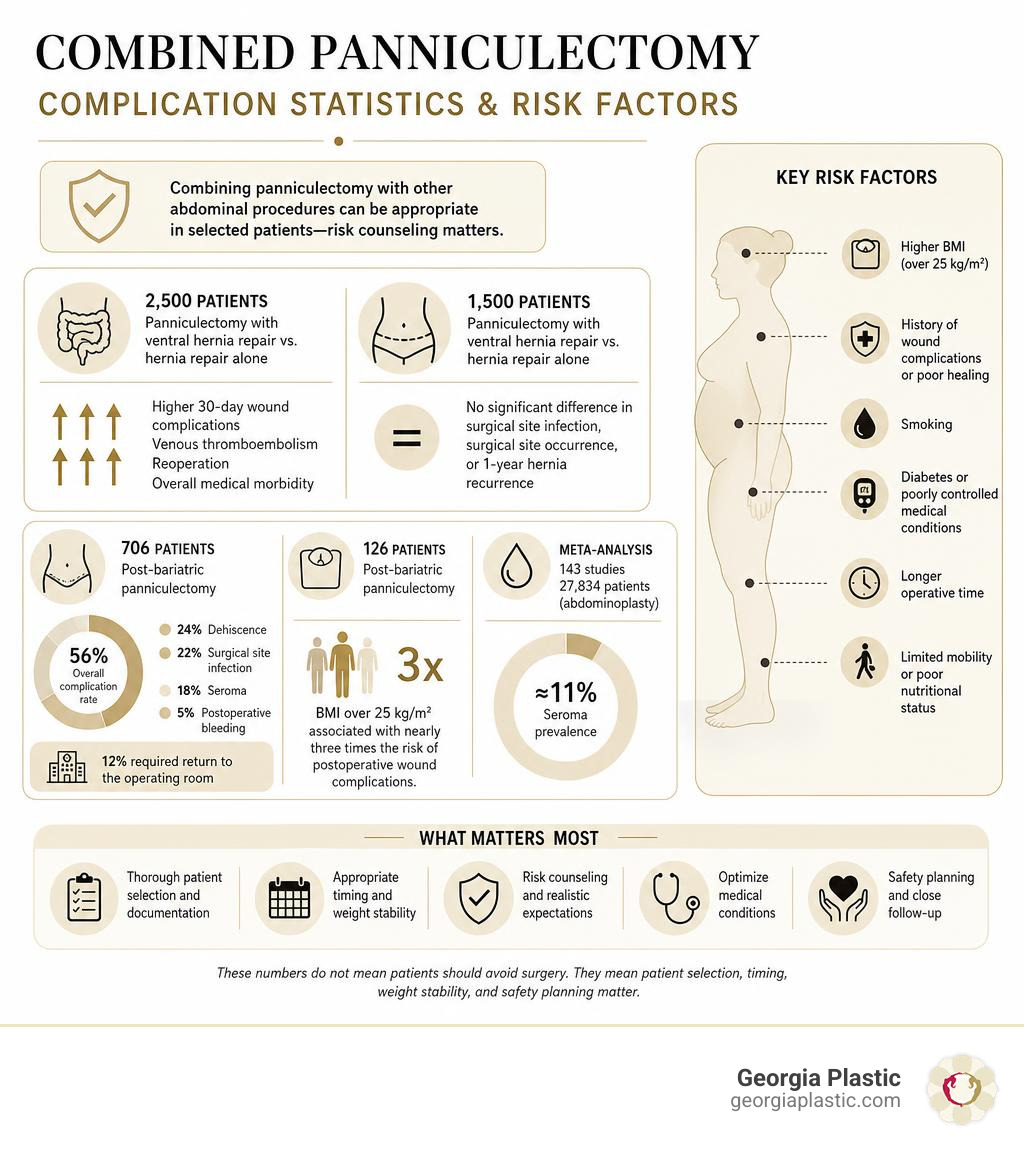
These numbers do not mean patients should avoid surgery. They mean patient selection, timing, weight stability, and safety planning matter. At Georgia Plastic and Reconstructive Surgery, we prioritize safety, individualized planning, and natural-looking results.
Frequently Asked Questions About Panniculectomy CPT Coding
What Is the Panniculectomy CPT Code?
The correct panniculectomy CPT code is 15830. It describes excision of excessive skin and subcutaneous tissue of the abdomen, specifically infraumbilical panniculectomy.
It may be reimbursed when medical necessity is proven through documentation of functional impairment, chronic skin problems, failed conservative treatment, and payer-specific criteria.
Can CPT 15830 and CPT 15847 Be Billed Together?
Yes, CPT 15830 and CPT 15847 can be billed together when both services are actually performed and documented. However, CPT 15847 is an abdominoplasty add-on code and is commonly considered cosmetic.
That means:
- Insurance may cover 15830 but deny 15847.
- The patient may be responsible for the cosmetic portion.
- Prior authorization may apply only to 15830.
- Cosmetic estimates should be clear before surgery.
- Documentation must distinguish reconstructive work from aesthetic work.
Never assume that approval for panniculectomy includes approval for tummy tuck components.
Which ICD-10 Codes Are Most Important for Panniculectomy Reimbursement?
Commonly important ICD-10 codes include:
- L98.7 for excessive and redundant skin and subcutaneous tissue
- M79.3 for panniculitis
- L30.4 for intertrigo
- R26.2 for difficulty walking
- Z74.09 for reduced mobility
- L03.311 for cellulitis of abdominal wall
- B37.2 for cutaneous candidiasis
- R21 for rash when appropriate
Some payers require dual diagnosis reporting, such as a redundant skin code paired with a functional or inflammatory condition code. The best code is the one that accurately reflects the patient’s condition and is supported in the medical record.
Conclusion
Panniculectomy coding is not just about choosing a number from a list. It is about matching the procedure, diagnosis, medical necessity, documentation, payer policy, and operative report into one consistent story.
For most medically necessary cases, the correct code is CPT 15830. Abdominoplasty components belong under CPT 15847 and are usually cosmetic. Liposuction, diastasis repair, and adjunct-only skin removal require even closer review.
The strongest claims have:
- Clear functional impairment
- Strong ICD-10 linkage
- Failed conservative treatment
- Weight stability documentation
- Quality photographs
- Accurate operative language
- Payer-specific authorization
At Georgia Plastic and Reconstructive Surgery in Atlanta, we combine reconstructive expertise with careful planning, patient safety, and personalized care. If you are considering panniculectomy or need help understanding whether your case may qualify as reconstructive, we invite you to schedule a panniculectomy consultation.


