
Why Understanding Mommy Makeover Surgery Risks Matters Before You Commit
Mommy makeover surgery risks are a critical part of the conversation for any woman considering this transformative procedure. While reclaiming your pre-pregnancy body is exciting, a clear understanding of potential complications is essential for an informed decision.
Quick Answer: Key Mommy Makeover Surgery Risks
- General Risks: Bleeding, infection, anesthesia issues, blood clots (DVT/PE), poor healing, and scarring.
- Common Complications (5-25% of patients): Seroma (fluid buildup), minor wound delays, and temporary numbness.
- Rare But Serious Risks (<1.5%): Tissue death, significant hematoma, and implant complications.
- Mortality Rate: Extremely low (0.001-0.02%) with board-certified surgeons in accredited facilities.
- Key Risk Factors: Smoking, BMI over 35, and uncontrolled medical conditions like diabetes.
A mommy makeover is a personal decision, balancing the desire to address post-pregnancy changes with a realistic view of the risks. This surgery, often combining a tummy tuck, breast surgery, and liposuction, can restore what pregnancy changed. However, every surgery has risks. While the vast majority of patients (96-98%) have no major complications, know what could happen.
Your safety depends on three key factors:
- Patient factors: Your overall health, lifestyle, and medical history.
- Surgeon factors: Your doctor’s training, experience, and technique.
- Facility factors: The accreditation and safety protocols of the surgical center.
Understanding these risks empowers you to minimize them, choose the right surgeon, and prepare for a smoother recovery.
I’m Dr. Stanley Okoro, a double board-certified plastic surgeon and founder of Georgia Plastic and Reconstructive Surgery in Atlanta. My approach prioritizes your safety through careful patient selection, advanced surgical techniques, and comprehensive counseling to help you achieve the natural-looking results you deserve.
Understanding the Spectrum of Mommy Makeover Surgery Risks
Not all mommy makeover surgery risks are equal. Some are minor, while others are more serious. A mommy makeover combines procedures—like a tummy tuck, breast surgery, and liposuction—so it’s important to understand the full picture.
The good news is that major complications are rare with an experienced, board-certified plastic surgeon. The Aesthetic Society confirms high satisfaction rates. But “rare” isn’t “impossible,” so we review every potential risk.
General Risks Common to Any Major Surgery
These risks are part of any major operation:
- Anesthesia complications: Most patients tolerate anesthesia well, but adverse reactions like nausea or, more rarely, respiratory or cardiac issues can occur. A skilled anesthesiologist monitors you continuously.
- Bleeding and hematomas: A hematoma is a collection of blood under the skin. Small ones resolve on their own, but larger ones may need drainage.
- Infection: With any incision, infection is a risk (1-4% for abdominoplasty). We use sterile protocols and antibiotics to minimize this.
- Poor wound healing: Incisions may not close smoothly, which can delay recovery or widen scars. Smoking is a major factor.
- Unfavorable scarring: Every incision leaves a scar. We place them strategically, but your genetics and skin type influence the final result. Most scars fade significantly.
- Blood Clots (DVT/PE): Deep Vein Thrombosis (DVT) is a clot in a deep vein. If it travels to the lungs, it becomes a life-threatening Pulmonary Embolism (PE). We use aggressive prevention, including early movement and compression devices.
Common (But Manageable) Mommy Makeover Complications
- Seroma: The most common issue (5-25% of patients), this is a collection of clear fluid under the skin, especially after a tummy tuck. It may require simple drainage in the office.
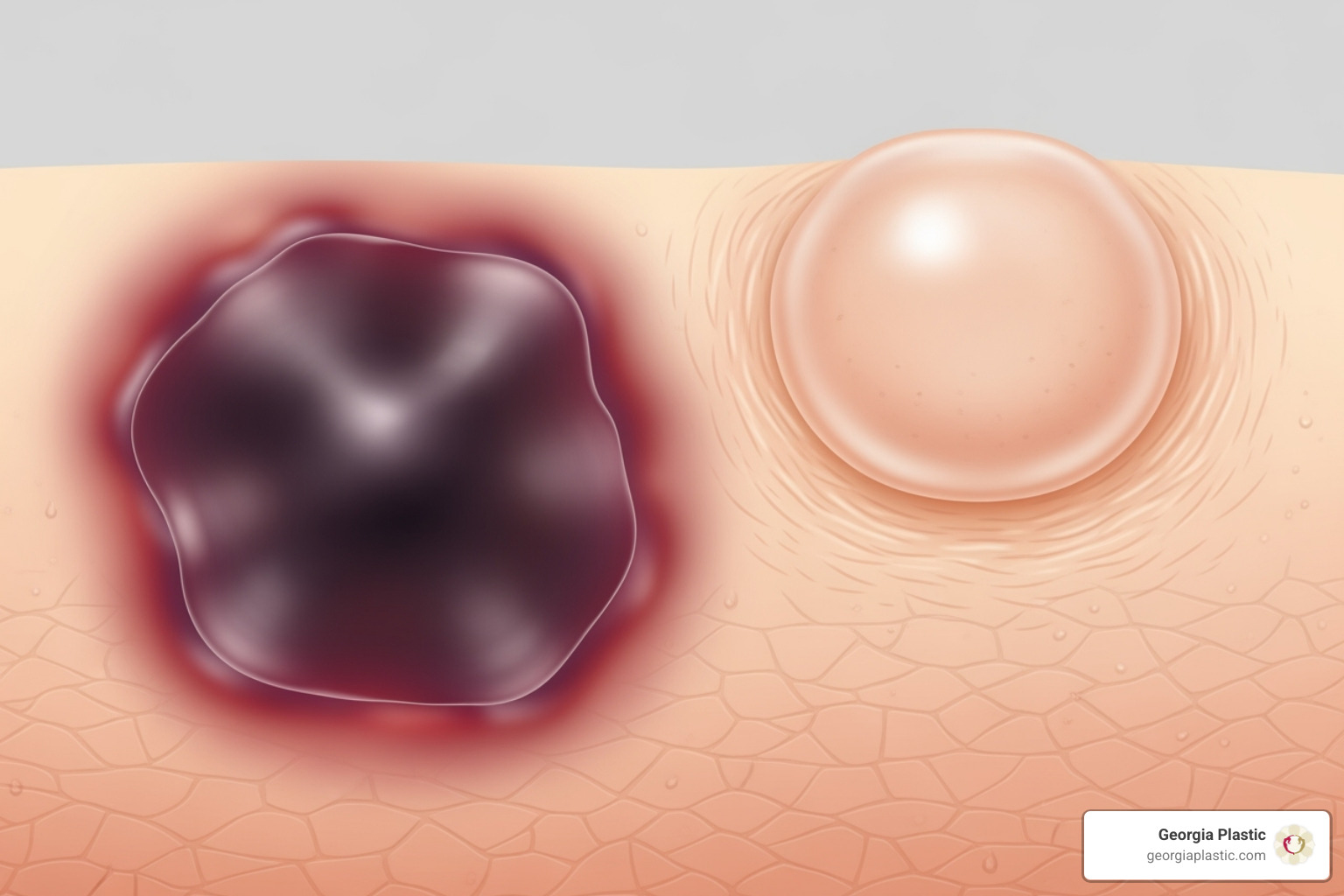
Understanding the difference between a hematoma (blood collection) and a seroma (fluid collection) is key for post-operative awareness.
- Minor wound healing delays: A small part of an incision may take longer to close but usually resolves with proper care.
- Changes in sensation: Numbness or tingling are common as small nerves are affected. Sensation typically returns over months, but permanent changes are possible.
- Nipple sensation changes: After breast surgery, sensation may decrease. For most, it returns within a year, but changes can be permanent.
- Asymmetry: We strive for symmetry, but minor differences can persist as the body isn’t perfectly symmetrical.
- Swelling and bruising: These are universal and temporary, fading within weeks, though subtle swelling can last up to a year.
Seek medical attention for:
- Excessive swelling, bruising, or severe pain.
- Redness, warmth, or foul-smelling discharge from incisions.
- Fever above 101°F (38.3°C).
- Sudden shortness of breath or chest pain (call 911 immediately).
Rare But Serious Mommy Makeover Surgery Risks
- Blood clots (VTE): Affecting fewer than 1.5% of patients, these are among the most serious risks, which is why prevention is paramount.
- Significant tissue necrosis: Tissue death from poor blood supply, more common in smokers. It may require surgery to remove dead tissue.
- Fat necrosis: Small, firm lumps of dead fat cells that can form after liposuction. They may resolve on their own or need removal.
- Implant-related complications: For breast augmentation, this includes rupture, shifting, or capsular contracture (hardened scar tissue). A rare lymphoma (ALCL) is also associated with textured implants.
- Severe anesthesia or cardiac/pulmonary complications: These are extremely rare in healthy patients (0.001-0.008%) but possible, especially with pre-existing conditions. This is why thorough pre-operative screening is vital.
Are You a Safe Candidate? Key Factors That Influence Your Personal Risk
Your personal health profile has a huge impact on mommy makeover surgery risks. We view you as an active partner in your safety, which is why we emphasize pre-operative optimization—preparing your body to handle surgery and heal beautifully.
Many risk factors are within your control. Let’s discuss what matters most.

How BMI, Smoking, and Medical Conditions Affect Mommy Makeover Risks
Your weight, smoking status, and underlying health are the biggest influencers of surgical safety.
Body Mass Index (BMI) is a key predictor of your body’s response to surgery. Studies on BMI and complications show that a BMI over 30 increases risks of infection, healing problems, and blood clots. The safest choice may be to postpone surgery until you reach a more optimal weight.
Smoking is the single most dangerous modifiable risk factor. Smokers face 3.7 times higher overall complication rates and a 4.3 times higher risk of tissue necrosis (tissue death). The good news is your body begins healing as soon as you quit. Each tobacco-free week after the first four improves surgical outcomes by 19%.
Underlying medical conditions like diabetes, heart disease, and high blood pressure are critical. Uncontrolled diabetes or heart conditions increase surgical risks. Getting these conditions under control before surgery is essential.
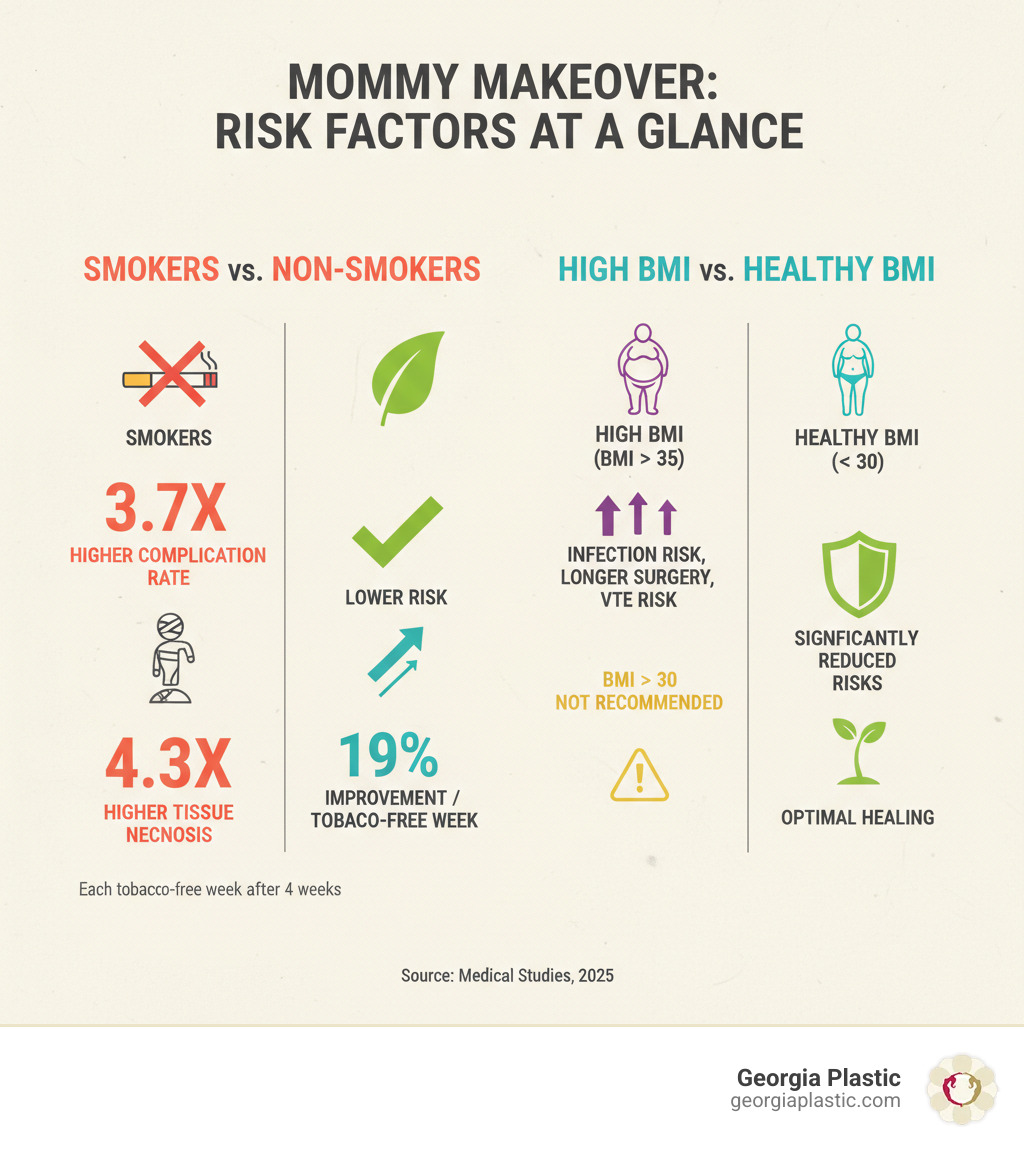
The difference between optimized and non-optimized patients is striking—and largely within your control.
Proactive Steps to Minimize Your Risks Before Surgery
Take these steps to prepare for a safer procedure and smoother recovery:
- Achieve a stable weight: Be within 10-15 pounds of your goal weight and maintain it for at least six months before surgery. This ensures your results last and reduces complications.
- Quit smoking: This is non-negotiable. You must quit all nicotine products (including vaping) at least four to six weeks before and after surgery to reduce mommy makeover surgery risks dramatically.
- Control medical conditions: Work with your primary doctor to optimize blood sugar, blood pressure, or any other health issues well in advance.
- Focus on nutrition and hydration: A balanced, protein-rich diet and plenty of water give your body the tools it needs to heal.
- Disclose all medications and supplements: Be completely honest about everything you take, including vitamins and herbal teas, as some can increase bleeding risk.
- Arrange post-operative support: You will need a responsible adult with you for at least 48 hours post-surgery. Plan for help with childcare and household tasks for at least two weeks to allow yourself to rest and heal.
The Non-Negotiables: How Surgeon and Facility Choice Dictate Safety
While your health is vital, who operates on you and where they operate matters even more. Choosing the wrong surgeon or facility based on price or convenience introduces unnecessary mommy makeover surgery risks.
Why Board-Certification Is Your Most Important Safety Check
Only trust your body to a surgeon certified by the American Board of Plastic Surgeons. This signifies at least six years of dedicated surgical training, rigorous exams, and a commitment to ongoing education. Be aware that any licensed physician can legally perform cosmetic surgery, but a “cosmetic surgeon” may lack this specialized training.
Experience matters tremendously. Ask potential surgeons how many mommy makeovers they perform annually. An experienced surgeon works more efficiently, reducing your time under anesthesia. Always ask to see before-and-after photos of their actual patients to judge their consistency and aesthetic style.
The facility where your surgery happens is just as important. Ensure it’s accredited by a recognized body like the American Association for Accreditation of Ambulatory Surgery Facilities (AAAASF) or The Joint Commission. This guarantees the facility meets strict safety, staffing, and emergency preparedness standards.
The Dangers of Surgical Tourism: A Cautionary Tale
Traveling abroad for cheaper surgery, or “surgical tourism,” is a dangerous trend. While the low prices are tempting, the risks are not worth the savings.
Medical standards, sterilization protocols, and emergency preparedness vary dramatically between countries. The biggest danger is the lack of follow-up care. If you develop a complication, you are thousands of miles from your surgeon with little recourse. Medical malpractice laws in other countries are often weak or non-existent.
The tragic death of television personality Jacky Oh after a mommy makeover highlights the importance of having your surgeon nearby for post-operative care. As her story shows, even traveling within the U.S. can complicate recovery. You can read more about the tragic story of Jacky Oh as a sobering reminder.
Your safety is priceless. Choose a local, board-certified plastic surgeon operating in an accredited facility. This ensures you can easily attend follow-up appointments and have a trusted medical team supporting you.
Putting the Numbers in Perspective: Statistics vs. Reality
Reading about mommy makeover surgery risks can be overwhelming, but the overall safety record for these procedures is remarkably strong, with high patient satisfaction rates.
To put it in perspective, the risk of a serious complication from a mommy makeover with a board-certified surgeon is often lower than risks you take in daily life. As the Cleveland Clinic’s overview on mommy makeovers notes, balancing the transformative potential with informed decision-making is key.
What Do the Statistics Say About Mommy Makeover Safety?
- Mortality Rate: The rate is extraordinarily low, at less than 0.02%, and drops to 0.001-0.008% with board-certified surgeons in accredited facilities.
- Major Complications: 96-98% of patients experience no major issues. Serious conditions like hematoma requiring drainage or infection affect only 1-4% of patients. The rarest, most severe complications (blood clots, tissue necrosis) affect less than 1.5%.
- Minor Complications: More common but manageable issues like seroma needing office drainage or minor healing delays affect 5-25% of patients. These rarely impact the final result.
Facilities accredited by organizations like AAAASF have exceptionally low complication rates (below 1%), a direct result of rigorous safety protocols.
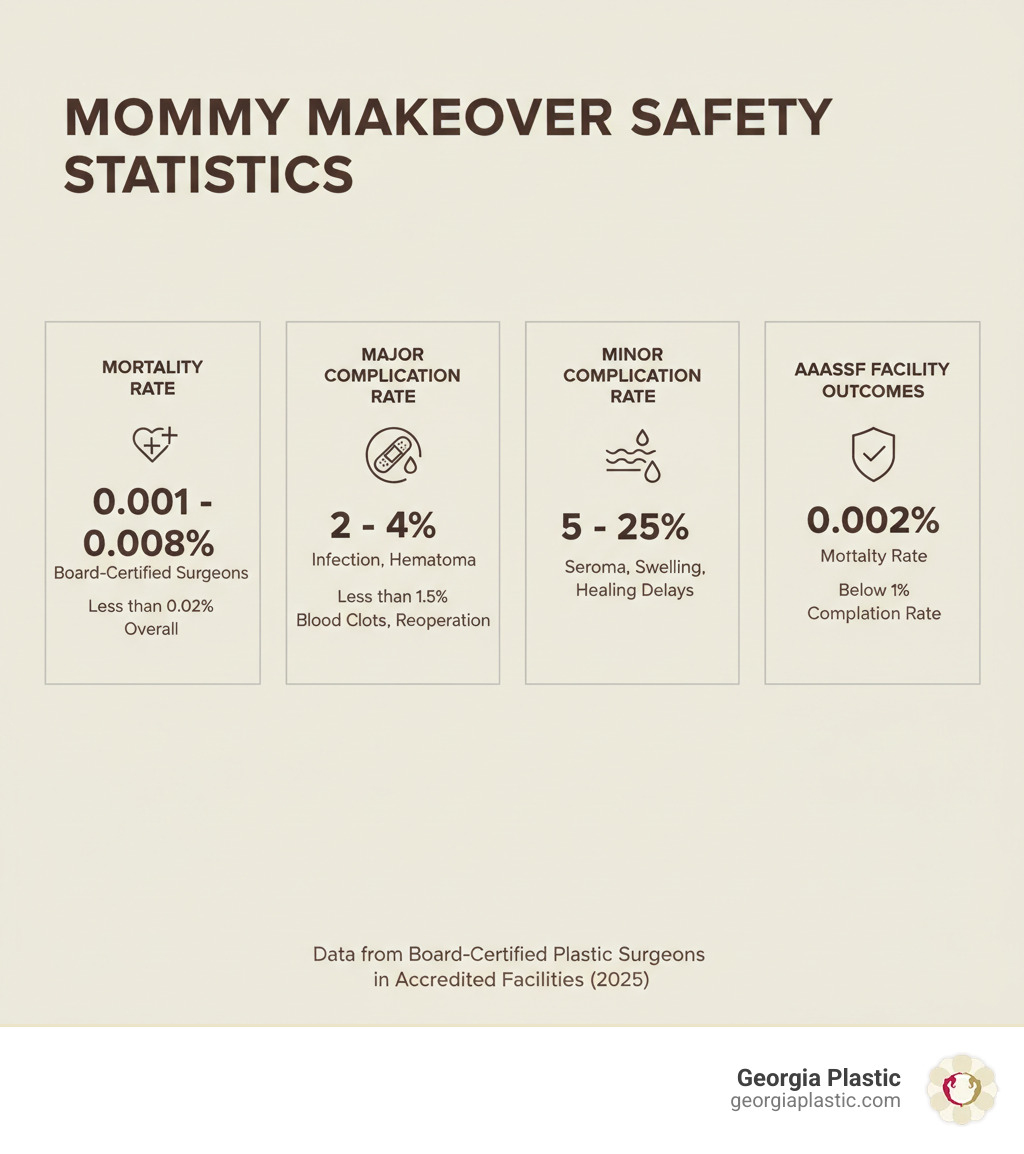
These statistics tell a reassuring story: when performed by qualified surgeons in accredited facilities, mommy makeovers have an excellent safety profile.
Does Combining Procedures Increase Mommy Makeover Surgery Risks?
This is a common and valid question. Does combining a tummy tuck, breast surgery, and liposuction into one operation increase risk?
The answer is nuanced. While very long procedures can have slightly higher risks, modern research shows something different. A comprehensive 2024 study confirmed that for appropriately selected patients, complication rates for combined procedures do not significantly increase.
Combining procedures has benefits: one anesthesia session and one consolidated recovery period. The key to safety is patient selection and operative time limits. Experienced surgeons plan procedures to stay within safe time limits (typically 5-6 hours). We only perform combined procedures on healthy, low-risk candidates. If your risk is higher, we may recommend staging the procedures to prioritize your safety.
Frequently Asked Questions About Mommy Makeover Safety
Is a mommy makeover considered a high-risk surgery?
A mommy makeover is major surgery. Because it combines procedures, it carries a slightly higher risk than a single, shorter surgery.
However, when performed by a board-certified plastic surgeon on a healthy, carefully selected patient in an accredited facility, the procedure is considered very safe. The risk is not eliminated, but it is well-managed. Major complication rates are low (2-4%).
What are the potential long-term downsides of a mommy makeover?
While most women love their results for years, it’s important to understand the long-term considerations:
- Scarring is permanent. We place incisions strategically to hide them, but they will always be there, though they fade significantly over time.
- Future pregnancies can alter your results. We strongly advise waiting until you are done having children, as pregnancy will re-stretch the skin and muscles.
- Weight fluctuations matter. Significant weight gain or loss after surgery will change your contours. A stable weight is key to protecting your investment.
- Sensation changes can be long-lasting. While most numbness resolves, some patients experience permanent changes in sensation.
- Revision surgery is possible. Most patients don’t need it, but a refinement may be desired years later.
What is the ideal weight for a mommy makeover?
There is no single magic number. We look for a stable, healthy weight that you can realistically maintain. We generally recommend being within 10-15 pounds of your goal weight and holding it for at least six months before surgery.
This stability is crucial because it reduces surgical risks and ensures your results will last. We want to operate on a body that has found its natural set point to create beautiful, long-lasting contours.
Your Path to a Safe and Successful Change
Your safety during a mommy makeover rests on three pillars: your health, your surgeon’s expertise, and the facility’s standards. When these align, you can expect a safe procedure and a beautiful outcome.
Informed consent is a partnership. It means you understand the procedure, recovery, and mommy makeover surgery risks, and feel comfortable asking questions. Your role is to optimize your health before surgery and follow all post-operative instructions carefully.
At Georgia Plastic & Reconstructive Surgery, we are committed to this partnership. Dr. Okoro and our team prioritize personalized care that puts your safety first. We take the time to understand your goals, assess your health, and create a surgical plan custom to you.
Our goal is to help you feel confident and happy with your decision, knowing you achieved your results responsibly and safely. If you are considering a mommy makeover and want to ensure your journey is as safe as possible, we invite you to start the conversation with us.


