
Your Guide to a Smooth Healing Journey
Understanding mommy makeover recovery time is crucial for planning your change journey and setting realistic expectations. Here’s what you need to know:
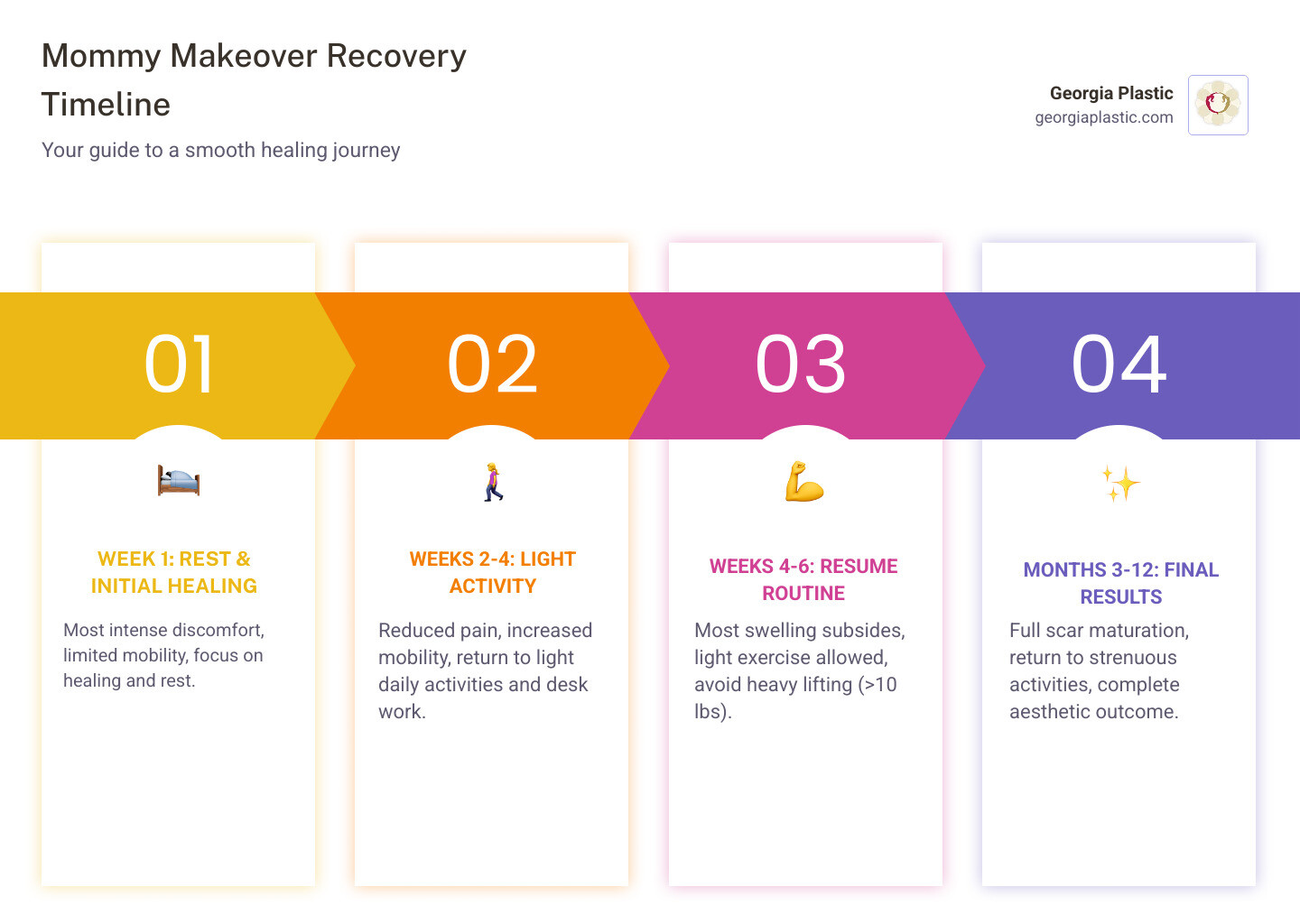
Quick Answer: Mommy Makeover Recovery Timeline
- Week 1: Rest and initial healing (most intense discomfort, limited mobility)
- Weeks 2-4: Return to light activities and possibly desk work
- Weeks 4-6: Resume most normal activities (avoid heavy lifting >10 lbs)
- 6 Weeks: Cleared for most exercise and strenuous activities
- 3-6 Months: Final results become visible as swelling fully resolves
- Up to 1 Year: Complete scar maturation and final aesthetic outcome
The American Society of Plastic Surgeons found that approximately 62% of moms would consider a mommy makeover if money weren’t an issue. This transformative combination surgery addresses post-pregnancy body changes, but it requires patience and proper planning.
Your recovery timeline depends on several factors: which procedures you choose, your overall health, and how closely you follow post-operative instructions. A mommy makeover typically combines multiple procedures like tummy tuck, breast surgery, and liposuction—all performed at once. This means you’re healing from several surgeries simultaneously.
Most patients take 2-4 weeks off work and avoid strenuous exercise for about 6 weeks. While you’ll see improvements within days, your body continues healing for months. Complete recovery—where all swelling subsides and final results emerge—can take 6 months to a year.
The good news? With proper preparation and care, most women find the recovery process manageable and well worth the confidence-boosting results.
What Is a Mommy Makeover and What Does It Include?
Motherhood changes everything—including your body. While pregnancy and breastfeeding are beautiful experiences, they often leave lasting physical changes that diet and exercise alone can’t address. Stretched skin, separated abdominal muscles, deflated breasts, and stubborn pockets of fat are incredibly common. Many women feel disconnected from their pre-baby bodies and wish they could reclaim that confidence.
That’s exactly what a mommy makeover is designed to do.
A mommy makeover is a personalized combination of cosmetic procedures that address the specific areas most affected by pregnancy and childbirth—typically your breasts, abdomen, and waistline. It’s not a cookie-cutter surgery. Instead, it’s carefully customized to your unique body and aesthetic goals, helping you restore a more youthful, contoured silhouette.
The term has become so widely recognized that postpartum reshaping is a priority for many women, enough so that the phrase “mommy makeover” has entered everyday conversation. At Georgia Plastic, we’re here to help you feel like yourself again—confident, comfortable, and proud of your body. For more info about what a Mommy Makeover is, visit our dedicated page.
Typical Procedures
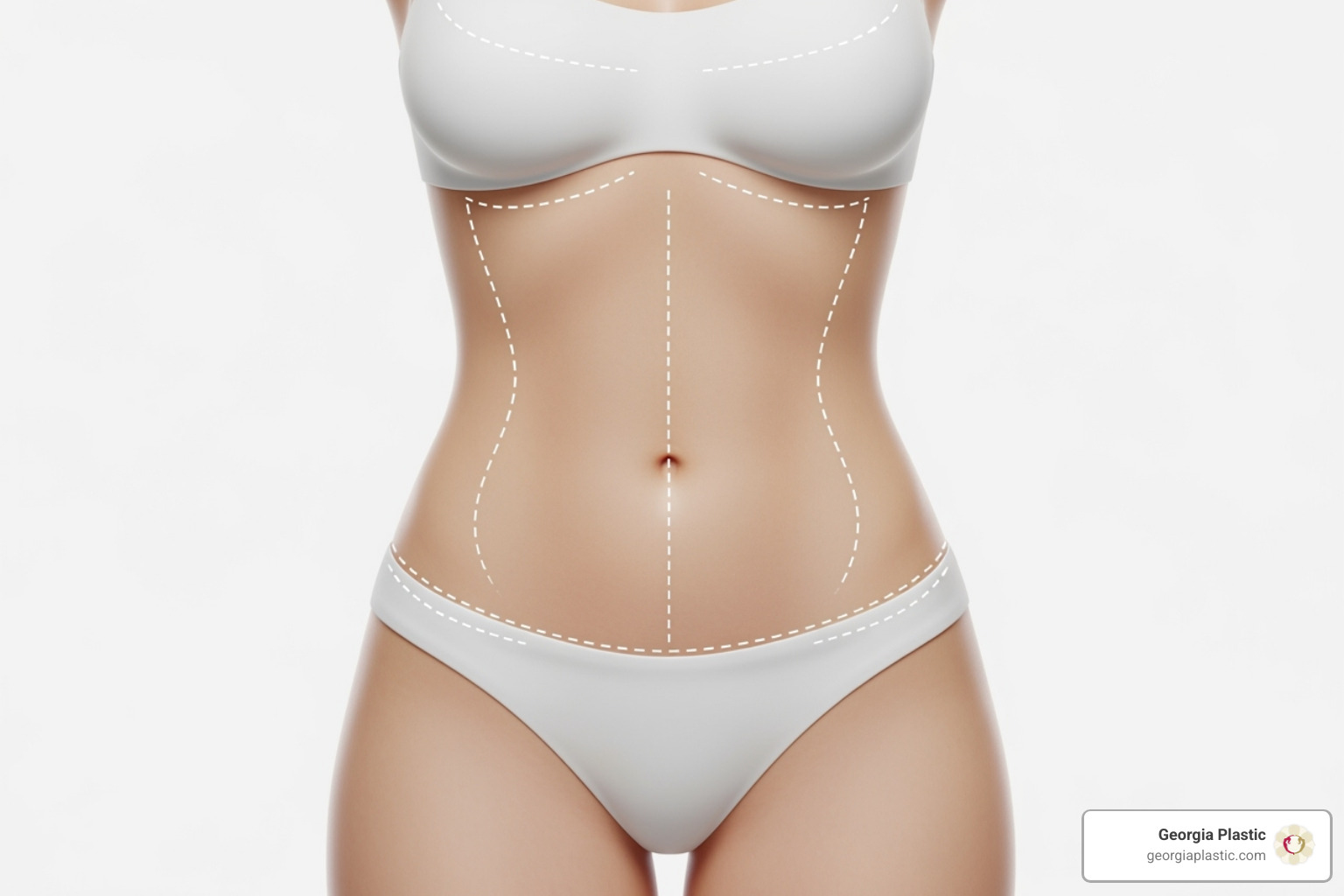
Your mommy makeover will be custom specifically to you, but most combinations focus on the breasts and abdomen—the areas pregnancy affects most. Here’s what you might include:
Tummy Tuck (Abdominoplasty) is the cornerstone of most mommy makeovers. Pregnancy stretches your abdominal skin and muscles, often creating loose skin, stubborn fat deposits, and separated abdominal muscles (called diastasis recti). A tummy tuck removes that excess skin and fat while repairing weakened muscles, giving you a flatter, firmer, more toned midsection. A full tummy tuck typically takes 2-3 hours, while a mini version takes about 1.5-2 hours.
Breast Augmentation restores volume to breasts that have deflated after pregnancy or breastfeeding. Using implants, this procedure brings back fullness and improves breast size, usually in about 1-2 hours. Many women find their breasts simply don’t look the same after nursing, and augmentation helps them feel whole again.
Breast Lift (mastopexy) addresses sagging by raising and reshaping breasts that have lost their youthful position due to pregnancy, breastfeeding, or gravity. If your breasts have dropped but you’re happy with their size, a lift creates a perkier, more aesthetically pleasing contour. This surgery typically takes 1-3 hours.
Breast Reduction can be a relief for women whose breasts became significantly larger during pregnancy and remained that way. If increased breast size is causing discomfort or you simply prefer a smaller profile, breast reduction surgery (which takes 3-4 hours) offers both physical and aesthetic benefits.
Liposuction targets those frustrating pockets of fat that won’t budge no matter how much you exercise. It’s often combined with a tummy tuck to further sculpt your waistline, hips, or thighs. Depending on the treatment areas, liposuction can take 30 minutes to several hours.
Diastasis recti repair addresses separated abdominal muscles—a common result of pregnancy that can cause a persistent “pooch” and core weakness. This repair is often performed as part of your tummy tuck, restoring strength and creating a flatter stomach.
The beauty of a mommy makeover is that these procedures are combined into one surgical session. This approach maximizes your results while consolidating your mommy makeover recovery time into a single healing period rather than multiple recoveries. For a more detailed breakdown of popular procedures, check out our additional resources.
The Complete Mommy Makeover Recovery Timeline: A Week-by-Week Guide
Your body is about to accomplish something remarkable—healing from multiple procedures all at once. Understanding your mommy makeover recovery time helps you plan properly and keeps expectations realistic. Since you’re healing from several surgeries simultaneously, your recovery unfolds in distinct phases, each bringing its own milestones and improvements.
The healing journey involves managing common post-surgical symptoms like swelling and bruising, which peak and then gradually fade. We’ll make sure you have effective pain management strategies in place, and we’ll outline clear activity restrictions to protect your results. Throughout this process, regular follow-up appointments with your surgeon are your safety net—a chance to monitor progress, celebrate improvements, and address any concerns before they become problems.

Week 1: The Initial Healing Phase
Let’s be honest—this first week is the toughest part of your mommy makeover recovery time. Your main job right now is simple: rest. Your body is working overtime to heal, and it needs all the energy it can get.
During these first few days, you’ll experience significant discomfort, swelling, and bruising. This is completely normal. The swelling typically peaks around days 2-3, which can feel discouraging, but it’s actually a sign your body is doing exactly what it should. We use a long-acting local anesthetic during surgery that provides substantial relief for the first 48-72 hours, and your prescribed pain medication will help manage discomfort after that.
If you had a tummy tuck, you’ll notice your mobility is quite limited. Many patients find themselves walking slightly hunched over for the first day or two—this is your body’s way of protecting those healing abdominal muscles. Don’t worry, you won’t be stuck this way forever. You’ll also have bandages or gauze covering your incisions, and you’ll wear compression garments around the clock. These garments might feel snug, but they’re working hard to reduce swelling and support your healing tissues.
You may have drainage tubes in place to prevent fluid buildup. While they require some care and attention, they’re temporary and play an important role in your recovery. This is definitely a time when having help with daily tasks, childcare, and household chores isn’t just nice—it’s essential.
Here’s something important: even though you’re resting, gentle walking for short distances several times a day is crucial. These little walks promote blood circulation, prevent blood clots, and actually help with healing. Think of it as the one activity you should do. Everything else—lifting anything heavier than five pounds, strenuous movements, or reaching overhead—stays off the table. For more detailed guidance on managing your abdominal recovery specifically, check out our tummy tuck recovery tips.
Weeks 2-4: Turning a Corner
Welcome to the phase where things start feeling manageable. As you move through weeks 2-4, you’ll notice a real shift in how you feel. The intense pain from week one begins to fade, replaced by occasional soreness. Most patients tell us that by the two-week mark, their pain has decreased dramatically. Swelling and bruising are still present, but they’re visibly improving day by day.
Your mobility increases noticeably during this period. You’ll move with greater ease and confidence, no longer feeling like you need to protect every movement. Many patients return to light daily activities and even go back to work if they have a desk job. If your work involves physical labor, you’ll need to wait a bit longer.
Driving is usually back on the table once you’re off prescription pain medication and can comfortably make all the necessary movements without hesitation. If you had breast surgery, that tight, uncomfortable feeling in your chest starts to ease. Your compression garments remain an important part of your daily routine—they’re still working to shape your new contours and minimize swelling.
While you’re feeling considerably better, this isn’t the time to push your limits. Heavy lifting (still nothing over 10 pounds) and intense exercise remain off-limits. Your body is making excellent progress, but the healing happening beneath the surface still needs protection. Think of this phase as steady improvement—each day brings you closer to feeling like yourself again.
Weeks 4-6: Resuming Your Routine
By weeks 4-6, most of the major healing is complete. The swelling has decreased significantly, and you’ll likely feel almost back to normal. This is an exciting milestone in your mommy makeover recovery time—you’re starting to see the real results of your surgery emerge.
Around the six-week mark, your surgeon will typically clear you to gradually reintroduce light exercise. We’re talking about activities like brisk walking, light yoga, or gentle cycling—not marathon training just yet. You might also get the green light to lift up to ten pounds, which makes daily life considerably easier. Your scars are also beginning their change, becoming less red and starting to flatten as they mature.
This is when many patients experience a surge of energy and enthusiasm. You feel good, you look good, and you want to jump back into everything at once. We get it—but patience is still your friend here. Your body has been through a lot, and even though you feel ready to “conquer the world,” easing back into strenuous activities gradually protects your results and prevents setbacks. Continue following your surgeon’s instructions closely, and resist the temptation to do too much too soon.
Month 3 and Beyond: Seeing the Final Results
The three-month mark brings another significant milestone. Most patients have comfortably returned to all their normal activities, including regular exercise routines and strenuous workouts. You can finally hit the gym without restrictions, play with your kids without worry, and fully engage in the active lifestyle you’ve been missing.
But here’s something important to understand: while you’ve been seeing improvements all along, your final results can take six months to a full year to completely emerge. This extended timeline is perfectly normal. Some residual swelling can linger for 6-12 months, particularly in the abdominal area. Your scars will continue to mature and fade throughout this period, becoming softer, flatter, and less noticeable over time.
This is where patience truly pays off. Your tissues need time to settle into their new shape, all the swelling needs to resolve completely, and your scars need to go through their full healing cycle. The beautiful, long-term body contour you envisioned gradually reveals itself during these months. Every patient heals at their own pace, so don’t compare your timeline to anyone else’s. Trust the process—your body is creating something worth waiting for.
Key Factors That Influence Your Mommy Makeover Recovery Time
Not everyone heals at the same pace, and that’s completely normal. Your mommy makeover recovery time is uniquely yours, shaped by a variety of factors that interact with your body’s natural healing abilities. Understanding what influences your recovery can help you prepare realistically and give yourself the grace you need during this transformative journey.
Your body’s individual healing rate is perhaps the most fundamental factor. Some people naturally bounce back faster than others—it’s written into your genetics, metabolism, and how efficiently your cells repair themselves. There’s no “right” speed for healing; your body has its own timeline.
Age and overall health play significant roles too. If you’re in good physical condition with a strong immune system, your body generally has more resources to dedicate to healing. Younger patients often experience faster recoveries, though we’ve seen women of all ages heal beautifully. Pre-existing health conditions or a compromised immune system may extend your recovery period, but that doesn’t mean you won’t achieve excellent results—it just means you’ll need a bit more patience.
The extent of surgery and combination of procedures you choose directly impacts how long you’ll need to recover. Think of it this way: your body is healing from multiple surgeries simultaneously. A mommy makeover that includes a tummy tuck, breast lift, and liposuction requires more healing energy than a single procedure alone. If your surgery exceeds six hours, your surgeon may even recommend splitting it into two separate procedures, spaced three months apart, to optimize both safety and recovery.
Here’s something within your control: adherence to post-operative instructions. This might be the single most important factor affecting your mommy makeover recovery time. Following your surgeon’s guidelines about medication, activity restrictions, wound care, and wearing compression garments isn’t just helpful—it’s essential. Patients who carefully follow instructions typically heal faster and experience fewer complications.
Your smoking status deserves special attention. Smoking constricts blood vessels and dramatically reduces oxygen flow to healing tissues, which can significantly prolong recovery and increase complication risks. If you smoke, quitting well before surgery is crucial for a successful outcome.
Finally, never underestimate the power of good nutrition and hydration. Your body needs quality fuel to heal. A diet rich in protein, vitamins, and minerals—along with plenty of water—provides the essential building blocks for tissue repair. Think of it as giving your body the best possible tools to do its healing work.
How Your Chosen Procedures Affect Recovery
The specific procedures you include in your mommy makeover create a unique recovery roadmap. Generally, your overall mommy makeover recovery time mirrors the most intensive procedure you undergo—which is typically the tummy tuck.
A tummy tuck has the most significant impact on your recovery timeline. This procedure involves repairing abdominal muscles and removing excess skin, which means substantial healing for your core. You’ll experience the most restrictions with a tummy tuck, including limited mobility in the first week and a longer period before you can resume exercise. The trade-off? A dramatically flatter, firmer abdomen that many women say transforms how they feel in their clothes.
Breast surgery brings its own considerations. Whether you’re having an augmentation, lift, or reduction, you’ll face upper body restrictions. Raising your arms overhead, lifting anything heavy, or sleeping on your stomach will be off-limits initially. Breast procedures typically involve less overall discomfort than a tummy tuck, but the recovery still requires careful attention to avoid complications with implant positioning or incision healing.
Liposuction is often the easiest to recover from when performed alone. However, when combined with other procedures, it adds to the overall swelling and soreness you’ll experience. The good news is that liposuction recovery integrates well with other procedures—you’re already taking time off, so addressing multiple areas at once makes sense.
When procedures are combined, recovery becomes more complex but not necessarily longer. You’re healing from everything simultaneously, which means more initial discomfort and swelling. However, you’re also consolidating your recovery time rather than going through separate healing periods for each procedure. Most patients find this trade-off worthwhile, even though the first two weeks require more rest and support.
| Procedure | Key Recovery Aspects | Impact on Overall Recovery |
|---|---|---|
| Tummy Tuck | Most restrictive; limited mobility first week; muscle repair requires 6+ weeks for full healing; most discomfort | Sets the baseline for overall recovery; typically the longest healing timeline |
| Breast Surgery | Upper body restrictions; arm movement limited; sleeping position matters; less painful than tummy tuck | Moderate impact; restrictions ease after 2-3 weeks; full healing by 6 weeks |
| Liposuction | Swelling and bruising; compression garments essential; relatively less painful | Minimal additional recovery time when combined; easiest standalone recovery |
Your surgeon will create a personalized recovery plan based on your specific combination of procedures, helping you understand what to expect and how to optimize your healing journey.


