
Why So Many Women Are Choosing a Breast Uplift

A boob uplift, also known as mastopexy, is a surgical procedure that removes excess skin and reshapes breast tissue to raise and firm the breasts, repositioning the nipple-areola complex to a higher, more youthful position on the chest. Here’s what you need to know:
Quick Facts About Breast Uplift:
- What it does: Lifts sagging breasts by removing excess skin and tightening surrounding tissue
- Who it’s for: Women experiencing breast sagging due to pregnancy, weight changes, aging, or gravity
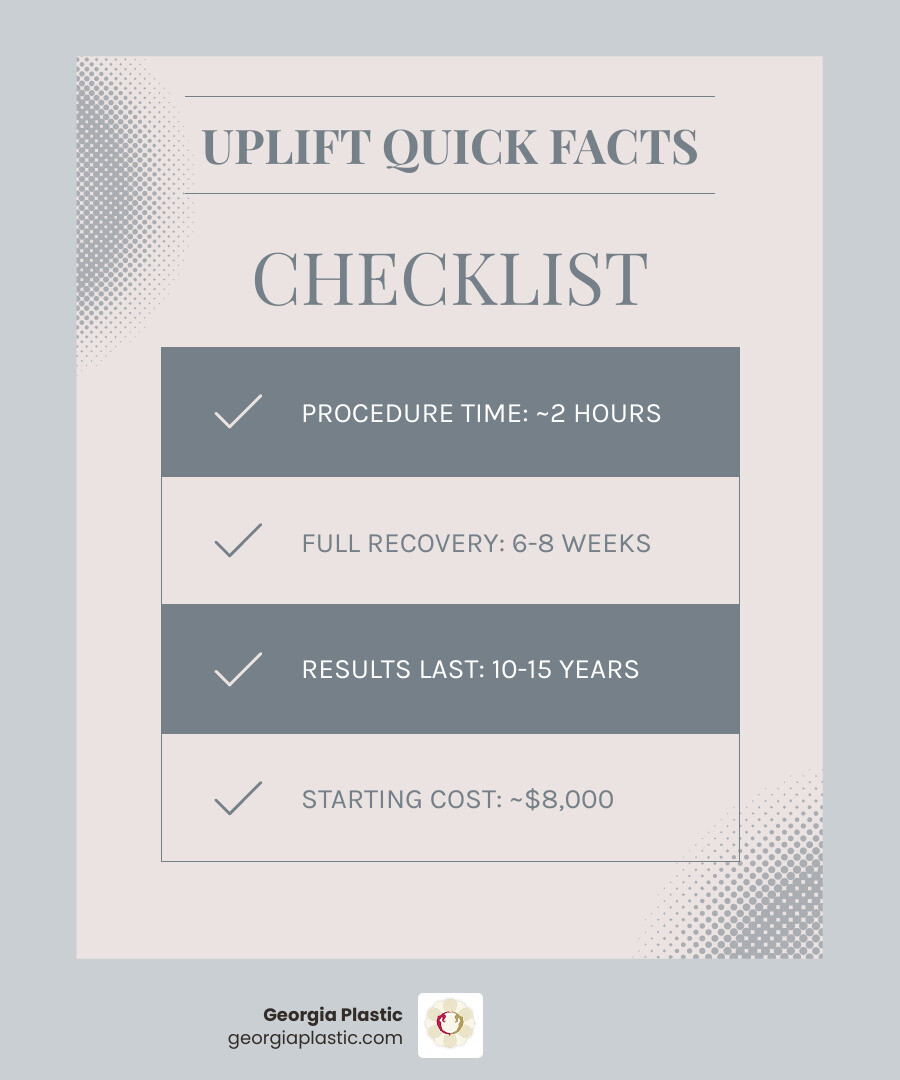
- Procedure time: Typically 2 hours under general anesthesia
- Recovery: 1-2 weeks off work; 6-8 weeks for full recovery
- Results: Can last 10-15 years with proper care
- Limitations: Does not significantly change breast size or add upper fullness
- Cost: Starts at approximately $8,000 (varies based on technique and location)
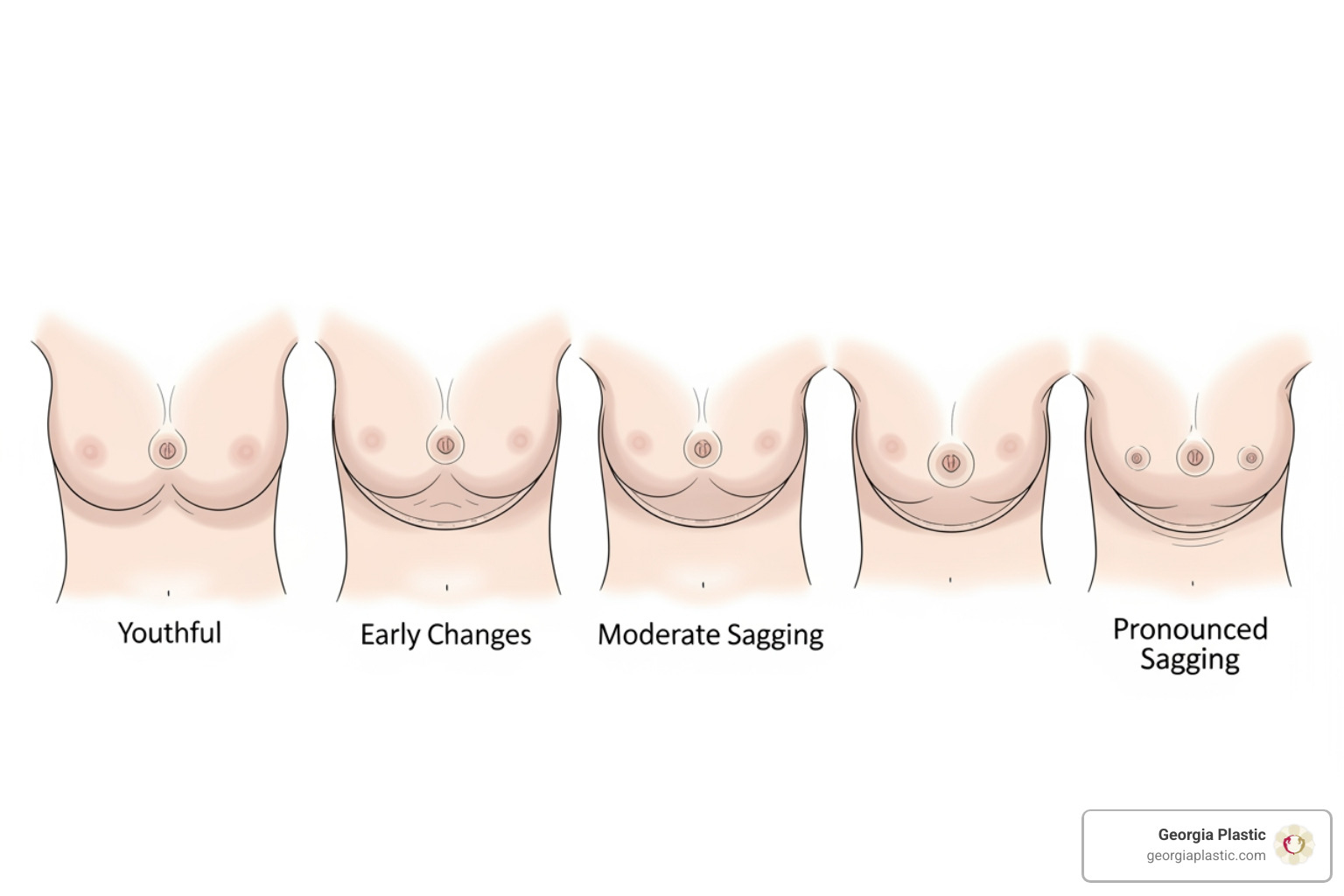
It’s completely natural for breasts to change over time. Pregnancy and breastfeeding stretch the skin and ligaments. Weight fluctuations affect breast volume. Aging reduces skin elasticity. Gravity is relentless. The result? Breasts that lose their firmness and drop lower on the chest.
Many women feel frustrated when their breasts no longer reflect how they feel inside. You might notice your nipples pointing downward, or that your areolas have stretched and enlarged. Perhaps your breasts look deflated or sit much lower than they used to. These changes can affect how clothes fit and, more importantly, how you feel about yourself.
A breast lift addresses these concerns by removing that excess, stretched skin and reshaping the breast tissue underneath. The surgeon also moves your nipple and areola to a higher, more forward-facing position. If your areolas have become enlarged, they can be reduced at the same time. The goal is a firmer, more youthful breast contour that sits higher on your chest.
It’s important to understand what a breast lift can’t do. It doesn’t significantly increase breast size or add fullness to the upper part of your breast. If you want larger breasts, you’d need to combine the lift with implants. If you want smaller breasts, you’d combine it with a reduction. But for women who are generally happy with their size and just want to restore shape and position, a lift alone can be transformative.
I’m Dr. Stanley Okoro, a double board-certified plastic surgeon and founder of Georgia Plastic and Reconstructive Surgery in Atlanta, where I’ve helped hundreds of women achieve natural-looking results through boob uplift procedures custom to their unique anatomy and goals. Throughout my years in practice, I’ve seen how this procedure can restore not just breast position, but also the confidence that comes with feeling comfortable in your own body.
Understanding the Breast Lift (Mastopexy): Purpose and Motivation
The journey to a boob uplift often begins with a desire to feel more comfortable and confident in your own skin. Over time, many factors can contribute to changes in breast appearance, leading to what we medically refer to as breast ptosis, or sagging. We understand that these changes can be frustrating, impacting self-esteem and even how clothing fits.
What a Breast Lift Aims to Achieve
At its core, a breast lift (mastopexy) is about restoration and rejuvenation. It’s designed to counteract the effects of time and gravity, giving your breasts a more youthful and uplifted appearance. Specifically, a breast lift aims to:
- Lift the breasts: By removing excess skin and tightening the surrounding tissue, we can raise your breasts to a higher, more aesthetically pleasing position on your chest.
- Reshape breast tissue: The internal breast tissue is carefully reshaped and supported, creating a firmer, more rounded contour.
- Remove excess skin: This is key to addressing sagging. The stretched-out skin is excised, allowing the remaining skin to provide better support.
- Reposition the nipple-areola complex: The nipple and the surrounding darker skin (areola) are moved to a more natural, upward-facing position.
- Reduce areola size: If your areolas have stretched and enlarged, they can be reduced in size during the procedure for a more proportionate look.
- Restore a firmer profile: The overall goal is to create a breast contour that is firmer, perkier, and more aesthetically balanced with your body.
For more detailed information on what a breast lift can achieve, you can visit our dedicated page on what is mastopexy.
Common Reasons Women Choose a Breast Lift
We’ve found that women opt for a boob uplift for a variety of deeply personal reasons, often stemming from significant life changes or natural aging processes. These include:
- Post-pregnancy changes: Pregnancy and breastfeeding are beautiful experiences, but they can significantly alter breast shape. The stretching of ligaments and skin, along with changes in breast volume, often leads to sagging and a loss of firmness. Many women seek a lift to restore their pre-pregnancy contours.
- Post-weight loss: Significant weight loss can leave behind excess skin throughout the body, including the breasts. A breast lift can remove this skin, creating a more proportionate and lifted appearance.
- Aging effects: As we age, our skin naturally loses elasticity. This, combined with years of gravitational pull, causes breasts to gradually droop. A lift can turn back the clock, restoring a more youthful silhouette.
- Inherited breast shape: For some women, sagging breasts or breast ptosis isn’t just a result of life events; it’s simply how their breasts are naturally formed. They may have had drooping breasts since their teens and desire a firmer, perkier shape for the first time.
- Improving confidence: Beyond the physical changes, a breast lift can dramatically boost self-esteem and body image. Feeling good about your appearance can positively impact all aspects of your life.
- Better fitting clothes: When breasts are lifted and reshaped, clothing often fits better, opening up new wardrobe possibilities and eliminating the need for overly supportive or uncomfortable bras.
Understanding these motivations is crucial to us. We believe in personalized care that addresses not just the physical, but also the emotional aspects of your journey. You can explore more about the reasons women consider this procedure on our page about breast lift reasons to lift breast ptosis Atlanta.
After Your Boob Uplift: Recovery, Results, and Risks
Recovering from a boob uplift involves several stages, with symptoms gradually subsiding over several weeks. We provide detailed post-operative instructions to guide you through each step.
- First 24-48 hours: You’ll likely experience some discomfort, swelling, and bruising. Pain can be managed with prescribed medication. You’ll typically have surgical dressings and a support bra. Drainage tubes might be temporarily in place to prevent fluid buildup, usually removed within a day or two. Rest is paramount during this initial period.
- First 1-2 weeks: Most women take one to two weeks off work to allow for initial healing. You’ll need to avoid strenuous activities, heavy lifting, and any movements that strain your chest. Swelling and bruising will be most noticeable during this time but will gradually decrease. We advise wearing your special support bra continuously, as instructed.
- 4-6 weeks post-op: By this point, much of the initial swelling and bruising should have subsided. You can gradually resume light activities and exercise, but still avoid anything that puts direct stress on your breasts or incisions. Your surgeon will advise when you can transition from your surgical bra to a comfortable, wireless support bra.
- Full recovery (6-8 weeks): While you’ll feel much better, full recovery and the settling of your final results can take up to six to eight weeks. Strenuous exercise and heavy lifting can typically be resumed after this period, with your surgeon’s approval.
- Long-term scar care: Scars are a permanent part of any surgery, but they will fade and soften over time, typically becoming less noticeable within 12 to 18 months. We provide guidance on scar massage and topical treatments to optimize their appearance. Protecting your healing skin from sun exposure is also crucial.
It’s a journey, and we’re with you every step of the way. You can see more about the recovery process and our patients’ experiences by visiting our Instagram page.
Potential Risks and Complications
While a boob uplift is generally safe when performed by a qualified, board-certified plastic surgeon, like our team at Georgia Plastic, it’s important to be aware of potential risks and complications, as with any surgical procedure. We discuss these thoroughly during your consultation to ensure you make an informed decision.
Common risks include:
- Scarring: All breast lift procedures involve incisions, leading to permanent scars. We carefully plan incision placement to make them as inconspicuous as possible, often hidden by clothing or natural breast contours. Scars typically soften and fade over 1-2 years.
- Changes in sensation: You might experience temporary or, less commonly, permanent changes in nipple or breast sensation, including numbness, increased sensitivity, or reduced sensation.
- Asymmetry: While we strive for symmetry, slight differences in breast shape or size can occur post-surgery.
- Infection: Though rare, any surgical site can become infected. We prescribe antibiotics to minimize this risk.
- Bleeding (Hematoma): Blood can collect under the skin, requiring drainage. Avoiding blood-thinning medications before surgery helps reduce this risk.
- Anesthesia risks: General anesthesia carries its own set of risks, which our board-certified anesthesiologists carefully manage.
- Healing problems: In some cases, wounds may heal slowly or improperly.
- Fluid collection (Seroma): Fluid can accumulate under the skin, sometimes requiring drainage.
- Fat necrosis: Small areas of breast tissue can die, sometimes forming firm lumps that may or may not resolve.
- Inability to breastfeed: While some women can still breastfeed after a lift, the milk ducts may be disrupted, potentially reducing or preventing future breastfeeding.
- Unsatisfactory cosmetic result: Despite our best efforts, occasionally patients may not be fully satisfied with the outcome, which may necessitate revision surgery.
We prioritize your safety and take every precaution to minimize these risks. For a more in-depth discussion on potential issues, please consult our resource on breast lift complications.
Longevity and Maintaining Your Results
One of the most common questions we receive is, “How long will my boob uplift results last?” While a breast lift provides long-lasting improvements, it’s important to understand that no cosmetic procedure can completely halt the natural aging process or the effects of gravity.
- How long results last: On average, the results of a breast lift can last for 10-15 years. This longevity is influenced by several factors, including your genetics, lifestyle, and the quality of your skin.
- Impact of future pregnancy: As mentioned, future pregnancies can cause breasts to stretch and change again, potentially impacting the results of your lift. We generally advise patients to consider a breast lift once they have completed their family.
- Weight stability: Maintaining a stable weight is crucial. Significant weight fluctuations, whether gain or loss, can stretch the skin and affect breast volume, potentially compromising your long-term results.
- Healthy lifestyle: A healthy lifestyle, including a balanced diet and regular exercise (once cleared by your surgeon), contributes to overall skin health and can help maintain your results.
- Sun protection: Protecting your breast skin from excessive sun exposure can help preserve its elasticity and the quality of your scars over time.
While we can’t stop time, we empower you with the knowledge and care to enjoy your refreshed silhouette for many years. We encourage you to view our breast lift before and after photos to see the transformative results we’ve achieved for our patients.
Frequently Asked Questions about Breast Lifts
We know you have questions, and we’re here to provide clear, straightforward answers. Here are some of the most common inquiries we receive about boob uplift procedures.
How much does a boob uplift cost?
The cost of a boob uplift is a significant consideration for many patients. We believe in transparency and want you to understand all the factors involved. The total cost typically includes several components:
- Surgeon’s fee: This covers the surgeon’s expertise, time, and the complexity of the procedure.
- Anesthesia fee: This covers the services of the anesthesiologist and the cost of the anesthesia itself.
- Facility costs: This includes the use of the surgical facility, operating room, and any necessary medical supplies.
- Pre- and post-operative care: This may include consultation fees, follow-up appointments, and post-operative garments.
Based on industry averages, the cost of a breast lift (mastopexy) typically starts at approximately $8,000 USD. If you choose a breast lift with implants, the cost generally starts higher, around $9,500 USD. Combining a breast lift with implants and inverted nipple correction would be a bit more, at about $10,700 USD.
These are starting figures, and the exact cost will depend on the specific techniques used, the complexity of your case, and your individual needs. Cosmetic procedures are generally not covered by health insurance, so discuss financing options during your consultation.
For a comprehensive breakdown of costs and what’s included, please refer to our Breast Lift Atlanta Cost Guide.
Will I be able to breastfeed after a breast lift?
This is a very important question for many women, particularly those who plan to have children in the future. The ability to breastfeed after a boob uplift can vary:
- Impact on milk ducts: In most breast lift procedures, the milk ducts connecting to the nipple may be cut or disrupted as breast tissue is reshaped and the nipple is repositioned. This can potentially reduce or prevent the ability to breastfeed effectively in the future.
- Nipple sensation: Changes in nipple sensation can also affect the breastfeeding reflex.
- Possibility of reduced milk supply: Even if some milk ducts remain intact, the overall milk supply might be reduced compared to pre-surgery.
While some women can still breastfeed successfully after a breast lift, it’s not guaranteed. If future breastfeeding is a high priority for you, it’s crucial to discuss this with your surgeon during your consultation. We can explore techniques that aim to preserve milk ducts, though these may not always be suitable for every patient or every desired outcome. We also often advise waiting to have a breast lift until you’re done having children, if possible, to minimize the impact on future breastfeeding and the longevity of your results.
How do I choose the right plastic surgeon?
Choosing the right plastic surgeon for your boob uplift is perhaps the most critical decision you’ll make. Your safety, satisfaction, and the quality of your results depend heavily on your surgeon’s qualifications and experience. We recommend considering the following:
- Board certification: Ensure your surgeon is board-certified by the American Board of Plastic Surgery. This signifies that they have met rigorous standards for training, experience, and ethical practice. Dr. Okoro, for example, is double board-certified, demonstrating our commitment to the highest standards.
- Experience with mastopexy: Ask how frequently the surgeon performs breast lift surgery and view their before-and-after photos, especially of patients with similar initial breast appearances to yours. This helps you understand their aesthetic style and the results they typically achieve.
- Patient reviews and testimonials: Look for feedback from previous patients regarding their experience with the surgeon and their team. This can offer valuable insights into patient care, communication, and overall satisfaction.
- Consultation feel: Pay attention to how you feel during your initial consultation. Does the surgeon listen attentively to your goals? Do they explain the procedure, risks, and recovery clearly and answer all your questions thoroughly? A good rapport and clear communication are essential.
- Accredited facility: Ensure the surgery will be performed in an accredited surgical facility, which indicates adherence to strict safety standards. Our state-of-the-art outpatient surgical center at Georgia Plastic is accredited by the Accreditation Association for Ambulatory Health Care.
We invite you to schedule a consultation with us at Georgia Plastic & Reconstructive Surgery. Our personalized care approach, combined with Dr. Okoro’s extensive experience, aims to deliver natural-looking results while prioritizing your safety and well-being. We’re here to guide you through every step of this transformative journey.
Conclusion
A boob uplift, or mastopexy, is a truly transformative procedure that can redefine your silhouette and significantly boost your self-confidence. We’ve seen how addressing concerns like sagging, loss of shape, and downward-pointing nipples can empower women to feel more comfortable, attractive, and vibrant in their own skin.
Throughout this guide, we’ve explored what a breast lift aims to achieve, the common reasons women choose this procedure, who makes a good candidate, the various surgical techniques, and what to expect during recovery. We’ve also highlighted the importance of understanding the potential risks, the longevity of results, and crucial considerations like cost and future breastfeeding.
At Georgia Plastic & Reconstructive Surgery, led by Dr. Okoro, we are dedicated to providing personalized care that delivers natural-looking results, always with your safety as our top priority. We understand that this is a deeply personal decision, and we are committed to providing you with all the information and support you need to make the best choice for yourself.
If you’re considering a breast lift and want to learn more about how we can help you achieve your aesthetic goals, we encourage you to reach out. We’re here to answer your questions and guide you through every step of your journey to a more confident you.


