
Why More People Are Choosing Buttock Reduction
Bum fat removal offers a path to improved body proportions and increased comfort for individuals seeking a slimmer, more balanced lower body silhouette. Whether through targeted liposuction, skin excision via buttock lift, or reversal of a previous Brazilian Butt Lift (BBL), surgical buttock reduction addresses excess volume, sagging skin, and disproportionate contours that don’t respond to diet and exercise alone.
Quick Overview: Your Bum Fat Removal Options
- Liposuction: Removes excess fat from specific buttock areas (lumbo-sacral pad, banana roll, infra-gluteal crease) to sculpt and slim
- Buttock Lift: Excises loose, sagging skin and repositions remaining tissue for a toned, lifted appearance
- BBL Reversal: Reduces volume from previous fat grafting procedures through targeted fat removal
- Recovery: 2-3 weeks for light activities; avoid direct sitting for 6 weeks; full results visible in 3-6 months
- Candidates: Stable weight, good health, non-smokers with realistic expectations
The decision to pursue buttock reduction is deeply personal. Some patients feel their buttocks are disproportionately large compared to their frame, causing discomfort when finding properly fitting clothes or sitting for extended periods. Others seek to reverse a BBL that resulted in more volume than desired. Still others have experienced significant weight loss, leaving behind excess skin and stubborn fat deposits that create an aged or droopy appearance.
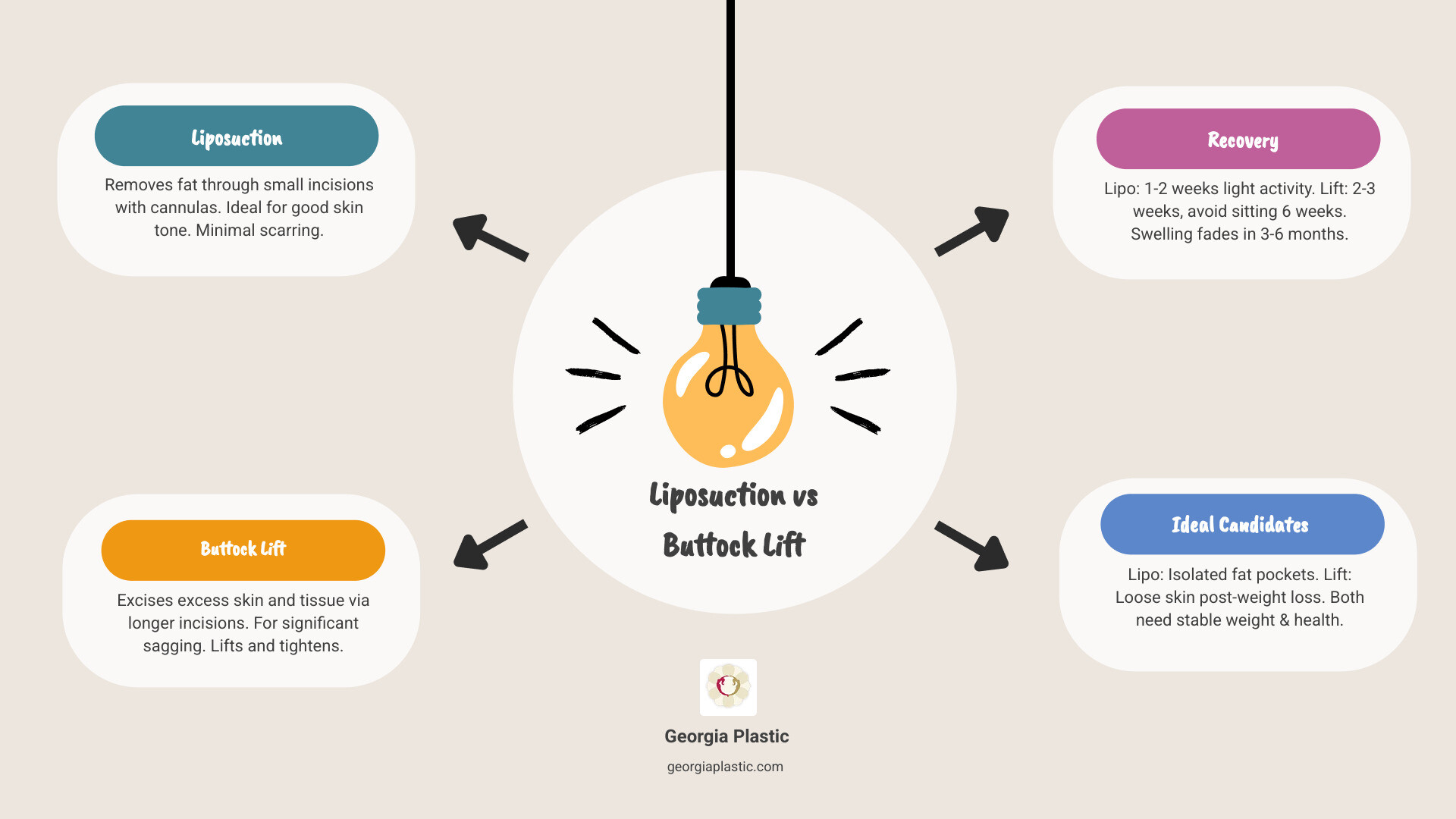
Unlike buttock augmentation procedures that add volume, reduction surgery focuses on removing excess tissue—whether fat, skin, or both—to create a sleeker, more proportionate lower body contour. The approach varies based on your unique anatomy and goals. Liposuction targets isolated fat pockets while preserving skin tone, making it ideal for patients with good skin elasticity. Buttock lifts address significant loose skin by excising tissue and repositioning what remains. For those regretting a previous BBL, specialized fat removal techniques can reduce volume and restore a more natural shape.
According to research from Mayo Clinic, buttock lift procedures typically take 2-3 hours under general anesthesia, with incisions strategically placed along the lower back or buttock crease to minimize visible scarring. Recovery requires patience—most patients return to light activities within 2-3 weeks but must avoid strenuous exercise and direct sitting on the buttocks for approximately 6 weeks to allow proper healing.
Safety remains paramount. While procedures like liposuction carry relatively low risk when performed by qualified surgeons, BBL procedures and their reversals require special attention due to proximity to vital structures. The NHS notes that fat transfer procedures, particularly BBL, carry the highest complication rates among cosmetic surgeries, primarily due to fat embolism risks when fat enters the bloodstream. This makes choosing an experienced, board-certified plastic surgeon essential.
I’m Dr. Stanley Okoro, a double board-certified plastic surgeon and founder of Georgia Plastic and Reconstructive Surgery, where I’ve performed hundreds of body contouring procedures including bum fat removal through liposuction, buttock lifts, and BBL reversals. My approach combines surgical precision with artistic vision to help patients achieve natural-looking results that enhance their unique proportions while prioritizing safety at every step.
Understanding Bum Fat Removal and Buttock Reduction
When we talk about bum fat removal, it is important to understand that this isn’t just one single procedure. It is a customized approach to buttock reduction that depends on whether your primary concern is excess fat, excess skin, or a combination of both.
Many people confuse a buttock reduction with a buttock lift or a Brazilian Butt Lift (BBL). Let’s clear that up. A BBL is an augmentation procedure where fat is taken from one part of the body and injected into the buttocks to add volume. Conversely, a reduction procedure is all about “less is more.” We are either suctioning out fat cells or surgically removing skin to decrease the overall size and projection of the backside.
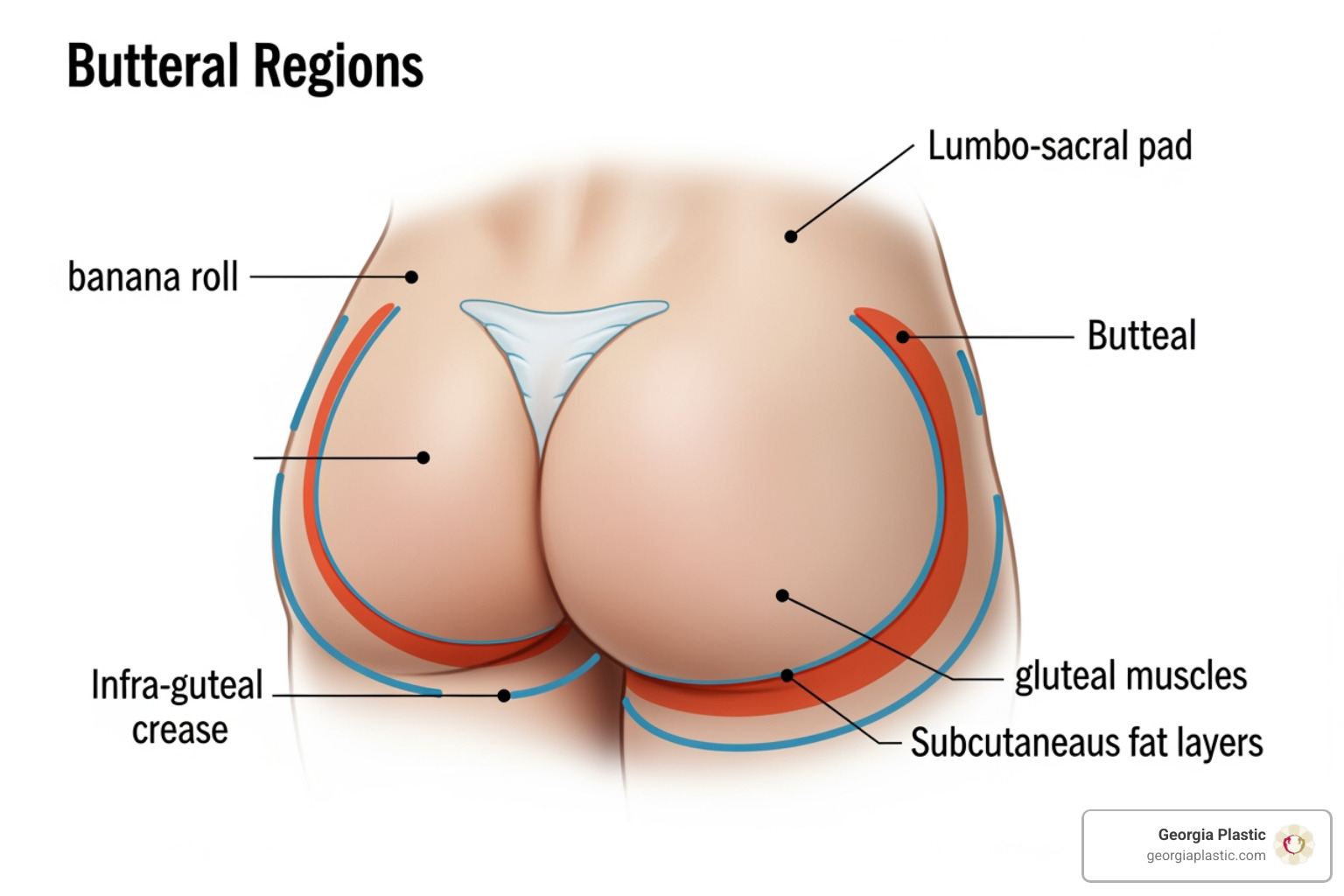
The anatomy of the buttocks is complex. It consists of the gluteal muscles (maximus, medius, and minimus) covered by a layer of subcutaneous fat. In some individuals, this fat layer is disproportionately thick due to genetics, hormonal changes, or weight fluctuations. When diet and exercise fail to move these stubborn deposits, surgical intervention becomes an option. Furthermore, for those who have previously undergone a BBL and are unhappy with the results, we can perform BBL removal to restore a more natural contour.
Precision Liposuction for Bum Fat Removal
For patients with good skin elasticity, liposuction is the gold standard for bum fat removal. This technique allows us to “shrink” the buttocks by removing deep fat cells while leaving the overlying skin intact. However, we don’t just remove fat randomly; we focus on specific anatomical zones to create a beautiful, balanced shape.
- Lumbo-sacral Fat Pad: This is the area at the very base of the spine, just above the buttocks. Reducing fat here helps define the lower back and makes the buttocks look more distinct and lifted.
- The Banana Roll: This is the crescent-shaped fat deposit found just below the buttock crease (the infra-gluteal crease). Removing fat here can eliminate that “double buttock” look and elongate the appearance of the legs.
- Gluteal Trochanteric Area: Often referred to as “saddlebags,” reducing fat on the outer edges of the buttocks helps narrow the silhouette.
At Georgia Plastic, we emphasize sculpting your curves and reshaping rather than just “emptying” the area. According to the Mayo Clinic guide to liposuction, the procedure permanently removes fat cells, meaning that as long as you maintain a stable weight, those cells won’t return. We use specialized cannulas to gently break up the fat and suction it out, ensuring the neurovascular structures remain protected.
Reversing Results with BBL Bum Fat Removal
In recent years, we have seen a rise in patients seeking BBL reduction or reversal. While the Brazilian Butt Lift remains popular, some patients find that their results are too dramatic, or they may experience “fat migration” or unevenness over time.
Reversing a BBL is more complex than a standard liposuction procedure. Because the fat was previously injected into the area, it may have integrated with existing tissue or formed small lumps (fat necrosis). When considering surgical choices for BBL reversal, we must carefully assess how much of the injected fat survived. Research suggests that typically about 70% of injected fat remains permanently, while the rest is absorbed. Our goal in a reversal is to selectively remove this excess volume to bring the buttocks back into proportion with the rest of the body.
Surgical Techniques and Procedure Details
When you come in for a consultation, we will determine when to consider buttock reduction based on your skin quality and volume. If you have significant sagging—perhaps after massive weight loss—a simple liposuction procedure might leave you with “deflated” or “empty” skin. In these cases, a surgical buttock lift is the better choice.
The Step-by-Step Procedure
- Anesthesia: Most bum fat removal surgeries are performed under general anesthesia to ensure you are completely comfortable and still.
- Incisions: For liposuction, we use tiny “poke” incisions that are barely visible once healed. For a buttock lift, incisions are typically made along the lower back (where they can be hidden by a bikini or underwear line) or in the crease under the cheeks.
- Fat Removal or Skin Excision: If we are doing liposuction, we use a thin tube (cannula) to vacuum out the fat. If we are doing a lift, we remove a wedge of excess skin and fat and then pull the remaining skin upward to create a tighter, smoother surface.
- Closing Up: We use dissolvable sutures and often place temporary drainage tubes to prevent fluid buildup (seromas).
| Feature | Liposuction (Reduction) | Buttock Lift (Excision) |
|---|---|---|
| Primary Goal | Remove excess fat volume | Remove sagging, excess skin |
| Best Candidate | Good skin elasticity, stubborn fat | Loose skin, post-weight loss |
| Incision Size | Tiny (3-5mm) | Longer (hidden in folds/waist) |
| Recovery Time | 1-2 weeks | 2-4 weeks |
| Sitting Restriction | Minimal to moderate | Strict (up to 6 weeks) |
Recovery, Safety, and Realistic Expectations
Recovery is the phase where your patience is truly tested. You’ve had the surgery, and you want to see the “new you” immediately, but your body needs time to heal.
The Recovery Timeline
- Week 1: This is the most intense period. You will likely experience swelling, bruising, and some soreness. We will provide pain management protocols to keep you comfortable.
- Weeks 2-3: Most patients can return to light desk work and walking. However, you must still wear your compression garment 24/7. This garment is crucial—it helps reduce swelling and ensures the skin adheres smoothly to the new contours.
- Week 6: This is usually when we clear you for more strenuous activity and allow you to sit directly on your buttocks for longer periods. Before this, we often recommend using a “boppy” pillow or sitting on your thighs to keep pressure off the surgical site.
Safety First: Understanding the Risks
Every surgery has risks. Common side effects include temporary numbness, swelling, and bruising. However, more serious complications can occur. The NHS safety concerns for fat transfer highlight that BBL and its reversal carry a risk of fat embolism—where fat accidentally enters a blood vessel and travels to the lungs. This is why it is vital to work with a board-certified surgeon who understands gluteal anatomy deeply.
Other risks include:
- Seroma: A buildup of fluid under the skin.
- Asymmetry: One side healing differently than the other.
- Scarring: While we hide incisions, scars are permanent (though they fade significantly over 12-18 months).
We encourage all our patients to view before and after results to set realistic expectations. You won’t look “perfect” on day one; it takes 3 to 6 months for the final shape to settle and the swelling to fully resolve.
Non-Surgical Alternatives and Lifestyle Factors
We always tell our patients that surgery should be the last resort, not the first. If your goal is to lose a small amount of “padding” or tone up, lifestyle changes can make a massive difference.
While you cannot “spot-reduce” fat (your body decides where it burns fat from first), you can change the muscle-to-fat ratio in your glutes. High-Intensity Interval Training (HIIT) is particularly effective for overall fat loss. According to the CDC physical activity guidelines, adults should aim for at least 150 minutes of moderate-intensity activity per week.
To firm up the area, we recommend the ACE glute strength routine, which includes:
- Squats and Lunges: These target the gluteus maximus.
- Step-ups: Great for functional strength and lifting the “crease.”
- Side-lying Hip Abduction: Targets the gluteus medius for a more rounded (but not necessarily larger) shape.
A caloric deficit is essential for any fat loss. However, if you have reached your goal weight and still have a “disproportionate” backside, that is when you should look at butt reduction vs enhancement to see which surgical path fits your needs.
Frequently Asked Questions about Buttock Reduction
How much does bum fat removal cost?
The cost of bum fat removal varies widely based on the complexity of the case. A simple liposuction procedure is generally less expensive than a full surgical buttock lift or a BBL reversal.
- Facility Fees: The cost of the surgical center.
- Anesthesia: Fees for the board-certified anesthesiologist.
- Surgeon’s Fee: Based on the doctor’s experience and the time required for the surgery. In the UK, prices often range from £3,000 to £8,000. In the US, complex BBL removals or body lifts can range significantly higher, often between $10,000 and $20,000 depending on the extent of the work.
Who is the ideal candidate for this surgery?
The best candidates for bum fat removal are:
- Stable in Weight: You should be at or near your goal weight for at least 6-12 months. Surgery is for contouring, not weight loss.
- Healthy Non-Smokers: Smoking significantly impairs wound healing and increases the risk of skin loss and infection. You must quit at least 6 weeks before surgery.
- Realistic: Understanding that surgery can improve your shape but won’t make you look like a different person.
- BMI Considerations: Most surgeons prefer a BMI under 32 to minimize surgical risks.
How long do the results of a buttock reduction last?
Liposuction results are technically permanent because the fat cells are physically removed. However, the remaining fat cells can still grow if you gain a significant amount of weight. To maintain your results:
- Stay Active: Maintain a regular exercise routine.
- Eat Balanced: Focus on whole foods and lean proteins.
- Manage Stress: High cortisol levels can lead to weight gain in stubborn areas. As you age, your skin will naturally lose some elasticity, but the fundamental change in volume from the surgery will remain.
Conclusion
Navigating bum fat removal can feel overwhelming, but you don’t have to do it alone. Whether you are struggling with the physical discomfort of excess volume or the emotional toll of a BBL gone wrong, there are safe, effective surgical solutions available.
At Georgia Plastic & Reconstructive Surgery, Dr. Okoro and our entire team are dedicated to providing personalized care that respects your body’s natural proportions. We believe that “less is more” when it comes to creating a silhouette that makes you feel confident, comfortable, and like the best version of yourself.
Ready to take the next step? Schedule a consultation for buttock reduction today, and let’s discuss how we can help you achieve your aesthetic goals safely and beautifully.


