
Understanding the Difference Between Two Popular Body Contouring Methods
Liposculpture liposuction represents two distinct approaches to body contouring that are often confused or used interchangeably, but they serve different purposes and deliver different results.
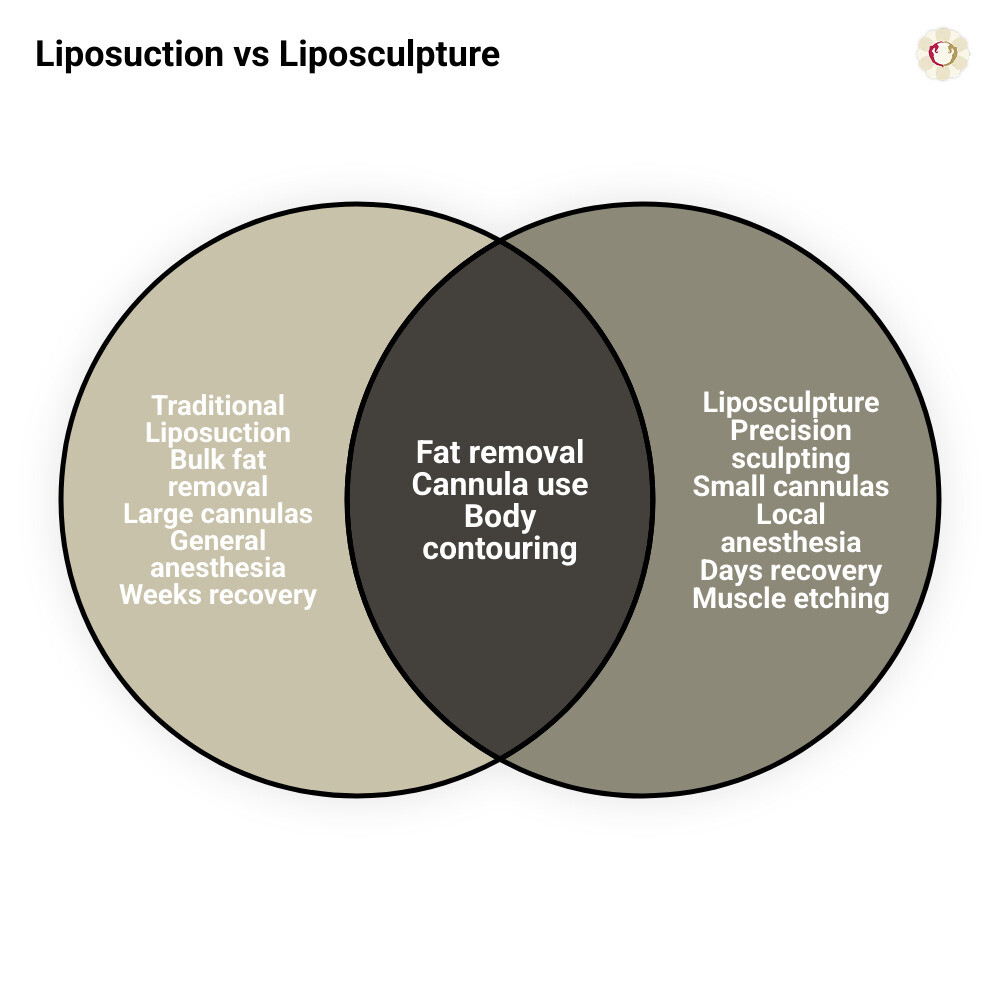
Quick Comparison: Liposuction vs. Liposculpture
| Aspect | Traditional Liposuction | Liposculpture |
|---|---|---|
| Primary Goal | Remove larger volumes of fat | Sculpt and define smaller areas with precision |
| Technique | Bulk fat removal | Fat removal + strategic repositioning for muscle definition |
| Anesthesia | Often general anesthesia | Typically local anesthesia |
| Recovery Time | Several weeks to months | Days to weeks |
| Ideal For | Significant fat reduction | Athletic contouring and detailed shaping |
| Incision Size | Larger cannulas | Smaller, thinner cannulas |
Traditional liposuction focuses on removing stubborn fat deposits from areas like the abdomen, thighs, and hips that don’t respond to diet and exercise. It’s designed to reshape your body by suctioning out larger volumes of fat.
Liposculpture (also called 4D Hi-Def Liposculpture) takes a more refined approach. It removes fat with precision and strategically places some of that fat back around muscle groups to create definition and contour. Think of it as artistic body sculpting rather than simple fat removal.
The confusion between these procedures makes sense. They both remove unwanted fat and use similar tools. But the technique, precision level, and final results differ significantly.
As Dr. Stanley Okoro, a double board-certified plastic surgeon specializing in advanced body contouring techniques, I’ve performed hundreds of liposculpture liposuction procedures helping patients understand which approach best fits their aesthetic goals. My practice focuses on delivering natural-looking results through personalized surgical planning and state-of-the-art techniques.
Defining Liposculpture Liposuction: More Than Just Fat Removal
When we talk about liposculpture liposuction, we are moving beyond the basic concept of “sucking out fat.” While traditional liposuction is a fantastic tool for reducing bulk—taking a “large” area and making it “small”—liposculpture is about the shapes that remain.
Highly effective Liposculpture, also known as 4D Hi-Def Liposculpture or 4D Liposuction, is an advanced form of liposuction. It involves precise fat removal and sculpting techniques to create a more chiseled, defined look. This procedure is highly effective for etching out the underlying musculature, especially in the abdominal region. Imagine the difference between a block of marble and a finished statue; liposuction removes the excess stone, but liposculpture carves the muscles of the torso.
One of the most exciting aspects of this advanced technique is its ability to use your own biological material to enhance other areas. This is often referred to as fat transfer. During a liposculpture session, we don’t just discard the fat. We can purify it and strategically re-inject it into areas like the buttocks (for a Brazilian Butt Lift), the breasts, or even the face to restore youthful volume.
| Feature | Traditional Liposuction | Liposculpture (4D Hi-Def) |
|---|---|---|
| Focus | Volume reduction | Definition and Shape |
| Muscle Etching | No | Yes (Abdominal “six-pack” lines) |
| Fat Grafting | Rare | Frequently combined |
| Artistic Eye | High | Extremely High |
| Instruments | Standard Cannulas | Micro-cannulas & Energy devices |
Key Differences in Technique and Technology
The “how” behind these procedures is just as important as the “what.” In our Atlanta practice, we utilize various technologies to ensure the fat is removed safely and the skin responds beautifully.
One of the primary differences lies in the equipment. Liposculpture typically uses much smaller, thinner cannulas (the hollow tubes used to remove fat). These smaller tools allow us to work closer to the skin’s surface to create fine lines and shadows that mimic natural muscle definition.
We also utilize specialized “wetting solutions” or tumescent fluid. This is a mixture of saline, lidocaine (an anesthetic), and epinephrine (which shrinks blood vessels). This solution is vital because it numbs the area, minimizes bleeding, and actually “puffs up” the fat cells, making them easier to remove with less trauma to the surrounding tissues.
For those interested in the clinical background, you can find a scientific review of liposuction safety and methods that details how these techniques have evolved to prioritize patient safety.
The Role of Energy in Liposculpture Liposuction
To achieve the “sculpted” look, we often incorporate energy-based devices. These aren’t just fancy gadgets; they serve a specific surgical purpose:
- Smartlipo (Laser-Assisted): This technology uses laser energy to liquefy fat before it’s removed. The thermal energy also stimulates collagen production, which helps with skin tightening—a major plus for areas where skin might otherwise sag after fat removal.
- VASER (Ultrasound-Assisted): This uses sound waves to “shake” fat cells loose while leaving nerves and blood vessels intact. It is particularly helpful for dense, fibrous fat found in the back or in cases of male gynecomastia.
- Laser Lipo Benefits: Beyond fat melting, the heat helps with tissue retraction, ensuring the skin “snaps back” over the new, contoured frame.
Who is the Ideal Candidate for Liposculpture Liposuction?
Not everyone is a candidate for the high-definition sculpting approach. Because liposculpture is about refinement, the qualities of a good candidate usually include:
- Stable Weight: You should be within 30% of your ideal BMI. Liposculpture is not a weight-loss surgery; it is a finishing tool for those who are already active.
- Good Skin Elasticity: Your skin needs to be able to shrink and conform to your new shape. If there is significant “apron” skin or extreme laxity, a tummy tuck might be a better starting point.
- Non-Smoker: This is non-negotiable for safety. Smoking cessation must occur at least 4 weeks before and after surgery to ensure proper healing and avoid skin necrosis.
- Realistic Expectations: We can enhance what you have, but we can’t completely change your underlying bone structure.
Targeted Treatment Areas and Expected Outcomes
Where can liposculpture liposuction be used? Almost anywhere you have “stubborn” fat that refuses to budge despite your best efforts at the gym.
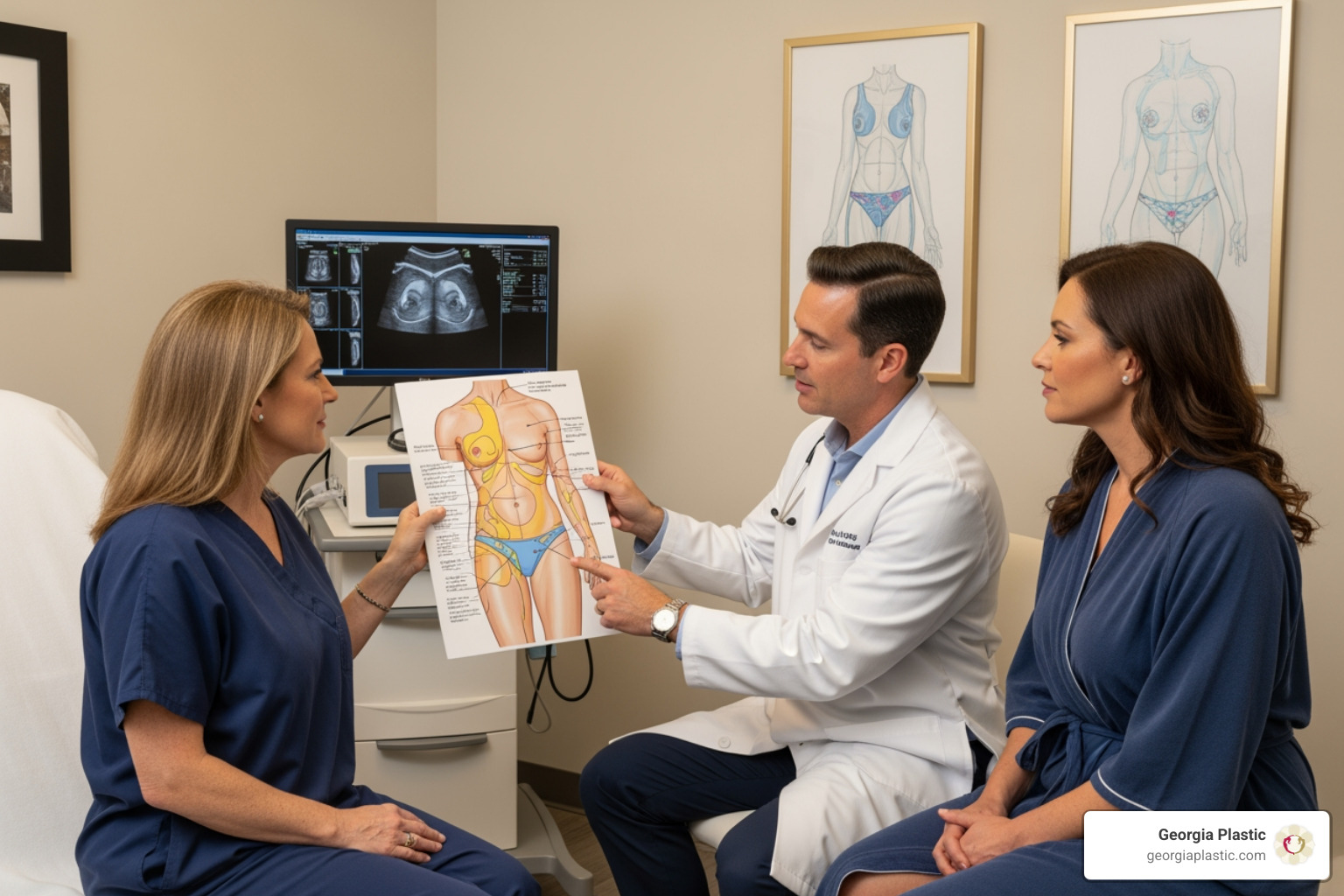
- Abdominal Etching: This is the hallmark of 4D Hi-Def work. We remove fat along the natural lines of the “six-pack” muscles to create a toned, athletic appearance.
- Chin and Neck Contouring: Using micro-cannulas, we can sharpen a jawline and remove a “double chin,” often providing a more youthful profile without a full facelift.
- Lipedema Treatment: For patients with this medical condition, liposculpture is a life-changing way to remove painful, disproportionate fat deposits that don’t respond to diet.
- Gynecomastia: For men, we can remove excess breast tissue and sculpt the chest to look more masculine and defined.
- Bra Line and Love Handles: These are classic “trouble spots” where precision sculpting can create a smoother silhouette in clothing.
Recovery, Results, and Safety Protocols
Recovery is a journey, not a sprint. While many of our patients return to light work within 3 to 5 days, the internal healing takes longer.
One of the most important parts of recovery is wearing a compression garment. You’ll likely wear this for 4 to 6 weeks. Why? It helps minimize swelling, reduces pain, and helps the skin adhere to the new underlying contours. It also plays a critical role in seroma prevention. A seroma is a collection of fluid that can form in the “empty space” left behind by removed fat; the garment “squeezes” that space shut.
Our comprehensive recovery timeline generally looks like this:
- Week 1: Some bruising and “leaking” of tumescent fluid. Most patients take this week off.
- Week 2-4: Swelling begins to subside. You can usually resume light exercise.
- Month 3-6: The “final” results start to peek through as the last bits of swelling resolve.
Safety is our absolute priority. We strictly follow lidocaine safety limits (limiting doses to 35 mg/kg) and utilize an interprofessional team to monitor your vitals throughout the procedure. We also encourage early walking (ambulation) the very night of surgery to prevent blood clots.
Frequently Asked Questions about Body Contouring
Is liposculpture a weight loss solution?
Absolutely not. We like to say that liposuction is for inches, not pounds. Because fat is very light but bulky, you might only see a small change on the scale, but a massive change in how your jeans fit. Ideal candidates should have a stable weight for at least 6 to 12 months before the procedure. If you are looking for significant weight loss, we recommend reaching your goal weight first, then using liposculpture liposuction to address the remaining stubborn pockets.
How much does liposculpture cost compared to liposuction?
Generally, liposculpture is more expensive than traditional liposuction. This is because it takes more time, requires more advanced technology (like VASER or Smartlipo), and demands a higher level of artistic expertise from the surgeon. Liposuction cost factors include the number of areas treated, the complexity of the sculpting, facility fees, and anesthesia. We provide a detailed quote during your consultation so there are no surprises.
What are the alternatives like CoolSculpting or Lipo 360?
- CoolSculpting: This is a non-invasive “fat freezing” method (cryolipolysis). It’s great for someone with a very small “pooch” who wants zero downtime. However, it cannot “sculpt” or etch muscles the way surgery can.
- Lipo 360: This isn’t a different type of lipo, but rather a description of the area. It means we treat the entire midsection—front, sides (waist), and back—to create a comprehensive, 360-degree transformation. This is often the foundation for a great liposculpture result.
Conclusion
Choosing between liposuction and liposculpture comes down to your personal goals. Do you want to be smaller, or do you want to be defined?
At Georgia Plastic & Reconstructive Surgery, we pride ourselves on helping you navigate these choices. Led by board-certified Dr. Okoro, our mission is to provide personalized care that prioritizes your safety while delivering natural-looking, artistic results. We don’t believe in a “one-size-fits-all” approach; we believe in a “you-sized” approach.
If you’re ready to see what’s possible and want to learn more about how we can help you achieve your dream silhouette, we invite you to schedule your Atlanta liposuction consultation with us today. Let’s work together to reveal the best version of you!


