
What Is Face Fat Surgery and Can It Give You Better Cheekbones?
Face fat surgery is a broad term for procedures that slim and reshape the face by removing excess fat from the cheeks. If you’re wondering what your options are, here’s a quick overview:
| Option | What It Does | Best For |
|---|---|---|
| Buccal fat removal | Removes deep fat pads inside the cheeks | Genetically full, round lower cheeks |
| Cheek liposuction | Suctions out superficial cheek fat | Generalized cheek fullness |
| Facial fat transfer | Adds volume using your own fat | Hollow or aging faces needing volume |
Both buccal fat removal and cheek liposuction are outpatient procedures that take under an hour. Results are long-lasting, and most people return to normal activities within one week.
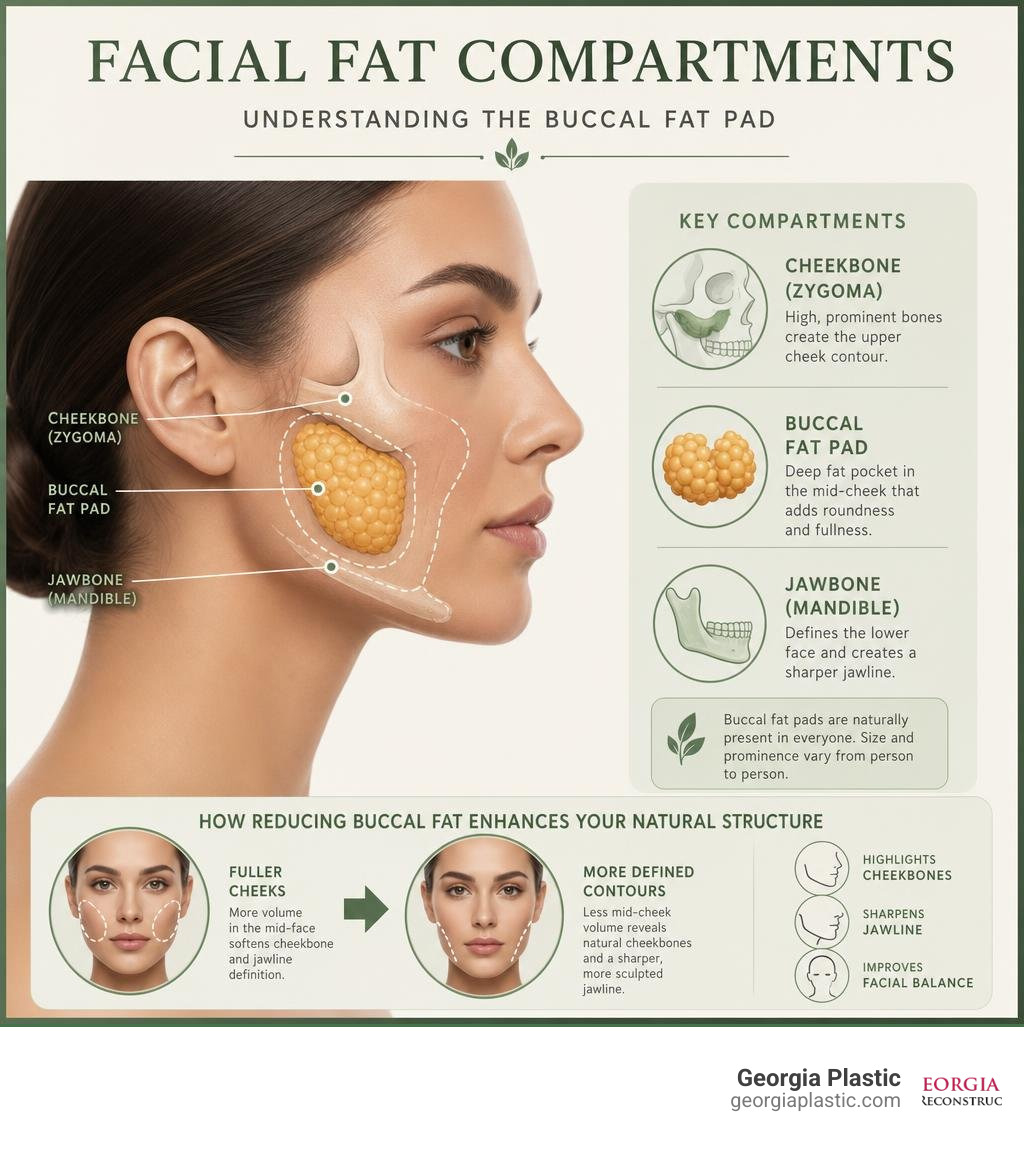
Some people eat well, exercise regularly, and still can’t shake that round, baby-faced look. The culprit is often the buccal fat pad — a deep pocket of fat between your cheekbone and jawbone that doesn’t shrink with diet or exercise. For these patients, no amount of contouring makeup or lifestyle changes will create the defined, sculpted cheekbones they want.
That’s where facial fat surgery comes in. It’s one of the fastest-growing areas of plastic surgery, and when done correctly, it can dramatically improve facial proportion and highlight your natural bone structure.
I’m Dr. Stanley Okoro, a double board-certified plastic surgeon and founder of Georgia Plastic and Reconstructive Surgery in Atlanta. With years of experience performing face fat surgery and advanced facial contouring procedures, I’ve helped patients from across the country achieve natural-looking, long-lasting results. In the sections below, I’ll walk you through everything you need to know — from candidacy and procedure details to recovery, risks, and realistic expectations.
Terms related to face fat surgery:
Understanding Face Fat Surgery: Buccal Fat Removal vs. Cheek Liposuction

When patients visit our Atlanta office asking for face fat surgery, they often use terms like “cheek lipo” and “buccal fat removal” interchangeably. However, these are two entirely different procedures that target different layers of facial fat. To understand which one is right for your aesthetic goals, it helps to read A Comprehensive Guide to Facial Plastic Surgery, which outlines how different surgical techniques harmonize your facial features.
Facial fat is divided into two primary layers:
- Superficial (subcutaneous) fat: This sits directly beneath your skin. It is the pinchable fat that covers your entire face.
- Deep fat pads: These are distinct, encapsulated pockets of fat located deep within the facial muscles. The most famous of these is the buccal fat pad.
What is Buccal Fat Pad Removal?
Often referred to clinically as a buccal lipectomy or bichectomy, Buccal Fat Pad Removal is a specialized surgical procedure designed to address lower cheek fullness.
The buccal fat pad is an encapsulated deposit of fat located in the mid-to-lower cheek, nestled between the masseter (chewing) muscle and the buccinator muscle. Think of it as a structural pocket of fat rather than a loose layer. Because it is encapsulated, it acts like a small, self-contained balloon. Its size is largely determined by genetics rather than diet or exercise, which is why even highly active, lean individuals can still struggle with “chipmunk cheeks.”
During a buccal lipectomy, we access this pad through a tiny incision inside the mouth, just above the upper second molar. This placement is highly strategic: it is near Stensen’s duct (the parotid gland duct that releases saliva), allowing us to safely navigate around crucial salivary and nerve pathways. By applying gentle external pressure to the outside of the cheek, the fat pad naturally protrudes through the intraoral incision, allowing us to tease out the desired amount without creating any external scars.
How Cheek Liposuction Differs from Buccal Face Fat Surgery
Cheek liposuction, on the other hand, targets the superficial subcutaneous fat layer. Instead of removing a solid, encapsulated pad of fat, cheek liposuction uses a very thin, hollow tube called a cannula.
We insert the cannula through tiny, hidden punctures (often beneath the chin or behind the earlobes) and use a vacuum device to gently suction away loose fat cells. Liposuction is ideal for patients who have generalized fullness across the lower third of their face, along the jawline, or under the chin. However, traditional liposuction cannot safely reach or remove the deep buccal fat pad because doing so with a sharp cannula would risk damaging the delicate facial nerves and salivary ducts that run through the deep cheek tissue.
Here is a quick reference table to help you compare the two primary types of face fat surgery:
| Feature | Buccal Fat Pad Removal | Cheek Liposuction |
|---|---|---|
| Target Layer | Deep, encapsulated fat pad | Superficial subcutaneous fat |
| Incision Location | Intraoral (inside the cheek, completely hidden) | External punctures (under chin or behind ears) |
| Fat Removal Method | Gentle manual excision of the pad | Cannula-based vacuum suction |
| Anatomical Area | Mid-to-lower cheek hollows | Lower cheek, jawline, and jowls |
| Best Candidate | Naturally round, “baby-faced” cheeks with high cheekbones | Generalized lower face heaviness or excess neck fat |
| Anesthesia Type | Local anesthesia (often in-office) | Local anesthesia with oral sedation or general anesthesia |
| Scarring | Zero visible external scars | Minimal, well-hidden puncture scars |
Are You a Good Candidate for Cheek Reduction?
While the idea of chiseled, high-fashion cheekbones is highly appealing, face fat surgery is not a one-size-fits-all solution. In fact, performing this procedure on the wrong candidate can lead to disappointing or prematurely aged results.
At Georgia Plastic, our philosophy centers on personalized care. We carefully evaluate your unique bone structure, skin elasticity, and overall facial volume before recommending any contouring procedure. If you are a male patient exploring these options, you may also find our resource, The Definitive Guide to Male Plastic Surgery, helpful for understanding how we tailor these techniques to preserve or enhance masculine facial features.
In general, you are an excellent candidate for buccal face fat surgery if you:
- Are physically healthy and maintain a stable, near-ideal body weight.
- Are bothered by the appearance of excessively round or chubby lower cheeks.
- Have realistic expectations about what the procedure can achieve.
- Do not smoke (or are willing to quit well in advance of your surgery).
- Have strong, well-defined malar (cheekbone) structures to support the newly contoured hollows.
Age Guidelines and Facial Maturity
One of the most critical factors we evaluate during a consultation is your age. Our faces undergo dramatic structural changes as we transition from late adolescence into adulthood. During our teenage years, we naturally carry a significant amount of “baby fat” in our cheeks. As we enter our twenties, this fat naturally recedes, revealing a more sculpted, mature facial contour.
Because of this natural progression, we strongly advise patients to wait until they are at least 18 to 20 years old before considering buccal fat removal. Performing a cheek reduction too early can disrupt this natural maturation process. If we remove the buccal fat pads from an 18-year-old whose face has not finished leaning out, they may end up looking gaunt, hollow, or prematurely aged by the time they reach their late twenties or thirties.
According to the American Society of Plastic Surgeons statistics on age guidelines, waiting for full skeletal and soft-tissue facial maturity ensures that your surgical results harmonize beautifully with your natural aging trajectory.
Anatomical Considerations: Cheekbones and Facial Structure
Your underlying skeletal foundation plays a massive role in your surgical outcome. The buccal fat pad sits directly below the malar bone (cheekbone). When we remove this fat pad, we are essentially creating a shadow or a “hollow” beneath your cheekbone.
For this shadow to look attractive and natural, you must have a prominent malar bone to cast it. If you have naturally flat or recessed cheekbones, removing the deep fat pad can make your face look flat, tired, or gaunt rather than chiseled.
During your consultation at our Atlanta office, we will perform a comprehensive facial analysis. If we find that you lack the necessary skeletal foundation, we may recommend combining your fat removal with cheek implants or dermal fillers to build up your cheekbones first. Our goal is always to create a balanced, youthful, V-shaped face that enhances your natural beauty.
The Surgical Journey: What to Expect Before, During, and After

Undergoing any cosmetic procedure is a journey that requires careful planning, precise surgical execution, and diligent post-operative care. At Georgia Plastic, we prioritize patient safety and comfort above all else, ensuring you feel supported at every step. If you are ready to explore your options locally, you can learn more about our state-of-the-art Atlanta surgical facility by visiting Face Procedures Atlanta.
Preparing for Your Face Fat Surgery
Your preparation begins weeks before you step into our operating room. During your pre-operative consultation, we will conduct a thorough medical evaluation and review your current medications, herbs, and supplements.
To ensure the safest possible surgical experience and promote optimal healing, we ask all patients to adhere to the following guidelines:
- Stop smoking and using tobacco products: Nicotine constricts blood vessels, which can severely delay wound healing and increase the risk of infection. We recommend stopping all tobacco use at least four to six weeks before and after surgery.
- Adjust medications: You will need to temporarily stop taking blood-thinning medications, aspirin, ibuprofen, and certain herbal supplements that can increase bleeding during and after the procedure.
- Achieve a stable weight: It is best to be at or near your target weight before surgery, as significant weight fluctuations after the procedure can alter your final facial contour.
- Arrange transportation: Even if your surgery is performed under local anesthesia, having a trusted friend or family member drive you home and stay with you for the first evening is highly recommended.
The Step-by-Step Procedure
One of the greatest advantages of buccal face fat surgery is its efficiency. When performed as a standalone procedure, the surgery takes about 45 minutes (approximately 15 to 20 minutes per side) and is routinely performed under local anesthesia in our comfortable office setting. This means you will be awake, completely numb, and able to drive yourself home afterward.
We utilize a highly structured, safe, and reproducible surgical protocol known in clinical literature as the S.H.A.P.E. technique:
- Supraductal Incision: After administering local anesthesia to numb the inner cheeks, we make a tiny, half-inch incision inside the mouth, positioned safely above Stensen’s duct to avoid any salivary gland injury.
- Hydrodissection: We inject a specialized saline and anesthetic solution into the deep tissue layer. This gently separates the buccal fat pad from the surrounding delicate facial muscles and nerves.
- Angle: We carefully guide our surgical instruments at a precise angle toward the earlobe, following the natural anatomical pathway of the fat pad.
- Pressure: We apply gentle external counter-pressure to the outside of your cheek, which coaxes the encapsulated fat pad to passively slide through the intraoral incision.
- Excision: We conservatively excise only the portion of the fat pad that protrudes naturally (typically 3 to 5 cc of fat per side, roughly the size of a walnut). We measure this volume precisely to ensure perfect facial symmetry.
Finally, we close the tiny incisions with dissolvable sutures that will break down naturally over the next week, leaving absolutely no visible external scars.
Recovery Timeline and Aftercare Instructions
Because the incisions are located entirely inside your mouth, your recovery is relatively quick and manageable. However, you must follow our post-operative instructions carefully to prevent infection and minimize swelling.
- Days 1 to 3: This is when swelling and mild bruising will peak. Your cheeks may actually look rounder now than they did before surgery—this is completely normal! You will need to maintain a strict liquid diet (smoothies, protein shakes, and broths) to keep food particles away from the healing incisions.
- Days 4 to 7: You can gradually transition to soft foods (mashed potatoes, yogurt, scrambled eggs, and pasta). You must rinse your mouth with a prescription medicated mouthwash after every meal to keep the surgical sites clean. Most patients plan to take 5 to 7 days off from work and normal daily activities.
- Weeks 2 to 3: Your swelling will begin to subside significantly, and you can resume light exercise. Your incisions should be fully healed by the end of the third week.
- Months 3 to 6: While the initial recovery takes about three weeks, it takes several months for your facial skin and tissues to contract and settle around the newly empty spaces. Your final, chiseled results will gradually emerge over three to six months.
Benefits, Risks, and Long-Term Aging Considerations
Before deciding on any cosmetic enhancement, it is essential to weigh the life-changing benefits against the potential risks. To see how buccal fat reduction fits into a broader facial rejuvenation plan, you can read more about our comprehensive approach to Facial Rejuvenation.
Aesthetic Benefits of Buccal Fat Reduction
The primary benefit of buccal face fat surgery is a more sophisticated, sculpted, and photogenic facial appearance. By removing the heavy “baby fat” from the lower cheeks, we can:
- Define and highlight your natural cheekbone structure.
- Create a slimmer, more balanced, V-shaped lower face.
- Soften deep nasolabial folds (smile lines) caused by heavy cheek pads.
- Deliver permanent results, as the removed fat pads do not grow back.
Potential Risks and Complications
While buccal fat removal is considered a highly safe, low-risk procedure when performed by a board-certified plastic surgeon, no surgery is entirely without risk. Some potential complications include:
- Asymmetry: If unequal amounts of fat are removed from either side.
- Infection: Since the incisions are in the mouth, keeping them clean is vital.
- Hematoma or bleeding: A collection of blood under the tissue.
- Temporary or permanent nerve injury: The facial nerves that control your smile run very close to the buccal fat pad. Injury is extremely rare but can cause temporary weakness.
For more detailed clinical data on surgical risks and safety protocols, you can consult the Cleveland Clinic clinical data on surgical risks.
How the Face Ages After Fat Pad Removal
One of the most common questions we receive is: “What will my face look like when I’m older?”
As we age, we naturally lose fat and muscle volume throughout our faces. This natural volume loss is why older adults sometimes develop a sunken or gaunt look. If a surgeon aggressively removes the entire buccal fat pad during your youth, your face may look beautifully chiseled in your twenties, but overly hollowed-out and aged in your fifties.
To prevent this, our approach at Georgia Plastic is always conservative. We focus on natural-looking results, removing only the portion of the fat pad that protrudes passively. This preserves a soft, youthful layer of fat to keep you looking healthy and vibrant as you age. For older patients who are already experiencing skin laxity, we often combine conservative buccal fat removal with a facelift or neck rejuvenation to ensure the skin remains taut and youthful.
Frequently Asked Questions About Facial Contouring
How much does buccal fat removal cost?
According to the latest national statistics from the American Society of Plastic Surgeons, the average surgeon fee for buccal fat removal is $3,142. However, it is important to understand that this is only a baseline. The total cost of your procedure will vary based on several factors, including:
- The surgeon’s experience and specialization.
- The geographic location of the practice (Atlanta, GA).
- Facility fees for the surgical suite.
- Anesthesia fees (if you choose general anesthesia or IV sedation over local anesthesia).
- Post-operative medications and follow-up care.
Because face fat surgery is an elective cosmetic procedure, it is not covered by health insurance. At Georgia Plastic, we offer flexible patient financing options to help make your aesthetic goals accessible and affordable.
Will buccal fat removal leave visible scars?
No! This is one of the most appealing aspects of buccal fat pad removal. Because the entire procedure is performed through tiny, half-inch incisions made inside the mouth (intraorally), there are absolutely no external scars on your face. Once the dissolvable stitches heal, there will be no visible trace of your surgery.
Can buccal fat removal be combined with other facial procedures?
Absolutely. In fact, many of our patients choose to combine buccal fat removal with other contouring procedures to achieve a more dramatic, harmonious transformation. Popular combinations include:
- Chin and Jawline Liposuction: To remove superficial fat under the chin and sculpt a razor-sharp jawline.
- Chin Implants: To balance a weak chin and project a stronger profile.
- FaceTite or Radiofrequency-Assisted Liposuction (RFAL): To tighten loose skin along the jawline while contouring the face.
- Dermal Fillers: To add volume to the upper cheekbones, enhancing the “shadow” created by the buccal fat removal.
Conclusion
If you are tired of struggling with genetically round cheeks that mask your natural bone structure, face fat surgery offers a safe, effective, and permanent solution. By targeting the deep buccal fat pads, we can sculpt the sophisticated, chiseled cheekbones you have always wanted without any visible external scarring.
At Georgia Plastic & Reconstructive Surgery, we believe that plastic surgery should enhance your natural beauty, not change who you are. Led by double board-certified plastic surgeon Dr. Okoro, our team is dedicated to providing personalized care, prioritizing patient safety, and delivering beautiful, natural-looking results that boost your self-confidence.
Are you ready to take the first step toward your dream contour? Schedule a consultation for facial rejuvenation at our state-of-the-art Atlanta facility today, and let us help you design a customized treatment plan tailored to your unique anatomy and aesthetic goals.


