
What to Expect During Your Eyelid Lift Recovery Journey
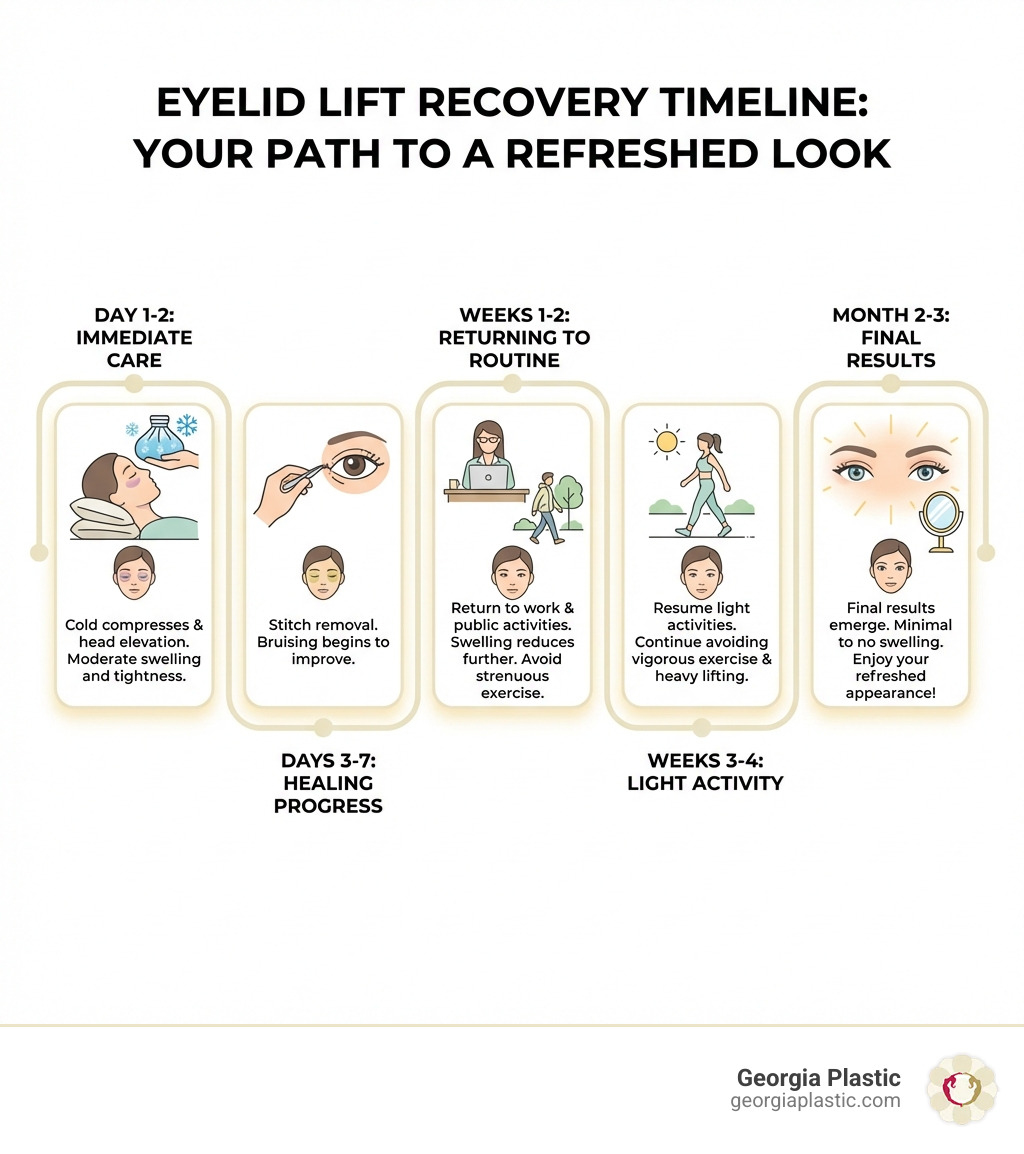
Eyelid lift recovery typically takes about 10 to 14 days for most people to feel ready to return to work and normal activities, though complete healing continues for several weeks to months. Here’s what you need to know:
Quick Recovery Timeline:
- First 48 hours: Swelling, bruising, tightness, and blurred vision are normal. Apply cold compresses and keep your head liftd.
- Days 3-7: Stitches are usually removed. Swelling and bruising begin to improve.
- Weeks 1-2: Most people return to work and public activities. Avoid strenuous exercise and heavy lifting.
- Weeks 3-4: Resume light activities. Continue avoiding vigorous exercise.
- Months 2-3: Swelling continues to fade. Final results become more visible.
If you’re considering eyelid surgery—also called blepharoplasty—you’ve probably wondered what comes after the procedure. Maybe you’re concerned about how long you’ll need to stay home, when the swelling will go down, or whether you’ll be in pain. These are all valid questions.
The truth is, most patients find that their eyelid lift recovery is easier than they expected. You’ll experience some swelling, bruising, and tightness for the first few days, but these symptoms typically improve quickly with proper care. Your eyes may feel tight or sore as the numbing medicine wears off, and you might notice blurred vision or light sensitivity for a short time. These are all normal parts of the healing process.
The key to a smooth recovery is understanding what to expect at each stage and following your post-operative care instructions carefully. Things like keeping your head liftd, applying cold compresses, protecting your eyes from sun and wind, and avoiding activities that increase blood pressure can make a significant difference in how quickly you heal.
I’m Dr. Stanley Okoro, a double board-certified plastic surgeon at Georgia Plastic and Reconstructive Surgery, and I’ve helped countless patients steer their eyelid lift recovery with confidence and achieve natural-looking, refreshed results. In this guide, I’ll walk you through every stage of healing so you know exactly what to expect and how to care for yourself.
Immediately After Your Eyelid Lift: The First 48 Hours
The first 48 hours after your eyelid lift are crucial for setting the stage for a comfortable and efficient recovery. This is when the immediate effects of surgery are most noticeable, and your diligent care can significantly impact your healing journey.
When you wake up from surgery, your eyes and eyelids will likely be covered with a lubricating ointment and, in some cases, a loose bandage or sterile gauze. This helps protect the delicate surgical area and prevent dryness. As the numbing medication from the procedure wears off, it’s normal for your eyelids to feel tight and somewhat sore. Don’t worry, this discomfort is usually mild and easily managed. Many of our patients find that over-the-counter pain relievers are sufficient to keep them comfortable. However, we’ll discuss which specific medications to avoid later on.
Before you even leave our practice, we’ll make sure you have a trusted adult to drive you home. This is non-negotiable, as your vision may be blurry and you’ll be recovering from anesthesia. Once home, your primary focus should be rest. We recommend keeping your activities to a minimum for the first 3 to 5 days.
One of the most important things you can do during this initial phase of your eyelid lift recovery is to keep your head raised as much as possible. This simple action helps prevent fluid from pooling around your eyes, which can reduce swelling and bruising. Whether you’re resting, sleeping, or simply relaxing, try to keep your head liftd above your chest.
We’ll provide you with detailed instructions for your eyelid lift aftercare instructions, which will cover everything from how to apply cold compresses to when to take your medications. Following these guidelines carefully is your best path to a smooth and swift recovery.
Managing Swelling and Bruising
Swelling and bruising are the most common and visible side effects during the initial phase of your eyelid lift recovery. Think of them as temporary badges of honor on your journey to refreshed eyes. Fortunately, there are effective ways to manage them.
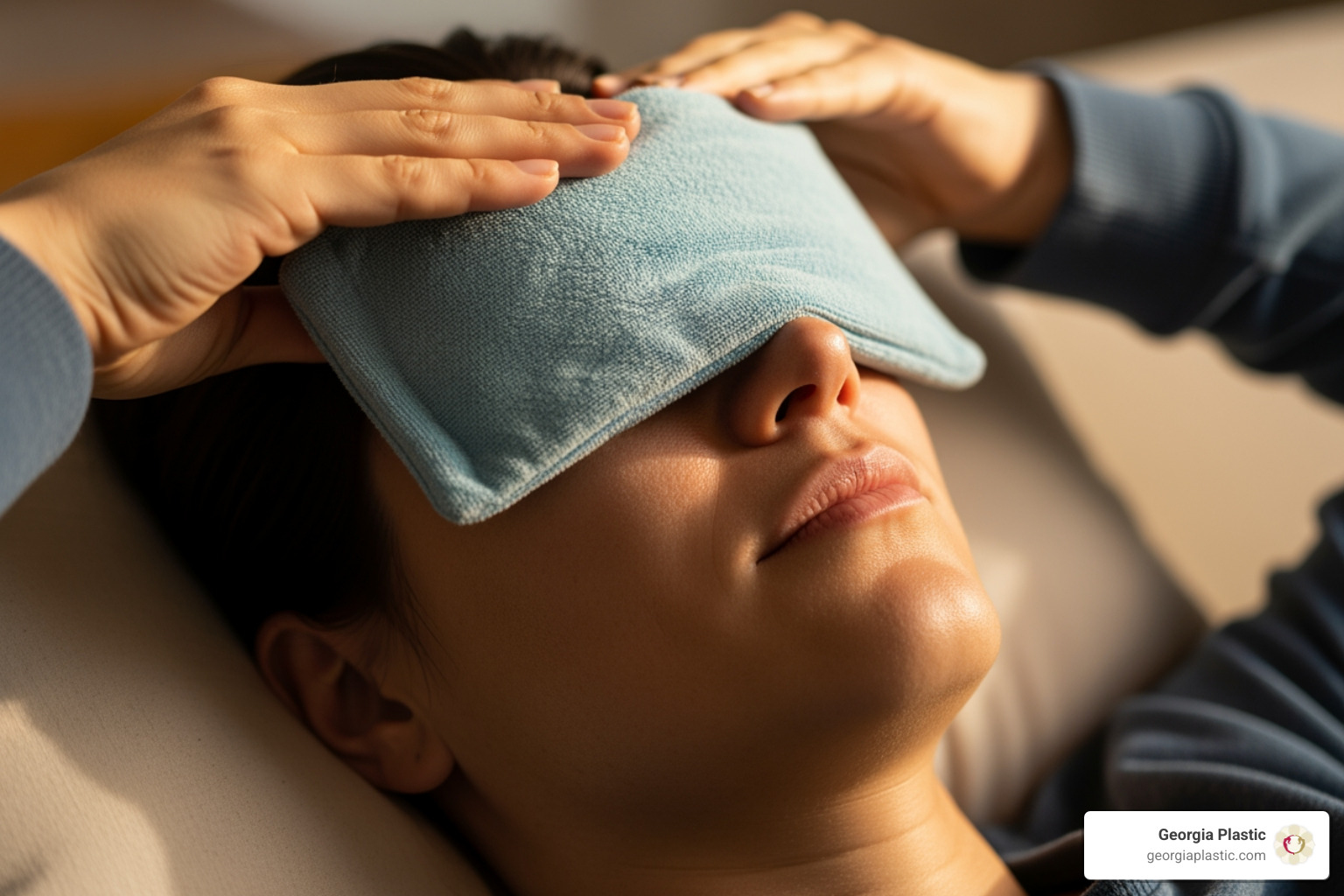
The golden rule for minimizing swelling and bruising in the first 48 hours is the consistent application of cold compresses. We recommend applying them to your eyelids every 10 to 15 minutes while you’re awake during this critical period. After the first 24-48 hours, cold compresses become less effective, but they can still provide comfort if you’re feeling particularly puffy.
Here’s how to apply a cold compress correctly:
- Preparation: Always wash your hands thoroughly before touching your eyes or applying compresses. You can make a cold compress by soaking a sterile gauze pad in sterile saline solution, or by using a clean cloth wrapped around a cold pack.
- Protection: It’s vital to wrap the cold pack in a soft, clean towel or cloth. Applying ice directly to your skin can cause cold injury, which we definitely want to avoid!
- Application: Gently place the wrapped cold pack over your closed eyelids. Do not press or rub.
- Duration: Keep it on for 10-15 minutes, then take a break for at least 40 minutes before reapplying. This allows your skin to recover and prevents excessive cooling.
Beyond cold compresses, maintaining head elevation is a powerful ally against swelling. When you sleep or rest, prop your head up on 2 to 3 pillows, or consider sleeping in a recliner for the first couple of weeks. This position helps gravity work in your favor, drawing fluid away from your face and reducing puffiness. While sleeping, try to stay on your back to avoid putting pressure on your healing eyelids.
You might notice that swelling is often worse in the morning and tends to improve throughout the day. This is completely normal and often extends to your cheeks and jawline as gravity pulls the fluid downwards. Patience is key here; these visible signs will gradually subside.
Initial Sensations and Vision
During the first few days of your eyelid lift recovery, your eyes will be adjusting to the changes. It’s common to experience a range of sensations and temporary vision changes. These are usually mild and resolve relatively quickly.
You might find your eyes feeling:
- Blurry: This is often due to the lubricating ointment we apply after surgery, or general swelling. It should improve significantly within 2 to 3 days.
- Watery: Your eyes might produce more tears than usual as they heal.
- Dry, sticky, or itchy: These sensations are also common.
- Sensitive to light and wind: Your eyes may feel more vulnerable to environmental factors.
- Double vision: In some cases, patients may experience temporary double vision for the first few weeks.
To combat dryness and irritation, we may recommend using lubricating eye drops or artificial tears. Always use these as directed by our team. Remember to wash your hands thoroughly before applying any drops or ointments to prevent infection. When applying drops, avoid pulling on your eyelids.
We want you to feel as comfortable as possible during this period. Rest assured that these initial sensations are a normal part of the healing process and will gradually fade as your eyes recover.
The First Two Weeks: Your Detailed Eyelid Lift Recovery Timeline
The first two weeks mark the most intensive period of your eyelid lift recovery. While the initial 48 hours focus on immediate post-op care, the subsequent days and weeks involve managing symptoms, carefully resuming activities, and witnessing the first signs of your refreshed appearance. Most patients are surprised at how quickly they start to feel better during this phase.
Stitch Removal: If we used permanent stitches (which are common for upper eyelid surgery), they are typically removed within 3 to 10 days after your procedure. For lower eyelid surgery, if an internal incision (transconjunctival approach) was used, stitches may not be required at all, or self-absorbing stitches might be used. This is often a quick and relatively painless process performed during a follow-up visit.
Bruising Progression: Significant bruising can occur, and it’s not uncommon for it to resemble a “black eye” initially. While cold compresses help, expect some bruising to linger for 2 to 4 weeks. It will change color, typically from purple to blue, then green, and finally yellow as it resolves.
Swelling Reduction: The most noticeable swelling usually subsides within 10 to 14 days. You’ll wake up each morning seeing a slight improvement, though minor residual swelling can persist for several months.
Returning to Public and Work Resumption: This is often the milestone patients look forward to most! Most people feel comfortable and ready to go out in public and return to work in about 10 to 14 days. This timeline can vary depending on your job and how quickly your bruising and swelling resolve. For some, a few extra days might be needed before they feel completely ready to head back.
For a broader understanding of what to expect, we encourage you to review this general recovery overview.
Key Symptoms During Your Eyelid Lift Recovery
As you progress through your eyelid lift recovery, you’ll continue to experience some symptoms that are part of the natural healing process. Understanding these can help you manage your expectations and avoid unnecessary worry.
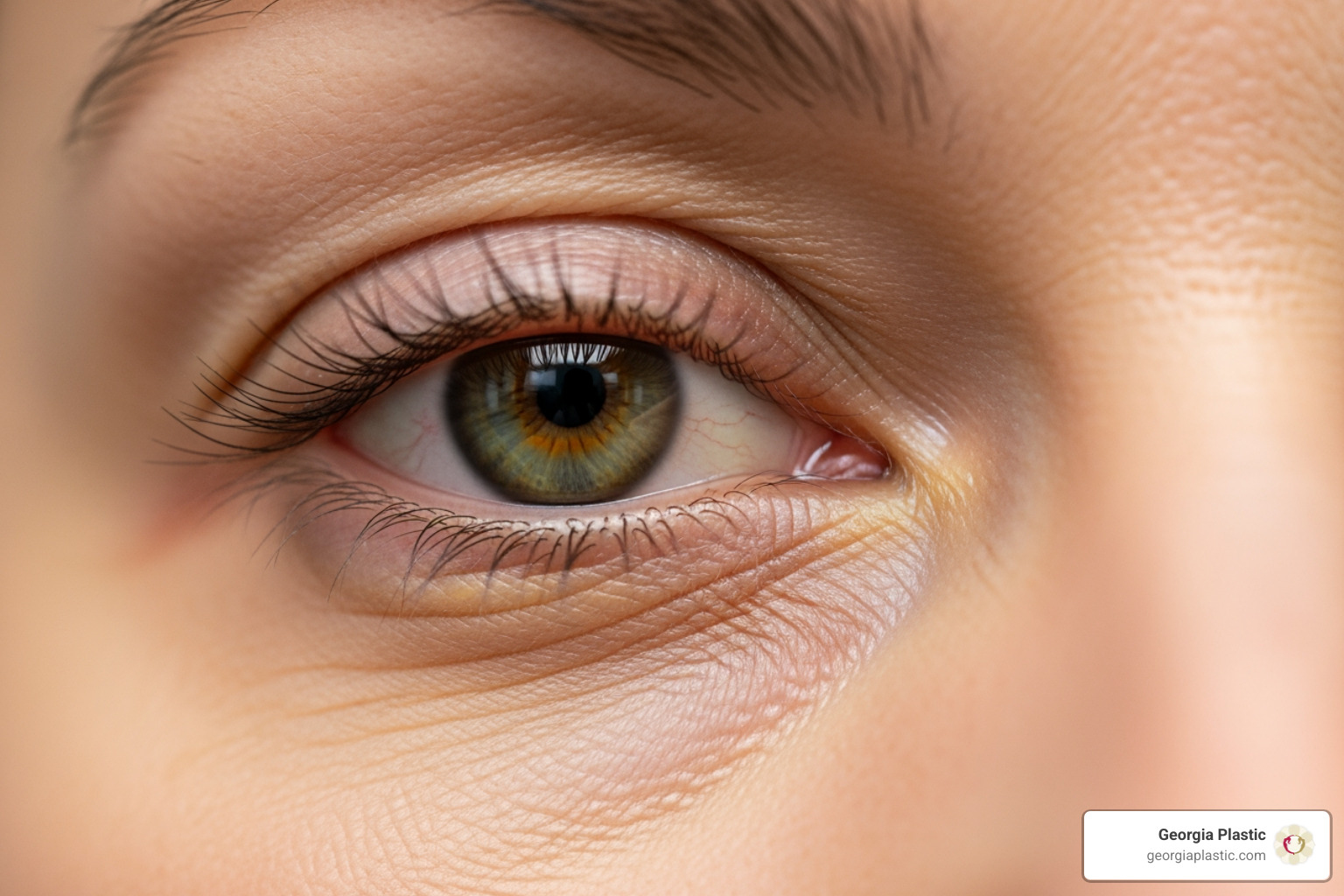
- Puffy Eyelids: While the initial, significant swelling will decrease after the first week or two, some residual puffiness will likely remain. This is especially true in the mornings and can take several weeks, even months, to fully resolve.
- Red Incisions: The incision lines, though carefully placed in natural creases to be inconspicuous, will appear red or pink in the early weeks. This is a normal part of wound healing and will fade over time.
- Dry Eyes: Dryness is a common complaint, often due to temporary changes in tear production or the eye’s surface adjusting. Lubricating eye drops, as prescribed, will be your best friend here.
- Eye Fatigue: Your eyes may tire easily, especially if you try to resume activities that require sustained visual focus too soon. Listen to your body and give your eyes plenty of rest.
- Sticky Sensation: You might notice a sticky discharge or crusting around your eyelids, particularly in the mornings. This is normal and can be gently cleaned as instructed.
Managing discomfort continues to be important during this period. We’ll ensure you have the right plan in place to stay comfortable. If you experience any sharp or sudden pain, or if your discomfort becomes severe and unmanageable, please contact our office immediately.
Activity Guidelines for Your Eyelid Lift Recovery
Knowing what you can and cannot do is crucial for a smooth eyelid lift recovery. Our goal is to promote healing while preventing any complications that could prolong your downtime or affect your results.
Here’s a helpful guide for the first two weeks:
| Activity Category | What You CAN Do “`


