
Why Atlanta Residents Are Choosing Facial Rejuvenation in 2026
Facial rejuvenation in Atlanta is more accessible than ever — with dozens of board-certified providers offering everything from quick lunchtime treatments to full surgical transformations.
If you’re looking for a fast answer, here’s where Atlanta patients typically start:
Top facial rejuvenation options available in Atlanta:
- Non-surgical — Botox, dermal fillers, microneedling, laser resurfacing, Ultherapy, chemical peels
- Minimally invasive — PDO thread lifts, AccuTite radiofrequency, EmFace
- Surgical — Mini facelift, full facelift, deep plane facelift, neck lift, eyelid surgery
Best for you depends on:
- How much downtime you can manage
- Whether you need volume restoration, skin tightening, or both
- The severity of your skin laxity or aging concerns
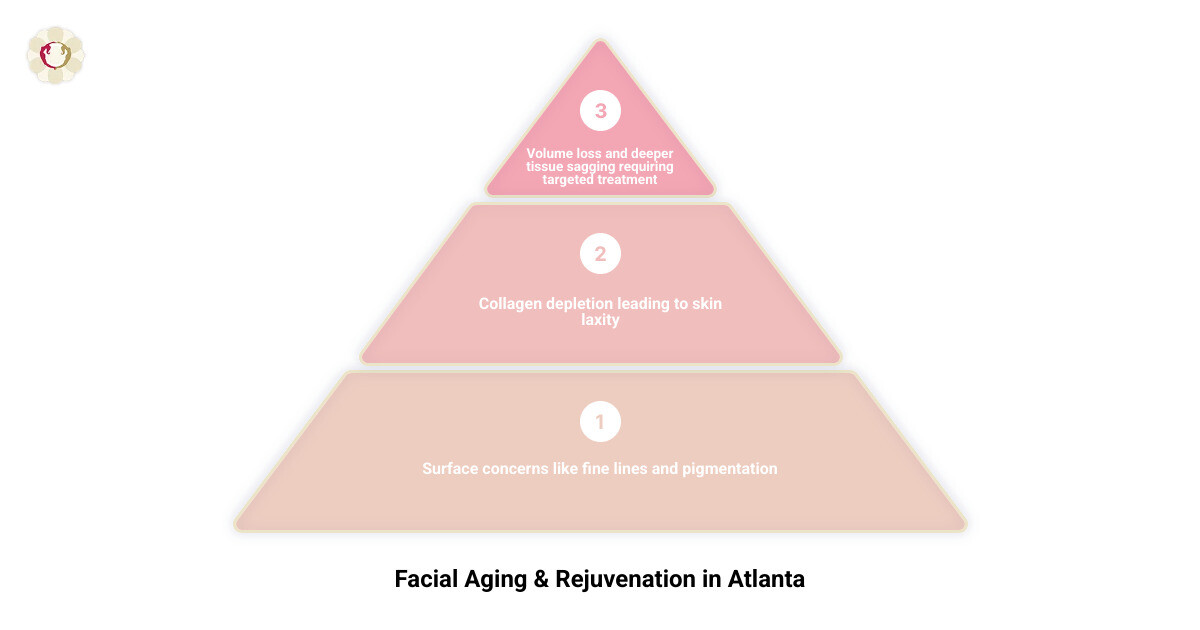
Atlanta’s warm climate and year-round sun exposure accelerate two of the biggest drivers of facial aging: collagen loss and skin laxity. By your 40s, your skin produces significantly less collagen than it did in your 20s — and it shows. Fine lines deepen. Jowls form. Skin that once bounced back starts to sag.
The good news? Today’s treatments work at multiple levels of the skin, from surface texture all the way down to deeper tissue. Whether you want zero downtime or long-lasting surgical results, Atlanta has options that fit.
I’m Dr. Stanley Okoro, a double board-certified plastic surgeon and founder of Georgia Plastic and Reconstructive Surgery in Atlanta, where I’ve helped patients achieve natural-looking facial rejuvenation results through both surgical and non-surgical approaches. My goal with this guide is to give you a clear, honest picture of what’s available so you can make the best choice for your face, your schedule, and your goals.
Relevant articles related to Facial rejuvenation Atlanta:
Understanding Facial Rejuvenation Atlanta Options
At its core, facial rejuvenation means improving how the face looks and ages by addressing texture, tone, volume loss, sagging, wrinkles, and skin quality. That can include one treatment or a carefully layered plan.
For many patients searching Facial rejuvenation Atlanta, the real question is not “What is facial rejuvenation?” but “Which option actually fits me?” That depends on whether your main concern is:
- Fine lines and early wrinkles
- Sun damage and pigmentation
- Redness or broken capillaries
- Acne scarring or rough texture
- Hollow cheeks or under-eye volume loss
- Jowls, laxity, or neck fullness
- Heavy brows or tired-looking eyelids
We often explain this as a spectrum. On one end are skin-refreshing treatments like peels, microneedling, and light-based procedures. In the middle are injectables and minimally invasive tightening options. On the other end are surgical procedures that reposition deeper tissue for more dramatic and longer-lasting change.
To explore the full category, visit our Facial Rejuvenation page. If you are already comparing surgical paths, our guides to facelift procedures and benefits, mini facelift, and the deep plane facelift can help.
Surgical vs. Non-Surgical Facial Rejuvenation Atlanta
This is the biggest fork in the road.
Non-surgical facial rejuvenation improves the skin and soft tissues without incisions or general anesthesia in most cases. Surgical facial rejuvenation lifts and repositions tissue more significantly, usually with more downtime but also more longevity.
Here is the simple comparison:
| Option | Best for | Downtime | Results timeline | How long results last |
|---|---|---|---|---|
| Botox and fillers | Early lines, volume loss, quick refresh | Minimal | Days to 2 weeks | 3 months to 2 years depending on product |
| Microneedling and peels | Texture, acne scars, dullness, pigment | 1 to 7 days | Gradual over weeks | Maintenance needed |
| Laser resurfacing and FotoFacial RF | Sun damage, spots, redness, fine lines | 1 to 14 days depending on intensity | Days to months | Months to years with upkeep |
| Ultherapy and RF tightening | Mild to moderate laxity | Minimal to several days | Builds over 2 to 6 months | About 1 year or more for many patients |
| PDO threads or AccuTite | Mild sagging, contouring | Several days to about 1 week | Immediate plus gradual collagen effect | About 1 to several years depending on method |
| Mini or full facelift | Moderate to advanced sagging and jowls | 1 to 3 weeks | Early improvement in weeks, refined over months | Often many years |
A surgical facelift is not “better” than non-surgical treatment in every case. It is simply designed for different anatomy and goals. If your main issue is skin tone, discoloration, pores, or crepey texture, surgery alone will not fix that. If you have heavier jowls, loose neck skin, and deeper descent of facial tissues, energy devices and injectables may help somewhat, but they usually will not match the lift of surgery.
That is why we encourage patients to think in layers. Skin quality treatments improve the surface. Injectables restore volume and soften movement lines. Surgery repositions deeper structures. Our Comprehensive Guide to Facial Plastic Surgery goes deeper on those relationships.
Top Non-Surgical Treatments for a Youthful Glow
Non-surgical rejuvenation is popular for a reason: less downtime, lower upfront cost, and flexibility. According to national procedure trends, demand for laser resurfacing and other non-surgical facial treatments has continued to rise, with over 1.8 million facial rejuvenation procedures performed in the U.S. in 2022 and laser resurfacing showing year-over-year growth. For readers who want broader background on how these procedures are categorized nationally, the American Society of Plastic Surgeons is a useful external resource.
Patients often start with:
- Botox for expression lines
- Juvederm fillers for cheeks, lips, folds, and contour
- Ultherapy for non-surgical lifting
- Microneedling for texture and collagen stimulation
- Fractionated CO2 laser resurfacing for deeper resurfacing

Laser Skin Resurfacing and FotoFacial RF
Laser and light-based treatments are workhorses for patients with visible sun exposure. In Atlanta, that matters. A lot.
These treatments can address:
- Brown spots and sun damage
- Redness and broken capillaries
- Uneven tone
- Fine lines
- Rough texture
- Some acne scars
FotoFacial RF is often used to target multiple concerns in one treatment category, especially redness, pigment, and mild textural changes. Sessions are typically completed in under an hour, usually without general anesthesia, and many patients need a series spaced over several weeks for the best result.
Laser resurfacing comes in different strengths. Fractionated CO2 is a more intensive option that can improve deeper wrinkles, texture, and scarring, but it usually comes with more downtime than lighter treatments. Milder light and laser treatments may involve temporary redness and bronzing, while deeper resurfacing can mean several days to two weeks of social downtime.
In plain English: the stronger the treatment, the bigger the potential payoff and the bigger the recovery commitment.
Potential side effects include:
- Redness
- Swelling
- Temporary darkening or flaking
- Sensitivity
- Infection risk if aftercare is poor
- Pigment changes, especially in some skin tones if treatment is not chosen carefully
That is why provider experience matters. Laser settings should match your skin type, concern, and tolerance for downtime.
Advanced Skin Tightening and Facial Rejuvenation Atlanta
For patients bothered by mild to moderate sagging, skin tightening treatments can help stimulate collagen without a traditional facelift.
Common options include:
- Ultherapy, which uses focused ultrasound to heat deeper tissue
- Radiofrequency-based treatments that heat tissue to promote tightening
- AccuTite, a minimally invasive RF option for smaller facial areas
- PDO thread lifts, which provide an immediate lift plus collagen stimulation
- EmFace, which combines radiofrequency and muscle stimulation without needles
These treatments are best for early laxity, not heavy tissue descent. Think soft jawline blur, early jowls, mild looseness under the chin, or a general “tired” look rather than dramatic hanging skin.
How they compare:
- Ultherapy: no incisions, little downtime, results build gradually over a few months
- PDO threads: quicker visible lift, mild swelling or bruising possible, often good for select lifting goals
- AccuTite: more invasive than surface treatments but less than surgery, often about a week of recovery
- EmFace: no downtime, series-based treatment, subtle improvements over time
A useful rule: if you want tightening, collagen stimulation matters; if you want repositioning, surgery may matter more.
Addressing Specific Skin Concerns
Facial rejuvenation is not one-size-fits-all because aging does not show up the same way on every face.
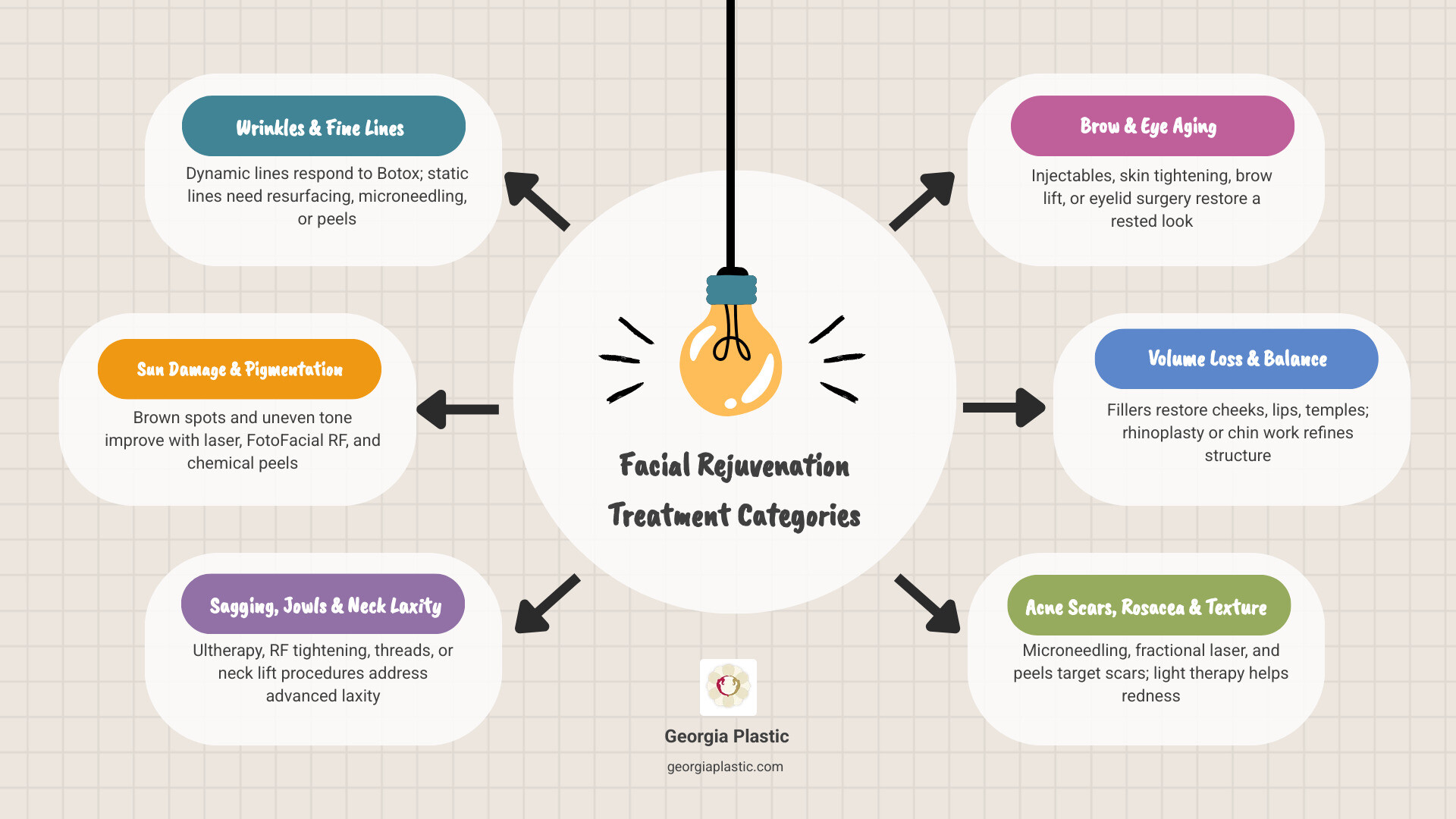
Here is how we typically match concerns to treatment categories:
Wrinkles and Fine Lines
Dynamic wrinkles caused by muscle movement, like forehead lines and crow’s feet, often respond well to Botox. Static lines caused by collagen loss and sun damage may respond better to resurfacing, microneedling, peels, or a combination plan.
Sun Damage and Pigmentation
Brown spots, uneven tone, and dullness often improve with laser treatments, FotoFacial RF, chemical peels, and targeted skincare. Since nearly 70% of cosmetic consumers are focused on texture, tone, and wrinkles, this remains one of the most requested categories.
Sagging, Jowls, and Neck Laxity
Mild laxity may improve with Ultherapy, RF tightening, or threads. More advanced jowls, platysmal banding, or loose neck skin often point patients toward a neck lift or facelift-based solution.
Brow and Eye Aging
A heavy brow or hooded upper eyelids can make the whole face look tired. Depending on anatomy, treatment might include injectables, skin tightening, an Atlanta brow lift, or eyelid surgery.
Volume Loss and Facial Balance
Fillers can restore cheeks, lips, temples, and folds. In some cases, facial balance concerns involve structural issues rather than skin aging alone. That is where procedures such as rhinoplasty or chin and neck refinement may become part of a larger plan.
Acne Scars, Rosacea, and Texture Problems
Microneedling, fractional laser treatments, and selected peels are often used for acne scarring. Rosacea is more complex because triggers like sun, alcohol, heat, spicy foods, and exercise can keep inflammation active. Light-based treatments may help visible blood vessels and redness, but a good plan also includes trigger management and skincare.
What to Expect: The Treatment Journey in Atlanta
The consultation is where good results start. Not in the laser room. Not in the operating room. Definitely not in a panic-fueled late-night internet search.
At Georgia Plastic, we believe the best treatment plans are personalized. During consultation, we evaluate:
- Skin tone and texture
- Degree of laxity
- Volume loss
- Bone structure and facial balance
- Sun damage and pigmentation
- Medical history
- Lifestyle, schedule, and downtime tolerance
- Your goals and budget
We also talk about what bothers you most. Sometimes patients say “I need a facelift” when what they really need is skin resurfacing and filler. Other times they ask for a laser when the real issue is tissue descent that a laser cannot lift.
From there, we build a plan that may include one treatment or several staged treatments. You can explore our broader face procedures in Atlanta to see how options fit together. If you are leaning surgical, our guide on how to navigate facelift surgery in Atlanta is a useful next read.
Typical process for non-surgical treatment:
- Consultation and skin analysis
- Pre-treatment instructions, such as pausing certain medications or avoiding sun exposure
- Procedure day, often 20 to 60 minutes depending on treatment
- Short recovery with redness, swelling, or mild bruising depending on the modality
- Follow-up and maintenance planning
Typical process for surgical rejuvenation:
- Consultation and candidacy review
- Surgical planning and pre-op instructions
- Procedure day in an appropriate surgical setting
- Recovery over 1 to 3 weeks for most social activity, with refinement over months
- Long-term maintenance through skincare, sun protection, and touch-up treatments if desired
Frequently Asked Questions about Facial Rejuvenation
How many sessions are typically needed for non-surgical results?
It depends on the treatment.
General guidelines:
- Botox: often every 3 to 4 months
- Fillers: every 6 to 24 months depending on product and area
- Microneedling: often a series of 3 to 6 sessions
- FotoFacial RF or IPL-type treatments: usually several sessions over weeks
- Ultherapy: often one treatment with gradual collagen remodeling
- EmFace: typically a treatment series
- Chemical peels: single treatment or a series depending on depth
- Fractionated CO2: often fewer sessions because each one is stronger
Many non-surgical treatments are cumulative. Collagen-building procedures do not always give instant gratification. They are more like planting a garden than flipping a switch. Annoying, yes. But biologically accurate.
What is the average cost and are financing options available?
Cost varies widely based on:
- Type of treatment
- Number of sessions
- Areas treated
- Whether treatments are combined
- Provider expertise
- Technology used
In general, injectables may cost less upfront than surgery, but they usually require ongoing maintenance. Surgical procedures cost more initially, though results can last much longer.
During consultation, we provide personalized pricing based on your plan. Financing options may also be available for qualified patients, including programs commonly used in aesthetic medicine such as CareCredit and PatientFi.
The best way to think about cost is not just “What is cheapest?” but “What gets me closest to my goal?” A lower-cost treatment that does not address your real concern can become the expensive option in disguise.
How can I maintain my results at home?
Home care matters more than most people expect. To prolong your results, we recommend:
- Daily broad-spectrum SPF 30 or higher
- Medical-grade skincare when appropriate
- Consistent moisturization and gentle cleansing
- Avoiding smoking
- Limiting excess sun exposure
- Maintaining stable weight
- Managing rosacea or acne triggers if relevant
- Scheduling maintenance visits before everything fades completely
If you invest in collagen and then roast it in the Georgia sun without sunscreen, your skin may file a formal complaint.
For surgical patients, maintenance may also include periodic non-surgical treatments to preserve skin quality after the lift. Surgery repositions tissues, but skincare protects the canvas.
Conclusion
Whether you want a subtle refresh or a more dramatic transformation, the best Facial rejuvenation Atlanta plan is the one tailored to your face, not copied from someone else’s before-and-after photo.
At Georgia Plastic & Reconstructive Surgery, we combine advanced facial treatments with individualized planning, natural-looking results, and a strong focus on safety. Under the leadership of Dr. Okoro, our goal is to help you look refreshed, balanced, and like yourself on your best day.
If you are ready to explore your options, visit our Facial Rejuvenation Landing page to take the next step.


