
Understanding Your Path to Facial Rejuvenation
Facelift recovery time is one of the most common concerns for anyone considering facial rejuvenation surgery. Here’s what you need to know:
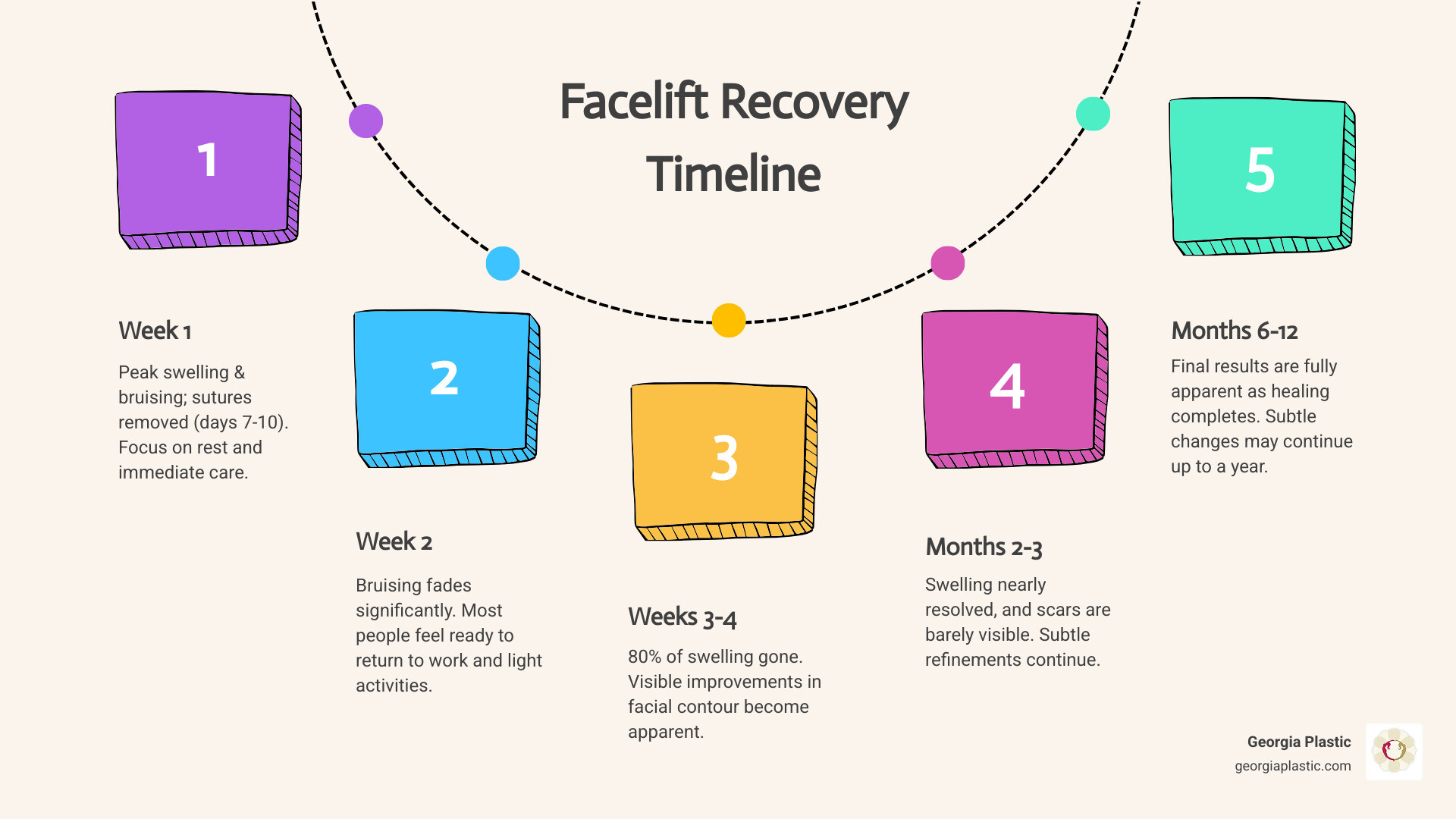
Quick Recovery Timeline:
- Week 1: Peak swelling and bruising, suture removal around days 7-10
- Week 2: Most people return to work and light activities
- Weeks 3-4: 80% of swelling gone, visible improvements in facial contour
- Month 2-3: Swelling nearly resolved, scars barely visible
- Month 6-12: Final results fully apparent as subtle refinements continue
The good news is that recovery is often shorter than most people expect. While many anticipate needing six weeks, most feel ready to return to work and social activities within just 10 to 14 days. However, complete healing takes time—about six months for final results to become fully apparent, with subtle changes continuing for up to one year.
Every facelift recovery is unique. The type of procedure, your age, health, and adherence to post-operative care instructions all play significant roles in your healing timeline. Understanding these factors helps you prepare for the journey ahead.
I’m Dr. Stanley Okoro, a double board-certified plastic surgeon with extensive experience guiding patients through facelift recovery time at Georgia Plastic and Reconstructive Surgery in Atlanta. Over the years, I’ve helped countless patients steer the recovery process with realistic expectations and personalized care, ensuring they achieve natural-looking results that improve their confidence.
The First 48 Hours: Immediate Post-Op Care
The first 48 hours after your facelift are critical for a smooth facelift recovery time as your body begins its natural healing process.
Immediately after surgery, you’ll have a large compression bandage around your head to minimize swelling and bruising. Small drainage tubes may be placed behind your ears to collect excess fluid and are typically removed within one to two days.
Discomfort is normal and manageable with prescribed pain medication; many patients find it’s less than anticipated. Pain should decrease significantly after the first 48 hours. Swelling and bruising will peak during these first 36 to 48 hours, often increasing before they subside. Don’t be alarmed if bruising extends down your neck or chest due to gravity.
To reduce swelling and ensure optimal healing, keep your head liftd. We recommend sleeping with your head raised on two to three pillows, at a 30 to 40-degree angle, for at least the first two weeks. Avoid bending over, lifting heavy objects, or straining, as these activities can increase blood pressure in your face and worsen swelling or bleeding.
A dedicated caregiver is essential. You’ll feel groggy from anesthesia, so someone needs to drive you home and stay with you for at least the first 24 to 48 hours to assist with medications, meals, and general support.
Rest is paramount. Your body is working hard to heal, so listen to it. Focus on relaxing and avoiding strenuous activity. Hydration is also key; drink plenty of water to help your body flush out toxins. Eating soft, easily chewable foods for the first few days will also increase your comfort.
For a comprehensive overview of what to expect, you can refer to general guidance on Facelift Surgery recovery overview.
Your Week-by-Week Facelift Recovery Timeline
Understanding the week-by-week milestones of your facelift recovery time can make the journey more manageable. While everyone heals differently, here’s a general guide to what you can anticipate.

Throughout your recovery, regular post-operative appointments are crucial for monitoring your progress and addressing concerns. You’ll also notice sensation changes like numbness, tingling, or tightness around the incision sites. These are normal signs of nerve regeneration and healing.
Week 1: The Initial Healing Phase
This week involves the most dramatic physical changes.
- Peak Swelling and Bruising: Swelling and bruising peak around days 3-4. Your face will look puffy with temporary discoloration ranging from purple to yellow.
- Discomfort Management: Take prescribed pain medication for the first few days, then switch to over-the-counter options around day 4-6 as needed.
- Light Movement: We encourage short walks around the house by day 4-6 to boost circulation and aid healing.
- Suture Removal: Some sutures or staples may be removed between days 5 and 10 in a quick, relatively painless process.
- Diet of Soft Foods: Stick to soft foods like soups, yogurt, and smoothies to avoid excessive chewing.
- Activity Restrictions: No strenuous activity, heavy lifting, or bending. Keep your head liftd at all times.
For more detailed insights into the procedure itself and how it sets the stage for your recovery, explore our page on More info about a Face lift.
Week 2: Turning a Corner
By week two, you’ll start to feel and look significantly better.
- Bruising Fades, Swelling Subsides: Bruising fades to lighter shades, and swelling noticeably decreases. The most prominent signs of surgery diminish.
- Returning to Work: Many feel ready to return to work and light activities. Visible signs can be camouflaged with makeup (once cleared). Mini-facelift patients may return to work in 5-7 days.
- Light Activities: Continue light walking, gradually increasing your activity level but avoiding strenuous or high-impact exercise.
- Socially Presentable: Most patients feel socially comfortable within two weeks. Acquaintances may simply notice you look well-rested.
- Incision Appearance: Incisions will be pinkish-red and healing. Tingling sensations are a normal sign of nerves reconnecting.
If you’re curious about less invasive options, learn more about What happens in a mini facelift.
Weeks 3-4: Seeing Real Improvement
This period brings a significant morale boost as your results become more apparent.
- Significant Reduction in Swelling: About 80% of swelling is gone by four weeks, revealing more defined facial contours.
- Returning to More Normal Routines: Most patients can resume normal social and work activities. Approach strenuous exercise with caution.
- Incision Sites Fading: Incision lines soften and fade from pinkish-red to a lighter color as they mature.
- Improved Facial Contours: You’ll see significant improvements, including a tighter jawline and smoother neck.
- Makeup Application: You can typically use makeup to conceal any remaining redness once incisions are fully closed and cleared by us.
To get a glimpse of the potential outcomes and how a facelift can refresh your appearance, visit our page on Look and feel rejuvenated after a facelift.
Month 1 to Year 1: The Final Results Unfold
Your final results will gradually unfold over the coming months.
- Residual Swelling Resolves: Minor, subtle swelling can persist for up to a year, often fluctuating and noticeable only to you.
- Tightness Improves: The sensation of tightness gradually eases as tissues settle and nerves heal.
- Numbness Disappears: Numbness around the ears and lower face resolves, with sensation typically returning fully by three months.
- Scars Mature and Flatten: Incision lines continue to fade and flatten, becoming virtually invisible for most by three months. Scars take a full year to mature; sun protection is vital.
- Final Aesthetic Outcome: It can take six months to a year for the final results to become fully apparent as deep tissues settle and all swelling resolves.
- Long-Term Expectations: A facelift “resets the clock” on aging. Results typically last five to ten years, and you’ll always look younger than you would have without surgery.
Factors That Influence Your Facelift Recovery Time
Your facelift recovery time is not a one-size-fits-all experience. Several factors influence how quickly you heal, and understanding them helps set realistic expectations.

- Patient Health: Healthy patients without significant medical conditions tend to heal more efficiently.
- Age: Younger patients with good skin elasticity may experience a slightly faster recovery, though this is not a strict rule.
- Skin Quality: Good skin elasticity and thickness contribute to a smoother recovery and better results.
- Surgical Technique: The facelift technique significantly impacts recovery. More extensive procedures like a deep plane facelift may have a longer initial recovery than a mini-facelift.
- Surgeon’s Expertise: An experienced surgeon’s precise techniques can minimize tissue trauma, leading to less swelling and a faster recovery.
- Smoking: Smoking constricts blood vessels, reduces oxygen flow, and severely impedes healing. We require patients to stop smoking well before surgery.
- Nutrition: A healthy, protein-rich diet aids tissue repair, while high-salt foods can worsen swelling. Proper hydration is also crucial.
Mini-Facelift vs. Traditional: A Facelift Recovery Time Comparison
The type of facelift you choose is one of the most significant factors influencing your facelift recovery time. Here’s a comparison:
| Recovery Metric | Traditional Facelift | Mini-Facelift (MACS-Lift) |
|---|---|---|
| Time Off Work | Up to 3 weeks (for more invasive procedures) | 5-7 days |
| Return to Exercise | 4-6 weeks for strenuous activity | 3-4 weeks for strenuous activity |
| Swelling Duration | Significant for 1-2 weeks; minor for several months | Significant for 5-7 days; minor for 2-4 weeks |
| Visibility of Results | Final results visible in 6-12 months | Initial results visible sooner; final in 3-6 months |
A mini-facelift (MACS-Lift) involves shorter incisions and addresses aging in the lower face and jawline, resulting in a quicker initial recovery. Traditional facelifts address more widespread aging in the mid-face, jawline, and neck, requiring a more extensive procedure and longer healing. Our experts can help you determine What type of facelift surgery is right for you?.
How Combined Procedures Affect Your Facelift Recovery Time
Combining a facelift with other procedures can achieve comprehensive rejuvenation but will generally extend your overall facelift recovery time.
Commonly combined procedures include:
- Eyelid Surgery (Blepharoplasty)
- Brow Lift
- Neck Lift
- Fat Grafting
Each additional procedure adds to the surgical time and the body’s healing burden, which can mean more swelling and a longer recovery. However, the benefit of a more complete rejuvenation often outweighs this. We will discuss the implications of combined procedures during your consultation. You can learn more about various Facial rejuvenation procedures we offer.
A Patient’s Guide to a Smooth Recovery
A successful facelift recovery time is a team effort. Your diligence in following our post-operative instructions is paramount to a smooth recovery.
Here’s how you can prepare for and manage your recovery:
Essential Recovery Supplies Checklist:
- Plenty of soft pillows for head elevation.
- Loose, button-down shirts.
- Soft, easily chewable foods like soups and smoothies.
- Plenty of water and electrolyte drinks.
- Gauze and cotton swabs for incision care.
- Prescribed medications (pain relievers, antibiotics).
- Cold compresses or frozen peas.
- Entertainment like books, movies, or podcasts.
- A thermometer to monitor for fever.
- A comfortable, clean, and quiet recovery space.
- Sunscreen (SPF 30+) for later recovery stages.
- Scar cream/gel (to be used when cleared by your surgeon).
- Mild, unscented soap and shampoo.
Incision and Scar Care
Proper incision care is vital to prevent infection and promote optimal healing.
- Keeping Incisions Clean: Follow our specific instructions for gently washing incision sites, typically with mild soap and water after 24-48 hours. Avoid hydrogen peroxide or alcohol.
- Ointment Application: Apply prescribed ointments as directed to keep incisions moist and protected.
- Avoiding Sun Exposure: This is critical. Sun exposure on healing skin can cause hyperpigmentation and worsen scars. Keep incisions out of direct sun for at least six months.
- Sunscreen SPF 30+: Once incisions are fully healed, apply a broad-spectrum SPF 30+ sunscreen daily to protect the scars.
- Scar Maturation: Scars are initially pink and raised but will soften, flatten, and fade over several months. They take a full year to reach their final appearance.
- When to Use Scar Creams: We will advise when to begin using scar creams, usually after incisions are fully closed.
Managing Symptoms and Complications
Knowing how to manage expected symptoms and recognize potential issues is crucial.
- Pain Medication Schedule: Take pain medication as directed to stay ahead of discomfort. Most patients switch from prescription to over-the-counter options by day 4-6.
- Managing Swelling with Cold Compresses: Apply cool compresses to swollen areas for 20-minute intervals. Always keep your head liftd.
- Head Elevation: Sleep with your head liftd on two to three pillows for at least two weeks to minimize swelling.
- Signs of Infection: Watch for increased pain, swelling, warmth, or redness; pus drainage; red streaks; or a fever over 100.4°F (38°C).
- Hematoma Warning Signs: A hematoma involves a sudden, rapidly expanding collection of blood under the skin, causing significant swelling and pain. This requires immediate attention.
- When to Call Your Surgeon: Call us immediately for any signs of infection or hematoma, excessive bleeding, severe or increasing pain after 48 hours, or difficulty breathing. We are here to support your facelift recovery time.
The Psychological Side of Recovery
The psychological aspect of facelift recovery time is as important as the physical healing.
- Patience: Healing takes time. It’s normal to feel frustrated with swelling, but remember the final results are worth the wait.
- Emotional Fluctuations: It’s normal to experience emotional ups and downs, including the “facelift blues” around days 2-3 due to swelling and bruising. This is temporary.
- Managing Social Re-entry: You may feel self-conscious at first, but most people will simply perceive you as looking refreshed. Many patients want imperceptible results, and achieving them is the goal.
- Focusing on the Final Outcome: Keep your “before” photos handy to track your progress and visualize the beautiful results to come.
- Building Confidence: Your confidence will grow as swelling subsides and your new contours emerge. By three months, most patients feel their new look is completely natural.
Frequently Asked Questions about Facelift Recovery
We understand you have many questions about your facelift recovery time. Here are some of the most common ones we hear:
When can I resume strenuous exercise after a facelift?
Resuming strenuous exercise must be a gradual process. Follow our specific instructions and listen to your body.
- Gradual Reintroduction: Avoid strenuous activities like jogging or weight lifting for about three to four weeks.
- Avoiding High-Impact Activities: These can increase blood pressure, risking bleeding or prolonged swelling.
- Listening to Your Body: Ease back into your fitness routine. If you feel pain or increased swelling, stop and rest.
- Typical Timeline: Most patients can return to vigorous exercise after four to six weeks. By three months, activity is usually unrestricted.
- Surgeon’s Clearance: Always get our explicit clearance before resuming strenuous activities.
For additional information on preparing for and recovering from various plastic surgery procedures, you can refer to general guidance on More info about plastic surgery in Atlanta.
How long until the final results of my facelift are visible?
While you’ll see positive changes quickly, the final, refined results of your facelift recovery time take time to emerge.
- Initial Results Visible After 2-3 Weeks: After most major swelling and bruising subsides in 2-3 weeks, you’ll see significant improvement.
- 80% of Swelling Gone by 4 Weeks: By the four-week mark, about 80% of swelling is resolved, giving you a clearer picture of your results.
- Subtle Refinements Continue for 6-12 Months: The remaining subtle swelling will dissipate over the next several months as tissues settle and scars mature.
- Final Results Timeline: It takes six months to a year for the final results to become fully apparent.
- Patience is Key: Patience is required during the weeks and months of healing to see the final outcome.
Will people be able to tell I had a facelift?
With modern techniques and an expert surgeon, the answer is generally “no.”
- Natural-Looking Results: Our philosophy is to deliver natural results, making you look like a refreshed version of yourself, not someone else.
- Modern Techniques: We focus on repositioning underlying tissues, not just pulling the skin tight. This avoids a “pulled” or “windblown” look.
- Hidden Incisions: We place incisions in discreet locations within the hairline and around the ear’s natural curves, so they become very difficult to detect as they heal.
- Looking Refreshed, Not “Pulled”: People will likely comment that you look well-rested or happy, not that you’ve had surgery.
- Surgeon’s Skill: The surgeon’s skill is paramount in achieving natural, undetectable results. We will discuss your aesthetic goals during your consultation.
We invite you to View our Facelift gallery to see examples of the natural-looking results we achieve for our patients.
Your Rejuvenation Journey Starts Here
Navigating your facelift recovery time requires patience and diligence. This journey culminates in a refreshed, more youthful appearance that can significantly boost your confidence.
Every step of your recovery is part of your change. By following our detailed post-operative care instructions, you actively contribute to a smoother recovery and optimal results.
At Georgia Plastic, led by Dr. Stanley Okoro, we are committed to providing personalized care that prioritizes your safety and delivers natural-looking results. We empower our patients with comprehensive information and unwavering support throughout their entire rejuvenation journey.
If you’re considering a facelift and want to understand how we can tailor a plan for your needs and ensure a comfortable recovery, we encourage you to take the next step.


