
Understanding the Common Concern of Loose Neck Skin
Loose neck skin is a widespread aesthetic concern that affects people across different ages and backgrounds. Whether it manifests as sagging under the chin, visible bands running vertically down the neck, or a poorly defined jawline, this condition can make individuals feel self-conscious about their appearance and older than they actually are.
Quick answers about loose neck skin:
- What causes it: Aging, sun damage, genetics, weight loss, and weakened neck muscles
- Main concerns: “Turkey neck,” double chin, jowls, loss of jawline definition
- Non-surgical solutions: Ultherapy, radiofrequency treatments, laser therapy, Botox, injectables
- Surgical options: Neck lift (platysmaplasty), liposuction, facelift
- Prevention: Daily sunscreen, retinoids, maintaining stable weight, good posture
The neck often shows signs of aging earlier than other visible areas of the body. As we age, our skin produces less collagen and elastin—the proteins that keep skin firm and elastic—leading to sagging and wrinkles. The neck’s thinner skin and constant movement make it particularly vulnerable to these changes.
Other factors compound the problem. Decades of sun exposure can damage collagen fibers. Significant weight loss can leave excess skin that won’t snap back. Even modern habits like constantly looking down at phones (“tech neck”) contribute to premature wrinkling and sagging.
The good news is that effective solutions exist for every severity level. From topical treatments and energy-based procedures to surgical interventions, today’s options can address loose neck skin and restore a more youthful profile.
I’m Dr. Stanley Okoro, a double board-certified plastic surgeon who has helped countless patients in Atlanta achieve natural-looking neck rejuvenation through both surgical and non-surgical approaches. My experience with loose neck skin treatments ranges from advanced neck lift procedures to the latest minimally invasive technologies, always focusing on results that improve each patient’s unique features while maintaining a refreshed, natural appearance.
Understanding Loose Neck Skin and Its Causes
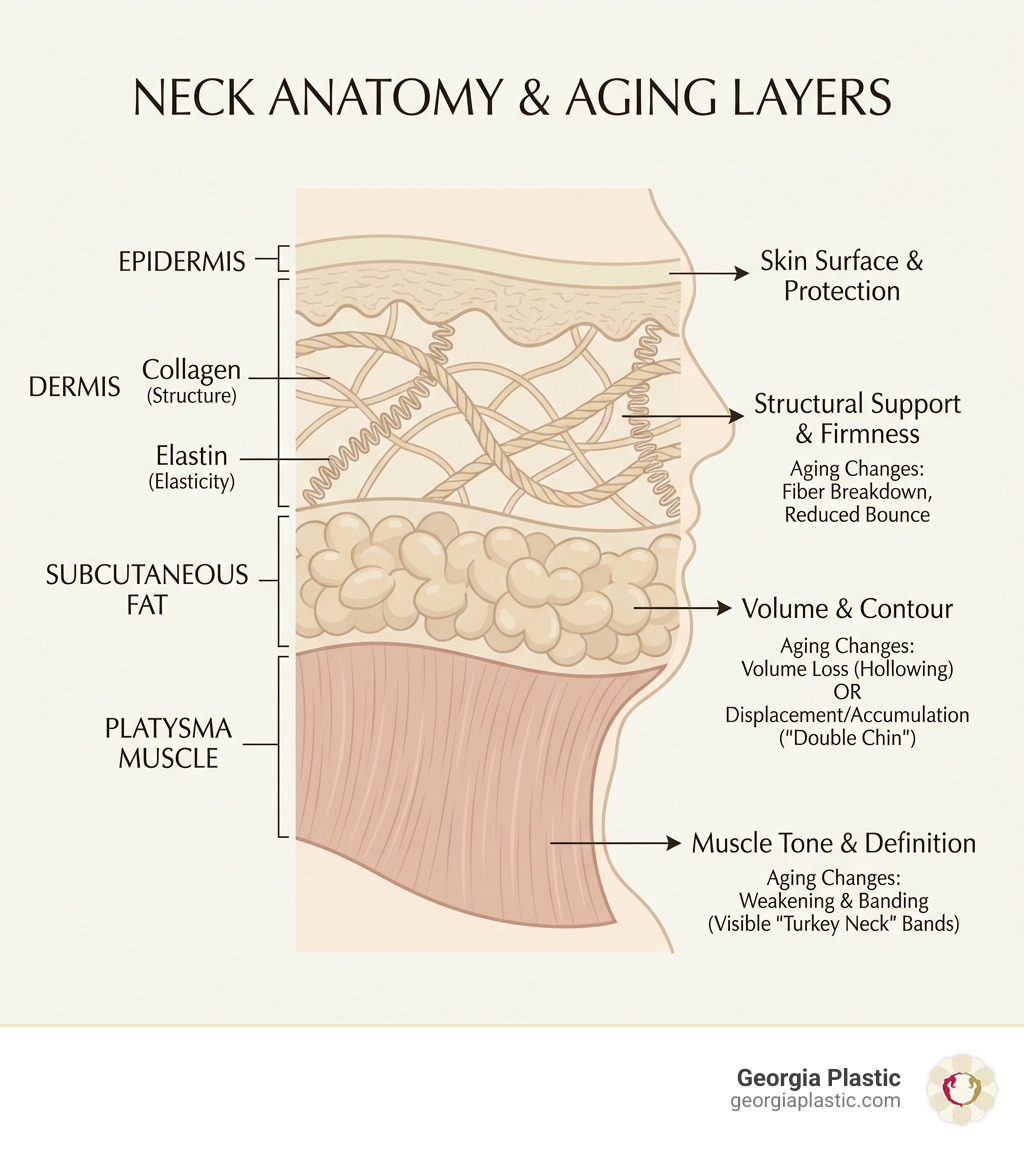
Loose neck skin, often colloquially referred to as “turkey neck,” is a common condition that occurs when the skin around the neck and under the chin loses its firmness and elasticity. This typically results in a less defined jawline, the appearance of a “double chin,” or visible vertical bands. Martin Newman, MD, a plastic surgeon, explains that “turkey neck is a problem with your neck’s skin, fat or underlying muscle, or a combination of the three.”
At the heart of this issue is the breakdown and reduction of vital structural components in our skin: collagen and elastin. Collagen provides strength and structure, while elastin gives our skin its ability to stretch and then “bounce back” into place. As we age, our bodies naturally produce less of these proteins, and existing fibers can become damaged. The neck’s skin is particularly susceptible because it’s often thinner and constantly in motion, making it more prone to showing signs of aging.
Beyond the skin itself, the underlying structures of the neck also play a significant role. The platysma muscles, two broad bands of muscle that extend from the chest up to the jawline, can weaken or separate over time. This weakening contributes to the droopy appearance and can create prominent vertical bands. The cervicomental angle—the angle between your chin and neck—becomes less defined as skin sags and fat accumulates, blurring the youthful contour of the jawline.
The Role of Aging and Genetics
Aging is, without a doubt, the most common culprit behind loose neck skin. As we get older, our bodies’ natural processes slow down, including the production of collagen and elastin. This decline means our skin loses its inherent ability to stretch and contract, leading to laxity. We’ve seen that “turkey neck can occur as soon as we hit our 40s,” and for most adults, some loosening of the neck skin is an inevitable part of getting older. The skin simply loses its ability to ‘bounce back’.
In addition to skin changes, the neck muscles themselves begin to weaken with age. The platysma muscles, which are crucial for maintaining a tight neck appearance, can become weaker and looser, leading to a more droopy look.
While aging is universal, the timing and severity of loose neck skin can often be traced back to our family tree. Genetics play a significant determining factor in whether someone develops this condition. If your parents or grandparents had noticeable “turkey neck,” you might be predisposed to developing it yourself. This inherited predisposition can influence factors like skin elasticity, collagen production rates, and even the natural position of structures like the hyoid bone, a small U-shaped bone in the neck. If this bone is set forward, away from the spine, it can make the skin on your neck appear less tight. For a deeper dive into how our skin changes over time, you can explore research on The science of skin aging.
Environmental and Lifestyle Factors
Our daily lives and the environment around us significantly impact the health and appearance of our neck skin. One of the most damaging external factors is sun exposure. Chronic exposure to ultraviolet (UV) radiation breaks down collagen and elastin fibers, accelerating the aging process and leading to premature wrinkling and sagging. This process, known as photoaging, is estimated to be responsible for 90% of visible skin aging, and UV irradiation can decrease collagen production by as much as 80%. It’s a cruel irony that while we diligently apply sunscreen to our faces, the neck and décolletage are often overlooked, leaving them vulnerable to damage.
Beyond the sun, other lifestyle choices contribute to loose neck skin. Smoking is notorious for destroying collagen and significantly reducing skin elasticity, leading to deeper wrinkles. Air pollutants can also contribute to oxidative stress, damaging skin cells and accelerating aging.
In our modern world, even our posture plays a role. Constantly looking down at smartphones or computers for extended periods has given rise to the term “tech neck.” This repetitive motion can intensify the wrinkles and creases in our neck, contributing to horizontal lines and overall laxity. Adjusting your posture and taking frequent breaks can make a difference. For more insights on how to mitigate this modern-day concern, check out advice on How to avoid tech neck.
The Impact of Weight Fluctuations
The relationship between weight and loose neck skin is multifaceted. Excessive weight or significant weight gain, particularly in the neck area, can cause the skin to stretch. This stretching can lead to the formation of a “double chin” due to surplus fat, which then contributes to a “turkey neck” appearance.
Conversely, rapid or significant weight loss can also lead to or worsen loose neck skin. When the skin has been stretched for an extended period, it may lack the elasticity to fully retract once the underlying fat is gone. This leaves behind excess, sagging skin that can be difficult to manage with diet and exercise alone.
A recent phenomenon drawing attention is “Ozempic neck,” a colloquial term referring to the accelerated appearance of sagging skin on the face and neck in individuals who experience rapid weight loss due to medications like Ozempic. While the medication itself doesn’t directly cause skin laxity, the swift reduction in facial and neck fat can unmask underlying skin laxity that was previously supported by volume. This highlights how both weight gain and loss can impact the neck’s appearance, often requiring targeted solutions to restore firmness.
Non-Surgical Solutions for a Firmer Neck
For individuals with mild to moderate loose neck skin, non-surgical treatments offer effective solutions with minimal downtime and gradual, natural-looking results. These options are perfect for those looking to firm up their neck without the commitment and recovery associated with surgery.
Energy-Based Skin Tightening
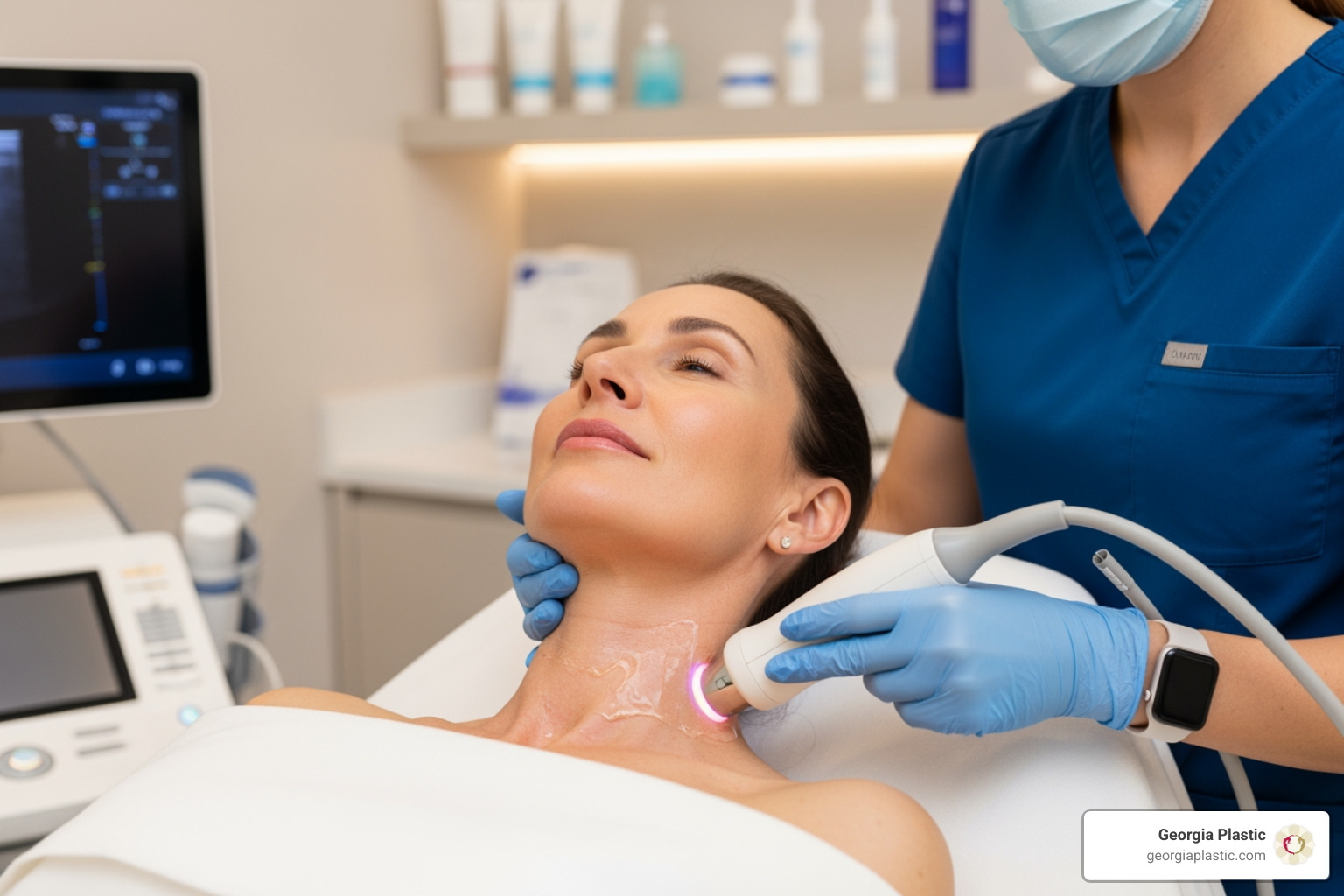
Energy-based devices are at the forefront of non-surgical neck rejuvenation. They work by delivering controlled energy into the deeper layers of the skin, stimulating the body’s natural healing response and, crucially, boosting collagen production.
Ultrasound (Ultherapy): This treatment uses focused ultrasound energy to send heat deep into the skin, specifically targeting the foundational layers without disturbing the surface. The heat initiates neocollagenesis, meaning new collagen production, which gradually lifts and tightens the skin over several months. We offer Ultherapy as a non-surgical lifting solution, and you can learn more about how it helps to Get a Non-Surgical Facelift with Ultherapy and Stimulate Natural Collagen Production with Ultherapy. Results typically appear within 2 to 6 months after a single treatment.
Radiofrequency (RF) Microneedling: This innovative approach combines microneedling with radiofrequency energy. Tiny needles create micro-injuries in the skin, while RF energy is delivered through these needles, heating the underlying tissue. This dual action stimulates a powerful collagen and elastin remodeling process, leading to improved skin texture, firmness, and a reduction in fine lines and wrinkles. RF treatments can provide some immediate tightening, with best results seen in about 6 months, potentially lasting 2 to 3 years with proper skincare.
Laser Skin Resurfacing: Certain lasers can also be used to tighten loose neck skin. These treatments send heat deep into the skin without wounding the top layer, promoting collagen production and improving skin laxity. Laser resurfacing can also address issues like fine lines, wrinkles, and dark spots, with results visible within 2 weeks after healing. However, it often requires 3 to 5 treatments, with full results appearing between 2 and 6 months after the last session, and typically involves some downtime (around 5 to 7 days).
Injectable Treatments for a Smoother Neck
Injectable treatments provide targeted solutions for specific concerns related to loose neck skin, offering impressive results without surgery.
Botox for Platysmal Bands: As the platysma muscles in the neck weaken or separate over time, they can form prominent vertical bands. These bands contribute to the “turkey neck” appearance. Botox (botulinum toxin) injections work by temporarily relaxing these muscles, smoothing out the bands and creating a more refined neck contour. As Dr. Newman explains, “Applying Botox helps tone them down and can be very effective.” Results typically last about 3 to 4 months. For more details on this treatment, explore More about Botox injections.
Deoxycholic Acid for Submental Fat: For those whose primary concern is a “double chin” caused by excess fat under the chin, deoxycholic acid injections, such as Kybella®, offer a non-surgical solution. This injectable treatment works by dissolving fat cells, which are then naturally cleared away by the body. Multiple sessions may be required to achieve optimal results, but once the fat cells are destroyed, they cannot store or accumulate fat again, leading to long-lasting improvement in the submental area.
Dermal Fillers for Volume Restoration: While not directly used to tighten loose neck skin, dermal fillers can sometimes be used strategically to restore lost volume in the jawline and chin area. By enhancing the structural support of the lower face, fillers can indirectly improve the appearance of the neck, creating a more defined transition from the jaw to the neck. This approach is more about contouring and defining rather than direct skin tightening.
Surgical Procedures for Significant Neck Contouring
For individuals with significant loose neck skin, pronounced platysmal bands, or substantial fat deposits that non-surgical methods cannot adequately address, surgical interventions often provide the most dramatic and long-lasting improvements. These procedures are designed to physically remove excess skin, tighten underlying muscles, and redefine the neck and jawline contours.
The Neck Lift (Platysmaplasty)
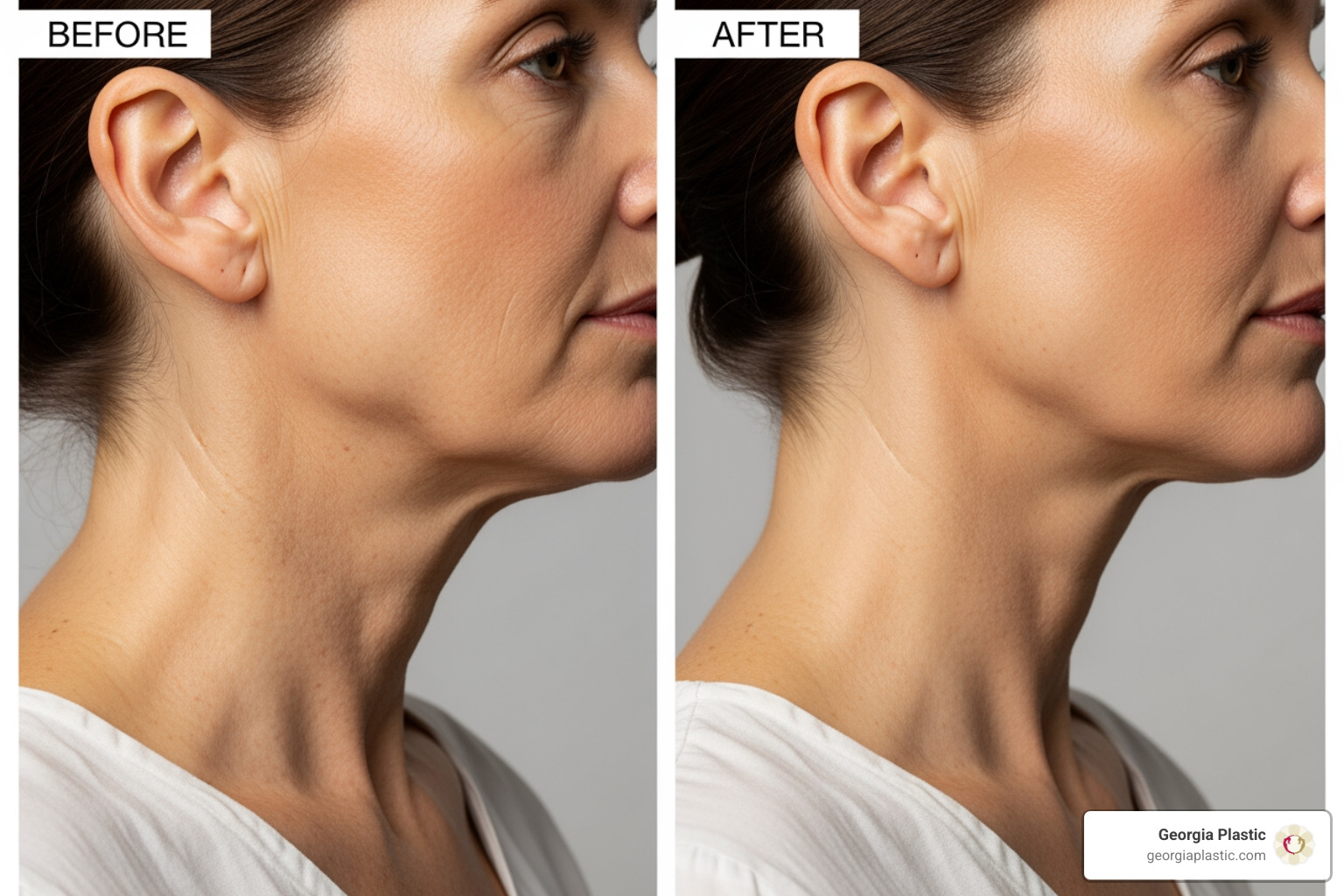
A neck lift, technically known as platysmaplasty, is considered the gold standard for comprehensively addressing loose neck skin and underlying muscle laxity. This procedure involves removing excess skin, tightening the platysma muscles, and often repositioning fat and other tissues to create a smoother, more youthful neck profile and a sharper jawline.
During a neck lift, incisions are typically made discreetly behind the ears and/or under the chin. Through these incisions, the plastic surgeon can access and tighten the platysma muscles, which often separate or weaken with age, creating vertical bands. Excess skin is then carefully trimmed, and the remaining skin is carefully redraped to achieve a natural, taut appearance. Dr. Newman notes that “facelifts and neck lifts go by many aliases, depend[ing] on the exact approach.”
Ideal candidates for a neck lift are those with significant sagging skin that extends from the chin to the shoulders, prominent platysmal bands, and a desire for a more defined jawline. Candidates should also be in good overall health, non-smokers, and have realistic expectations about the surgical outcomes. At Georgia Plastic, we specialize in advanced neck lift techniques to deliver refined and natural-looking results. You can Learn about Neck Lift surgery in Atlanta to see if it’s the right option for you.
Neck Liposuction for Excess Fat
Neck liposuction is a surgical procedure primarily designed to remove localized pockets of excess fat from under the chin and along the jawline. This is an excellent option for individuals whose primary concern is a “double chin” rather than significant loose neck skin.
For neck liposuction to be effective and yield good results, the patient must have good skin elasticity. If the skin has lost its ability to retract, simply removing the fat will not address the laxity and may even exacerbate the appearance of sagging. In such cases, neck liposuction is often combined with a neck lift or a skin-tightening procedure to ensure a smooth, contoured outcome. For a detailed comparison of these approaches, you can read our guide on Neck Lift vs. Neck Liposuction for Tightening Skin.
Facelifts for Comprehensive Rejuvenation
Often, loose neck skin doesn’t occur in isolation; it’s frequently accompanied by sagging in the lower face, such as jowls and marionette lines. In these instances, a facelift offers a comprehensive solution by addressing both the face and neck as a single cosmetic unit.
A facelift (rhytidectomy) involves lifting and tightening the skin and underlying tissues of the face and neck. During the procedure, excess skin is removed, and the deeper facial and neck muscles are repositioned to create a smoother, more youthful contour. This can dramatically improve the appearance of jowls, redefine the jawline, and eliminate severe loose neck skin.
We offer various types of facelifts, including mini facelifts and full facelifts, custom to individual needs. A mini facelift typically focuses on the lower face and jawline, offering a less invasive option for earlier signs of aging. For more extensive concerns, a full facelift can provide a more dramatic and long-lasting rejuvenation of the entire face and neck. You can Explore Facelift Procedures & Benefits and learn What happens in a mini facelift? to understand the differences and determine the best approach for your goals.
Lifestyle, Prevention, and At-Home Care
While advanced medical treatments offer powerful solutions for loose neck skin, maintaining a healthy lifestyle, incorporating preventative measures, and utilizing targeted at-home skincare can significantly impact your neck’s appearance and the longevity of any treatments. Think of it as a daily commitment to keeping your neck looking its best.
Skincare and Topical Treatments for Loose Neck Skin
A consistent and targeted skincare routine is your first line of defense against loose neck skin. The delicate skin on the neck can often be thinner and more sensitive than facial skin, making it crucial to use the right products.
Daily Sunscreen (SPF 30+): This is non-negotiable. Sun damage is a primary accelerator of aging, breaking down collagen and elastin. Applying a broad-spectrum sunscreen with an SPF of 30 or higher to your neck and décolletage every single day, regardless of weather, is paramount. Many of us forget this vital area, leading to premature aging.
Retinoids: Derivatives of Vitamin A, retinoids (like retinol) are powerful ingredients known to stimulate collagen production and promote healthy skin cell turnover. When using retinoids on the neck, it’s often best to start with a lower strength and gradually increase frequency, as the neck can be more susceptible to dryness and irritation due to fewer oil glands.
Antioxidants (Vitamin C, E, Ferulic Acid): These ingredients protect your skin from environmental damage caused by free radicals and oxidative stress. Topical antioxidants, such as Vitamin C serums, can help brighten skin, improve tone, and support collagen health.
Hyaluronic Acid: This humectant is a hydration powerhouse. It attracts and holds moisture in the skin, making it appear plumper and smoother, which can temporarily reduce the appearance of fine lines and crepiness. As one dermatologist illustrates, “When used topically, hyaluronic acid can make your skin more hydrated — like a grape rather than a raisin.”
Research supports the efficacy of certain topical treatments. For example, a 2016 study showed that participants continuously improved neck appearances over a 16-week period using a cosmetic cream containing N-acetyl glucosamine. Another 2023 study examined a topical treatment with retinol, tripeptide, and glaucine, finding improvements in neck wrinkles and skin texture.
The Role of Diet, Hydration, and Exercise
What we put into our bodies and how we move them also impacts the appearance of our neck.
Nutrient-Rich Foods: A diet rich in antioxidants, healthy fats (like omega-3s), and lean proteins provides the building blocks for healthy skin. Foods high in Vitamin C, for instance, are crucial for collagen synthesis. Berries, leafy greens, nuts, and seafood are all excellent choices.
Importance of Hydration: Staying well-hydrated is fundamental for overall skin health. Drinking adequate water daily helps keep skin supple, contributing to a natural radiance and lessening the early signs of aging. We recommend aiming for around eight glasses of water per day.
Neck Exercises: While exercises alone cannot eliminate significant loose neck skin or excess fat, they can help strengthen the underlying neck muscles. Stronger muscles can provide better support to the skin and improve overall tone. Exercises like chin tucks and neck lifts, or even making chewing motions to mobilize neck muscles, can contribute to a more toned appearance. However, it’s important to set realistic expectations; as research points out, “neck exercises may help improve tone and elasticity, but they won’t necessarily remove saggy or excess skin.” A 2025 study on intensive face yoga showed positive effects on facial muscle tone, stiffness, and elasticity in middle-aged women, suggesting some benefits for muscle integrity.
Frequently Asked Questions about Treating Loose Neck Skin
When considering solutions for loose neck skin, many questions arise about prevention, safety, and the longevity of results. We’re here to provide clear, expert answers.
How can I prevent loose neck skin?
While some degree of loose neck skin is a natural part of aging, there are several proactive steps you can take to delay its onset and minimize its severity:
- Sun Protection: Consistent daily use of broad-spectrum sunscreen (SPF 30+) on your neck and décolletage is crucial to prevent UV damage that breaks down collagen and elastin.
- Maintaining a Stable Weight: Avoid drastic weight fluctuations, as rapid weight gain or loss can stretch the skin and reduce its ability to retract.
- Good Posture: Be mindful of “tech neck” – the constant downward gaze at devices. Adjust your screens and practice good posture to prevent horizontal neck lines and premature sagging.
- Consistent Skincare Routine: Incorporate retinoids, antioxidants, and hydrating ingredients into your daily neck care routine.
- Avoiding Smoking: Smoking severely damages collagen and elastin, accelerating skin aging. Quitting can significantly improve your skin’s health.
Are treatments for loose neck skin safe?
The safety of treatments for loose neck skin largely depends on the type of procedure and the expertise of the practitioner.
- Non-Surgical Treatments: Most non-surgical options like Ultherapy, radiofrequency, lasers, and injectables are generally safe with minimal side effects. Common temporary side effects include redness, swelling, bruising, or tingling. Serious complications are rare, especially when performed by a qualified professional.
- Surgical Treatments: Surgical procedures like neck lifts and facelifts involve more significant risks, as with any surgery. These can include bleeding, infection, scarring, nerve injury, or asymmetry. However, these risks are greatly mitigated by choosing a renowned and experienced, board-certified plastic surgeon. Dr. Stanley Okoro and our team at Georgia Plastic prioritize patient safety and meticulous technique to ensure the best possible outcomes. It’s always essential to have a thorough discussion about potential Risks and Benefits overview with your medical professional before proceeding with any treatment.
How long do the results of neck tightening treatments last?
The longevity of results varies significantly depending on the chosen treatment:
- Injectables (Botox, Kybella): Results are temporary. Botox typically lasts 3-4 months, while Kybella’s fat-dissolving effects are permanent for the treated fat cells, but further fat accumulation can occur.
- Energy-Based Devices (Ultherapy, RF, Laser): These treatments stimulate collagen, and results appear gradually. While improvements can last 12-18 months or even up to 2-3 years with RF, maintenance sessions are often recommended to sustain the benefits as natural aging continues.
- Surgical Procedures (Neck Lift, Facelift): Surgical results are the most dramatic and long-lasting, often providing improvements for 10-15 years or more. However, surgery doesn’t stop the aging process; your skin will continue to age naturally, but from a more refreshd starting point.
Ongoing maintenance and a diligent skincare routine are key to preserving the results of any treatment for loose neck skin.
Your Path to a More Youthful Neck Profile
We’ve explored the many facets of loose neck skin, from its primary causes like aging, genetics, and environmental factors to the impact of weight fluctuations, including the recent “Ozempic neck” phenomenon. We’ve also digd into the diverse range of solutions available, from non-surgical options that stimulate collagen and address fat or muscle bands, to advanced surgical procedures that offer dramatic and long-lasting contouring.
Understanding that each individual’s neck aging is unique, with varying degrees of skin laxity, fat accumulation, and muscle involvement, underscores the importance of a personalized approach. What works wonderfully for one person might not be the ideal solution for another.
This is where expert guidance becomes invaluable. At Georgia Plastic, led by Dr. Stanley Okoro, we believe in providing comprehensive, personalized care that delivers natural-looking results while prioritizing your safety and well-being. Our approach considers your specific anatomy, aesthetic goals, and lifestyle to craft a treatment plan that’s just right for you. We aim to improve your unique features, restoring a refreshed and more youthful appearance without looking “overdone.”
If you’re ready to explore solutions for your loose neck skin and achieve a more defined, youthful neck profile, we invite you to take the next step. Our team is here to answer your questions and guide you through the options.
Schedule a consultation for your personalized facial rejuvenation plan today and find how we can help you regain confidence in your appearance.


