
What You Need to Know About Eyelid Surgery
Eyelid surgery — also called blepharoplasty — is a surgical procedure that removes excess skin, fat, and muscle from the upper and lower eyelids to restore a more youthful, refreshed appearance.
Here’s a quick overview of what to expect:
| Topic | Key Facts |
|---|---|
| What it treats | Sagging skin, under-eye bags, puffiness, hooded lids, vision obstruction |
| Procedure time | 45 minutes to 2 hours |
| Anesthesia | Local, twilight sedation, or general |
| Recovery | Back to work in 7-10 days; full recovery in 2-4 weeks |
| Results last | 10 to 15 years |
| Insurance | May be covered if vision is impaired |
| Cost | Starts at several thousand dollars |
Your eyelids are often the first facial feature to show signs of aging. The skin there is the thinnest on your entire body, which means it stretches and sags earlier than anywhere else. Over time, this can make you look tired, sad, or older than you feel — even when you’re well-rested.
Some people also develop sagging so severe it actually blocks their peripheral vision. In those cases, this isn’t just a cosmetic concern — it’s a medical one.
Whether you’re bothered by heavy upper lids, puffy bags under your eyes, or both, eyelid surgery offers a proven, long-lasting solution.
I’m Dr. Stanley Okoro, a double board-certified plastic surgeon and founder of Georgia Plastic and Reconstructive Surgery, with extensive experience performing eyelid surgery as part of comprehensive facial rejuvenation. In this guide, I’ll walk you through everything you need to make a confident, informed decision.
What is Blepharoplasty?
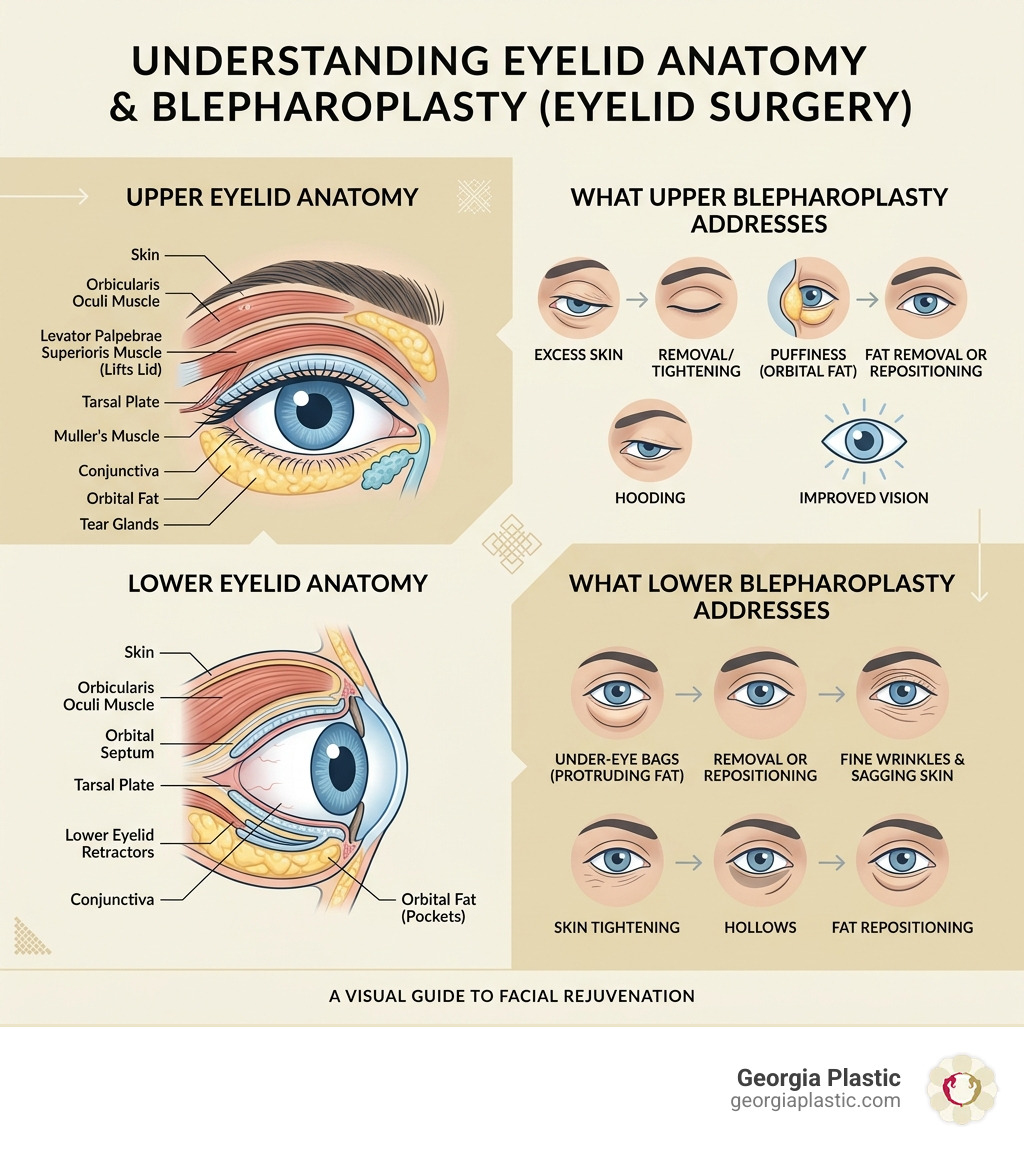
In our practice, we often describe eyelid surgery (blepharoplasty) as a way to “open up” the face. As we approach April 2026, it remains one of the most sought-after procedures because the results are both dramatic and natural-looking. Essentially, the surgery involves the precise removal or repositioning of skin, muscle, and fat.
The procedure can be performed on the upper lids, the lower lids, or both simultaneously. According to the American Society of Plastic Surgeons, blepharoplasty is designed to improve the appearance of the eyelids and the area surrounding the eyes. It addresses:
- Loose or sagging skin that creates folds or disturbs the natural contour of the upper eyelid.
- Fatty deposits that appear as puffiness or “bags.”
- Drooping lower eyelids that may reveal the white below the iris.
- Excess skin and fine wrinkles of the lower eyelid.
Different patients have different needs. Some may only require an upper blepharoplasty to fix “hooded” eyes, while others focus on the lower lids to eliminate deep hollows or bags. For many, a combination of both provides the most balanced rejuvenation. You can learn more about the different approaches on our eyelid surgery types page.
Functional vs. Cosmetic Eyelid Surgery
One of the most common questions we hear is whether eyelid surgery is purely for looks. The answer is: not always. While many patients seek us out to look more rested and alert, others come to us because their eyelids are literally getting in the way of their life.
When the upper eyelid skin becomes extremely heavy, it can sag over the eyelashes and into the field of vision. This is known as “hooding.” If you find yourself constantly lifting your eyebrows or tilting your head back just to see clearly, you may have a functional impairment. In these instances, a visual field test can prove that the surgery is medically necessary.
The good news? Health insurers often cover blepharoplasty when it is performed to correct visual impairment. If you’re doing it strictly to look younger, it’s considered cosmetic and won’t be covered, but the functional benefits are a major “win” for those who qualify.
Who is a Good Candidate for the Procedure?
Most of our patients are 35 years or older, but if droopy or puffy eyelids run in your family, you might decide to have the surgery sooner. We’ve even seen patients in their 20s who struggle with hereditary “bags” under their eyes.
To be a good candidate for eyelid surgery, we look for a few key factors:
- Good Physical Health: You should be generally healthy without life-threatening illnesses or medical conditions that can impair healing.
- Non-Smokers: Smoking significantly slows down the healing process and increases the risk of complications. We ask all our patients to quit well in advance of surgery.
- Realistic Expectations: While eyelid surgery can take 10 to 15 years off your appearance, it won’t stop the aging process entirely. It’s about looking like the best version of you, not a different person.
- No Serious Eye Conditions: Conditions like severe dry eye, glaucoma, or a detached retina need to be addressed or cleared by an ophthalmologist before proceeding.
The Procedure: How Eyelid Surgery is Performed
At Georgia Plastic, we perform eyelid surgery as an outpatient procedure. This means you’ll be able to go home the same day. The surgery typically lasts between 45 minutes and 2 hours, depending on whether we are treating two eyelids or four.
One of the biggest concerns patients have is about being “put under.” We offer several anesthesia options to ensure your comfort:
- Local Anesthesia: We numb the area around the eyes. You’ll be awake but won’t feel pain.
- Twilight Sedation: You are relaxed and sleepy but not fully unconscious.
- General Anesthesia: You are completely asleep. This is often used if we are combining the eyelid lift with other procedures like a facelift.
Upper Blepharoplasty Techniques
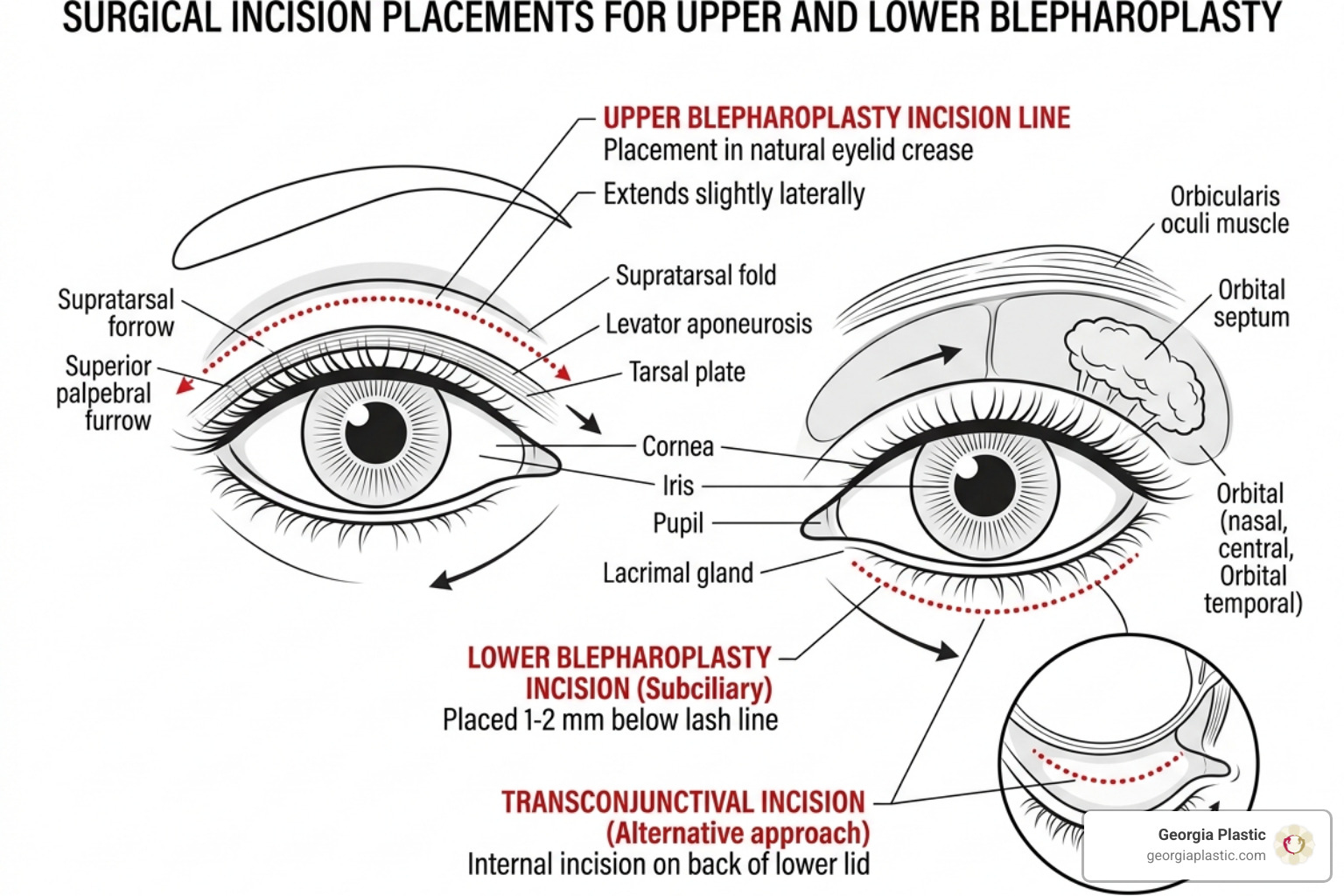
During an upper blepharoplasty, we make an incision within the natural crease of the eyelid. This is a strategic choice; by placing the incision in the fold, the resulting scar is virtually invisible once healed.
Once the incision is made, we:
- Remove excess skin that causes sagging.
- Tighten the underlying muscle if necessary.
- Remove or reposition fat deposits that cause puffiness.
In some cases, if the eyelid itself is drooping too low (a condition called ptosis), we may also perform a ptosis repair to strengthen the muscle that lifts the eyelid. This ensures your eyes don’t just look younger, but also more “open.”
Lower Blepharoplasty and Under-Eye Bags
Lower eyelid surgery is slightly more complex because it deals with the delicate area where the cheek meets the eye. There are two primary ways we approach this:
- The Transconjunctival Incision: We make the incision inside the lower eyelid. This is ideal for younger patients or those who only need fat removed or redistributed, as it leaves no external scar.
- The Subciliary Incision: We make a tiny cut just below the lower lash line. This allows us to remove excess skin and tighten the muscle, which is often necessary for older patients.
A modern technique we favor at Georgia Plastic is “fat repositioning.” Instead of just cutting out the fat (which can sometimes leave the eyes looking hollow or “sunken”), we move that fat into the “tear trough” (the hollow area under the eye). This smooths out the transition between the eye and the cheek, erasing dark circles and creating a youthful contour. This is particularly effective for male patients who want a refreshed look without looking “done.”
Recovery Timeline and Post-Operative Care
Think of recovering from eyelid surgery like recovering from a twisted ankle — there’s going to be some swelling and bruising, and the best medicine is rest and ice.

Most patients are pleasantly surprised by how little pain is actually involved. While you might feel some tightness or soreness, “pain” is rarely the primary complaint. Here is what you can expect on the recovery timeline:
- Days 1-3: This is the peak of swelling and bruising. Your eyes may feel tight, and your vision might be slightly blurry due to the lubricating ointments we provide.
- Days 7-10: Most patients feel comfortable enough to return to work and social activities. Bruising can usually be covered with a little concealer at this point.
- Weeks 2-4: Swelling continues to subside. You can usually resume more vigorous exercise.
- 6 Months+: The final results are fully settled, and the scars have faded into thin, nearly invisible white lines.
Immediate Aftercare Tips
To ensure a smooth healing process, we provide every patient with a detailed aftercare plan. The “Big Three” rules are:
- Ice, Ice, Ice: Use cold compresses for 10–15 minutes every hour for the first 48 hours. This is the single best way to minimize swelling.
- Stay Elevated: Sleep with your head propped up on two or three pillows for the first week. Keeping your head above your heart helps fluid drain away from the face.
- Ointment and Drops: We will prescribe an antibiotic ointment to keep the incisions moist and eye drops to prevent dryness.
We also recommend avoiding contact lenses for about two weeks and wearing dark sunglasses whenever you go outside to protect your eyes from wind and sun.
Long-Term Results and Maintenance
How long does eyelid surgery last? For most, the results are very long-lasting — typically 10 to 15 years. While the upper lids may eventually start to sag again as the skin continues to age, lower blepharoplasty is often a “once-in-a-lifetime” procedure because the fat bags we remove rarely return.
To keep your results looking fresh, we recommend:
- Sun Protection: UV rays break down collagen. Wear sunscreen and sunglasses religiously.
- Quality Skincare: Use medical-grade eye creams to keep the skin hydrated and elastic.
- Healthy Lifestyle: Proper nutrition and avoiding smoking will help your skin maintain its quality for much longer.
You can see the long-term impact of these procedures in our blepharoplasty gallery.
Risks, Costs, and Preparation
Like any surgery, eyelid surgery comes with risks. While complications are rare when the procedure is performed by a board-certified surgeon, it’s important to be aware of them. Potential risks include:
- Temporary dry eyes or irritation.
- Difficulty closing your eyes (usually temporary during the swelling phase).
- Noticeable scarring (though we take great care to hide incisions).
- Infection or bleeding.
- Asymmetry (where one eye looks slightly different from the other).
According to the American Academy of Ophthalmology, choosing a surgeon who specializes in the delicate structures of the eye is the best way to minimize these risks.
Upper vs. Lower Blepharoplasty Comparison
| Feature | Upper Blepharoplasty | Lower Blepharoplasty |
|---|---|---|
| Primary Goal | Remove “hooding,” improve vision | Remove “bags,” smooth hollows |
| Incision Site | Natural eyelid crease | Inside lid or below lashes |
| Commonly Combined With | Brow lift | Fat grafting, laser resurfacing |
| Recovery Focus | Reducing lid heaviness | Managing under-eye swelling |
Preparing for Eyelid Surgery
Preparation begins weeks before your actual surgery date. During your consultation at Georgia Plastic, we will:
- Review Medical History: We need to know about any previous surgeries and current conditions like dry eye or allergies.
- Physical Exam: This includes a thorough eye exam and potentially a vision test.
- Photography: We take photos from various angles to help with surgical planning and to provide a “before” for your records.
Actionable Steps for Patients:
- Stop Blood Thinners: You’ll need to stop taking aspirin, ibuprofen, and certain herbal supplements that can increase bleeding at least two weeks before surgery.
- Quit Smoking: As mentioned, smoking is a no-go for surgery.
- Arrange a Ride: You will not be able to drive yourself home after the procedure.
- Prep Your “Nest”: Have your ice packs, pillows, and audiobooks ready so you can rest without stress.
Combining Procedures for Full Rejuvenation
Sometimes, what a patient perceives as “heavy eyelids” is actually a sagging brow. In these cases, an eyelid surgery alone might not achieve the desired result. We often recommend combining blepharoplasty with a brow lift to pull the forehead skin upward and truly open the eye area.
Other popular combinations include:
- Facelift: To address sagging in the lower face and neck alongside the eyes.
- Botox/Fillers: To treat “crow’s feet” or add volume to the temples.
- Laser Resurfacing: To improve the texture and fine lines of the skin around the eyes that surgery alone can’t fix.
Frequently Asked Questions
How long do the results last?
Upper eyelid surgery typically lasts 10 to 15 years. Lower eyelid surgery is usually permanent, as the fat pads removed do not typically grow back. However, your face will continue to age naturally.
Is the procedure covered by insurance?
If a visual field test proves that your upper eyelids are obstructing your vision, insurance may cover the cost of the upper blepharoplasty. Lower blepharoplasty is almost always considered cosmetic and is not covered.
When can I return to work?
Most patients return to desk jobs within 7 to 10 days. If your job involves heavy lifting or strenuous activity, you may need to wait 2 to 3 weeks.
Will I have visible scars?
Scars are a natural part of surgery, but we are experts at hiding them. Upper lid scars are tucked into the natural fold, and lower lid scars are either inside the eyelid or hidden right against the lash line. Most people will never know you had surgery once you are fully healed.
Does eyelid surgery hurt?
You will be under anesthesia during the procedure, so you won’t feel anything. Afterward, most patients describe the feeling as “tight” or “sore” rather than painful. We provide medication to manage any discomfort.
Conclusion
At Georgia Plastic & Reconstructive Surgery, we believe that your eyes should reflect how you feel on the inside. If you’re tired of looking tired, or if sagging skin is impacting your vision, eyelid surgery can be a life-changing procedure.
Led by board-certified Dr. Okoro, our team is dedicated to providing personalized care that prioritizes your safety and delivers natural-looking results. We don’t want you to look like you’ve “had work done”; we want you to look refreshed, alert, and vibrant.
If you’re ready to take the next step toward a more youthful appearance, we invite you to schedule a consultation at our Atlanta or Alpharetta offices. Let us help you see the world — and yourself — more clearly.
For more information or to book your appointment, visit our eyelid surgery service page.


