
Why Fat Apron Removal Matters for Your Health and Confidence
Fat apron removal is a surgical procedure that eliminates the hanging excess skin and fat from the lower abdomen, medically known as a pannus or apron belly. This condition commonly develops after significant weight loss, pregnancy, or bariatric surgery.
Quick Facts About Fat Apron Removal:
- Primary Procedure: Panniculectomy removes excess skin and fat without tightening muscles
- Medical Benefits: Eliminates rashes, infections, mobility issues, and hygiene problems
- Recovery Time: 2-4 weeks off work, 6 weeks before resuming physical activity
- Candidacy Requirements: Stable weight for 6+ months, non-smoker, good overall health
- Insurance Coverage: May be covered if medically necessary (chronic infections, mobility impairment)
- Cost Range: $8,000-$15,000 before insurance
- Results: Permanent with maintained weight stability
The pannus isn’t just an aesthetic concern. When skin folds hang over your lower abdomen, thighs, or genitals, they create a breeding ground for bacteria and fungal growth. Many patients experience chronic rashes, painful skin irritation, and recurrent infections that resist medical treatment. The weight of excess tissue can also limit your ability to walk comfortably, exercise, or perform daily activities.
Beyond the physical discomfort, living with an apron belly affects self-confidence and quality of life. After working hard to lose weight—whether through diet, exercise, or bariatric surgery—you deserve to feel comfortable in your body. The stretched skin simply cannot “bounce back” on its own once elasticity is lost.
As Dr. Stanley Okoro, a double board-certified plastic surgeon, I’ve helped hundreds of patients through panniculectomy and body contouring procedures, restoring both function and confidence after massive weight loss. My approach to fat apron removal prioritizes patient safety while achieving natural-looking results that enhance your unique features.

Understanding the Fat Apron Removal Procedure
When we talk about fat apron removal, we are usually referring to a surgical procedure called a panniculectomy. While it sounds like a mouthful, the goal is straightforward: removing the “pannus,” which is that apron-like flap of skin and fat that hangs down over the pubic area.
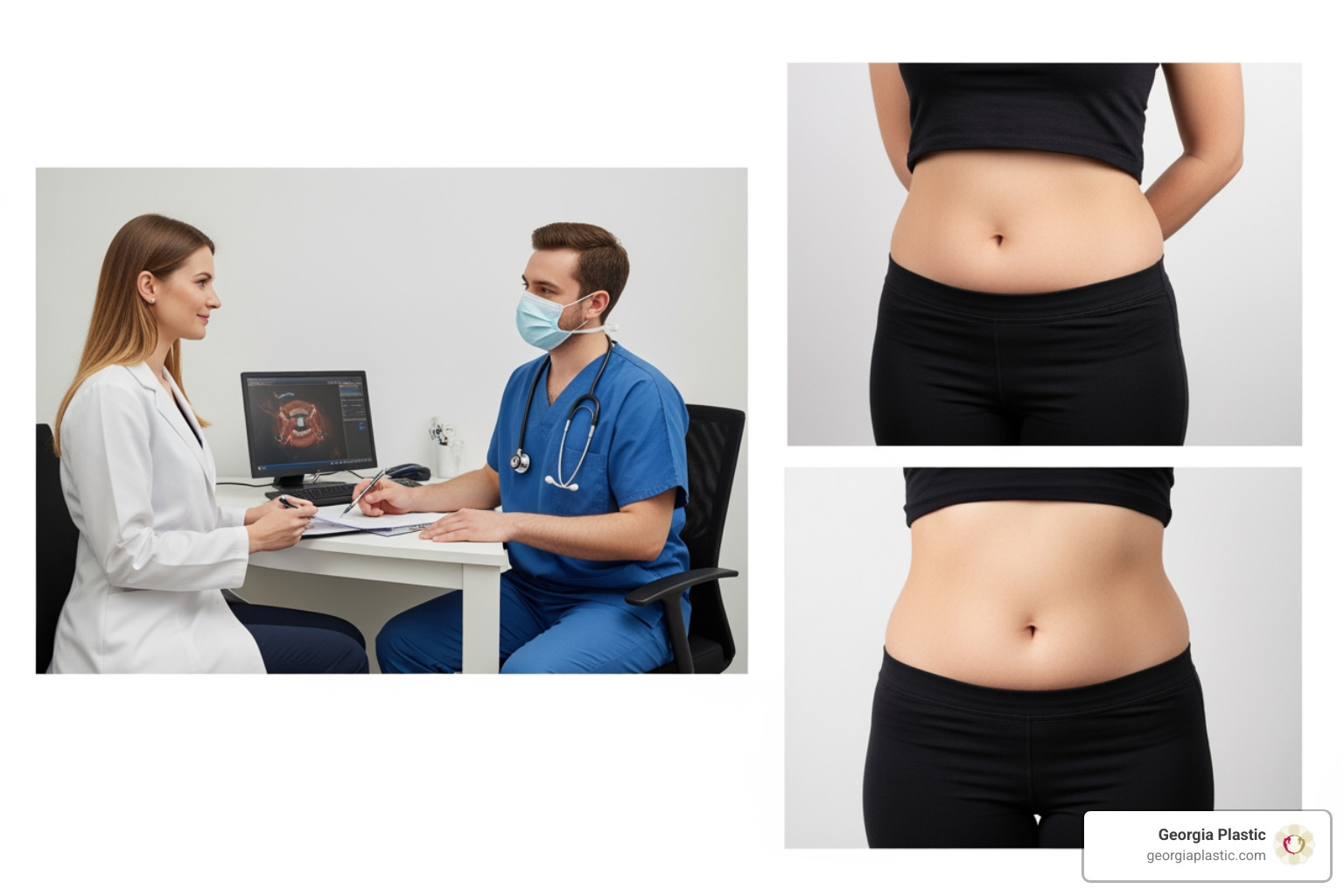
Unlike purely cosmetic surgeries, a panniculectomy is often classified as reconstructive surgery. Its primary purpose is to provide functional relief. For many of our patients, this isn’t about fitting into a smaller swimsuit—it’s about being able to walk without chafing, clean themselves properly, and live without the constant threat of skin infections.
According to the Panniculectomy: MedlinePlus Medical Encyclopedia, the procedure involves removing the overhanging skin “en bloc,” meaning in one large piece. This is a major operation, but for those struggling with a large abdominal panniculus, the relief is often life-changing. If you want to dive deeper into the technical aspects, you can find more info about panniculectomy on our dedicated service page.
Medical Necessity vs. Cosmetic Goals
One of the most frequent questions we hear at Georgia Plastic is whether this procedure is “just for looks.” The answer is a resounding no. While the aesthetic improvement is a wonderful “side effect,” the medical reasons for fat apron removal are significant.
The presence of a heavy pannus leads to several clinical issues:
- Intertrigo: This is a fancy medical term for a rash that occurs in skin folds. Because the area stays moist and warm, it becomes a haven for yeast and bacteria.
- Skin Maceration and Ulceration: Constant moisture can cause the skin to break down, leading to open sores or ulcers that are difficult to heal.
- Hygiene and Odor: Even with the best intentions, it is physically difficult to keep the skin under a large apron belly clean and dry.
- Mobility and Back Strain: Carrying 10, 15, or even 20 pounds of hanging tissue puts immense pressure on the lower back and can make walking or exercising nearly impossible.
Research titled Functional panniculectomy vs cosmetic abdominoplasty highlights that while both procedures improve quality of life, the panniculectomy focuses on resolving these chronic health hurdles.
Candidacy for Fat Apron Removal
Who is the right fit for this surgery? We look for specific criteria to ensure your safety and the longevity of your results.
First and foremost, you should have a stable weight. We generally recommend that patients maintain their goal weight for at least six months (and often 18 months if you’ve had bariatric surgery). If you are still actively losing weight, the skin will only continue to sag, which might require a second surgery later.
Other candidacy factors include:
- Non-smoking status: Smoking severely impairs blood flow and wound healing. We require patients to quit well in advance of surgery.
- Overall Health: Conditions like uncontrolled diabetes or heart disease can increase the risk of complications.
- Realistic Expectations: This is a reconstructive procedure. While it removes the “apron,” it does not necessarily create a “six-pack” or a contoured waistline like a tummy tuck might.
If you are dealing with the aftermath of massive weight loss, you can treat excess skin with panniculectomy to regain your mobility and comfort.
Panniculectomy vs. Tummy Tuck: Key Differences
It is very common for patients to use these terms interchangeably, but in plastic surgery, they are quite different tools in our belt. Think of it this way: a panniculectomy is about removal, while a tummy tuck (abdominoplasty) is about restoration and contouring.
A panniculectomy focuses solely on the lower “apron.” It does not tighten the underlying abdominal muscles. A tummy tuck, however, involves muscle plication—where we sew the abdominal muscles back together if they have separated (diastasis recti). For many women after pregnancy, this muscle tightening is the key to getting rid of that “pooch” that won’t go away with sit-ups. You can find more info about tummy tucks to see which approach fits your goals.
The Role of Liposuction in Fat Apron Removal
Sometimes, removing the skin isn’t enough to get the smooth result a patient wants. This is where liposuction comes in. While a standard panniculectomy doesn’t usually include it, we often combine the two to address localized fat deposits on the hips or upper abdomen.
Using liposuction allows us to “sculpt” the surrounding areas, ensuring that the transition from the surgical site to the rest of your body looks natural. If you have good skin elasticity in certain areas but stubborn fat, we can tighten loose abdominal skin through a combination of excision and suction. This aesthetic refinement helps turn a functional surgery into a confidence-boosting transformation.
Addressing the Apron Belly with a Plus Size Tummy Tuck
For patients with a higher BMI who still want a contoured look, we offer what is often called a “plus size tummy tuck.” Traditional tummy tucks were once reserved for very thin patients, but modern techniques allow us to help a wider range of people.
This comprehensive approach addresses the loose skin tummy tuck needs of patients who have significant tissue in both the upper and lower abdomen. It involves extensive skin re-draping and can provide a more dramatic abdominal rejuvenation than a simple panniculectomy alone.
Preparing for Surgery and the Procedure Steps
Preparation is the foundation of a successful surgery. Because fat apron removal is a major procedure, we leave no stone unturned in our pre-operative process.
The surgery is performed under general anesthesia and typically takes between 3 to 4 hours. During the procedure, we make a horizontal incision, usually from hip to hip, hidden as low as possible near the pubic line. For very large aprons, we may use a “fleur-de-lis” pattern, which includes a vertical incision to remove excess skin from the sides as well.
One technical detail we focus on is Scarpa fascia preservation. Research suggests that by leaving this deep layer of connective tissue intact, we can significantly reduce the risk of fluid buildup (seromas) after surgery. Once the excess tissue is removed “en bloc,” we carefully place surgical drains to help manage fluid during the initial healing phase.
Pre-Operative Requirements
Before you head to the operating room, there are several “must-dos”:
- Smoking Cessation: You must be nicotine-free for at least 4-6 weeks before and after surgery.
- Medication Review: Certain supplements and blood thinners (like aspirin or ibuprofen) must be stopped to prevent excessive bleeding.
- Medical Clearance: We often require a “thumbs up” from your primary care doctor or bariatric surgeon.
- Lab Tests: We check your blood counts and organ function to ensure your body is ready for anesthesia.
Understanding what does a panniculectomy entail before your surgery day helps reduce anxiety and ensures you have your home recovery station ready to go.
Surgical Technique and Incision Placement
The goal of our surgical technique is to maximize the amount of skin removed while minimizing the visibility of the scar. The horizontal incision is placed so it can be hidden by most underwear or swimwear.
In some cases, the pannus is so large that the belly button (navel) must be repositioned. We carefully “re-home” the navel so it looks natural on your new, flatter stomach. For more academic details on the surgical steps, the NCBI Bookshelf on Panniculectomy provides a deep dive into the clinical methodology.
Recovery Timeline and Post-Operative Care
Recovery from fat apron removal is a marathon, not a sprint. You’ve spent months or years losing weight; now, you must give your body the time it needs to heal.
Recovery Milestones
- Days 1-2: Most patients spend at least one night in the hospital or a recovery center. You will be encouraged to take a few steps as soon as possible to prevent blood clots.
- Week 1: This is the most uncomfortable phase. You will likely walk with a slight “hunch” to avoid putting tension on your stitches. You’ll be wearing a compression garment (binder) 24/7.
- Week 2: Drains are typically removed once the fluid output drops. Most patients can return to light desk work at this point.
- Week 6: You can finally ditch the compression garment and resume more strenuous physical activity, like gym workouts.
- 6 Months to 2 Years: This is how long it takes for swelling to fully subside and for scars to begin their significant fading process.
For a detailed home care guide, we recommend reviewing Panniculectomy: What to Expect at Home (Search code: P185).
Managing Risks and Complications
No surgery is without risk. Studies on panniculectomy complications show that complication rates can vary, especially in patients who have had massive weight loss. Common issues include:
- Seroma/Hematoma: Fluid or blood collecting under the skin.
- Wound Dehiscence: Small areas of the incision “popping” open, which usually heal with proper wound care.
- Infection: Prevented with sterile technique and post-op antibiotics.
- Tissue Necrosis: Where a small area of skin doesn’t get enough blood supply and dies; this is why smoking is strictly forbidden!
We monitor you closely in the weeks following surgery to catch and treat any of these issues early.
Long-Term Results and Weight Stability
The results of fat apron removal are permanent—provided you stay at a stable weight. If you gain a significant amount of weight back, the remaining skin can stretch again, potentially recreating the apron.
We often see patients who combine this with other life milestones. For instance, some discuss the timing of hysterectomy and panniculectomy with their surgeons to address multiple health concerns in a single recovery period. While the aging process will continue to affect your skin elasticity, the bulk of the tissue removed will not return.
Frequently Asked Questions about Fat Apron Removal
Is the procedure covered by insurance?
This is the “million-dollar question.” Because a panniculectomy addresses medical issues like chronic rashes and mobility, it is more likely to be covered by insurance than a tummy tuck. However, you must provide extensive documentation. Most insurers require proof that you have tried medical treatments (like prescription creams) for at least three months without success. If you are seeking panniculectomy in Atlanta, we can help provide the necessary clinical notes for your insurance evaluation.
How much does the surgery cost?
If insurance does not cover the procedure, the out-of-pocket cost typically ranges from $8,000 to $15,000. This price varies based on the size of the pannus, the complexity of the surgery, and whether you are combining it with other procedures. This total usually includes:
- Surgeon’s fees
- Operating room/facility costs
- Anesthesia fees
- Post-operative garments and follow-up visits
We offer various financing options to help make the procedure accessible for our patients.
Can the apron belly return after surgery?
If you maintain your weight, the apron will not return. However, “lifestyle maintenance” is key. A weight gain of 20-30 pounds or more can put new stress on the abdominal skin. The surgery removes the existing excess, but it doesn’t prevent new fat from being stored if your calorie intake exceeds your burn.
Conclusion
At Georgia Plastic & Reconstructive Surgery, we believe that finishing your weight loss journey should be a celebration, not a struggle with hanging skin. Fat apron removal is about more than just a flatter stomach; it’s about hygiene, mobility, and the freedom to move through the world without discomfort.
Led by board-certified Dr. Okoro, our team is dedicated to providing personalized care that prioritizes your safety and delivers natural-looking results. Whether you are seeking a functional panniculectomy or a comprehensive body contouring plan, we are here to guide you every step of the way.
Ready to take the next step? Schedule a consultation with us today and let’s discuss how we can help you ditch the apron for good.


