
What You’ll Actually Pay: A Clear Look at Plastic Surgery Fees
Plastic surgery fees can range from a few hundred dollars for a non-surgical treatment to well over $30,000 for a complex surgical procedure — and most patients are surprised by how many line items make up the final bill.
Here’s a quick snapshot of average all-in costs for the most popular procedures in 2026:
| Procedure | Estimated Total Cost (All-In) |
|---|---|
| Botox / Neuromodulators | $400 – $800 |
| Hyaluronic Acid Fillers | $700 – $1,500 |
| Eyelid Surgery (Blepharoplasty) | $4,000 – $8,000 |
| Liposuction | $5,000 – $12,000 |
| Breast Augmentation | $6,500 – $12,000 |
| Brazilian Butt Lift (BBL) | $7,000 – $14,000 |
| Rhinoplasty | $7,000 – $15,000 |
| Tummy Tuck (Abdominoplasty) | $8,000 – $18,000 |
| Facelift | $12,000 – $30,000+ |
| Mommy Makeover | $15,000 – $30,000+ |
Note: These are estimated total costs including surgeon fee, anesthesia, and facility. Your personal quote will depend on your anatomy, location, and surgeon.
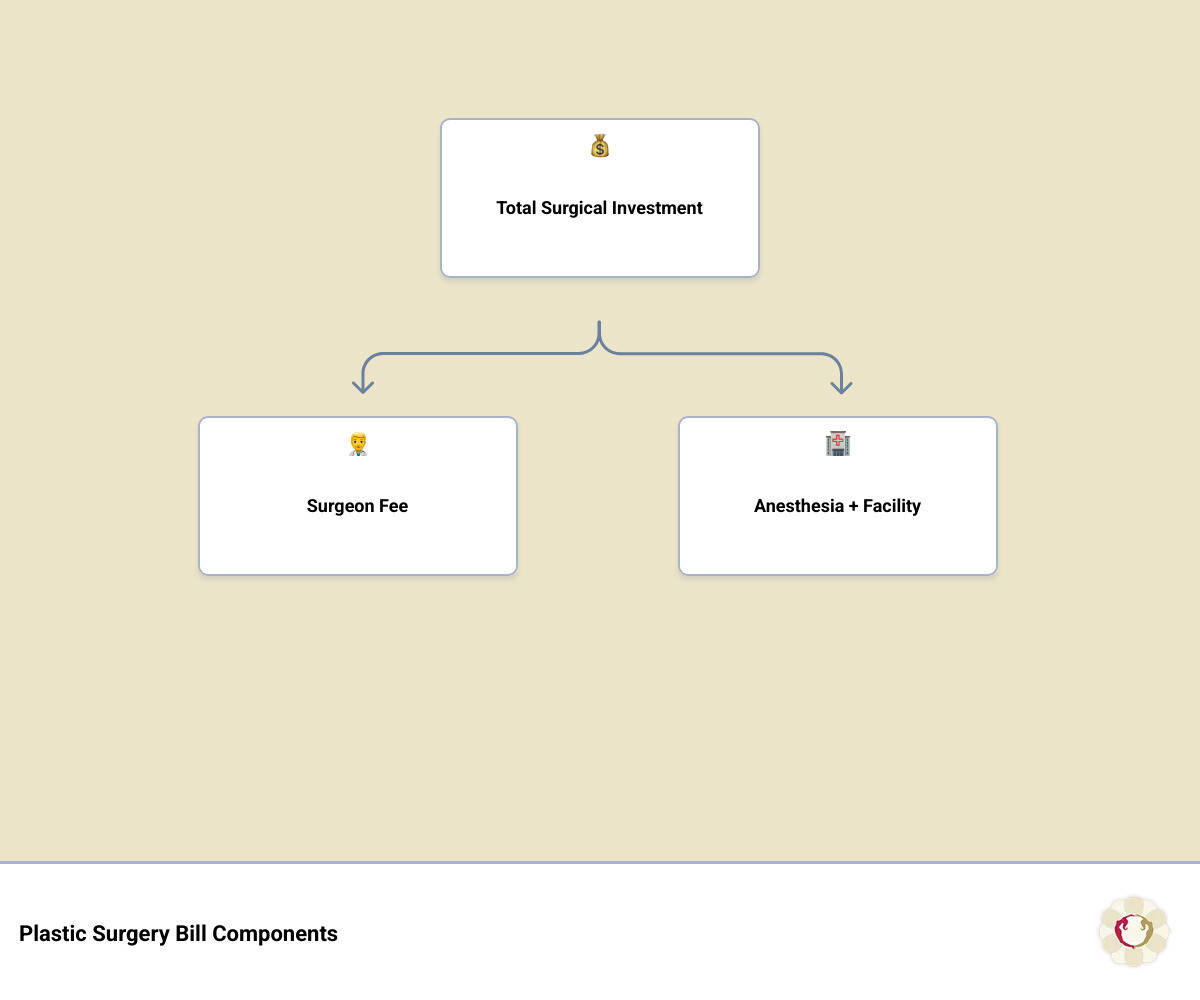
The surgeon’s fee is only one piece of the puzzle. Anesthesia, the operating room, post-op garments, and follow-up visits all add up — often by 30–50% on top of the base fee. Knowing what to expect before your consultation puts you in a much stronger position.
I’m Dr. Stanley Okoro, a double board-certified plastic surgeon and founder of Georgia Plastic and Reconstructive Surgery in Atlanta, where I’ve guided thousands of patients through the financial side of plastic surgery fees as part of their care journey. In this guide, I’ll break down every cost component so you can walk into any consultation fully prepared.
The National Landscape: Average Plastic Surgery Fees in 2026
As we navigate through May 2026, the landscape of plastic surgery fees has evolved significantly. While inflation has touched every corner of the economy, the aesthetic industry has also seen shifts driven by technological advancements and a higher demand for specialized techniques. When you look at a medical data chart today, you’ll notice that the “surgeon’s fee” reported by organizations like the American Society of Plastic Surgeons (ASPS) is often just the baseline.
In 2023, the average surgeon fee for a facelift was $11,395, but by 2026, most high-end practices in major metropolitan areas are seeing all-inclusive quotes that reach much higher. This evolution is partly due to the increased complexity of modern procedures—patients no longer just want a “tuck”; they want comprehensive rejuvenation.
To get a head start on your budgeting, tools like the Plastic surgery price calculator – ToolcR can provide a realistic ballpark based on your specific zip code and desired surgeon experience level. However, it is vital to distinguish between surgical and non-surgical investments.
Surgical vs. Non-Surgical Cost Comparison
| Treatment Category | Entry Level Cost | Maintenance Frequency | 5-Year Investment |
|---|---|---|---|
| Non-Surgical (Botox/Fillers) | $400 – $1,500 | Every 4-6 Months | $6,000 – $15,000 |
| Surgical (Facelift/Body Lift) | $12,000 – $25,000 | Once every 10-15 years | $12,000 – $25,000 |
As the table shows, while non-surgical options have a lower “sticker price,” the cumulative cost over five years can sometimes rival a one-time surgical intervention.
Average Costs for Body Contouring
Body contouring remains one of the most sought-after categories in our Atlanta practice. The plastic surgery fees for these procedures are heavily influenced by the “time in the OR.”
- Tummy Tuck (Abdominoplasty): This isn’t a one-size-fits-all procedure. A mini-tummy tuck will naturally cost less than a full abdominoplasty with muscle repair (rectus plication). Nationally, costs range from $8,000 to $18,000.
- Liposuction: We often see patients confused by “per area” pricing. Our Liposuction Cost 101 guide explains that while a single area might seem affordable, most patients require multiple zones for a cohesive look.
- Brazilian Butt Lift (BBL): This procedure involves two steps: liposuction and fat grafting. Because it’s essentially two surgeries in one, the fees reflect that complexity. You can find a deeper breakdown in our Guide to Brazilian Butt Lift Expenses.
- Mommy Makeover: This is the ultimate “combination” surgery. By grouping a tummy tuck with a breast procedure, you save on certain fixed costs like anesthesia and facility fees. Our Average Mommy Makeover Cost Guide highlights that while the total price tag is higher ($15,000 – $30,000+), it is more cost-effective than doing the procedures separately.
Average Costs for Breast and Facial Procedures
Breast and facial surgeries are precision-based arts. The ASPS 2024 Average Surgeon Fee Report showed a steady climb in these fees, a trend that has continued into 2026.
- Breast Augmentation: The cost varies based on the implant type. Silicone gel implants generally carry a higher fee than saline. All-in, you are looking at $6,500 to $12,000.
- Breast Lift (Mastopexy): Many patients realize during consultation that they need a lift in addition to or instead of an implant. For a detailed year-over-year comparison, see our 2025 Breast Lift Costs: A Comprehensive Price Guide.
- Facial Rejuvenation: Techniques like the deep plane facelift are more labor-intensive and require specialized training. Consequently, a Deep Plane Facelift Cost Guide will show higher fees than a standard “mini” lift.
- Rhinoplasty: Often considered the most difficult plastic surgery, a “nose job” requires immense skill. In Georgia, prices range from $7,500 to $15,000. Check out our guide on Nose Job Cost in Georgia for local specifics.

Anatomy of a Quote: What’s Included in Your Surgical Investment?
When you receive a quote for plastic surgery fees, it’s important to play detective. Is the number “all-in,” or is it just the surgeon’s fee? At Georgia Plastic, we believe in transparency, but not every practice operates the same way. A comprehensive quote should ideally include:
- The Surgeon’s Fee: This covers the doctor’s time, expertise, and the actual performance of the surgery.
- Facility Fees: Whether the surgery is performed in a private accredited suite or a hospital, there are costs for the staff, sterilization, and equipment.
- Anesthesia Fees: You aren’t just paying for the medication; you are paying for a board-certified anesthesiologist or CRNA to monitor your vitals every second you are under. For more details, read What You Need to Know About Anesthesia Cost for Plastic Surgery.
- Medical Implants: If you’re getting a breast augmentation or chin implant, the device itself has a manufacturer cost that is passed through to the patient.
- Post-Operative Essentials: This includes compression garments, which are vital for healing, and initial prescription medications.
- Follow-up Care: Your Plastic Surgery Fees should cover all your post-op visits for at least the first year.
If a quote seems “too good to be true,” check if it’s missing these “hidden” essentials. You don’t want to get a bill for the operating room three weeks after your surgery!
Factors That Move the Needle on Plastic Surgery Pricing
Why does a tummy tuck cost $9,000 at one clinic and $16,000 at another? Several “levers” influence the final number.
Surgeon Experience and Board Certification You are paying for safety and results. A surgeon who has performed 5,000 rhinoplasties will charge more than one who has performed 50. Always ensure your surgeon is board-certified by the American Board of Plastic Surgery.
Geographic Location Just like real estate, plastic surgery fees are higher in areas with high overhead. A practice in the heart of New York City or Beverly Hills will typically charge 20-40% more than a practice in a smaller market. Even within Georgia, our Liposuction Cost Atlanta Guide shows that metropolitan prices reflect the higher cost of living and specialized facility standards.
Facility Accreditation Operating in a JCAHO or AAAASF-accredited facility is non-negotiable for safety, but it does cost more than an unaccredited office “procedure room.”
Procedure Complexity A “secondary” or revision surgery (fixing a previous surgeon’s work) is almost always more expensive because the surgeon must navigate scar tissue and compromised anatomy. For example, Investing in Your Youth: What a Deep Plane Facelift Really Costs explains that specialized techniques that yield more natural, longer-lasting results require more time in the OR, thus increasing the fee.

Navigating Financials: Insurance, Financing, and Payment Timelines
We understand that plastic surgery is a significant financial commitment. Most patients don’t pay “cash under the mattress”; they utilize modern financial tools.
Cosmetic vs. Reconstructive
The first question is: will insurance help? Purely cosmetic procedures (like a facelift) are never covered. However, reconstructive procedures—such as breast reconstruction after cancer or a septoplasty to fix a breathing issue—often are. We help patients navigate these distinctions every day.
Financing Options
If you are looking to break your plastic surgery fees into manageable monthly payments, several reputable medical financing companies exist:
- CareCredit: One of the most popular options, often offering 6 to 24-month deferred-interest plans.
- PatientFi and Cherry: These newer platforms focus on high approval rates and soft credit pulls, often offering instant approvals up to $50,000.
- In-House Plans: Some practices offer their own installment schedules, though the full balance is usually due before the surgery date.
For a deep dive into these choices, see The Definitive Guide to Financing Plastic Surgery.
Consultation and Cancellation Policies
Most reputable surgeons charge a consultation fee (ranging from $100 to $500). This fee is usually applied toward the cost of your surgery if you book. Regarding timelines, most practices require the full balance to be paid 3–6 weeks before the surgery date. Be sure to read the Payment and cancellation policies carefully; cancelling within three weeks of surgery often results in a forfeiture of 25% of the fee to cover the reserved OR time.
Frequently Asked Questions About Plastic Surgery Fees
Does insurance ever cover plastic surgery fees?
As mentioned, insurance covers “medically necessary” procedures. A common example is a breast reduction. If you have documented back pain and shoulder grooving, insurance may cover it. Our guide on What a Boob Reduction and Lift Really Costs explains how to navigate the “medically necessary” vs. “cosmetic” divide. Other examples include a panniculectomy (removing hanging skin after massive weight loss) or a septoplasty.
Why do plastic surgery fees vary so much by city?
It comes down to overhead. Rent for a surgical center in Atlanta is higher than in rural Georgia. Additionally, the “market rate” is driven by local demand. In a competitive market like Atlanta, prices stay fair but reflect the high level of expertise available. See our Mommy Makeover Atlanta Cost Guide for a look at local market trends.
Are there hidden costs I should budget for?
Always budget an extra 5-10% for the “unexpected.” This includes:
- Lab Work: Pre-op blood tests usually cost between $150 and $400.
- Prescriptions: Pain meds and antibiotics.
- Recovery Aids: Special pillows, extra garments, or lymphatic massages.
- Revision Fees: Ask your surgeon about their revision policy. If you need a minor “touch-up,” do you pay just the facility fee, or the full surgeon fee again?
Even non-surgical options have nuances; for instance, our Guide to Non-Surgical BBL Expenses notes that multiple sessions are often required to see results, which can catch patients off guard if they only budgeted for one.
Conclusion
At Georgia Plastic & Reconstructive Surgery, we believe that an informed patient is a happy patient. Understanding plastic surgery fees is the first step toward a stress-free transformation. While it can be tempting to hunt for the lowest price, in surgery, you often get what you pay for. Choosing a board-certified expert like Dr. Okoro ensures that your “investment in yourself” is backed by the highest standards of safety and aesthetic excellence.
If you’re ready to get a personalized, transparent quote for your journey, we invite you to explore our Plastic Surgery Fees page or schedule a consultation with us in Atlanta today. Let’s work together to achieve the natural, beautiful results you deserve.


