
Why Getting Insurance to Pay for a Panniculectomy Is Harder Than It Should Be
Figuring out how to get insurance to pay for panniculectomy is one of the most frustrating parts of an already difficult journey — but it is absolutely possible with the right preparation.
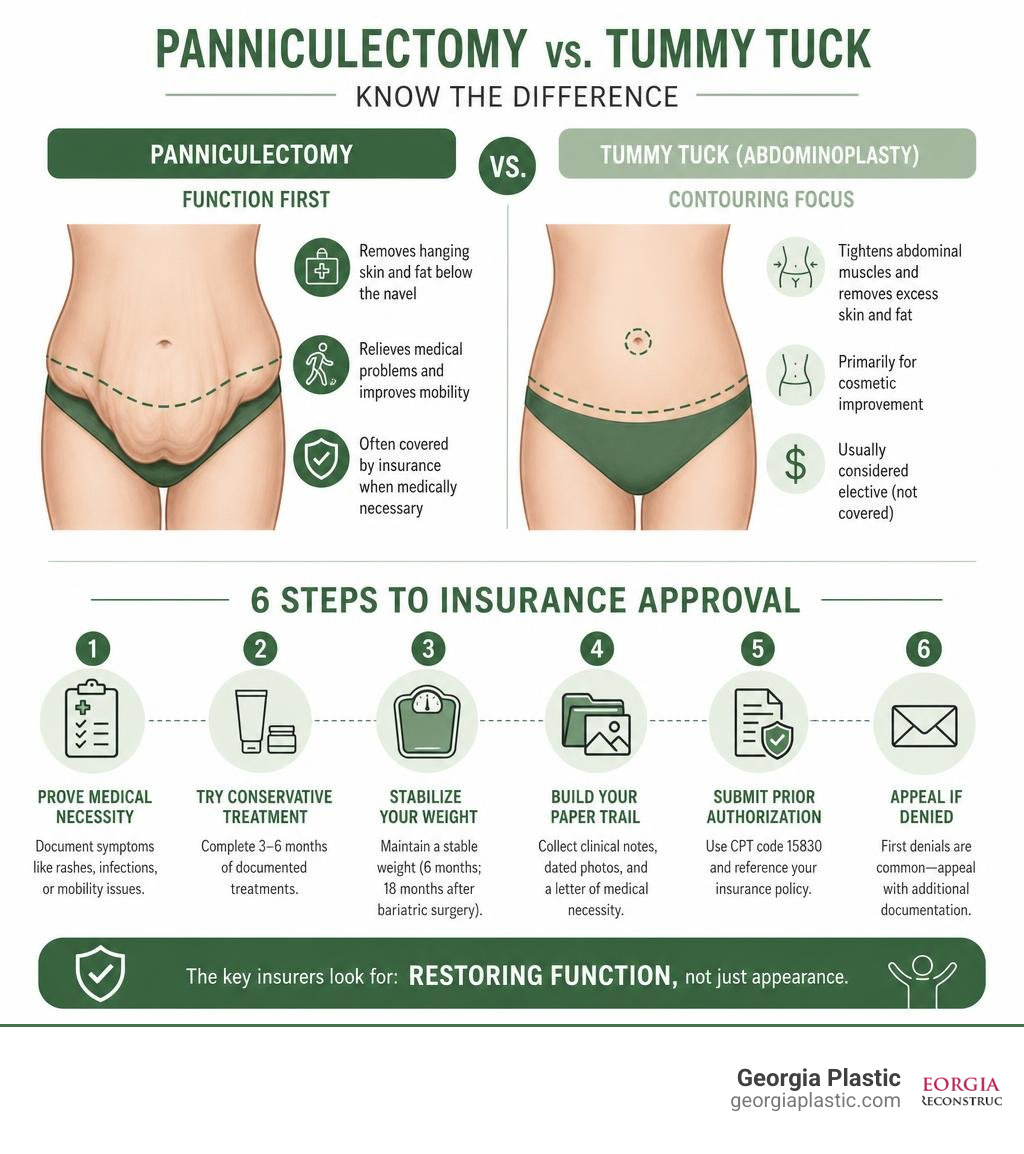
Here’s the short answer on how to get insurance to cover a panniculectomy:
- Prove medical necessity — your pannus must hang at or below the pubic bone and cause documented medical problems (chronic rashes, skin infections, or mobility limitations).
- Try conservative treatment first — document at least 3–6 months of failed treatment with antifungals, topical steroids, or antibiotics.
- Stabilize your weight — most insurers require at least 6 months of stable weight (18 months if you had bariatric surgery).
- Build a paper trail — gather clinical notes, dated photos, and a letter of medical necessity from your surgeon.
- Submit prior authorization — use CPT code 15830 and reference your carrier’s specific coverage policy.
- Appeal if denied — first denials are common and often overturned with added documentation.
The key distinction insurers make is simple: a panniculectomy that restores function may be covered. One done purely for appearance never will be.
Massive weight loss — whether from bariatric surgery, GLP-1 medications like Ozempic, or lifestyle changes — can leave a heavy apron of skin and fat hanging from the lower abdomen. This isn’t just a cosmetic concern. For many patients, it causes chronic skin infections, rashes, hygiene difficulties, and real limits on daily movement. Yet insurance companies don’t automatically see it that way. Without the right documentation and process, even a genuinely medically necessary procedure can be denied.
I’m Dr. Stanley Okoro, a double board-certified plastic surgeon and founder of Georgia Plastic and Reconstructive Surgery, and I’ve helped countless patients navigate exactly how to get insurance to pay for panniculectomy by building airtight medical necessity cases from the very first consultation. In the sections ahead, I’ll walk you through every step — from understanding what insurers actually require to appealing a denial successfully.
How to get insurance to pay for panniculectomy terms to learn:
What is a Panniculectomy and How Does It Differ From a Tummy Tuck?
When patients visit us at Georgia Plastic & Reconstructive Surgery, they often use “panniculectomy” and “tummy tuck” (abdominoplasty) interchangeably. However, from an insurance perspective, they are treated as two entirely different procedures. Understanding this distinction is the absolute foundation of learning how to get insurance to pay for panniculectomy.
A panniculectomy is a reconstructive, functional surgery. Its primary goal is to remove the hanging “apron” of excess skin and fat (known as the panniculus or pannus) from the lower abdomen. This procedure does not tighten the abdominal wall muscles, nor does it reposition the belly button (neoumbilicoplasty) unless it is medically necessary to remove it entirely due to the sheer size of the tissue.
An abdominoplasty (tummy tuck), on the other hand, is an aesthetic procedure designed to enhance the abdominal contour. It includes:
- Tightening the loose abdominal wall muscles (muscle plication or rectus diastasis repair).
- Repositioning and reshaping the belly button (neoumbilicoplasty).
- Sculpting the waistline, often using liposuction.
Because abdominoplasty is performed to improve appearance rather than restore physical function, insurance carriers classify it as cosmetic and exclude it from coverage.
To ensure your billing is processed correctly, surgeons use highly specific Current Procedural Terminology (CPT) codes:
- CPT 15830: Represents an infraumbilical panniculectomy (the removal of the hanging skin flap below the belly button). This is the code we submit for insurance authorization.
- CPT 15847: This is an add-on code used for abdominoplasty (which includes the muscle repair and belly button transposition).
For a deeper dive into how these codes impact your surgical plan and potential coverage, read our detailed guide on Panniculectomy vs Abdominoplasty: Pinning Down the Right CPT Codes.
Comparison at a Glance: Panniculectomy vs. Abdominoplasty
| Feature | Panniculectomy (CPT 15830) | Abdominoplasty / Tummy Tuck (CPT 15847) |
|---|---|---|
| Primary Goal | Restore physical function, relieve chronic skin infections, and improve mobility. | Improve aesthetic contour, flatten the abdomen, and narrow the waistline. |
| Tissue Removed | Only the overhanging apron of excess skin and fat (panniculus). | Excess skin and fat across the entire abdomen, often paired with liposuction. |
| Muscle Tightening | No. Abdominal wall muscles are left untouched. | Yes. Separated abdominal muscles (diastasis recti) are stitched back together. |
| Belly Button | Typically left in place or removed if necessary; not cosmetically reshaped. | Yes. The belly button is surgically repositioned and cosmetically sculpted. |
| Insurance Coverage | Yes, if strict medical necessity criteria are met. | No. Considered strictly cosmetic and paid entirely out-of-pocket. |
To learn more about the specifics of the surgical process, check out our resource on What Does a Panniculectomy Entail?.
How to Get Insurance to Pay for Panniculectomy: Medical Necessity vs. Cosmetic Criteria
To get an insurance company to pay for any plastic surgery, you must prove the procedure is reconstructive rather than cosmetic.
Most major insurance providers use standardized clinical guidelines, such as InterQual criteria, to determine when a surgery crosses the line from aesthetic enhancement to medical necessity. The core of their decision rests on documenting a clear functional impairment that interferes with your activities of daily living (ADLs).
To learn more about how we navigate these boundaries, you can read our overview on Plastic Surgery Covered by Insurance.
According to clinical guidelines, a panniculectomy is considered medically necessary only when the following conditions are met:
- Pannus Severity: The overhanging skin flap must hang at or below the level of the symphysis pubis (the pubic bone). This is typically classified as a Grade 2 panniculus or higher.
- Chronic Skin Complications: You must suffer from persistent, documented skin issues beneath the fold. This includes intertriginous dermatitis (chafing and rashes), cellulitis (bacterial skin infections), or non-healing skin ulcerations.
- Failure of Conservative Therapy: You must prove that these skin conditions have not resolved despite at least 3 to 6 months of active medical management. This means you have used prescription topical antifungals, corticosteroids, or oral antibiotics under the supervision of a primary care doctor or dermatologist, and the issues keep coming back.
- Functional Limitations: The sheer weight and size of the pannus must physically interfere with your mobility, posture, or ability to maintain basic personal hygiene.
If your primary complaint is simply that the skin is heavy, makes clothing fit poorly, or causes back pain without these documented skin conditions, insurers will categorize the procedure as cosmetic and deny coverage. For an independent legal perspective on how these rules are applied across the industry, you can refer to How to Get Panniculectomy Covered by Insurance – LegalClarity.
Step-by-Step: How to Get Insurance to Pay for Panniculectomy After Massive Weight Loss
For patients who have achieved life-changing weight loss — whether through bariatric surgery, lifestyle adjustments, or modern GLP-1 medications like Ozempic and Wegovy — a hanging pannus is a common parting gift. While we celebrate your incredible health milestone, insurers require you to clear specific hurdles before they will authorize skin removal.

If you are seeking a post-weight loss panniculectomy, you must meet these strict timing and stability metrics:
- The 18-Month Rule (Bariatric Patients): If your weight loss was achieved via gastric bypass, sleeve gastrectomy, or another bariatric procedure, most insurance carriers require you to wait at least 18 months post-surgery before they will consider approving a panniculectomy.
- The 6-Month Weight Stability Rule: Regardless of how you lost the weight (including GLP-1 medications), you must demonstrate that your weight has remained stable for at least 6 consecutive months. This ensures you have reached your baseline weight and reduces the risk of needing a revision later.
- BMI Thresholds: Many insurers have strict Body Mass Index (BMI) cutoffs. While some require a BMI of 30 or lower, others are more flexible if medical necessity is severe. However, a lower BMI significantly reduces your risk of surgical complications.
To explore how we help patients transition from massive weight loss to physical comfort, read about how to Treat Excess Skin with Panniculectomy.
The Documentation Checklist: How to Get Insurance to Pay for Panniculectomy Without Denials
The number one reason insurance companies deny panniculectomy claims is a lack of detailed, consistent medical documentation. You cannot simply show up to a plastic surgeon’s office, take a few photos, and expect an immediate approval. You must build a multi-month paper trail.
To give your prior authorization request the highest chance of success, we work with you to compile the following documentation checklist:
- Comprehensive Clinical Notes: Gather records from your primary care physician (PCP) or dermatologist dating back at least 3 to 6 months. These notes must explicitly detail every time you sought treatment for rashes, skin breakdown, or infections under your abdominal fold.
- Prescription History: Keep a log of all prescribed medications used to treat the skin conditions (e.g., Nystatin powder, Ketoconazole cream, or oral antibiotics). Over-the-counter remedies like baby powder or diaper rash cream do not carry the same weight with insurance auditors.
- High-Quality Photographic Evidence: We must submit clear, professional, colored photographs taken from the front, side, and underneath the fold. These photos must clearly show the pannus hanging below the symphysis pubis and visually document any active rashes, raw skin, or ulcerations.
- Detailed Weight History: Provide a documented timeline of your weight loss journey, including your highest weight, your bariatric surgery date (if applicable), and monthly weight checks proving stability for the last 6 months.
- A Letter of Medical Necessity: Our team will draft a highly structured letter that maps your clinical history directly to your specific insurance carrier’s policy language, point by point.
Carrier-Specific Requirements: What Major Insurers Demand
Every insurance carrier writes its own medical policy guidelines. While they share the same general framework of “medical necessity,” the specific definitions and thresholds vary. As of June 2026, here is what the major national carriers look for when evaluating a panniculectomy claim:
UnitedHealthcare (UHC)
UnitedHealthcare relies heavily on standardized InterQual criteria. They require clear documentation of a Grade 2 or higher pannus (meaning it covers the mons pubis). Additionally, they demand proof of chronic intertrigo or ulceration that has failed at least 3 months of conventional medical therapy, or documented physical functional impairment in activities of daily living.
Aetna
Aetna requires the pannus to hang to or below the symphysis pubis. They are very strict about documenting that the skin condition has been refractory to at least 3 months of medical hygiene treatment (such as topical antifungals or corticosteroids). If the surgery is requested after bariatric surgery, they strictly enforce the 18-month post-operative wait time and require 6 months of documented stable weight.
Cigna
Cigna’s policy requires the pannus to hang below the symphysis pubis. They require a detailed history of recurrent or chronic skin infections (cellulitis, dermatoses) that have not responded to 3 months of medical therapy. Cigna explicitly excludes abdominoplasty and muscle repair, viewing them as purely cosmetic. You can view their full clinical guidelines in the Panniculectomy and Abdominoplasty Cigna Policy.
Blue Cross Blue Shield (BCBS)
BCBS policies vary by state, but most regional plans demand that the panniculus hangs at or below the pubic bone and causes severe functional impairment. Like other major carriers, they require 3 to 6 months of failed conservative treatment and a minimum of 6 months of weight stability following bariatric surgery or medical weight loss.
Medicare
Medicare will cover a panniculectomy if it is deemed medically reasonable and necessary. They look for a pannus that hangs at or below the pubic symphysis, chronic skin complications that fail medical management, and severe functional limitations. Medicare coverage is heavily dependent on thorough documentation provided by both your primary care doctor and your operating surgeon.
For other regional and commercial policies, such as Ambetter, surgeons reference guidelines like the Ambetter CP.MP.109 – Panniculectomy guideline, which outlines similar strict parameters regarding weight stability and skin complications.
Navigating the Prior Authorization and Appeals Process
Once we have compiled your documentation checklist, we submit a formal prior authorization request to your insurance company. This is not a quick process, and patience is key.
The standard review timeline for a prior authorization is typically 7 to 14 business days, though some carriers can take up to 30 days. If your case is urgent (for example, if you have an open, non-healing wound or a severe, active infection), we can request an expedited 72-hour review.
What Happens If You Get Denied?
First-time denials are incredibly common in plastic surgery. If your request is denied, do not panic. A denial is not the end of the road; it is simply a signal that the insurance auditor needs more information.
Here is how we handle a denial:
- Analyze the Denial Letter: We look closely at the exact reason for the denial. Did they claim there was “insufficient documentation” of your skin rashes? Did they argue your weight hasn’t been stable long enough?
- Request a Peer-to-Peer Review: Dr. Okoro can schedule a direct phone call with the insurance company’s medical director to discuss your case clinician-to-clinician, explaining why the surgery is medically necessary.
- File an Internal Appeal: We will submit an appeal letter addressing their specific objections, accompanied by additional medical records, more detailed progress notes from your PCP, or updated photographs.
- Request an External Review: If the internal appeal is denied, you have the right to an independent external review. An independent panel of doctors who do not work for your insurance company will review the clinical evidence. Their decision is binding, and they focus entirely on medical facts, not cost.
For a comprehensive look at the entire patient journey, read The Complete Guide to Panniculectomy.
Surgical Risks, Complications, and Recovery Considerations
A panniculectomy is a major surgical procedure. Because it involves removing a large volume of tissue and creating a long incision across the lower abdomen, it carries a higher rate of complications than standard cosmetic procedures, especially in patients who have undergone massive weight loss.

In a retrospective cohort study of 706 post-bariatric panniculectomy cases, the overall complication rate was 56%. The most common surgical risks include:
- Seroma: A buildup of fluid under the skin. A systematic review of 143 studies comprising 27,834 individuals found that the global prevalence of seroma following abdominoplasty approaches 11%. Temporary surgical drains are almost always placed during a panniculectomy to help manage this fluid.
- Wound Dehiscence: The separation of the incision line, which is more common in patients with a higher BMI or poor circulation.
- Venous Thromboembolism (VTE): Blood clots in the legs or lungs. Interestingly, a database analysis of panniculectomy patients receiving prophylactic anticoagulation showed that the 30-day VTE rate was 4.9% among those with a history of COVID-19, compared to 2.5% among those without. Because of this, we take blood clot prevention incredibly seriously, utilizing compression boots and blood-thinning medications when appropriate.
Combined Procedures
Many patients ask if they can repair a hernia or undergo a tummy tuck at the same time as their insurance-covered panniculectomy.
While performing concurrent surgeries is common, it does impact your risk profile. For example, in a propensity-matched analysis of 1,500 individuals undergoing ventral hernia repair with or without a panniculectomy, there was no statistically significant difference in surgical site infections (6.3% vs. 5.2%) or 1-year hernia recurrence (15.2% vs. 21.5%). However, combining a panniculectomy with bariatric surgery or gynecological procedures at the same time is generally discouraged by insurers and surgeons alike due to a sharp increase in wound healing complications.
Frequently Asked Questions About Panniculectomy Insurance Coverage
Does insurance cover a tummy tuck if I have diastasis recti?
No. While diastasis recti (the separation of the abdominal muscles) is a physical condition often caused by pregnancy or weight fluctuations, insurance carriers view its repair as cosmetic. Diastasis recti repair does not have a universally accepted clinical standard of medical necessity, as it is not linked to severe functional impairment in the eyes of insurance auditors. Therefore, the muscle plication portion of the surgery remains an out-of-pocket cosmetic expense.
What out-of-pocket costs should I expect if my panniculectomy is approved?
Even if your insurance company approves your panniculectomy, you will likely still have some out-of-pocket costs. These can include:
- Your insurance plan’s deductible and co-insurance percentages.
- Hospital or ambulatory surgical facility fees.
- Anesthesia fees.
- Post-operative garments and medications.
Additionally, if you choose to combine your covered panniculectomy with cosmetic enhancements (such as liposuction, waist contouring, or muscle repair), you will be responsible for paying the surgeon’s fees and additional operating room time for those specific cosmetic components. The national average cost of a standalone panniculectomy is $7,000, with a total range between $5,393 and $13,618 depending on geographic location and surgical complexity.
How long does the insurance pre-authorization process take?
The pre-authorization process typically takes 7 to 14 calendar days once all of your documentation, photos, and clinical notes have been submitted. If your carrier requests additional information, or if we have to file an appeal, the timeline can extend to 4 to 6 weeks.
Conclusion
Navigating the path to insurance approval for a panniculectomy can feel like a full-time job, but you do not have to do it alone. By understanding the strict medical necessity criteria, building a meticulous paper trail of your skin complications, and working with an experienced surgical team, you can successfully secure the coverage you deserve.
At Georgia Plastic & Reconstructive Surgery, Dr. Okoro and our dedicated coordination team specialize in helping patients navigate the complexities of insurance authorizations. We prioritize your safety, comfort, and physical function, delivering personalized care and natural-looking results that help you finally feel at home in your body.
Are you ready to take the next step toward relief? Schedule a Panniculectomy Consultation with us today, and let us help you navigate your insurance journey with confidence.


