
What Does Calf Augmentation Surgery Cost in 2026?
Calf augmentation surgery cost typically falls in the following ranges depending on your location, surgeon, and procedure type:
| Cost Factor | Typical Range |
|---|---|
| Average all-in cost (US) | $8,000 – $15,000 |
| Surgeon’s fee only | ~$3,600 avg. |
| Standard implants (base price) | $4,000 – $9,000 |
| Premium/custom implants | up to $15,000 |
| Fat transfer alternative | $3,000 – $11,000 |
| International (Turkey) | from $2,157 |
Note: The widely cited average of $5,026 (from the 2021 Aesthetic Plastic Surgery National Databank) covers surgeon and facility fees only. It does not include anesthesia, medical tests, prescriptions, or compression garments.
Many people are surprised by the gap between the base quote and the final bill. That gap is real — and it matters when you’re planning your budget.
Calf augmentation is one of the more underappreciated body contouring procedures available today. Whether your goal is correcting asymmetry, enhancing muscle definition, or restoring shape after injury, the results can be life-changing. In fact, calf augmentation carries a 95.4% patient satisfaction rate — one of the highest among body contouring surgeries.
But cost is almost always the first question — and the answer isn’t simple. The price you pay depends on where you live, who performs the surgery, what type of implant you choose, and what’s bundled into your quote.
I’m Dr. Stanley Okoro, a double board-certified plastic surgeon and founder of Georgia Plastic and Reconstructive Surgery in Atlanta, and I’ve guided many patients through the full financial and surgical picture of calf augmentation surgery cost. In the sections below, I’ll walk you through every cost factor so you can plan with confidence.

Factors Influencing the Calf Augmentation Surgery Cost
When you receive a quote for calf augmentation, it is rarely a single flat fee. Instead, it is a “bundle” of several different professional services and medical supplies. Understanding these components helps you avoid “sticker shock” later in the process.
The most significant portion of the calf augmentation surgery cost is usually the surgeon’s fee. This fee reflects the surgeon’s level of expertise, their reputation, and the time required to perform the procedure. We always recommend choosing a surgeon certified by the American Board of Plastic Surgeons. A board-certified surgeon has undergone rigorous training and testing, ensuring they meet the highest standards of safety and aesthetic skill.
Beyond the surgeon, you must account for the facility fee. This is the cost of using the operating room. At Georgia Plastic, we prioritize safety by performing procedures in state-of-the-art, accredited surgery centers. Accredited facilities maintain strict standards for equipment, sterilization, and emergency preparedness, which is a critical factor in your overall safety.
Anesthesia is another major variable. Most calf implant surgeries are performed under general anesthesia or deep sedation to ensure patient comfort. This requires a qualified anesthesiologist or a certified registered nurse anesthetist (CRNA). Their fees are typically billed by the hour or as a flat rate for the procedure.
How Implant Material Affects Calf Augmentation Surgery Cost
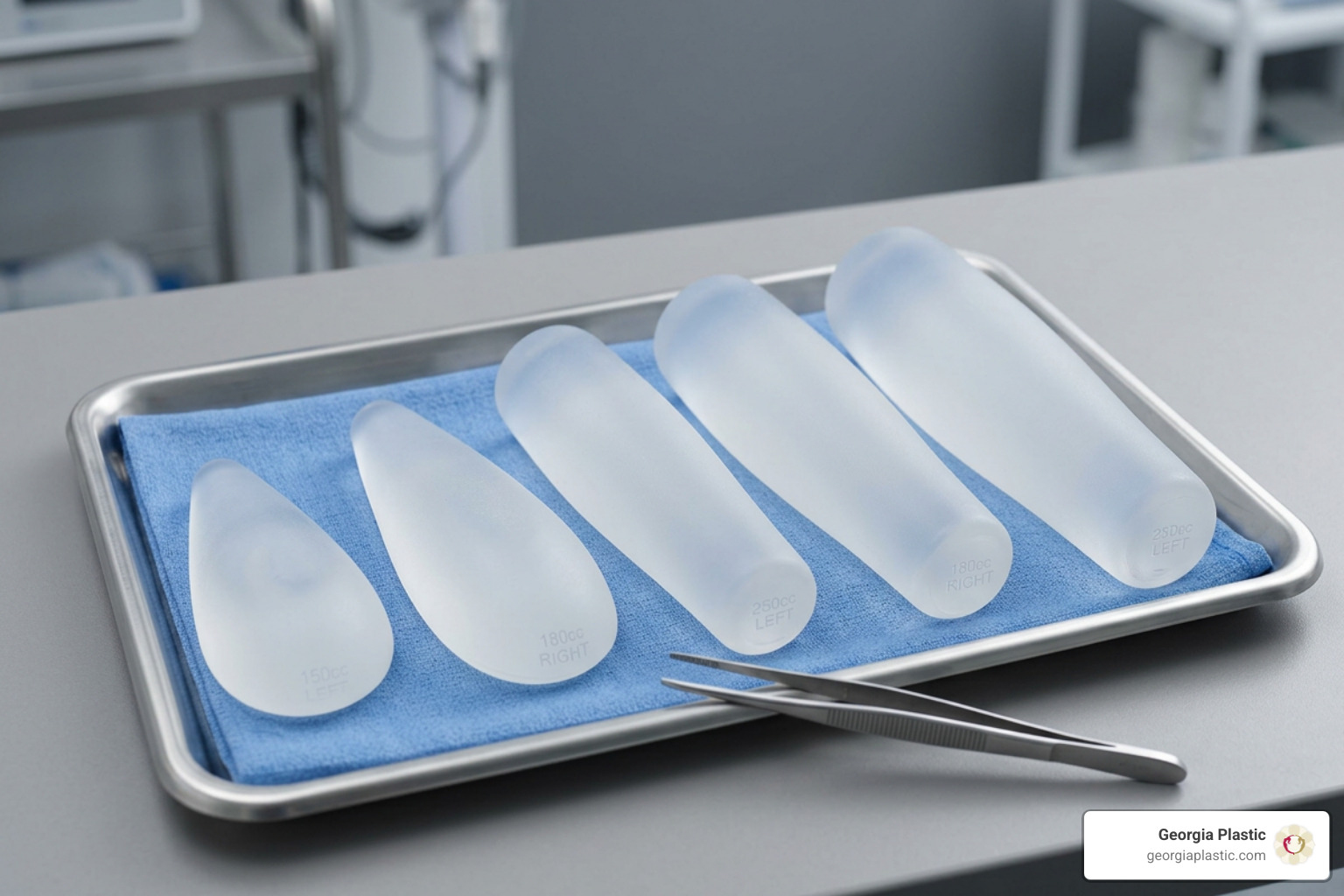
The physical implants themselves are medical-grade devices that vary in price based on their composition and shape. Most modern calf implants are made of solid, cohesive silicone. Unlike breast implants, which are often filled with liquid or gel, calf implants are usually “solid” to the touch, mimicking the firm feel of a flexed muscle.
- Standard Silicone Implants: These come in various stock sizes (ranging from 50cc to 220cc). Because they are mass-produced, they are the most cost-effective option.
- Anatomical or Symmetrical Shapes: Depending on whether you want to bulk up the inner calf (medial) or the outer calf (lateral), the shape of the implant can vary. Some shapes are more complex to manufacture, slightly increasing the price.
- Custom-Made Implants: For patients with severe asymmetry due to congenital defects, polio, or traumatic injury, standard implants may not suffice. Custom implants are designed using 3D imaging to fit your specific anatomy. While these offer a highly personalized result, they can significantly increase the total calf augmentation surgery cost due to the specialized manufacturing process.
Budgeting for the Total Calf Augmentation Surgery Cost Beyond the Surgeon’s Fee
To have a realistic financial plan, you must look at the “hidden” or additional expenses that occur before and after the surgery. Organizations like the Plastic Surgery Educational Foundation emphasize that patient education on the full scope of costs leads to better long-term satisfaction.
Consider these common additional expenses:
- Medical Tests: Before surgery, we often require blood work or a physical exam to ensure you are healthy enough for anesthesia.
- Prescriptions: You will need pain medication and antibiotics to prevent infection during the first week of recovery.
- Surgical Garments: Compression stockings are vital. They help reduce swelling and keep the implants in their correct position. Expect to pay between $50 and $150 for high-quality medical-grade garments.
- Recovery Aids: Some patients find they need a cane or a walker for the first few days to help with mobility while the calf muscles are tight and sore.
Geographic Price Variations and Considerations
Where you choose to have your surgery has a massive impact on the price. In the United States, plastic surgery costs are generally higher in major metropolitan hubs like New York City, Beverly Hills, or Miami. This is due to higher overhead costs for the surgeons, including rent, staff salaries, and malpractice insurance in those regions.
For example, a surgeon in NYC might charge $7,000 to $9,000 for the procedure alone, whereas a provider in a smaller market might charge $4,000 to $5,000. In Atlanta, we offer competitive pricing that reflects our high standard of care without the “zip code premium” found in some coastal cities.
International Pricing and Medical Tourism
You may see advertisements for calf implants in countries like Turkey or Mexico for as low as $2,100 to $6,000. While the lower price tag is tempting, it’s important to weigh the total “real” cost.
When you travel abroad for surgery, you must factor in:
- Round-trip airfare and hotel stays for at least 7 to 10 days.
- The risk of complications while away from your primary care doctor.
- The difficulty of attending follow-up appointments.
- Variations in safety standards and facility accreditation.
We believe that the peace of mind that comes with having a local, board-certified surgeon who can see you for every follow-up visit is an investment worth making.
Comparing Calf Enhancement Methods and Prices
Not everyone who wants shapelier legs needs silicone implants. Depending on your goals and your body type, there are several ways to achieve a more contoured look.
At Georgia Plastic, we offer various calf-implants and enhancement services tailored to the individual. Here is how the costs and methods compare:
- Calf Implants: The “gold standard” for permanent bulk and definition.
- Fat Grafting (Fat Transfer): We harvest fat from another area of your body (like the abdomen or thighs) via liposuction, process it, and inject it into the calves.
- Hyaluronic Acid Fillers: These are non-surgical injections. While they require no downtime, they are temporary and can be very expensive because the calves require a large volume of filler.
- BOTOX® Contouring: Interestingly, BOTOX is sometimes used to slim the calves by relaxing the muscle, rather than augmenting it. This is popular for patients who feel their calves are too bulky or “manly.”
Cost-Benefit Analysis of Fat Transfer vs. Implants
Fat transfer is a fantastic option for patients who want a natural look and have enough donor fat. The calf augmentation surgery cost for fat transfer typically ranges from $3,000 to $11,000.
- Pros of Fat Transfer: No “foreign body” (implant) is used, so there is no risk of implant rejection or shifting. You also get the added benefit of liposuction in a “trouble area.”
- Cons of Fat Transfer: Not all the injected fat will “take.” Usually, about 60-80% of the transferred fat survives permanently. If you want a very dramatic, muscular “pop,” implants are usually more effective.
- Cost Comparison: While the initial price of fat transfer can be similar to implants, it may require a second “touch-up” session to reach your desired volume, which can increase the long-term cost.
Long-term Value and the 95.4% Satisfaction Rate
While the upfront calf augmentation surgery cost might seem high, it is helpful to view it as a long-term investment. Silicone calf implants are designed to be permanent. Unlike breast implants, which are often replaced every 10-15 years, calf implants are solid silicone and do not have a shell that can “leak.” Unless you experience a rare complication or want a different size, you likely won’t need another surgery for decades.
The psychological benefits are also a major part of the “value.” Many of our patients have spent years avoiding shorts or feeling self-conscious at the gym. Achieving a proportionate, athletic physique often leads to a significant boost in self-confidence. With a 95.4% satisfaction rate, the vast majority of patients feel the financial investment was well worth the result.
Recovery Timeline and Financial Planning
Your financial planning should include the “opportunity cost” of your recovery time. Most patients need to take at least one full week off work. If your job involves standing or physical labor, you may need two weeks.
The Recovery Timeline:
- Days 1-3: You will feel significant tightness. Walking will be slow and may require a cane.
- Week 1: Most patients can return to sedentary office work.
- Weeks 4-6: You can gradually resume light exercise.
- Month 3: High-impact activities like running or heavy leg presses are usually cleared.
Budgeting for a walker or cane (approx. $15–$80) and ensuring you have someone to help you around the house for the first 48 hours is essential.
Is Calf Augmentation Covered by Insurance?
In the vast majority of cases, calf augmentation is considered an elective cosmetic procedure and is not covered by health insurance.
However, there are rare exceptions for reconstructive surgery. If the procedure is being performed to correct a congenital deformity (like club foot) or to restore muscle mass lost to a disease like polio or a traumatic injury, some insurance providers may cover a portion of the cost. We always recommend contacting your insurance provider directly to ask about their specific policies for “reconstructive leg surgery.”
Financing Options for Plastic Surgery
We understand that $8,000 to $15,000 is a significant amount to pay upfront. To make the calf augmentation surgery cost more manageable, we offer several financing options:
- CareCredit: This is a healthcare credit card that allows you to pay for your procedure in monthly installments. Many plans offer “no interest” if paid within a certain timeframe (usually 6 to 18 months).
- Medical Financing Companies: Companies like Alphaeon or United Medical Credit specialize in personal loans for elective surgeries.
- Personal Loans: Some patients choose to use a traditional bank loan or a high-limit credit card to cover the costs.
During your consultation, our patient coordinators can walk you through the application process for these services to find a monthly payment that fits your budget.
Frequently Asked Questions about Calf Augmentation Surgery Cost
How much does the average calf implant procedure cost in the US?
The total out-of-pocket cost typically ranges from $8,000 to $15,000. While the surgeon’s fee might average around $3,600 to $5,000, once you add in the cost of the implants, the facility, anesthesia, and post-op care, the total usually lands in that higher range.
Are there hidden fees in the initial surgical quote?
A reputable practice should provide a transparent, all-inclusive quote. However, always ask if the quote includes:
- Anesthesia fees
- Operating room fees
- The cost of the implants themselves
- Post-operative follow-up visits
- Compression garments At Georgia Plastic, we strive for total transparency so there are no surprises on surgery day.
Do custom implants cost significantly more than standard sizes?
Yes. Custom implants require 3D CT scans and a specialized manufacturing process to create a “one-of-a-kind” silicone device. This can add several thousand dollars to the total calf augmentation surgery cost. Most patients achieve excellent results with standard sizes, but custom options are available for those with unique anatomical needs.
Conclusion
Deciding to undergo calf augmentation is a big step toward achieving the athletic, balanced physique you’ve always wanted. While the calf augmentation surgery cost is a major factor in your decision, it’s important to remember that you are paying for safety, expertise, and a permanent result.
At Georgia Plastic & Reconstructive Surgery, Dr. Okoro and our entire team are dedicated to providing personalized care that prioritizes your safety and delivers natural-looking results. We believe that every patient deserves to feel confident in their own skin—and their own legs.
If you’re ready to take the next step and get a personalized quote for your procedure, we invite you to schedule a consultation for calf augmentation with us today. Let’s work together to help you stride forward with newfound confidence!


