
Why So Many Women Are Choosing Breast Reduction Surgery
Breast reduction surgery is a procedure that removes excess breast tissue, fat, and skin to create a smaller, lighter, and better-proportioned bust. It is one of the highest-rated plastic surgery procedures for patient satisfaction.
Quick answer – what you need to know:
- What it is: A surgical procedure (also called reduction mammaplasty) that reduces breast size and reshapes the breast
- Who it’s for: Women with large breasts causing physical discomfort or self-consciousness
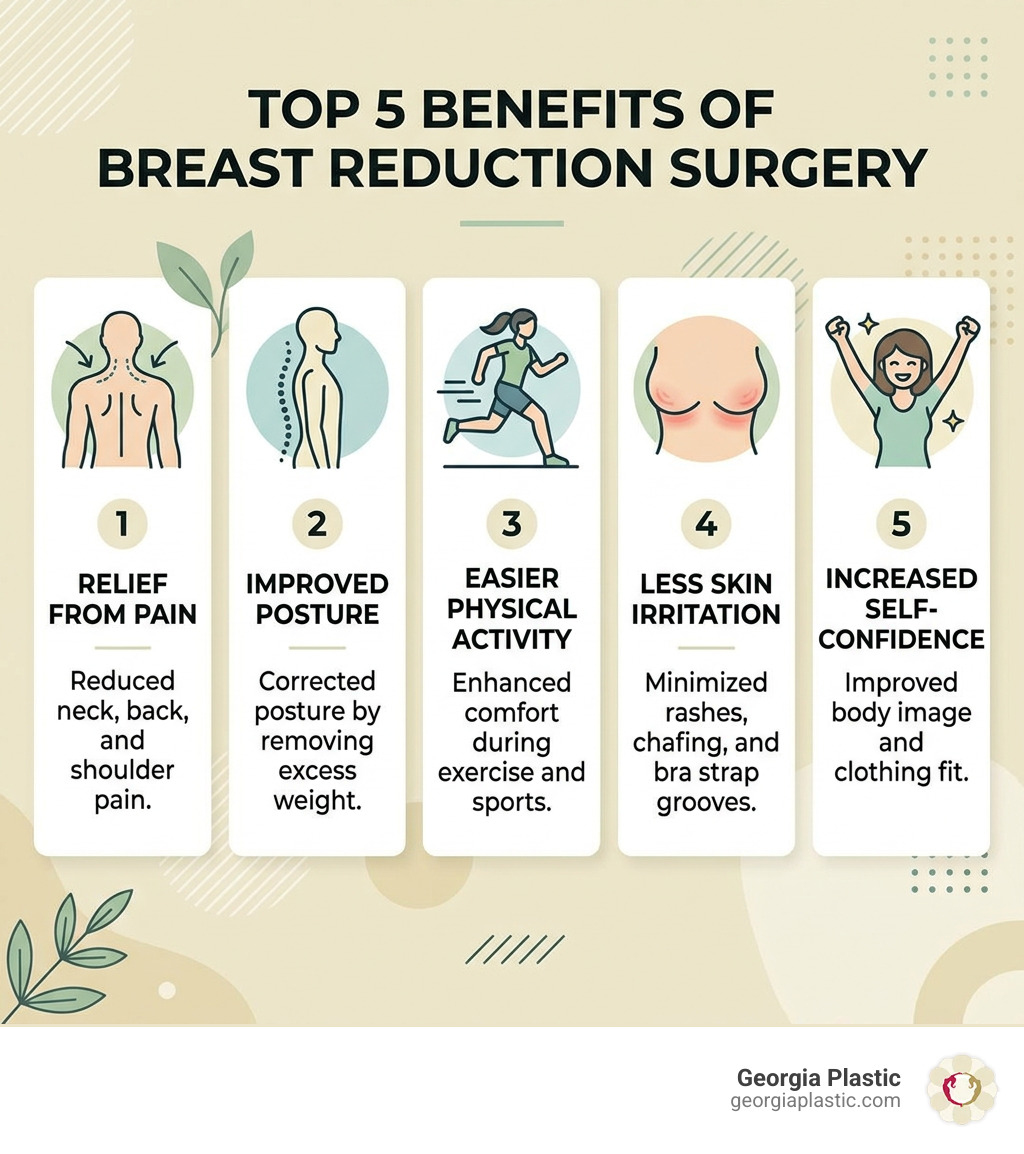
- Common benefits: Relief from back, neck, and shoulder pain; easier exercise; reduced skin irritation; improved confidence
- Recovery: Most patients return to a desk job within 1-2 weeks; full activity resumes after about a month
- Results: Long-lasting, especially with stable weight; one of the most life-changing procedures women report ever having
Many women spend years living with chronic pain, bra strap grooves, and limited mobility before considering surgery. Afterward, most say it was one of the best decisions they ever made for their quality of life.
It is not just about appearance. For women with very large breasts, the physical toll can include poor posture, breathing difficulty, nerve pain, and persistent skin rashes. Surgery addresses all of this at once.
I’m Dr. Stanley Okoro, a double board-certified plastic surgeon and founder of Georgia Plastic and Reconstructive Surgery, with extensive experience performing breast reduction surgery and helping patients achieve natural-looking, proportional results. In the sections below, I’ll walk you through everything you need to know — from candidacy and techniques to recovery and long-term outcomes.
What is Breast Reduction Surgery and Why is it Performed?
At its core, breast reduction surgery, or reduction mammaplasty, is a functional procedure designed to improve a patient’s health and comfort. While many people think of plastic surgery as purely aesthetic, this procedure is unique because it addresses significant medical issues. By performing a tissue excision of excess glandular tissue, fat, and skin, we can transform a heavy, sagging bust into one that fits the patient’s frame.
For many women, the weight of their breasts is a literal burden. Small-to-medium breasts typically weigh around 500 grams or less, but those seeking reduction often have breasts weighing between 750 and 1,000 grams each. In cases of gigantomastia, where a patient carries more than 1,000 grams of excess weight per breast, the physical strain is immense.
The primary goal is to alleviate back pain and other physical symptoms. However, the benefits of breast reduction extend far beyond physical comfort. Scientific research on quality of life improvements consistently shows that patients experience a massive boost in self-esteem and mental well-being. Imagine being able to breathe easier, move freely, and buy clothes off the rack without having to size up three times just to accommodate your chest. It’s a total game-changer.
Ideal Candidates for the Procedure
Who is the right fit for this surgery? We look for several key factors during our evaluations at Georgia Plastic:
- Completion of Breast Development: Generally, we recommend waiting until breast growth has stabilized. While teenagers can undergo the procedure if they are in extreme pain, they must understand that a second surgery might be needed if their breasts continue to grow.
- Physical Symptoms: Candidates often suffer from chronic pain in the neck, back, or shoulders that hasn’t responded to conservative treatments like physical therapy.
- Non-Smokers: This is a big one. Nicotine restricts blood flow, which is vital for healing. We require patients to be nicotine-free for at least six weeks before and after surgery to ensure the best results.
- Realistic Expectations: Understanding that while we can achieve incredible results, there will be permanent (though fading) scars.
- General Health: Being in good overall health without conditions that impair healing, such as uncontrolled diabetes.
If you are curious if you fit these criteria, you can learn more about our specific approach to breast-reduction here.
Common Reasons for Seeking Surgery
Most of our patients come to us not because they want “perfect” breasts, but because they want relief. The most common complaints include:
- Chronic Pain: The constant pull on the trapezius muscles leads to headaches and upper body tension.
- Bra Strap Grooves: Heavy breasts cause bra straps to dig into the shoulders, sometimes leaving permanent indentations or “divots” in the skin.
- Skin Irritation: Chronic rashes or fungal infections (intertrigo) often occur in the fold under the breast (the inframammary fold) where skin rubs against skin.
- Posture Issues: To compensate for the forward weight, many women develop a “hunched” posture, which can lead to long-term spinal issues.
- Activity Limitations: It is hard to enjoy a jog or a yoga class when your chest makes movement painful or embarrassing.
If you’ve been searching for ways to alleviate-back-pain-breast-reduction-marietta-atlanta, you are certainly not alone.
Surgical Techniques and Incision Patterns
There is no “one-size-fits-all” method for breast reduction surgery. The technique we choose depends on your anatomy, how much tissue needs to be removed, and the degree of sagging (ptosis).
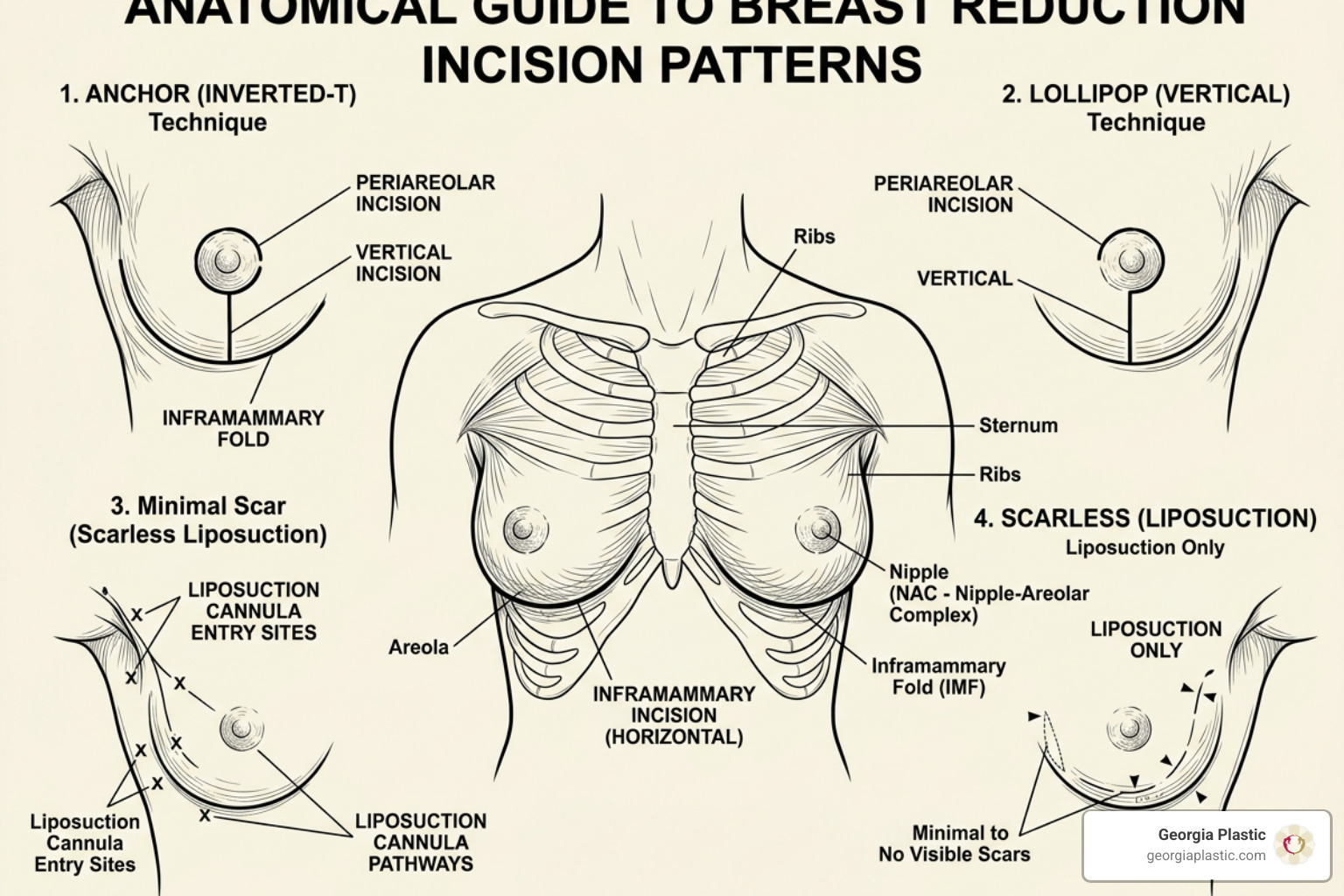
| Technique | Best For | Description |
|---|---|---|
| Anchor (Inverted-T) | Significant reductions | Incisions around the areola, down the center, and along the breast crease. |
| Lollipop (Vertical) | Moderate reductions | Incisions around the areola and straight down to the crease. No horizontal scar. |
| Scarless (Liposuction) | Fatty breasts / Minor reduction | Uses only small punctures for liposuction; requires good skin elasticity. |
We often combine these methods to get the best shape. For example, we might use a short-scar-breast-reduction technique to minimize visible marks while still achieving a significant lift. In specific cases where the breast is composed mostly of fat rather than glandular tissue, a scarless-breast-reduction using liposuction can be an excellent option.
Choosing the Right Breast Reduction Surgery Technique
The choice of technique often involves a “pedicle.” This is the internal bridge of tissue that keeps the nipple and areola connected to their blood and nerve supply.
- Inferior Pedicle: This is a very common and reliable technique where the blood supply comes from the bottom of the breast. It is excellent for preserving nipple sensation.
- Vertical Scar (Lollipop): This technique is popular because it eliminates the long horizontal scar in the breast fold. However, research on vertical scar complications suggests that while it offers a great shape, there can be temporary “puckering” at the bottom of the scar that takes a few months to smooth out.
- Liposuction-only: This is ideal for patients who don’t need a lift and have breasts that are primarily fatty. It leaves almost no visible scarring but won’t fix significant sagging.
We also offer a short-scar-breast-reduction-2 which is a modified version of the vertical technique, perfect for those who want to avoid the “anchor” look.
Addressing Asymmetry and Nipple Position
Almost everyone has some degree of asymmetry—one breast is usually a different size or shape than the other. During breast reduction surgery, we take precise measurements to bring them into better balance.
This process also involves the nipple-areola complex. As breasts grow and sag, the areola often stretches and the nipple points downward. We resize the areola to a more proportionate diameter and reposition the nipple to a higher, more youthful “perky” spot on the breast mound. This is often done using a breast-reduction-short-scar-incision-atlanta approach to keep the results looking as natural as possible.
Preparing for Your Procedure and Consultation
Preparation is the key to a smooth recovery. Your journey begins with a comprehensive consultation where we get to know you and your goals.
We will review your medical history in detail. This includes any past surgeries, medications, and your family history of breast health. For patients over 40 (or younger with a family history), we often require a recent mammogram to ensure there are no underlying issues. We believe in being proactive, especially regarding breast-reduction-and-breast-cancer screenings, as we send all removed tissue to a lab for routine testing.
Steps to Take Before Surgery
To get your body ready for the big day, we recommend:
- Nicotine Cessation: Stop all smoking, vaping, and nicotine patches at least six weeks before surgery. This is non-negotiable for safety!
- Medication Adjustments: Avoid blood-thinning medications like aspirin, ibuprofen, and certain herbal supplements for two weeks prior to reduce the risk of bleeding.
- Set Up a Recovery Station: At home, have your “nest” ready. This should include loose, front-opening clothing, your prescribed pain medications, plenty of pillows to keep you propped up, and a few good books or shows to binge-watch.
- Financial Planning: If you are combining your surgery with other procedures, check our combined-breast-reduction-and-lift-your-financial-guide for helpful tips.
What to Expect During the Consultation
During your visit, we will:
- Discuss Your Goals: How small do you want to go? We use “cup sizes” as a guide, but surgeons think in terms of grams and volume.
- Take Measurements and Photos: This helps us plan the exact surgical approach and provides a “before” reference.
- Review Costs: We will provide a clear breakdown of fees. For more details on pricing, see our guide on how-much-for-a-breast-reduction-and-lift-a-detailed-cost-breakdown and decoding-the-dollars-what-a-boob-reduction-and-lift-really-costs.
The Recovery Process and Long-Term Results
Recovery is a marathon, not a sprint. While the most intense part is over in a few days, your body will continue to “settle” for several months.
The healing timeline generally looks like this:
- Days 1-3: You’ll feel sore and tired. You will need a caregiver to help you around the house.
- Week 1: Most patients can stop prescription pain meds and move to over-the-counter options. You may be able to return to a desk job.
- Weeks 2-4: Swelling begins to subside. You can usually drive once you are off narcotics and feel comfortable moving.
- Month 1+: You can start light exercise (walking is encouraged from day one!).
- Month 6: Your final shape is usually visible, and scars have begun to fade from pink to a lighter skin tone.
It is important to understand the breast-reduction-vs-breast-lift-understanding-the-differences during this time, as a reduction always includes a lift, but the recovery focus is on managing the larger amount of internal tissue healing.
Immediate Post-Operative Care
Most breast reduction surgery procedures are performed under general anesthesia as an outpatient procedure, meaning you go home the same day.
In some cases, we use small surgical drains to prevent fluid buildup. These are usually removed within a few days at your first follow-up appointment. Pain management is a priority; we provide a personalized plan to keep you comfortable. You can see some of our real-world results in our gallery-breast-lift-reduction.
Maintaining Your New Shape
Will the results last? For most women, yes—for a lifetime! However, your body is still subject to the laws of nature.
- Weight Stability: Significant weight gain or loss can change the size and shape of your breasts even after surgery.
- Pregnancy: Future pregnancies can cause breasts to enlarge and sag again. This is why many women wait until they are finished having children.
- Aging: Gravity never sleeps. While your breasts will always be smaller than they would have been without surgery, natural aging will eventually cause some skin laxity.
Scientific research on long-term outcomes shows that patient satisfaction remains incredibly high even years after the procedure, provided they maintain a stable lifestyle.
Frequently Asked Questions about Breast Reduction Surgery
Does insurance cover breast reduction surgery?
This is one of the most common questions we hear. The short answer is: often, yes! Unlike a breast augmentation, which is almost always elective, insurance companies recognize that large breasts can cause genuine medical problems.
To qualify, you usually need to prove “medical necessity.” This often includes:
- A certain amount of tissue to be removed (calculated based on your Body Mass Index or Body Surface Area).
- Documentation of symptoms like chronic back pain or rashes.
- Proof that you’ve tried other treatments (like physical therapy or special bras) without success.
You can Explore Mayo Clinic studies on breast reduction to see how medical necessity is evaluated in clinical settings.
Will it affect breastfeeding or nipple sensation?
This is a vital consideration for younger patients. While many women can breastfeed after surgery, there is a risk that the milk ducts may be disrupted. Research on breastfeeding after superomedial reduction shows that certain techniques have higher success rates than others. If breastfeeding is a top priority for you, we will tailor our technique to be as “duct-friendly” as possible.
Regarding sensation: temporary numbness is very common. Most patients find that sensation returns to normal over 6 to 12 months, though there is a small risk of permanent changes in a small percentage of cases.
What are the risks and potential complications?
Like any major surgery, breast reduction surgery carries risks. These include infection, bleeding (hematoma), and reactions to anesthesia. Specific to the breast, there is a risk of asymmetry or “fat necrosis” (where small areas of fat tissue don’t heal properly and form firm lumps).
The most common “complication” is simply dissatisfaction with the scar appearance, though these usually fade significantly over time. For a deeper dive into the clinical side, you can View an interactive patient education module on Breast Reduction.
Conclusion
At Georgia Plastic & Reconstructive Surgery, we have seen how breast reduction surgery can be a life-altering event. It is not just about a smaller bra size; it is about reclaiming your ability to live without pain and move with confidence.
Dr. Okoro and our entire team are dedicated to providing personalized care that prioritizes your safety and delivers natural-looking results. Whether you are tired of the back pain or just want to feel more like yourself in your favorite clothes, we are here to help you navigate every step of the journey.
If you are ready to see if you are a candidate for breast-reduction, contact us today to schedule your consultation. Let’s take that weight off your shoulders—literally!


