
Why Deep Plane Facelift Technology Has Transformed Facial Rejuvenation
A Deep plane facelift is an advanced surgical technique that repositions the deeper layers of facial tissue—specifically beneath the SMAS (superficial musculoaponeurotic system). By releasing key ligaments, it lifts muscle, fat, and skin as a single unit. This approach creates natural-looking, long-lasting results that address mid-face sagging, jowls, and neck laxity without the “pulled” look of older techniques.
Key Facts About Deep Plane Facelifts:
- What it treats: Mid-face volume loss, jowls, nasolabial folds, neck sagging, and jawline definition
- How it works: Releases facial ligaments and repositions tissue as a single unit rather than just pulling skin
- Results duration: Typically 7-12 years, often making patients look 12-15 years younger
- Recovery time: Most patients return to normal activities within 10-14 days
- Ideal candidates: Generally ages 40-70 with significant facial sagging and good overall health
- Cost range: $20,000-$100,000+ depending on location and complexity
While traditional facelifts often stretched the skin, resulting in an unnatural, “windswept” look, the deep plane technique represents a fundamental shift. It works beneath the surface to reposition the facial scaffolding itself. By releasing key ligaments and placing tension on the strong, deep SMAS layer instead of the skin, surgeons can achieve a smoother, more authentic vertical lift. This method is widely considered the gold standard in facial rejuvenation.
I’m Dr. Stanley Okoro, a double board-certified plastic surgeon and founder of Georgia Plastic and Reconstructive Surgery. I have performed thousands of facial rejuvenation procedures, including advanced Deep plane facelift techniques. My experience allows me to combine surgical precision with an artistic eye, delivering natural-looking results that improve each patient’s unique features by addressing the deep anatomical causes of aging.
Understanding the Deep Plane Difference
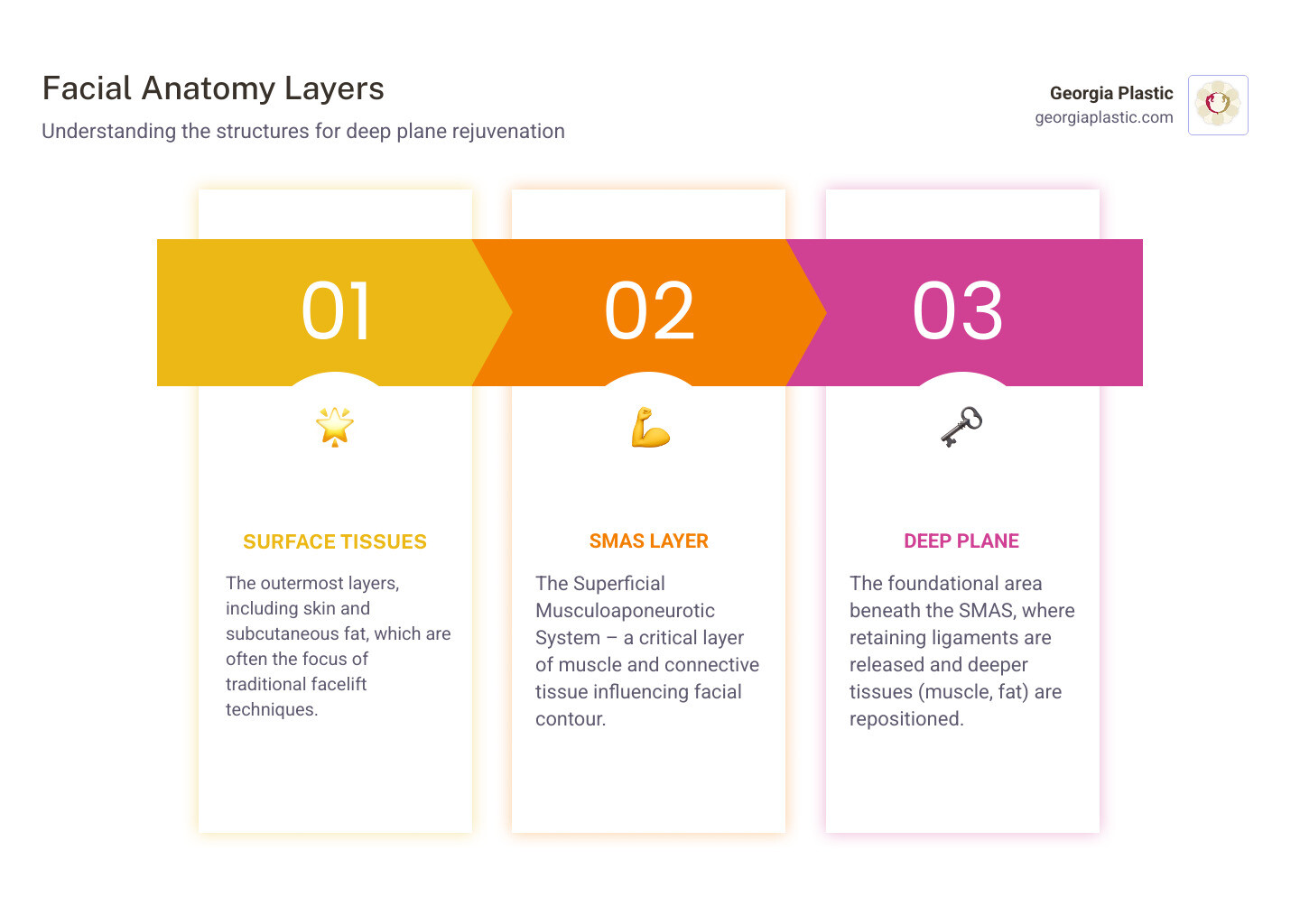
Facial aging involves more than just the skin. A crucial layer called the Superficial Musculoaponeurotic System (SMAS)—a mix of elastin, collagen, and fat cells—provides facial contour. As we age, this layer and the tissues above it descend, causing jowls, deep folds, and a less defined jawline.
While traditional facelifts pulled the skin tighter, they failed to address this underlying sagging. The Deep plane facelift revolutionizes this by working below the SMAS layer. By releasing specific retaining ligaments, the surgeon can lift the skin, fat, and muscle as a single, cohesive unit. This vertical lift, rather than a horizontal pull, is the key to achieving natural and long-lasting results.
What is a Deep Plane Facelift?
A Deep plane facelift is an advanced technique that goes beyond surface-level lifting. The surgeon dissects beneath the SMAS to release the facial retaining ligaments holding tissues in their aged, descended position. This allows the entire composite flap of skin, muscle, and fat to be repositioned vertically.
This approach is highly effective for:
- Mid-face rejuvenation: Restoring volume to the cheeks by lifting the malar fat pad, which combats the anatomical basis of facial aging.
- Jawline definition: Dramatically improving the jawline by eliminating jowls and sculpting the neck.
- Natural results: Avoiding a “pulled” look because tension is placed on deep tissues, not the skin, resulting in a harmonious, refreshed appearance.
How It Differs from Traditional Facelifts
The evolution of facelift surgery has moved from skin-only lifts to the more sophisticated Deep plane facelift. Early techniques that only pulled the skin often created an unnatural “windswept” look with short-lived results. The SMAS facelift was an improvement, but it didn’t fully release the deep tissues, limiting the lift’s naturalness and longevity.
The Deep plane facelift is different because it involves dissecting below the SMAS to release the key ligaments responsible for sagging. This allows the entire facial structure to be repositioned vertically as a single unit. Tension is placed on the strong, underlying fascia, not the skin, which is why it yields a more natural, lasting result. For more information on various facelift procedures, we invite you to explore our dedicated page on facelift procedures.
| Feature | Deep Plane Facelift | Traditional SMAS Facelift |
|---|---|---|
| Technique | Dissection below the SMAS layer; direct release of facial retaining ligaments; repositions skin, fat, and muscle as a single “composite flap.” | Dissection above the SMAS layer; SMAS is either folded (plication) or cut and overlapped (imbrication); skin flap is separated and pulled. |
| Target Areas | Comprehensive rejuvenation of midface, jawline, and neck; addresses malar fat pad descent, nasolabial folds, jowls, and neck laxity by lifting deeper structures. | Primarily addresses lower face and neck; less effective at significant midface lift; focuses on tightening the SMAS layer. |
| Results | Natural-looking, profound rejuvenation; restores youthful volume and contour; avoids a “pulled” or “windswept” appearance because tension is on deeper tissues. Can make patients look 12-15 years younger. | Can provide good results, but may appear less natural if too much tension is placed on the skin; less effective at restoring true midface volume; potential for a “tight” look. Patients can look about five years younger. |
| Longevity | Typically lasts 7-12 years, with some experts reporting even longer. Addresses fundamental causes of aging, leading to more durable outcomes. | Generally lasts 5-7 years. As tension is often on more superficial layers, results may diminish sooner. |
| Recovery | Similar to traditional facelifts, with 7-14 days of social downtime. Potentially less bruising and swelling due to thicker, well-vascularized flap. | Similar recovery, but the thinner skin flap in some techniques can have a slightly higher risk of skin complications. |
| Safety | Considered safer in some aspects due to a thicker skin surface, reducing the risk of skin injury or necrosis. | Risk of skin injury or necrosis can be higher with thinner skin flaps, especially in smokers. |
The Deep Plane Facelift Journey: From Consultation to Surgery
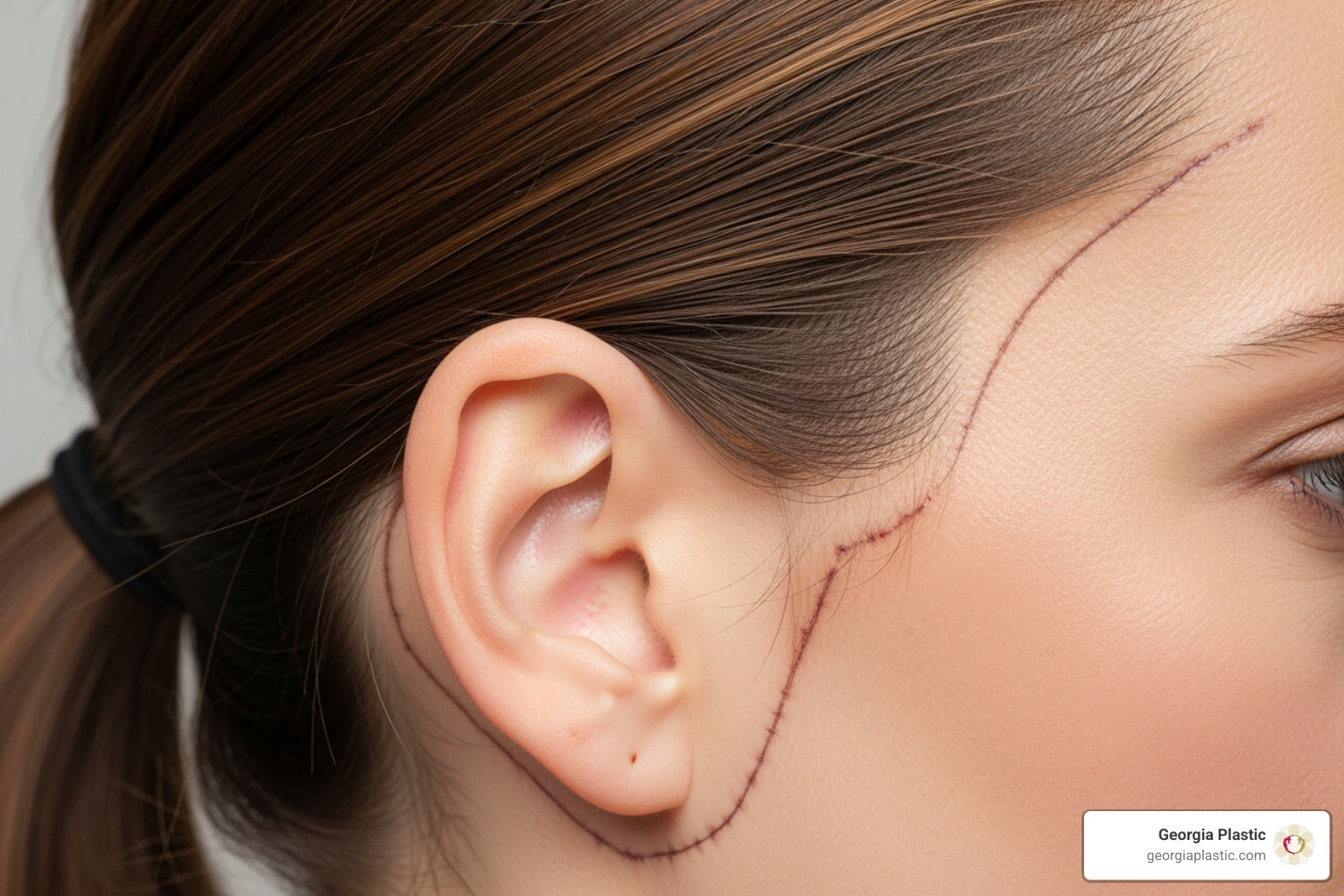
Starting on a Deep plane facelift journey begins with a personalized consultation to discuss your goals. The procedure is ideal for individuals, typically between their 40s and 70s, with significant mid-face sagging, jowling, and neck laxity. Incisions are artfully hidden within the hairline and the natural creases around the ear, making scars virtually undetectable once healed.
Are You a Good Candidate?
A good candidate has significant facial aging, good skin elasticity, and is in good overall health with realistic expectations. We conduct a thorough evaluation of your medical history and screen for any contraindications.
- Health Status: Ideal candidates are non-smokers, as smoking dramatically increases complication risks. Certain medications and supplements that increase bleeding must be stopped before surgery.
- Mental Health: We screen for conditions like Body Dysmorphic Disorder (BDD), as patient safety and satisfaction are our top priorities. The prevalence of BDD in plastic surgery clinics highlights the importance of ensuring patients are psychologically suitable for cosmetic surgery.
The Surgical Procedure Explained
The Deep plane facelift is typically performed under general anesthesia and takes four to six hours. The process involves several key phases:
- Incisions and Access: Carefully planned incisions are made in discreet locations. The surgeon then lifts a composite flap of skin and the underlying SMAS layer to access the deep plane.
- Ligament Release: The surgeon carefully releases key facial ligaments (zygomatic, masseteric, etc.) that tether the facial tissues in a descended position. This is the crucial step that allows for a tension-free lift.
- Repositioning and Securing: The entire flap of skin, fat, and muscle is lifted vertically into a more youthful position. It is then secured with strong, long-lasting sutures to underlying stable structures.
- Final Contouring: Excess skin is trimmed without tension, and incisions are closed with fine sutures to minimize scarring and prevent deformities like a “pixie ear.”
Combining Procedures for Full Rejuvenation
To achieve a more comprehensive and harmonious result, many patients combine their Deep plane facelift with other procedures.
- Neck Lift: Addresses neck bands and sagging skin for a sculpted jawline.
- Brow Lift: Lifts a heavy brow to open up the eyes and refresh the upper face.
- Eyelid Surgery (Blepharoplasty): Removes excess skin and fat from the eyelids to reduce puffiness and drooping.
- Facial Fat Grafting: Restores lost volume in areas like the cheeks and temples.
- Laser Skin Resurfacing: Improves skin texture, fine lines, and sun damage.
- Liposuction: Sculpts the area under the chin to eliminate a “double chin.”
- Dermal Fillers and Neuromodulators: Can be used post-surgery to refine results and maintain a youthful look.
Combining procedures allows us to create a balanced facial rejuvenation that addresses all your concerns.
Recovery and Results: What to Expect
After your Deep plane facelift, you will have a light compressive dressing for the first 24 hours. Swelling, bruising, and a feeling of tightness are normal and can be managed with pain medication. Most patients feel ready to return to work and light daily activities within 10-14 days.

For a smooth recovery, we advise you to keep your head liftd, use ice packs, avoid strenuous activity for a few weeks, and refrain from smoking and alcohol. Protecting your skin from the sun is also crucial. We will provide detailed post-operative instructions and monitor your progress through follow-up appointments.
Benefits of a Deep Plane Facelift
The results of a Deep plane facelift are both transformative and remarkably natural. Key benefits include:
- Natural, Not “Pulled” Results: By placing tension on deep tissues instead of the skin, this technique avoids a “windswept” look.
- Restored Cheek Volume: Lifting the mid-face tissues restores youthful volume and contour to the cheeks.
- Sharper Jawline and Neck: The procedure eliminates jowls and tightens the neck, creating a smooth, defined profile.
- Smoother Skin: Repositioning the underlying structures also smooths nasolabial folds and other wrinkles.
- Long-Lasting Results: Addressing the root causes of aging provides durable results that can make patients look 12-15 years younger.
- Improved Confidence: Our patients often report a significant boost in self-confidence, feeling as vibrant as they look.
A Deep plane facelift helps to restore a youthful appearance that is both dramatic and authentically you.
How Long Do Results Last?
A Deep plane facelift provides exceptionally durable outcomes, typically lasting 7 to 12 years. While it turns back the clock, it doesn’t stop the aging process. The longevity of your results depends on genetics, skin quality, and lifestyle choices. You can maximize the duration of your results by protecting your skin from the sun, adopting a healthy lifestyle, avoiding smoking, and following a consistent medical-grade skincare regimen.
Navigating the Decision: Risks, Costs, and Finding Your Surgeon
Deciding to undergo a Deep plane facelift involves carefully considering the benefits, risks, and financial investment. We are committed to providing transparent information to help you make a confident decision. Selecting the right surgeon is paramount, as their expertise directly impacts your safety and results.
Potential Risks and Complications
While a Deep plane facelift is safe when performed by an experienced, board-certified surgeon, all surgery carries risks. We will discuss these thoroughly during your consultation. Potential complications are rare and include:
- Hematoma: A collection of blood under the skin (less than 2% of cases, though higher in men).
- Nerve Injury: Temporary facial nerve weakness is rare (less than 1%), as is permanent numbness.
- Infection: Occurs in less than 1% of cases.
- Skin Slough: Localized skin necrosis (less than 3%), with a significantly higher risk for smokers.
- Scarring: Incisions are placed in hidden creases to be virtually undetectable.
We use meticulous surgical techniques to minimize these risks. For a comprehensive overview, you can refer to this StatPearls overview of Deep Plane Facelift complications.
Understanding the Cost
The cost of a Deep plane facelift reflects the procedure’s complexity and the surgeon’s expertise. Nationally, the total cost can range from $20,000 to $100,000 or more. This investment typically covers the surgeon’s fee, anesthesia fee, and facility costs. The final price is influenced by the extent of the surgery, geographic location, and whether other procedures are combined. As a cosmetic procedure, it is not covered by medical insurance. We will provide a detailed, transparent cost breakdown during your consultation.
How to Choose a Qualified Surgeon
Choosing the right surgeon is the most critical decision you will make. This complex procedure demands exceptional skill and artistry. Look for these qualifications:
- Board Certification: Your surgeon must be certified by the American Board of Plastic Surgery. This ensures they meet rigorous standards for training and patient safety.
- Specialization and Experience: Choose a surgeon who specializes in facial plastic surgery and regularly performs the Deep plane facelift. Ask about their specific technique to ensure they release the deep ligaments for a true deep plane lift.
- Before-and-After Photos: Review an extensive portfolio of their work. Look for natural-looking results with a well-defined jawline, restored mid-face volume, and no “pulled” appearance.
- Patient Reviews: Testimonials can offer insight into the surgeon’s patient care and results.
- Personal Connection: You should feel comfortable and confident with your surgeon and their team.
At Georgia Plastic & Reconstructive Surgery, our team, led by Dr. Okoro, is dedicated to providing personalized care and natural-looking results. We invite you to meet our expert team and experience the difference that specialized expertise can make.
Conclusion
The Deep plane facelift is a pinnacle of facial rejuvenation, offering a sophisticated solution to the signs of aging. By repositioning the face’s deep foundational structures, it delivers transformative results that are both natural and long-lasting. This advanced technique restores cheek volume, sculpts the jawline, and tightens the neck without a “pulled” look, allowing our patients to enjoy a refreshed appearance that reflects their inner vibrancy.
With results lasting 7 to 12 years, a Deep plane facelift is a powerful investment in your confidence. However, the success and safety of this intricate procedure depend entirely on the skill of your surgeon. Choosing a board-certified specialist with deep expertise in this technique is paramount for achieving the best outcome.
If you are ready to explore how a Deep plane facelift can help you achieve a naturally refreshed look, we encourage you to take the next step. Find the possibilities by visiting our facial rejuvenation options page or contacting us for a personalized consultation.


