
What Is RF for Skin — and Does It Actually Work?
RF for skin is a non-surgical treatment that uses radiofrequency energy to heat the deeper layers of your skin, triggering your body to produce more collagen and elastin — the proteins that keep skin firm and smooth.
Here’s a quick summary of what you need to know:
| Question | Quick Answer |
|---|---|
| What does RF do? | Heats the dermis to stimulate collagen and tighten skin |
| Who is it for? | Adults with mild to moderate skin laxity or wrinkles |
| Is it safe? | Yes, when performed by a licensed, trained provider |
| How many sessions? | Typically 2-6 treatments for best results |
| How long do results last? | 1-3 years with proper skincare |
| Downtime? | Little to none for most RF treatments |
As we age, our skin produces less collagen — roughly 1% less per year after early adulthood. That gradual loss leads to sagging, fine lines, and a duller texture. RF treatments work with your body’s natural healing response to slow and partially reverse that process, without surgery or significant recovery time.
This guide covers everything a first-timer should know: how RF works, what the science says, the different types of devices, real risks to be aware of, and what to expect before and after treatment.
I’m Dr. Stanley Okoro, a double board-certified plastic surgeon and founder of Georgia Plastic and Reconstructive Surgery in Atlanta, and my experience with advanced cosmetic procedures gives me a clear perspective on where rf for skin fits within the full range of surgical and non-surgical options available today. Whether you’re just starting to explore skin rejuvenation or weighing RF against other treatments, this guide will help you make a confident, informed decision.

The Science and Benefits of RF for Skin
To understand why rf for skin has become a staple in modern aesthetic medicine, we have to look beneath the surface—literally. Unlike lasers, which use light energy that can be absorbed by melanin (pigment) in the upper layers of the skin, radiofrequency uses an electrical current. This current meets resistance in our tissues, which generates heat.
According to scientific research on tissue tightening, the magic happens when we safely heat the dermis (the skin’s deep layer) while keeping the epidermis (the surface) cool. This deep dermal heating does two things: it causes immediate contraction of existing collagen fibers and kicks our internal “repair shop” into high gear.
The primary reported benefits of rf for skin include:
- Skin Tightening: Noticeable lifting of the brow, jowls, and neck.
- Wrinkle Reduction: Smoothing of fine lines and deep rhytides (wrinkles).
- Improved Texture: A reduction in pore size and a smoother “glass-like” glow.
- Body Contouring: Reduction of localized fat and improvement in the appearance of cellulite.
How RF for Skin Stimulates Collagen
The biological process behind these changes is called neocollagenesis. When the skin reaches a specific temperature threshold—ideally maintaining a temperature over 115°F (46°C) for at least three minutes—it triggers the release of “heat-shock proteins.” These proteins signal your fibroblasts (the cells responsible for collagen) to start building new structures.
Research highlights that rf for skin specifically boosts:
- Type I Collagen: The strongest, most abundant collagen that provides structure.
- Type III Collagen: Often called “baby collagen,” which is essential for skin elasticity and wound healing.
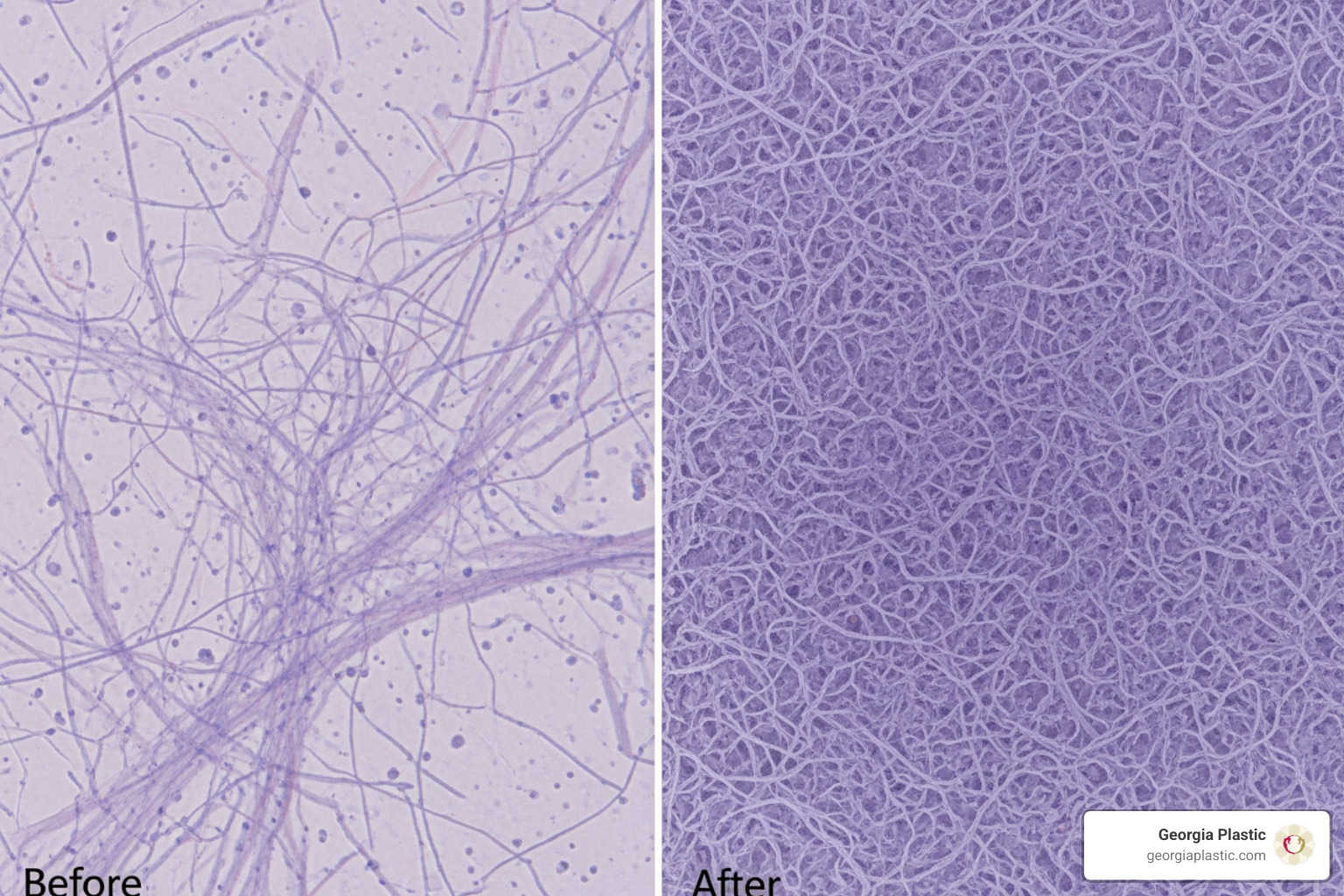
Studies on the role of collagen and elastin show that as we age, these fibers become disorganized and sparse. RF energy helps reorganize these fibers, making the skin’s “scaffolding” much more robust.
Clinical Results and Statistics
The numbers behind rf for skin are quite impressive. Clinical evaluations of monopolar RF treatments have shown that patients experience significant improvements within three months of their procedure:
- 70% to 75% improvement in skin tightening.
- 65% to 70% improvement in skin texture.
- 90% to 95% improvement in the appearance of wrinkles (rhytides).
Histologic (tissue-level) data is even more revealing. Three months after a series of treatments, studies have shown a significant increase in Collagen Type I (from 65.8% to 81.2%) and Collagen Type III (from 60.9% to 73.6%). Additionally, the epidermis—the very top layer of your skin—actually thickens, increasing from an average of 62.7 µm to 79.5 µm. This means your skin isn’t just tighter; it is biologically “younger” and more resilient.
Comparing RF Technologies and Modalities
Not all rf for skin devices are created equal. Depending on your goals, we might use one of several different modalities:
- Monopolar RF: This uses a single active electrode and a grounding pad. It allows the energy to travel deeply into the tissue—up to 20mm—making it excellent for deep skin laxity and body contouring.
- Bipolar RF: The energy travels between two electrodes on a single handpiece. This is much more superficial (1–4mm) and is often used for delicate areas like the face and neck.
- Fractional RF: This delivers energy in “zones,” leaving tiny pillars of untreated skin in between to speed up healing.
RF Technology Comparison Table
| Feature | Radiofrequency (RF) | Microfocused Ultrasound (HIFU) | Intense Pulsed Light (IPL) |
|---|---|---|---|
| Target Depth | Epidermis to Subcutis (Deep) | Up to 5mm (Very Deep) | Superficial Dermis |
| Primary Goal | Tightening & Texture | Deep Lifting (SMAS layer) | Pigment & Redness |
| Skin Type | Safe for all skin types | Safe for all skin types | Best for lighter skin tones |
| Downtime | Minimal to None | None | Minimal |
We also utilize advanced “subdermal” technologies like BodyTite and FaceTite, which use a tiny internal probe to deliver heat directly under the skin for more dramatic, surgical-like results without the large scars.
RF Microneedling vs. Non-Invasive RF
One of the most popular advancements is RF microneedling, such as the Morpheus8. While standard RF treatments use a flat electrode that sits on top of the skin, RF microneedling uses an array of tiny needles to deliver the energy inside the dermis.
This “controlled micro-injury” creates channels that allow the heat to bypass the skin’s surface resistance. This makes it incredibly effective for treating deeper concerns like acne scars, stretch marks, and significant sagging. Because the energy is delivered at the tip of the needle, the surface of the skin is mostly spared, which reduces the risk of pigment changes.
Safety, Risks, and FDA Guidelines
At Georgia Plastic, your safety is our absolute priority. It is important to know that RF devices are considered Class II medical devices. This means they are cleared by the FDA through the 510(k) process, which ensures the device is “substantially equivalent” to other safe, legally marketed devices.
You can actually verify if a device is cleared by searching the FDA 510(k) database.
However, even with FDA-cleared devices, complications can occur if the treatment is performed by an inexperienced provider. The FDA has issued safety communications regarding serious risks associated with improper use of RF microneedling, including:
- Burns and Scarring: If the skin is overheated or the device is used incorrectly.
- Fat Loss (Atrophy): If the energy is delivered too deeply into the subcutaneous fat in areas where you want to keep volume (like the cheeks).
- Nerve Damage: Temporary or permanent numbness if the energy affects deep facial nerves.
Is RF for Skin Safe for All Skin Types?
One of the greatest advantages of rf for skin is that it is generally safe for all skin types and tones. Unlike many lasers that target melanin, RF is “colorblind.” It doesn’t care about the pigment in your skin; it only cares about the resistance of the tissue.
This makes it a go-to treatment for patients with darker skin tones (Fitzpatrick types IV-VI) who might otherwise be at risk for hyperpigmentation from laser treatments. To ensure safety, we always recommend:
- Choosing a Qualified Provider: Only seek treatment from board-certified surgeons or licensed professionals under medical supervision.
- Reporting Issues: If you ever experience an adverse event, you should report it to the FDA MedWatch Reporting Form.
Your Treatment Journey: Candidates and Recovery
Who is the “perfect” candidate for rf for skin? Generally, it is someone with mild to moderate skin laxity who isn’t quite ready for a surgical facelift but wants more than what a topical cream can provide. It is also excellent for younger patients looking to “bank” collagen and prevent future sagging.
What to Discuss During Your Consultation
Before undergoing any rf for skin treatment, we will sit down with you to discuss:
- Your aesthetic goals and “trouble spots.”
- Any history of skin diseases or cold sores.
- The presence of metal implants or pacemakers (which are contraindications for RF).
- Your current skincare routine (you may need to stop using retinoids for a week prior).
Expected Downtime
For non-invasive treatments like ThermiSmooth, there is virtually zero downtime. You might look slightly flushed, as if you’ve just had a warm facial, but you can go right back to work. For RF microneedling, you can expect 24–72 hours of redness and mild swelling, similar to a sunburn.
Post-Treatment Care
To maximize your results and minimize risks:
- Stay Hydrated: Well-hydrated skin conducts energy better and heals faster.
- Sun Protection: Wear SPF 30+ daily. Your skin will be more sensitive to UV rays.
- Gentle Products: Stick to a basic cleanser and moisturizer for the first few days.
Treatment Frequency and Longevity
While some patients see a “glow” immediately, rf for skin is not an overnight miracle. It takes time for your body to build new collagen.
- The Timeline: Results typically become visible within 2 to 6 months.
- The Series: Most patients require 2 to 6 sessions, spaced about 4 weeks apart, to reach their peak result.
- The Longevity: Once you achieve your desired look, results can last between 1 and 3 years. Because your skin continues to age, we often recommend a maintenance session once or twice a year.
Frequently Asked Questions about RF for Skin
Does RF skin tightening hurt?
Most patients describe the sensation as a deep, warming prickle. For non-invasive treatments, it feels like a hot stone massage. For RF microneedling, we apply a strong topical numbing cream 45–60 minutes before the procedure to ensure you stay comfortable.
How long does it take to see results from RF?
You might see some immediate tightening due to collagen fiber contraction, but the real “wow” results happen at the 3-month mark. This is the time it takes for new collagen to mature and thicken the dermal layer.
Can RF treatments be combined with fillers?
Yes! In fact, we often recommend combination therapies. However, we usually suggest waiting a few weeks after a filler injection before doing an RF treatment in that same area, as the heat could potentially affect the longevity of certain fillers.
Conclusion
RF for skin represents a remarkable bridge between basic skincare and invasive surgery. By harnessing your body’s own regenerative powers, we can achieve natural-looking results that help you look as vibrant as you feel.
At Georgia Plastic & Reconstructive Surgery, our team, led by board-certified Dr. Okoro, is dedicated to providing personalized care that prioritizes your safety and long-term satisfaction. Whether you are interested in the subtle lifting of ThermiTight or the transformative power of Morpheus8, we are here to guide you through every step of your rejuvenation journey.
Ready to see what radiofrequency can do for you? Schedule your consultation at our Atlanta office today and take the first step toward firmer, more youthful skin.


