What Is a Postop Seroma — and Should You Be Concerned?
A postop seroma is a pocket of clear, watery fluid that collects under the skin after surgery. It forms when the body’s natural fluid — called serous fluid — leaks into empty space left behind after tissue is removed or disrupted.
Here’s what you need to know at a glance:
| What it is | A fluid-filled pocket beneath the skin at a surgical site |
| When it appears | Days to 1-2 weeks after surgery |
| Common symptoms | Swelling, tenderness, tight skin, wave-like feeling under skin |
| Most common after | Mastectomy, abdominoplasty, hernia repair, liposuction |
| How common | Affects up to 15-85% of mastectomy patients; ~11% after tummy tuck |
| Treatment | Small ones often resolve on their own; larger ones may need draining |
| When to call your surgeon | Pain, redness, warmth, fever, or rapid growth of the swelling |
Seromas are one of the most common complications after plastic and reconstructive surgery. They are not cancerous and are rarely dangerous on their own — but if left unmanaged, they can lead to infection, delayed healing, or other setbacks.
I’m Dr. Stanley Okoro, a double board-certified plastic surgeon and founder of Georgia Plastic and Reconstructive Surgery in Atlanta, where I regularly guide patients through recovery from procedures that carry a risk of postop seroma, including tummy tucks, liposuction, and body contouring surgery. In this guide, I’ll walk you through everything you need to know — from how seromas form to how they’re treated and prevented.

Understanding the Pathophysiology of Postop Seroma
To understand why a postop seroma forms, we have to look at what happens deep inside the body during surgery. When a surgeon performs an operation like a tummy tuck or a mastectomy, they often have to separate layers of tissue or remove large sections of fat or glandular tissue. This creates what we call “dead space.”
Think of dead space as an empty room where there used to be furniture. Nature hates a vacuum, so the body tries to fill that empty room. Usually, we want the tissue layers to knit back together, but several factors can interfere.
Lymphatic Disruption and Vascular Leakage
During extensive soft tissue dissection, tiny lymphatic vessels and small blood capillaries are inevitably cut. These vessels act like the body’s drainage system. When they are disrupted, they leak a mixture of plasma and lymphatic fluid—collectively known as serous fluid—into the surgical cavity. This isn’t just “water”; it’s a complex cocktail of proteins and electrolytes.
The Role of Inflammation
Surgery triggers an inflammatory response, which is a normal part of the wound healing phases. However, this inflammation also increases the permeability of blood vessels, allowing even more fluid to escape into the surrounding tissues. Scientific research on seroma etiology suggests that the fluid in a seroma is often more similar to an inflammatory exudate than simple lymph fluid.
If the volume of fluid produced exceeds the body’s ability to reabsorb it, a postop seroma begins to grow. You can find more info about postop-seroma on our dedicated condition page, which details how these collections behave in the days following your procedure.

Identifying Symptoms and Clinical Signs
Recognizing a seroma early can save you a lot of stress. Most patients notice changes between the first and second week after surgery, often shortly after their surgical drains have been removed.
The “Wave Test” and Fluctuance
The most classic sign of a postop seroma is a fluctuant mass. This means when you press on one side of the swelling, you can feel the fluid shift to the other side—much like a waterbed. A common trick used by cosmetic surgeons is the “wave test”: a gentle tap on one side of the lump produces a visible wave-like motion across the surface.
Common Symptoms
- A swollen lump: Usually located near the incision or where tissue was removed.
- Skin tension: The area may feel uncomfortably tight or “full.”
- Discomfort or dull ache: While usually not as painful as an infection, the pressure can cause significant soreness.
- Restricted range of motion: If the seroma is in the armpit (axilla) after breast surgery, it may be hard to move your shoulder.
- Sloshing sounds: Some patients actually hear the fluid moving when they walk or change positions.
Seroma vs. The Alternatives
It is vital to distinguish a seroma from other postoperative collections. A clinical evaluation of postoperative fluid is necessary to ensure you aren’t dealing with something more serious.
| Characteristic | Seroma | Hematoma | Abscess |
|---|---|---|---|
| Fluid Type | Clear/Yellowish serous fluid | Clotted or liquid blood | Pus (infected) |
| Appearance | Skin looks normal or slightly shiny | Dark bruising, purple/blue skin | Red, hot, and angry-looking skin |
| Pain Level | Mild to moderate pressure | Sudden, sharp, or intense pain | Throbbing pain and tenderness |
| Systemic Signs | None | Possible low-grade fever | High fever, chills, malaise |
| Timing | 7–14 days post-op | Within 24–48 hours post-op | Usually 5+ days post-op |
High-Risk Procedures and Risk Factors
Not all surgeries carry the same risk. Generally, the more “real estate” involved in the surgery, the higher the chance of fluid buildup.
Mastectomy and Breast Surgery
Seroma is considered the most common complication following breast cancer surgery. Research on breast cancer surgery seromas shows that radical mastectomies have higher rates than simple lumpectomies. In fact, up to 51% of women undergoing mastectomy or axillary lymph node dissection will develop some degree of seroma formation.
Abdominoplasty (Tummy Tuck)
The “tummy tuck” involves a massive amount of tissue undermining, which creates a large potential space for fluid. Research on abdominoplasty prevalence indicates a global prevalence rate of approximately 10.9%. At Georgia Plastic, we use specific techniques to keep this number as low as possible for our Atlanta patients.
Ventral Hernia Repair
Both open and laparoscopic hernia repairs are prone to seroma. Interestingly, 95-100% of patients may show early seroma formation on imaging after laparoscopic repair, though most of these resolve without any treatment.
Key Risk Factors
- High BMI: Patients with a higher Body Mass Index have more adipose (fatty) tissue, which is less vascular and more prone to leaking fluid.
- Smoking: Nicotine constricts blood vessels and impairs the body’s ability to heal and reabsorb fluid.
- Early Drain Removal: If drains are taken out while the body is still producing more than 30ml of fluid per day, a seroma is likely to form.
- Early Activity: Being too active too soon can cause “shearing forces” between tissue layers, preventing them from sticking together.
Management Strategies for a Postop Seroma
If you find yourself with a postop seroma, don’t panic. We have a clear ladder of treatment options depending on the size and symptoms.
Conservative Management and Observation
Small seromas (usually those that are asymptomatic and not under high tension) are often left alone. The body is remarkably good at recycling. Over several weeks or months, the lymphatic system will slowly reabsorb the fluid.
We recommend:
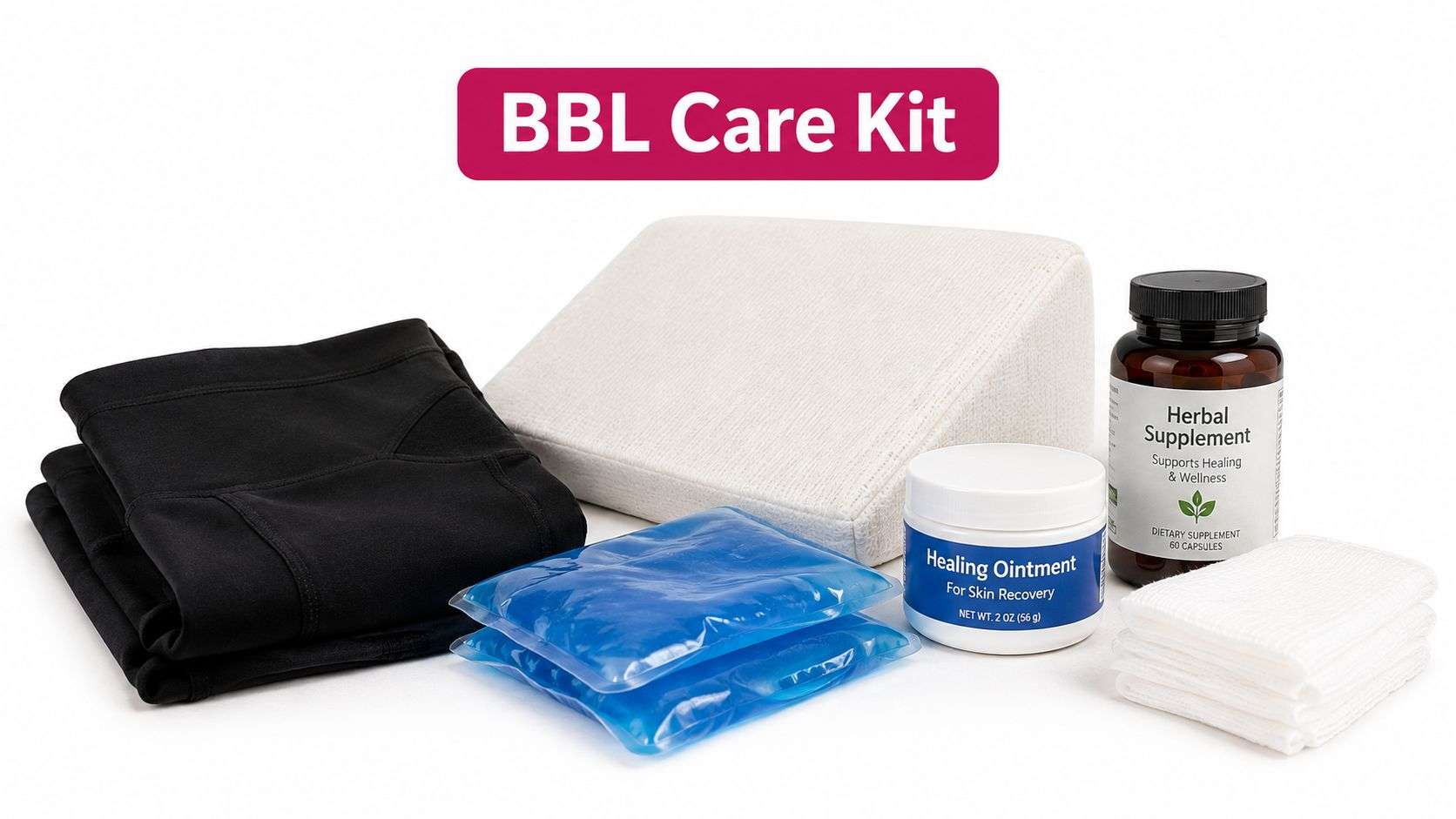
- Compression garments: Wearing your medical compression vest or binder 24/7 helps “sandwich” the tissue layers together, reducing the space where fluid can hide.
- Activity restriction: Avoiding strenuous exercise prevents the layers from sliding against each other.
- Warm compresses: These can sometimes help increase local blood flow to aid reabsorption, but only do this if cleared by your surgeon.
Needle Aspiration for Postop Seroma
If the seroma is large, painful, or putting stress on your incision line, we perform a needle aspiration. This is a quick office procedure where we use a syringe and an 18G needle to draw the fluid out.
While it provides immediate relief, there is a catch: seromas often refill. Research on ultrasound-guided aspiration shows that using imaging can make the process safer, especially if you have breast implants, as it prevents accidental needle punctures of the device.
When Surgical Intervention is Necessary
Sometimes, a seroma becomes “refractory,” meaning it just won’t go away. According to a 12-year retrospective study, patients who require repeated aspirations for more than 40 days have a 9.43 times higher risk of needing definitive surgery.
Surgery is usually required if:
- A Pseudocyst forms: The body creates a thick, fibrous “capsule” around the fluid. Once this capsule forms, the fluid will never reabsorb on its own.
- Skin Necrosis: The pressure of the fluid cuts off blood supply to the skin, causing it to die.
- Infection: If the fluid becomes an abscess, it must be surgically drained and washed out.
In these cases, we perform a capsulectomy—removing the fibrous lining—and may use Negative Pressure Wound Therapy (NPWT) or “wound vacs” to ensure the area heals from the bottom up.
Prevention and Complications of Postop Seroma
Prevention is always better than a cure. At Georgia Plastic & Reconstructive Surgery, we employ several intraoperative “tricks” to minimize your risk.
Surgical Techniques to Prevent Postop Seroma
- Quilting Sutures: We use internal stitches to “tack” the skin flap down to the underlying muscle. This eliminates the dead space entirely.
- Fibrin Glue and Adhesives: These biological glues act like a sealant to close off leaking lymphatic channels.
- Suction Drains: These are the gold standard. They actively pull fluid out of the body until the tissue layers have a chance to bond.
- Steroid Use: Research on steroid use in surgical wounds suggests that putting steroids into the wound or using them shortly after surgery can reduce the inflammatory response that leads to seromas.
Potential Complications of Untreated Fluid
Ignoring a large seroma isn’t a good idea. Untreated fluid can lead to:
- Infection: Stagnant fluid is a breeding ground for bacteria. Infection rates in breast surgery seromas range from 3% to 15%.
- Wound Dehiscence: The pressure can literally “pop” your stitches open.
- Implant Loss: In breast reconstruction, a persistent seroma can cause the body to reject the implant, with loss rates between 2-8%.
- Calcification: Over years, an undrained seroma can turn into a hard, calcified lump that mimics a tumor on mammograms.
Frequently Asked Questions about Seromas
How long does it take for a seroma to resolve?
Small ones can disappear in 2 to 6 weeks. Larger ones that require aspiration might take several months to fully dry up. If it persists beyond 3 months, it is considered chronic.
Can a seroma turn into a permanent lump?
Yes. If the body forms a capsule (pseudocyst) around the fluid, it becomes a permanent, soft lump. While not dangerous, it can be aesthetically unpleasing and may require surgical removal.
Is it normal to hear a “sloshing” sound after surgery?
It’s more common than you’d think! While it sounds a bit like you’ve swallowed a fishbowl, it’s simply the sound of serous fluid moving in the dead space. Tell your surgeon, as this is a clear sign a seroma is present.
Conclusion
A postop seroma is often just a “speed bump” on the road to recovery. While it can be frustrating to deal with drains or extra office visits for aspiration, following your postoperative instructions is the best way to ensure a smooth journey.
At Georgia Plastic & Reconstructive Surgery, we pride ourselves on personalized recovery plans. Whether you are coming to us for expert liposuction and body contouring care or a complex reconstructive procedure, our team, led by board-certified Dr. Okoro, is dedicated to your safety and your results.
If you suspect you have a seroma or are planning a procedure and want to discuss our prevention techniques, we invite you to schedule a consultation with us in Atlanta. Your safety and comfort are our highest priorities.