
Understanding Facial Plastic Surgery and Its Scope
Facial plastic surgery is a specialized field of medicine focused on improving the appearance and function of the face, head, and neck — through both cosmetic and reconstructive procedures.
Here’s a quick overview of what it covers:
- Cosmetic procedures – elective surgeries and treatments to enhance appearance (facelift, rhinoplasty, eyelid surgery, fillers, etc.)
- Reconstructive procedures – surgeries that restore form and function after trauma, cancer, or birth defects
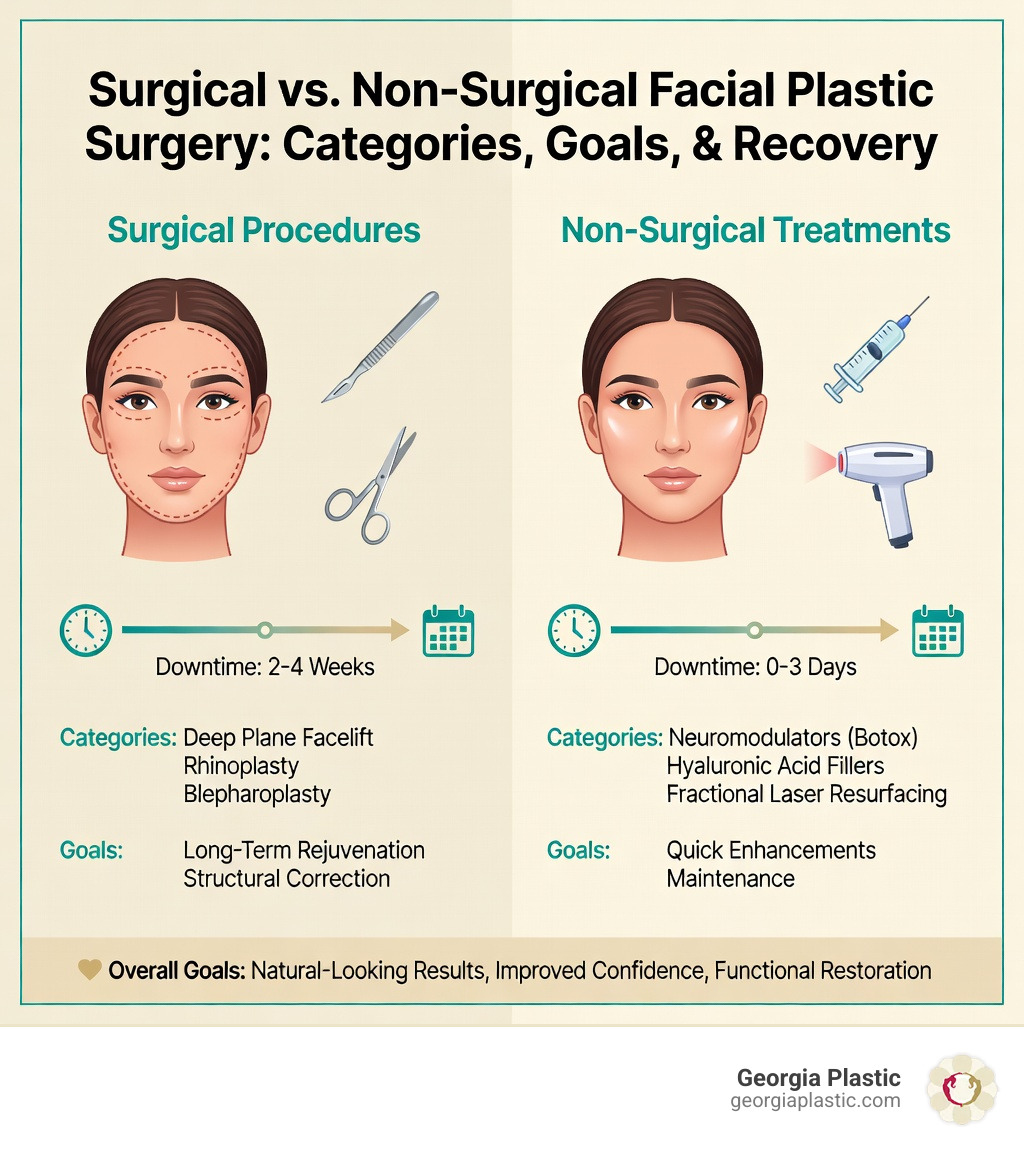
- Surgical options – longer-lasting results, more downtime (facelifts, rhinoplasty, blepharoplasty)
- Non-surgical options – minimal downtime, temporary results (BOTOX, dermal fillers, laser treatments)
- Who it’s for – adults of nearly any age who want to address signs of aging, facial asymmetry, or specific features they’d like to change
The goal isn’t to create a dramatically different face. It’s to restore balance, refresh your appearance, and help you feel more like yourself — with results that look natural, not “done.”
Whether you’re bothered by a nose that’s always drawn attention, eyelids that make you look tired, or skin that’s lost its firmness, facial plastic surgery offers options ranging from a quick injectable appointment to a full surgical transformation.
I’m Dr. Stanley Okoro, a double board-certified plastic surgeon and founder of Georgia Plastic and Reconstructive Surgery, with extensive experience performing advanced facial plastic surgery procedures for patients across Atlanta and beyond. In this guide, I’ll walk you through everything you need to know — from procedure types and costs to recovery and choosing the right surgeon.
Facial plastic surgery terms made easy:
Defining the Goals of Facial Plastic and Reconstructive Surgery
When we talk about the “scope” of this field, we are really looking at two sides of the same coin: form and function. Reconstructive surgery is often a necessity, helping patients who were born with congenital defects like a cleft lip or those who have suffered facial trauma or cancer. On the other hand, cosmetic enhancement is about elective refinement—addressing the “flaws” or signs of premature aging that can quietly chip away at a person’s self-confidence.
The ultimate goal of any facial plastic surgery is aesthetic balance. We aren’t just looking at a nose or an eyelid in isolation; we are looking at how every feature works together to create a harmonious whole. For instance, a well-performed rhinoplasty shouldn’t just look like a “perfect nose”—it should draw more attention to your eyes and your smile by removing a distraction. You can explore more about these goals in this official procedure overview from the AAFPRS.
Why Toronto and Major Metros are Hubs for Facial Artistry
You might notice that cities like Toronto, New York, and Atlanta have become international hubs for facial plastic surgery. Why? It comes down to a high concentration of specialized training centers and surgeons who possess international acclaim. In these major metros, there is a diverse patient population, which has led to incredible advancements in techniques tailored to different ethnicities and facial structures.
At Georgia Plastic, we see a similar trend in Atlanta. Patients travel to major hubs because they want a surgeon who views the face as a canvas—someone who combines medical expertise with true artistry. Whether it’s a clinic in Yorkville or our own state-of-the-art facility, the focus remains on comprehensive facial rejuvenation that respects the unique anatomy of the patient.
Popular Surgical Procedures for Facial Rejuvenation
As we age, gravity and a loss of collagen eventually take their toll. We start to see skin laxity, the development of jowls, and a general “falling” of the facial tissues. While non-surgical options are great for maintenance, surgical procedures remain the gold standard for significant, long-lasting transformation.
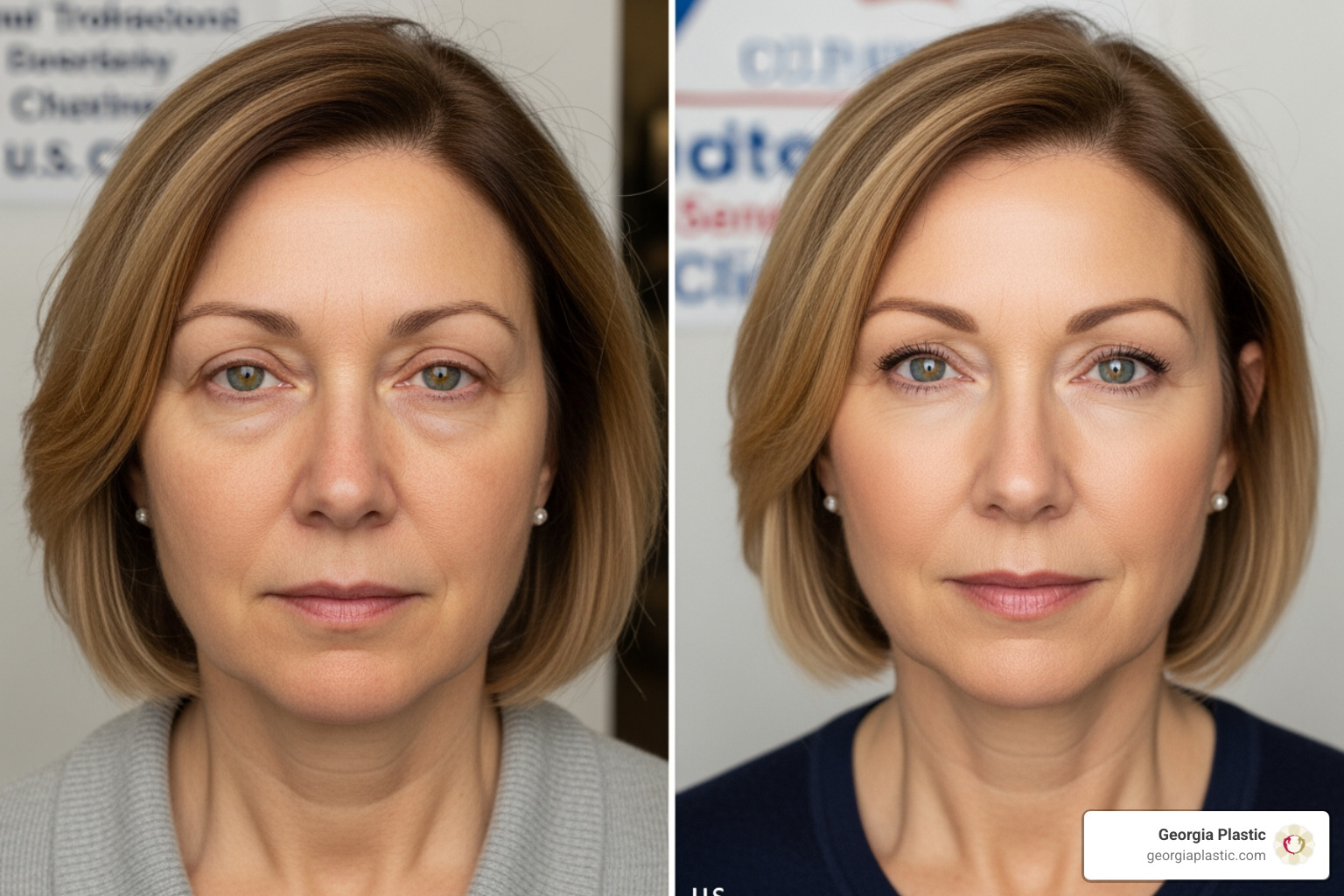
Some of the most sought-after surgical procedures we perform include:
- Facelift: To tighten the jawline and midface.
- Blepharoplasty: To refresh tired-looking eyes.
- Neck Lift: To eliminate “turkey neck” or vertical bands.
- Brow Lift: To reposition a heavy, sagging forehead.
For a deeper look at how these surgeries can help you, check out our detailed guide on facelift procedures.
Restoring the Midface and Jawline with a Facelift
The modern facelift has come a long way from the “pulled” look of the 1980s. Today, we focus on the deeper structures of the face. The deep plane facelift and the SMAS lift involve repositioning the underlying muscle and fat rather than just stretching the skin. This creates a result that is both more natural and much longer-lasting.
For patients with less advanced aging, a mini facelift might be the perfect solution, focusing specifically on the jowls and jawline with shorter incisions. Regardless of the technique, the facelift remains a gold standard because it addresses the root cause of aging: structural descent.
Refreshing the Eyes with Blepharoplasty and Brow Lifts
They say the eyes are the windows to the soul, but if those windows are covered by heavy, sagging lids, you might just look exhausted even when you’re well-rested. Blepharoplasty, or eyelid surgery, removes excess skin and fat from the upper or lower lids to create a bright, alert appearance.
Often, what looks like “eye” aging is actually a heavy brow. In these cases, a brow lift (or forehead lift) is used to surgically elevate the eyebrows. Wondering if you’re a match? Learn who is a good candidate for eyelid surgery to see if this procedure fits your needs.
Enhancing Contours with Chin and Cheek Implants
Sometimes, the issue isn’t aging, but rather a lack of definition. A “weak” chin can make the nose look larger and the neck look shorter. By using silicone chin implants or cheek augmentation, we can bring the profile into better balance.
If you aren’t ready for a permanent implant, fat grafting—where we transfer your own fat from an area like the abdomen to your face—is a wonderful way to restore volume. This “liquid gold” can soften shadows and hollows naturally. You can find more info about chin implants and how they balance the facial profile here.
The Art of Rhinoplasty: Types and Techniques
Rhinoplasty, or the “nose job,” is widely considered one of the most complex procedures in all of facial plastic surgery. Because the nose is the central anchor of the face, even a change of a few millimeters can dramatically alter a person’s look.
Whether you are looking for cosmetic improvement or need a functional septoplasty to help you breathe better, the goal is always a nose that blends in perfectly. For a broad overview, see our page on nose reshaping.
Exploring the Different Types of Rhinoplasty
Not all nose surgeries are created equal. We generally categorize them into a few types:
- Primary Rhinoplasty: The first time a patient has surgery on their nose.
- Revision Rhinoplasty: A secondary surgery to correct issues from a previous procedure elsewhere. This requires a high level of expertise, as scar tissue is involved.
- Open vs. Closed: “Open” involves a small incision on the underside of the nose for maximum visibility, while “closed” involves incisions only inside the nostrils.
- Preservation Rhinoplasty: A newer technique that preserves the bridge of the nose while adjusting the structure from beneath.
For those not ready for the operating room, a “liquid rhinoplasty” uses dermal fillers to temporarily camouflage bumps. For a deep dive, check out this detailed guide to nasal cosmetic surgery.
Ethnic Rhinoplasty: Preserving Heritage and Harmony
One of the most important advancements in our field is the move away from “cookie-cutter” noses. Ethnic rhinoplasty is a specialized approach for patients of Asian, African American, or Persian descent. The goal is to refine the nose—perhaps by narrowing the nostrils or increasing the bridge height—while strictly preserving the patient’s cultural heritage and ethnic identity.
We believe that beauty isn’t about conforming to a single standard; it’s about harmony. You can read more info about correcting the nose while maintaining your unique features on our dedicated page.
Surgical vs. Non-Surgical Facial Plastic Surgery Treatments
One of the most common questions we hear is: “Do I really need surgery, or can a needle fix this?” The answer depends on your goals, your anatomy, and how much downtime you can afford.
| Feature | Surgical (Facelift/Rhinoplasty) | Non-Surgical (Fillers/Botox) |
|---|---|---|
| Longevity | 10+ Years / Permanent | 6 Months – 2 Years |
| Downtime | 1–2 Weeks | Zero to 2 Days |
| Cost | Higher Initial Investment | Lower Per-Treatment Cost |
| Results | Dramatic / Structural | Subtle / Refinement |
If you’re looking for a face lift without cutting, non-surgical options are an excellent way to dip your toes into rejuvenation.
Injectables and Dermal Fillers for Volume
Injectables are the “lunchtime” heroes of facial plastic surgery. BOTOX Cosmetic is used to relax the muscles that cause wrinkles (like crow’s feet and frown lines), while dermal fillers like Juvederm and Restylane add volume.
Whether it’s for lip augmentation or softening the folds around the mouth, these treatments offer immediate gratification. If you’re in the area, you can learn more about Atlanta Botox and how we use it to create a rested, youthful appearance.
Advanced Laser Resurfacing and Skin Tightening
Sometimes the issue isn’t sagging or volume—it’s the texture of the skin itself. CO2 lasers can “erase” sun damage and fine lines, while treatments like Ultherapy use ultrasound energy to lift and tighten the skin from the inside out.
For those looking for skin tightening with minimal fuss, Ultherapy lifting is a fantastic non-invasive solution that stimulates your body’s own collagen production.
The Patient Journey: Consultation, Recovery, and Safety
Every successful surgery begins long before the first incision. It starts with a conversation. During a consultation, we dive deep into your medical history and perform a physical examination to ensure you are a safe candidate for anesthesia.
Realistic Expectations and Results of Facial Plastic Surgery
We often use computer imaging to show you what a potential result might look like. This helps align our vision with yours. However, have realistic expectations. Surgery can turn back the clock, but it doesn’t stop it entirely.
Reviewing before and after galleries is the best way to see the “style” of a surgeon. For more on the early stages, read about what to expect during a facelift.
Navigating the Recovery Process and Safety Protocols
Recovery is a marathon, not a sprint. For a major procedure like a facelift or rhinoplasty, you should expect some swelling and bruising. Most patients can return to work within 10 to 14 days, though full healing (especially for a nose) can take up to a year.
Your safety is our priority. This includes following strict COVID-19 protocols and performing surgeries only in accredited facilities. For a day-by-day breakdown of the healing journey, check out our facelift recovery guide. You can also find general patient safety resources from the ASPS.
Choosing the Right Surgeon and Understanding Costs
The most important decision you will make—more important than the procedure itself—is your choice of surgeon. You want someone who is board-certified by the American Board of Plastic Surgery (ABPS) or the Royal College of Physicians and Surgeons of Canada. These certifications ensure the surgeon has undergone years of rigorous, specialized training.
Don’t be afraid to ask about their specific experience with the face. A surgeon who does 100 rhinoplasties a year will have a different level of nuance than one who only does five. Learn more about choosing a board-certified plastic surgeon to protect your health and your results.
Factors Influencing the Cost of Facial Procedures
We know that cost is a major factor for our patients. The price of facial plastic surgery isn’t just one number; it’s a combination of the surgeon’s fee, the facility fee (the operating room), and the anesthesia fee.
Geographic location also plays a role—major hubs often have higher overhead. However, many clinics offer financing options like CareCredit to make these life-changing procedures more accessible. For a detailed look at the numbers, see our neck lift pricing guide.
Frequently Asked Questions about Facial Plastic Surgery
What is the best age for a facelift or rhinoplasty?
There is no “magic” number. For rhinoplasty, we wait until the face is fully grown (usually 16 for girls, 17-18 for boys). For a facelift, most patients are in their 40s to 60s, but “preventative” mini-lifts are becoming popular for patients in their late 30s.
How long do the results of facial surgery typically last?
A facelift typically “sets the clock back” by about 10 years. You will still age, but you will always look younger than you would have without the surgery. Rhinoplasty results, once the swelling is gone, are generally permanent.
Does insurance cover any facial plastic surgery procedures?
Generally, insurance does not cover cosmetic procedures. However, if the surgery is reconstructive or functional—such as a septoplasty to fix a deviated septum or eyelid surgery to correct impaired vision—a portion may be covered.
Conclusion
At Georgia Plastic & Reconstructive Surgery, we believe that facial plastic surgery is about more than just vanity—it’s about restoring the confidence that allows you to face the world head-on. Whether you are looking for a subtle refresh with injectables or a transformative deep plane facelift, our team, led by Dr. Okoro, is dedicated to providing personalized care and natural-looking results.
Your journey to a more refreshed, balanced version of yourself starts with a single conversation. If you’re ready to explore your options, we invite you to schedule a consultation for facial rejuvenation at our Atlanta facility today. Let us help you look as young as you feel!


